The Satinsky Archive
Western Impact on the Transition to the Russian Market Economy
Establishing Private Business and Reform of Soviet Industry
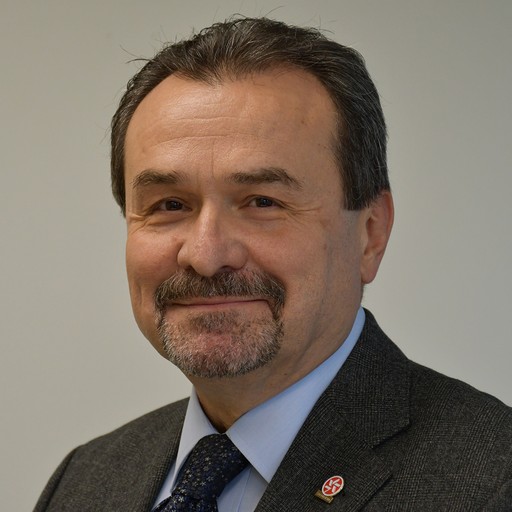
Lou Naumovski
Canadian Foreign Service, EBRD, Visa International, Kinross Gold
Biography
Ljupco (Lou) Naumovski, Canadian diplomat, aid official, and businessman, joined the Canadian Foreign Service as a Trade Commissioner in 1980 after completing his undergraduate BA and an MA in International Affairs. He was assigned to the Canadian Embassy in Moscow in August 1980 where he was responsible for the Agriculture and Food sectors, covering the entire Soviet Union.
In 1990, Mr. Naumovski was seconded to the newly-formed Canada – USSR Business Council in Toronto as its first Executive Director until his departure to join the European Bank for Reconstruction and Development (EBRD) in June 1992, again on loan from the Canadian Government. He launched the EBRD’s Moscow office and ran it until 1997. He left the EBRD, and the Canadian foreign service, in 2000 to launch Visa International’s first office in the Former USSR. He recruited the staff of the Moscow office and helped managed it until September 2005, when he moved to London to become Head of Strategy for the Region, in addition to his role in the former USSR.
In September of 2007, Mr. Naumovski was recruited by the Canadian Gold Mining company, Kinross Gold, to open the firm’s representative Office in Moscow. He led a team at Kinross that established the company as the only international gold mining firm with successful operations in the former USSR. While resident in Moscow, Mr. Naumovski was Chair of the Board of the Canada-Eurasia Business Council.
Mr. Naumovski retired from Kinross Gold in 2017 and returned to Toronto. From there, he consulted Canadian and foreign companies in a variety of business sectors on market strategies and business development in the former USSR and served on the boards of mining companies, including the Russian company, GV Gold. Mr. Naumovski ceased his consulting activities following the Russian invasion of Ukraine in February 2022.
Summary of Main Topics Covered
Lou Naumovski recounts a multi-decade career at the forefront of Western commercial engagement with the Soviet Union and post-Soviet Russia, beginning with his role as a Canadian foreign service officer in Moscow in the early 1980s and continuing through leadership positions in the Canada-USSR Business Council, the European Bank for Reconstruction and Development (EBRD), Visa International, and Kinross Gold. Drawing on his linguistic fluency and cultural affinity with Russia, Naumovski facilitated early trade initiatives in agriculture and energy, helped connect Western firms with Soviet and later Russian counterparts, and played a central role in establishing the EBRD’s Moscow office in the 1990s. At EBRD, he worked with Russian ministries, financial institutions, and emerging private enterprises, while also confronting structural challenges in implementing Western financial models in a rapidly changing but institutionally underdeveloped environment.
Naumovski highlights his later work with Visa as particularly transformative, where he led the expansion of electronic payments across Russia, growing usage from hundreds of thousands to tens of millions of cards by partnering with Russian banks, enterprises, and government institutions to modernize financial infrastructure and improve financial literacy. At Kinross Gold, he further advanced a model of partnership-based foreign investment by introducing Canadian mining standards and regulatory practices, many of which were adopted by Russian authorities. Throughout the interview, he emphasizes that success in Russia depended on trust, cultural understanding, and long-term relationship building rather than formal systems alone, while also acknowledging the limits of Western influence and the eventual reversal of integration under Putin. The interview demonstrates that foreign engagement played a significant but ultimately constrained role in shaping Russia’s post-Soviet economic transformation, leaving behind both lasting institutional changes and unresolved structural tensions.
Daniel Satinsky: Thanks for agreeing to do this interview with me. And as I said to you, I want it to be more of a conversation than a set of questions and answers, but obviously there are some things I’d like to cover. So, maybe you can just begin by talking about how you got involved with Russia, what your motivations were, and the beginnings.
Lou Naumovski: Happy to do so. Well, I can’t start at the right spot. I’ll go back further, just to say that I was born in Yugoslavia. I’m Macedonian ethnically, and as a child we spoke Macedonian at home, but at age 15 my father wanted us—I was four when we came, so I didn’t remember much, and—
Daniel Satinsky: And you came to Canada then, right?
Lou Naumovski: To Canada, yeah. All the way to Canada.
Daniel Satinsky: Where in Canada?
Lou Naumovski: Well, we started off in Hamilton, Ontario, but when I have lived in Canada since I became an adult it’s been in the Toronto area. A little bit in Ottawa.
In any event, that’s relevant why? Because when I was 15 and I went back I fell in love, again, with our Eastern Orthodox culture and the language, and I taught myself to read and write Macedonian. And I was only 15, but that sparked an interest in the broader Eastern European—
Daniel Satinsky: So, wait a minute, you went back by yourself at 15?
Lou Naumovski: No. I was there with my parents, of course, and then two years later I went back for another three months of debauchery in high school, so that all reinforced my passion for the Slavic people. And I identified with them. And when I eventually did go to Moscow, I identified very strongly, on a cultural level, with Russians. Now, how did I get there? Well, I did two degrees, undergrad and a master’s degree. I didn’t do any Russian language studies, but I studied a lot of Russian history, politics, and economics, and it was probably almost a little more than a third of all the courses that I did over six years, so—
Daniel Satinsky: And what institutions?
Lou Naumovski: I did my undergraduate at the University of Toronto, and then I got a scholarship, a modest one, to go to Carlton University, where there is a—Canada’s first, no longer only, but Canada’s first school of international affairs, graduate and postgraduate, and I did a master’s degree there. And I met some wonderful academics who were very well-versed and published widely on Russia and the Soviet Union, both history and economics, and so I was very proud of that. But as luck would—
Daniel Satinsky: I’m sorry, let me interrupt you. What years were these?
Lou Naumovski: Yeah. I started graduate school in 1978, and by 1980 I was looking for something to do, and I wrote the foreign service exam in Canada. Not expecting anything. And surprisingly, or I was the most surprised person, I was chosen. I wanted to be a political officer, but they say no, we think you’re better suited to be a trade officer. So, that was not my…but I said okay, I’m game for anything. And so, I spent the first year, or a few months in Ottawa. Then I went to, they sent me to a regional office in Regina, Saskatchewan. Now, that’s relevant because of the Steppe in Russia, and dry land farming and agriculture. And although my father was an agronomist back in Yugoslavia, I despised everything agricultural. But I learned. I learned quite a bit while I was there. And that served me well when I eventually went to Moscow.
Now, I only got to Moscow because I challenged my personnel officer, who wanted to send me to Chicago.And I said I don’t want to offend you, but you haven’t read my CV. I speak multiple Slavic languages, and I have a strong interest in the region, and I know there’s a position coming up in Moscow, so what do you say? He said, I don’t know, I’ll have to think about it. Well, eventually I got assigned, and prior to going they put us in Russian language training.
Daniel Satinsky: Ah, okay. In what year?
Lou Naumovski: It was in 1981. So, I boasted to that same personnel officer that I shouldn’t go to Chicago because I could learn Russian really fast. It was a full year program, and true to my word, I finished it in three months, and I was fluent. Then I just had a casual conversation structure with a very attractive, somewhat older than me young lady from Kyiv, who was a Russophile, and so that helped me be fluent.
So, I ended up in Moscow, arriving in August of 1982, as the third secretary in the commercial division. There were three of us in the commercial division. And what I learned in Saskatchewan, and also what I could smell, there were opportunities for Canadian business. And my role was to work with Canadian companies, primarily for exporting technology and livestock. And I was on the happy end of a one million bull semen contract that we signed with the Russian, Soviet agency at the time, and some live animals. And I did pitch the Canola Council of Canada. You probably know what canola is.
Daniel Satinsky: Sure.
Lou Naumovski: It’s this oil seed. And I had a phenomenal idea, and I was really passionate about it, and they dropped me like a sack of potatoes because they said, well, we don’t want to teach those commies how to grow canola because then we won’t have a market. I said you don’t have a market today; how do you expect to get a market? Anyway, I left that meeting.
But through those first two years my cultural affinity was really cemented. I made far more contacts than my colleagues in the political section of the embassy, and I learned quite a bit. And I was very proud that the first ambassador I had there, because they switched in my mid posting, was the son of a former prime minister of Canada, Lester Pearson. And he only came to me, which drove my boss crazy—he was the commercial counselor. But he came to me because he could see that I was really in the country and not just pretending. So, that was a great experience.
Daniel Satinsky: Yeah, so that’s a big difference, that you were in the country and not sort of visiting. And that provoked some, I don’t know, envy, jealousy, suspicion, whatever, yeah?
Lou Naumovski: I think all of the above because I was the best Russian speaker amongst the Canadians, and I had a lot of friends. I had to be careful because the then KGB were scrutinizing us very closely. I had to smuggle some friends from Kyiv into our apartment and things like that. And I had to be careful also that they were looking, the FSB, KGB were looking for targets. And I wasn’t directly targeted, but I knew I was—and I behaved myself, kept my nose clean.
But I had a wonderful experience in those two years, so it made me really keen to continue. And at that point there was no option to extend for a third year. They said you have to go on another posting now. And I said well, I’d like to go to a Hispanic speaking market, I’d like to go to Mexico, or I’d like to go to Brazil. And they said oh, no-no, you’re going to Atlanta, Georgia. So, all the experience that I had built up… [Laughs.]
Daniel Satinsky: They were determined to send you to the U.S. somehow, huh?
Lou Naumovski: Yeah, they were. And to say that I was not thrilled to be in Atlanta—I mean, we had a nice time socially, but business was so easy that I got frustrated with Canadians writing to me saying could you give me a list of car parts distributors in South Florida. And I would photocopy and mail to them the relevant phone book. And I said this is not fun, it’s not hard to do.
So, I got out of there after two years. And I did so by agreeing to go to the Middle East. And they were going to send me to Abu Dhabi, and in the end, they had to send me to Baghdad because my predecessor there was a raging alcoholic and they had to fill the spot quickly. So, I spent two years there. I had a lot of fun. I maintained my connections to Russia. I met everybody in the Soviet embassy, and we had them for dinner.
And that provoked in the security officer of the embassy to complain to the Ambassador. I was the No. 2 in the Embassy, but he called me in and he said listen, you’re far too close to these Russkis, they’re targeting you. And I said well, I think I can hold my own. This was the same person who was in his first and last ambassadorial appointment. He never left his office, and when he did, he’d go, because he was born in Denmark, he would go to the lunches of the Scandinavian ambassadors. And of course that was a circular discussion.
So, anyway, I survived Baghdad, and I came back to Ottawa and spent two years, and I was deputy director in the division responsible for economic affairs with the whole region, not just Russia, but Central and Eastern Europe.
Daniel Satinsky: And what year was this? Where are we now?
Lou Naumovski: That was in ’84 to ’86.
Daniel Satinsky: Okay, just before perestroika, right?
Lou Naumovski: Yes. As it was starting, to be honest, because while I was in Baghdad I heard about perestroika and glasnost. And I got to experience it firsthand because I was inundated, after I returned to Ottawa, inundated by business requests for linkages, contacts, information, and I was overwhelmed, frankly, because I was the only person in the division who had actually been and worked there. In fact, that opened my eyes that there was interest and that it could lead to something else.
So, after two years there I had an offer to become the executive director of the Canada-USSR Business Council. I moved back to Toronto from Ottawa and spent two years. And it was absolutely fascinating. I was in fact, for about a year—well, actually, before I left Moscow I became the agent for Lada Cars of Canada, and we managed to buy all sorts of Ladas at the dirt-cheap price of $3,200. And I was chastised by my bosses, but in any event, I took that on afterwards.
And so once… I got noticed by the private sector while I was in that job still in Ottawa. Because these are people who were asking me for advice and contacts, etc. And so much to my surprise that group was very keen to start a business council and they picked me to be the general director of this business council. At one point we had 260 firms. We had 25 of the largest Canadian companies join. And my offices were in one of the towers in Toronto. And the chairman of the association, a very prominent Canadian business leader, he was four floors above, so if I needed to bounce things off, I could go up and see him. So, that was a fascinating experience as well.
Daniel Satinsky: What kinds of products or sectors were the Canadian companies interested in in the Soviet Union as it was opening up?
Lou Naumovski: Right. Primarily oil and gas because Canada, for its sins, was very progressive in tertiary extraction of oil, and heavy oils, etc., and injection of steam to make the oil rise. Agriculture was almost equal in terms of the interest, but the agricultural side was principally for sales.
But when I was there the first time I was—well, we’re in Toronto now, but I neglected to say that when I was there in ’82 to ’84 on the ground I worked with some of these vendors—bull semen, embryos, agricultural equipment. In fact, the first and only license to reproduce a packer harrow drawbar, which is a dry land farming till, was made on my watch, and Russians paid $6 million for the license. They never produced a single one of these things, but they saved, basically, the small Saskatchewan company that had the patent on this type of equipment. In any event, so agriculture, oil and gas, and that was basically it.
However, in the business council we had basically everybody in every sector imaginable, and there was a very high degree of interest because our prime minister at the time, Brian Mulroney, had been invited to go to Moscow, and he convinced about 180 other Canadian business people, wives included, to travel there. And I organized that visit and trip, and so the enthusiasm was really, really high. But as high as it grew, it fell even further when some of these people, who were not really patient enough to understand what you could do and how to do things in the Soviet Union, they lost interest in about 18 to 24 months, and so I couldn’t even get a quorum for a board meeting to talk about our initiatives.
But we had a lot of initiatives, and I got funding from the government to bring Russians to Canada to go to business school, and we did a lot of things that were, I guess, pioneering at that time. Of course, the security and intelligence service was suspicious because they thought these people were going to be spies. Well, I imagine some of them were. But in any event, we influenced several hundred Russians, many of whom became bank presidents and senior bureaucrats because they got to go to York University in Toronto for a three-month mini-MBA, as we called it. So, things like that were, for me, very satisfying, that we catalyzed that project and I shepherded the Russians who went there.
Daniel Satinsky: And this was still in perestroika, in Soviet times?
Lou Naumovski: Oh, absolutely. This was 1990 to ’92. I got to meet Gorbachev when he came to Canada for a state visit, and a lot of his senior people, because I was the only functionally literate Russian speaker—I mean, it’s a sad condemnation of our foreign service, but I was. And so that gave me some, I guess, some notoriety, which helped. And so after…actually, I told you about Atlanta. From the business council, that lasted two years, and in 1992 I left. I left the foreign service for good. I was head hunted—well, not really. I applied and then they…at the European Bank for Reconstruction and Development in London.
Daniel Satinsky: So, while you were head of the council, the Canadian Soviet Business Council, you were still in the foreign service?
Lou Naumovski: Yes. They gave me an executive interchange. I had written a letter of resignation, but then I got a call from the Public Service Commission. The guy said to me, young man, I think you’ve done some good work, but you’re not very smart. I said, I beg your pardon, so why are you calling me? He said, well, we can give you a leave without pay. So, I got that at the business council. And then I resigned again when I got the job at EBRD. And he called me again and he said you didn’t learn anything, you can have another extension for up to eight years, and then this is all pensionable time for you. Go for it. So, I did.
Daniel Satinsky: Yeah.
Lou Naumovski: So, when I joined the European Bank for Reconstruction and Development, I was technically on leave, authorized leave from the public service, and so I started off as the deputy representative of the bank in Moscow for Russia, principally for Russia. And then the fellow they had appointed, a Swede, turned out to be a fraud. He could not speak Russian. He had studied Russian in the Swedish military, and so he was summarily fired, and I acceded to that post, and I spent another couple of years—well, more than that. January ’94 to November ’97 I became the top person for the EBRD.
Daniel Satinsky: And so EBRD had already been there, and they had activities, and you took it over—
Lou Naumovski: No, no. I was there at the opening.
Daniel Satinsky: You were at the opening, okay.
Lou Naumovski: At the same time. Now, Russia was a member since ’91, but I was the one that opened the office.
Daniel Satinsky: In Moscow, okay. And what were you tasked to do by the EBRD? What did they want you to do when opening that office?
Lou Naumovski: Principally to investigate opportunities for both financing and for technical assistance, and build a team, which I did. And then programs or projects had already been seeded, but there were no projects in progress. I was the go-between for bankers from London who were not posted in Moscow. We didn’t have bankers for a few years. And then to try to develop new projects. Also to liaise with the relevant ministries—the Ministry of Economy, Ministry of Finance, the Foreign Ministry, the Central Bank of Russia. And so, I was basically, as the representative, I had to cover all those bases.
And I recruited people. I even started a program for young Russian graduates, a program that we named the Financial Assistance Team. And they were all English speakers, etc., and it was a tremendously successful program which went on for about ten years, even after I left.
Daniel Satinsky: Do you remember the very first project you funded?
Lou Naumovski: I have it somewhere, but I didn’t—
Daniel Satinsky: It wasn’t memorable enough that—
Lou Naumovski: Well, no. There were many memorable projects, but the very first one would have been a state-to-state or a project for reforms, technical assistance. Jeffrey Sachs and all of that, you know, it was—
Daniel Satinsky: Right. So, how was your relationship with the OECD and USAID? I mean, you all were in the same space.
Lou Naumovski: No, not really, no, because the OECD wasn’t going to, about to lend to—well, they don’t have a lending function, first of all. But the World Bank, I mean, I was close to the director of the World Bank because they were principally responsible for state-to-state, or state loans. EBRD was focused on commercial projects, although we did have some technical assistance projects, which were not loans, they were grants from all the member countries that gave us money. So, I was involved in that. I was on a few boards representing the bank on technical assistance projects. And actual funding through private sector took longer than it should have.
But here’s a very important learning point. It did so because Russians were so inundated by these technical assistance evaluations and studies, etc., etc., they didn’t know what to do with it, what the bank and the West, in general, as they say in French, forgot to think about was that you’re talking about concepts that people were really not familiar with. And so, to try and—I’ve got a great anecdote for you. Khodorkovsky—I don’t know if you remember him.
Daniel Satinsky: Sure, of course, yeah.
Lou Naumovski: Well, Khodorkovsky came while I was still in Moscow for the EBRD, came to my office at 7:00 at night with two guys in black shirts, black ties, black suits, etc., and he sat down and he said I want to start a bank. I said, well, that’s very good. And I’d like the EBRD to invest. And actually, he did start a bank, by the way, and several banks, in fact, but he said I want the EBRD to invest. I said okay, so how much capital are you willing to put into this bank? He said, oh, about a million dollars. I said okay, and do you have a business plan? No. And how much would you like the EBRD to invest? The rest. I said how much is the rest? You need a business plan, and we need to help you, we can help you with technical assistance funding to develop a proper business plan for you and whoever else is going to be party to this project. He said, well, how soon can that happen? I said, well, it takes a while. Well, I need the money next month. This is Khodorkovsky, not a stupid man, okay? And I said and that’s not possible. So, he left mad.
Fast forward. When I was…when I went—I haven’t got there yet, but it’s important because this is illustrative, I think, of how the Bank failed, in many respects, Russia. A few years later when I was the representative of the EBRD in Russia the No. 2 guy in the Bank, an American, said I want to go—no, it was Guy De Selliers, the No. 3 guy. Guy is Belgian, and anyway, he was technically my boss in London.
So, I want to meet Khodorkovsky, so I arrange the appointment. Now this was several years later. And he didn’t come to me, he summoned us to his palace, “osobnyak” as it’s called in Russian. And so, we walk in and we shake hands to everybody. Mind you, he didn’t come out. He made us wait an hour and a half. And he had all these young guys in sharp suits. They looked like newly minted MBAs. And so, they finally, we ascended to his palatial office, and we shook hands. He says, remember me [in Russian]? I said of course I do. So, how do you think I’ve done without a business plan?
Daniel Satinsky: [Laughs.] Wow.
Lou Naumovski: Yeah, wow is right. And so, I said, well, congratulate you is all I can do, I said, but, you know, you were talking to a bureaucrat in the EBRD bureaucracy. I explained to you, and I did it in your own language, and I don’t know what else I could have done. And you never got back to us. He says, I don’t need you anymore. So, basically, the result of that meeting with the No. 2 guy—No. 3 guy—in the EBRD was nothing because they had learned capitalism without the help of the EBRD. Or he had, at least.
Daniel Satinsky: He had, yeah. So…well, that’s interesting. So, some of the sort of American view was that—Brzezinski I think was the one who most articulated this—that Russia was in receivership to the West and had to be taught how to develop. And, you know, that sort of sense of little brother, big brother sort of relationship I think characterized a lot of the ‘90s. And, you know, did you see that? Did you…you know, do you have any thoughts about that sort of attitude?
Lou Naumovski: Yes. I mean, I’ve…I won’t say disgust, but my response was, are you people not listening? You people don’t understand exactly the culture, the mentality of this country. You can’t do a report because it’ll go on the shelf and it’ll never be read, and yet they continue to do that, the World Bank, and OECD, and everybody else did the same thing. So, there was…there were these psychological restrictions on both sides, the Russian side—we don’t need reports. We want your capital. Of course there is a practical barrier there. We can’t give you capital if we don’t know how you’re—you don’t understand the business ethics; you don’t understand exactly how it works. And we’re not a gazillionaire with our own money, we’re a public institution. So, they didn’t understand that, and our people really didn’t fully understand.
Now, to say that I fully understood myself would be an exaggeration, but I had this uneasy feeling that we were talking like this, and the EBRD would not eventually succeed. Individual projects, yes, over the time that I was employed by the bank, some individual projects were successful, but by and large we didn’t have the impact that Jacques Attali thought we could have when he came up with this dream.
Daniel Satinsky: What was that impact? When you say it wasn’t successful, what would have success looked like if you had been successful? What did that mean?
Lou Naumovski: Well, it would have been a more organized format for delivering a little bit of the help necessary, more pilot projects with the right Russian sponsors, people like Khodorkovsky who were—well, turned out to be corrupt, but most of them were, sadly. But better mining job of getting the right people with the right attitudes, and starting small, and basically nurturing these investments instead of trying to shotgun everything—you know, we’ll spend 200 million on studies, and then we might invest a little bit, but you never got to that stage, or at least to an economy of scale. It never reached that while I was there.
Now, I was responsible—after I left Russia to work for the EBRD in London. I was responsible for a couple of projects. Magnitogorsk Metal, the biggest steel company in the former Soviet Union, was a client. I worked with a German banker, and we tried to develop a line of finance for them. And unfortunately, all the other nice to haves, like environmental controls, and a complete surgical review of their financing, etc., that put them off.
And we offered this working capital facility—it wasn’t big, it was $50 million or something—and they said no, we don’t need the money. Because it was just onerous, in their view. But it was a mistake to say that we were going to work with a giant like that that always got the money that the Central Committee of the Communist Party allocated to them. They didn’t want to do the things that we—I mean, we weren’t wrong, we just didn’t go about it the right way, and we chose the wrong potential partners or recipients. That’s a generalization, but that’s certainly the impression I’m left with 20 years later.
Daniel Satinsky: Interestingly, I interviewed someone last week who was a consultant on that project and was resident there and was trying to put together the financials for I guess a sub—there were subcontractors way below your level at that time. [Kent Lauridsen]. But anyway, I’m just noting it because when we put the archive together we’ll put a link to that so that someone who’s interested in that can follow up.
But I mean, but isn’t that…so my perception of big organizations like this is that you do big projects because overhead is the same for a big project as for a little project, and so from the point of view of outsiders, doing a big project is better. It’s a better measure of success than doing a little project that you have the same overhead, and the same due diligence cost as doing a big project. So, was it even conceivable that an organization, an institution that size could have done smaller demonstration projects like you’re describing?
Lou Naumovski: Well, they did. I mean, I don’t want to be categoric. Some were done. But a lot of emotional and financial effort was spent on trying to nail a big one that could be a real demonstration project. And you can’t fault people for having that viewpoint, for many of the practical reasons you suggest. But by the same token—and hindsight is 20/20. But I did—I’m not trying to pat myself on the back—I did feel uneasy personally because I would see a lot of smaller people who came in, and they were below our threshold, but I could see on a human level that this is a person he’s genuine, he’s real, he’s got a product, we need to be able to fund that. And of course we couldn’t necessarily.
So, there was this idea for lending to the nascent banking system, lending them money, and that didn’t really work very well, either, because the due diligence, I mean, these banks had no track record, they had really no financial records, they had nothing to recommend them, but we’d give them 100 or 85,000, or whatever it was. And God knows what they did with the money, because we didn’t have the horsepower to monitor these loans. Anyway, it was very frustrating.
But on a personal level, I felt very pleased with what I and the people that I built the office with were doing, telling people straight up how we operate, coming up with ideas how they could bring themselves to the point where they could approach either one of these sub-lenders, or for larger projects to have Western expertise to help repackage, if you’re telling the truth in terms of your financials, they will package it in a way that the bankers in London, who would take these projects on, would feel comfortable with, and the confidence level would rise, and then you could… So, the Russians were not completely blameless. They wanted pie, and they wanted to eat it now, and they weren’t prepared to educate themselves—many, many of them that I met.
Daniel Satinsky: Right. But do you think over time some of them did, I mean, they began to—did you see change in that sense?
Lou Naumovski: Well, yes, I mean, and it began and ended with privatization, because no matter what you think about the voucher system and how the privatization program went on, if you look at some of these huge companies that are still owned by oligarchs or that have been nationalized, they learned very, very quickly. They learned very quickly.
And of course, we didn’t want to lend money to the Khodorkovskys or the others because of the well-founded suspicion that they didn’t play by the rules. But, you know, you can’t take a thousand-year-old culture, and just because you’re offering them some, what in their view is peanuts, change the mentality. And maybe it was not a solvable problem, but it was really that fundamental. So, those guys, however they did the privatization, they stole or cheated and got all the vouchers and bought these huge state companies at a huge discount, they were the ones who demonstrated that they had the capacity. They certainly could marshal the technological skills, even the financial skills.
I mean, this program that I mentioned earlier, this financial analyst program that we did for young Russians in the first couple of years of the office, those people are absolutely brilliant. Today I’m still in touch with some of them, and they have built huge fortunes and done wonderful things. They did it by themselves. They read a lot. But the two years, the year or two they spent in EBRD as financial analysts for projects that they were doing taught them a hell of a lot and gave them the confidence to try these things. So, the cultural change, nobody should have expected it to happen in 10 or 12 years. It’s taken 50 years…maybe not 50, but 40, for sure.
Daniel Satinsky: Right. But there were certain business skills that people picked up fairly quickly, just in terms of skills. I’m not talking about ethics or sort of broader view, but the understanding of the concepts and practices of a market economy were picked up relatively quickly, right?
Lou Naumovski: As simple as buy low, sell high. I mean, it really is that simple. And those people who had the initiative and the courage, I suppose, to build stuff without the nuisance expectations and forms to be filled in that the EBRD wanted, or the IFC, for that matter, or the German technical assistance facility, and the British, and etc., etc.
So, yeah, I look back to those years that I was at EBRD, eight, that eight years or seven years, I look at it as for me a huge learning program. I learned a lot. I hope I… Certainly…I believe we had a very strong relationship because I was a relationship manager—not first and foremost, but to a large extent—and the doors were always open. I was well received in the Central Bank, and the Ministry of Economy, and everywhere else, and I represented the Bank. But I think the way that you communicate makes a big difference, and in which language you communicate. When we had very senior people come and they had to have an interpreter with them, the relationship wasn’t the same.
And of course they weren’t there enough, or frequently enough, or long enough to develop any relationships while being resident there. And we eventually got some Western expatriates, EBRD bankers to be embedded in the office, and projects started to move better when that happened, but that was towards the end of my time in Moscow. And then I went to London for a couple of years, for three years, actually.
Daniel Satinsky: When did you leave Moscow?
Lou Naumovski: I left the EBRD Moscow office in November of ’97.
Daniel Satinsky: ’97. You left before the crash, yeah.
Lou Naumovski: And then I was on the Russia team in London. And that was a very sad time for me, to be honest, because the only people you see are your colleagues and your superiors, who are impatient, and the projects that I worked on, very few of them actually moved, and it was hard to—and I was never trained as a banker, so I had some limitations. I was more of a relationship banker than I was a financial banker, so that was apparent to me and was clearly apparent to my bosses because I didn’t last much longer. That was ’94 to ’97. Anyway. No, that was in Russia, and then ’97 to 2000 is when I left EBRD.
Daniel Satinsky: You left EBRD in 2000, okay.
Lou Naumovski: Yeah. So, I was there—
Daniel Satinsky: And you were living in London then, right?
Lou Naumovski: I was living in London. They wanted to send me—these anecdotes, I won’t bore you with too many—but they wanted to send me back to Moscow after having let me live in London for three years, and I said but I don’t want to go and run that office anymore. Well, actually, you won’t be running the office because this person, you’ll be reporting to this person. I said, I beg your pardon? Oh, well, she’s Serbian and she speaks Russian. Well, I knew her and she spoke Russian as well as I speak Swahili, which is not at all, hello and goodbye and things like that. So, I said no, I refuse. And then, because I refused, they basically, there was no room for me. There was a position in Belarus; they didn’t want to send me there. There were other things. And I had someone come up to me and say look; you’ve been blackballed. And that hit like a ton of bricks, but I said, well, thanks for being honest, that’s what I suspected. And so that was not a very good time, the last few months that I was there. But, you know, if you remain, let’s say, not optimistic, but undefeated and through shear accident I got a call from my former assistant at the EBRD Moscow office, and she says, oh, we have this guy in the office here, it’s Visa International, the credit card company and payment system, and would you be interested in talking to him, because they’re looking for someone to open up representation in Russia. I said sure, I’ll talk to him.
So, I talked to him and within eight days I had a firm job offer from Visa, and my wife wasn’t that happy. We were leaving a wonderful house in Woking, Surrey to go back to Moscow. We had two children, two adopted children, and one of them had serious mental challenges. And so, we did go back to Moscow and I spent the next seven years at Visa.
When I got there there were approximately 800,000 debit cards, and they were issued initially during the Olympics in Seoul. And so, our job was to develop the market. And so, the reason I say this was my favorite job is because basically Visa didn’t know what the hell to do and they said here, you do it. And with some very smart advice, and very capable colleagues, and a team around me, we realized that the way to propagate the payment, electronic payments, was to go to the large factories who paid their employees in paper bags cash, rubles.
Daniel Satinsky: And this is still in 2000. In 2000 they’re still doing that, right.
Lou Naumovski: Oh, absolutely. And so they were basically unbanked. Maybe 20% of the people actually kept real money in banks. And so, I crossed the country talking to these facilities, explaining how much they could save in manpower and by controlling where the money went when they paid people electronically, and they would have a debit payment card tied to their accounts. And women, I did a number of road shows, and we talked about it, and women were delighted because they knew that their factory working husbands couldn’t drink the money before the wife got her hands on it to buy groceries.
That was, I have to say just on a personal level and a professional level, that was the most satisfying thing, to know that we, my team and I, helped really stimulate banking in Russia, and literally hundreds of thousands, maybe more, of people over the seven years I was in charge of that office became banked. They learned about payment cards. I mean, Russian technology people were further ahead because they had already thought about the chip card, and we were still, in North America, using the, whatever you call that, the press machine.
Daniel Satinsky: The magnetic strip thing.
Lou Naumovski: Magnetic strip. So, we went from the 800,000 cards that weren’t being used at all to 43 million cards.
Daniel Satinsky: Wow.
Lou Naumovski: 43 million cards in seven years. And about 800,000 credit cards, because we started to introduce credit cards as well, as the banking system matured. And everybody—in fact, I got a death threat from…I’m trying to remember his name. He was a very famous, but very shady banker in Russia. Because I kicked him out of the Visa—Visa was not a corporation then, it was a commonwealth. It was basically a…I don’t know what you’d call it. And I had discretion. So, he wasn’t meeting his targets. He didn’t do anything that we wanted him to, like increasing the number of point of sales remittals and etc. And I said sorry, we’re going to pull your license. He said, well, I’m bringing 20 new banks into the system. I said they’re not ready yet. And he said you better watch yourself because I’m out to get you. “Be careful, I am watching you [in Russian]. So, I said okay, well, I’ll meet you out on the street. Okay, come on, I’ll be out there by myself. Let’s see what you can do. Well, he hung up the phone. He never followed up. He and his shady banks were out of the system.
But we went from something like 60 banks to—well, the Russian banks proliferated in that time, but many more banks. And the volumes that were actually being spent on our cards just exponentially grew. And financial literacy was a big deal, so I got involved with the Princess Trust in the U.K. and we did a whole campaign funded by the Princess Trust on financial literacy for middle and senior public-school students. And that was really well—so well received that we had, I accepted a nominee from the Ministry of Economic Development on the steering committee of this initiative. And that initiative led to the creation of the Financial Literacy Department in the Ministry of Economic Development.
Daniel Satinsky: Wow.
Lou Naumovski: So, those—I mean, you can hear in my voice how enthusiastic and proud I was of what our small team did. I didn’t hire anybody who came from the banking system. I hired young people, people who knew about computers, people who knew about telecoms, and people with the personality to solicit banks to join and to encourage the clients of these banks, industrial clients, to move salary payment to the banks.
Daniel Satinsky: So, this changes the way people shop, the way people live. It changes so much of the experience of life by making this change. And you kind of jumped over the stage of writing checks. You went from cash to cards without checks in between.
Lou Naumovski: Never had checks in Russia. They had telephone banking long before we did in Canada, I’ll tell you that much. Once they got a taste of what they could do and how to meld technology with finance, they just were flying. They were flying. So, much so that we had some competing payment systems sprout from nowhere, and they all hoped that we would buy them out and they could be part of the Visa system. No, obviously that was not in our interest. We had to make Visa…we crushed Mastercard, by the way. They were there before us. My CEO at that time at Visa Europe was a former Mastercard executive, and she said I’m so proud of you, Lou, you crushed those bastards. [Laughs.]
And I said that wasn’t my intent. But what Visa did for financial literacy for getting cash out of the economy, that will be my legacy, I guess. Now, I wasn’t alone. I had a great team. I had a lot of support from our president and from other executives in London to which I reported.
But I also applaud a lot of the Russian banks, because I was chairman of the Visa Russia Association of the member banks, and we had regular meetings, and it was a serious organization, and we came up with initiatives, and they checked up on what we were doing in terms of new technologies, etc., etc. And for a Canadian kid to be the chair, having all these bank chairmen—I mean, they weren’t bankers their entire lives, but they had the guts to start banks—I took a lot of pride in that as well.
Daniel Satinsky: Well, it sounds like some of your success was your attitude, your relationship focus, and meeting them where they were, but at the same time it wasn’t you imposing systems on them as much as them buying in and being partners in changing the way the whole financial system worked. Am I reading that properly?
Lou Naumovski: Absolutely. In fact—and we had a very tense time with the Anti-Monopoly Committee because we encouraged banks—and everybody wanted to be part of Visa, but we needed a minimum capital requirement, we needed multiple branches, we needed a demonstration that they would actually be spokespeople for the growth of the system.
And one banker from the Urals took me, or at least engaged the Anti-Monopoly Committee, which opened a case against us and me personally because we had disqualified his little bank from membership. And so we spent a long time, and we basically, we baffled them with our 2,000-page operating rules. So, when we had this hearing at the—you know, the guy was great, the deputy head of the Anti-Monopoly Committee. He turned up—he was a friend. We had dinner a few times after this was all settled. He understood that an organization needs rules, and you can’t let an undercapitalized bank that could fail any moment join an organization because it affects everybody else, including the Visa name.
So, we had this final meeting, and there were people, investigators from the Anti-Monopoly Committee, there was a representative of the complainant from the Urals, and we had prepared a summary of these 2,000 pages and explained the logic. And then we had a break and the deputy head of the Anti-Monopoly Committee took me aside. He said, look, we need to do something to show that we’ve actually…I understand what you’re doing. So, what I’d like you to do is to put on your website something that was already there, the general requirements for joining Visa. And we already had it there. I said of course, we’ll do that right away.
So, this guy, the complainant never became a Visa member while I was there, at least. And the Anti-Monopoly Committee got to pat itself on the back, forcing Visa to be transparent. We’re always transparent. Just this guy didn’t like our rules, and he thought that it was a utility and that we couldn’t deny him. Well, Visa was not a utility, it was a business. It was a cooperative at the time, but in 2006 it went public, and all the banks bought up all the shares, and so it was then a bank owned institution, but prior to that it was a cooperative. So, anyway, nobody understood what Visa was. I certainly didn’t when I signed—
Daniel Satinsky: Well, you were perceived as foreigners, though. That had to be part of it, right?
Lou Naumovski: Well, there’s the rub. I’m glad you raise that because there were no pre—well, we had a predecessor. He was a British guy. He would go and have fun in Moscow and come back to London, but he never did anything. So, when they decided to open the office, it was a series—and I interviewed everybody that I hired, and the first six people, and then when I left there were 65 people in the office. But the point is that—now I forgot my point.
Daniel Satinsky: About being foreigners.
Lou Naumovski: Right, about being foreign. So, I heard that a lot. And I did a lot of interviews. Had a great PR person, and this was all in Russian, of course. And I said look; my philosophy is to be the most international of Russian payment systems. What do you mean? I said just watch. So, we sponsored the Russian junior ice hockey team, and in that year the Russian team won the world championship, and it was in Halifax, in Nova Scotia, so I had all my Canadian friends shitting all over me—pardon the expression—what did you do that for? I said, well, because people like you noticed. They have Visa on their helmets. And then we sponsored the Russian Golf Federation, we did all these things.
And there was no condescension. Nobody was speaking English to them through an interpreter. Everybody on the team was—well, not everybody was Russian, but everybody was fluent in Russian. And we encouraged viable regional banks to join and to make them feel welcome, unlike this guy in the Urals, who was a P-R-I-C-K, but they were people who followed the rules. And so, we went from 30 banks to, I think at the end before I left it was about 460 banks were our members. I can’t remember. That may be the wrong figure, but it was by multiples we grew. And the volumes of spend on the cards kept going up and up and up and up.
And Visa was happy, and so happy that when I went back for my last two years in the company I was still in charge of the former Soviet Union, but I was also head of strategy, and so some of the strategies that we applied in Russia I encouraged the regional managers to do in other emerging markets. And so I always tell everybody that was the best job I ever had because I had supportive management, and basically, I made my own decisions, and knock on wood, they turned out to be successful.
Daniel Satinsky: That’s fantastic. It’s a fantastic story. And interestingly, because part of the narrative of Russian business is they don’t want to follow rules, you know, rogue behavior here and there and everywhere. And yours is a story of a larger and larger number of banks collaborating for mutual benefit in changing the system, right?
Lou Naumovski: Very much. Very much so. One other, if I may, another anecdote. In Uzbekistan, I went there a few times, and we grew the market there, in Georgia and other places, and there was a former Soviet citizen who had emigrated to Austria, and he was involved somehow in a proprietary payment card scheme, and he was—my suspicion was, and I’m sure it was true—he was bribing the chairman of the Uzbek, the main bank in Uzbekistan, state-owned, to use their cards. And he was charging $120 for the piece of plastic per card, the exchange fees were really high, the processing fees were really high, and one of the Uzbek bankers sent me the pro forma offer and said you might want to read this. And so I read it and I said ooh, this is terrible.
So, I flew to Tashkent again and went to see the head of the Central Bank, and then the deputy minister of finance, and I said, well, here’s our value proposition: cards cost 30 to 60 cents, depending on whether it’s a magnetic strip or a chip card, these are our rules, translated into Russian for them to read, etc., etc., now you tell me what’s better. So, the guy changed his mind.
And the expatriate Russian from Vienna calls Visa headquarters in San Francisco and he says, you have to fire Naumovski. And they said why? And he said, well, one of our senior people, the executive VP—turned out to be a phenomenal guy, former U.S. military—he’s going to be in Moscow, you should go and talk. So, the guy comes in, and I’m sitting there with this senior person from Visa in San Francisco, and the Russian fellow says, I want him out of the room, talking about me. I said—and my colleague says no fucking way, and he used that word, and he says he runs this business; he’s got to be here.
So, the guy was complaining, you know, and so I had prepared a brief for this fellow from San Francisco. And he said, well, you’re charging a huge amount of money for a card that we charge 60 cents for. You have these exchange fees that we don’t have, and you’re telling the Uzbek Minister of Finance that you’re a better bet? He says, get out of this office before I kick you out.
Daniel Satinsky: Wow.
Lou Naumovski: The guy left with his tail between his legs. Never heard a thing again, and Uzbekistan now has the third largest number of cards in the former Soviet Union after Russia and Ukraine. And of course, they’ve had a lot of reforms as well, which made it much easier. So, these are the…this is—
Daniel Satinsky: And so you had, you started with these debit cards as a way of transferring salary, but mostly people in the U.S. think of credit cards as the primary thing about this plastic payment system, so you must have had different standards then for the banks to issue credit cards, or how did…what was the difference, and how did that work?
Lou Naumovski: Fundamentally, the financial strength of the bank is all that interested us. How they applied our rules and what kind of rules they had in terms of to whom would they issue a credit card. Now, it was their loss, it wasn’t Visa’s loss. Visa never takes a loss. It’s the issuing card and the bank, the issuing bank or the receiving bank, they’re the ones that take the risk. So, their standards were very high in terms of Russians and credit cards. Now Russia has millions of credit cards. It didn’t take them very long.
So, our standards were really we wanted the right banks, solvent banks. We did reputational diagnostics. We had consultants that did that for us. And we didn’t want to be caught up in any reputational crisis. So, for us, if they had enough capital and they wanted to issue credit cards, and if they had their own systems for vetting depositors and clients, that was fine. But it was still more risky than debit cards, and as a consequence it couldn’t grow as fast, but it has skyrocketed in the last…
Daniel Satinsky: And did these cards become a significant factor in the Russian banks growing themselves?
Lou Naumovski: Yes. Very much so because if you had Visa on your cards as opposed to—there were Russian debit card systems which were laughable, just like the one that this fellow from Vienna tried to sell the Uzbeks. And so, it became prestigious. They saw it on the hockey helmets; they saw it in television commercials that we did. And our strap line was “the most international of Russian payment systems,” how could you—
Daniel Satinsky: Fantastic, yeah.
Lou Naumovski: And that worked. And other sponsorships we did, etc., put us in the public eye. I don’t know how many interviews I gave. I got three cartons full at my cottage of my press activity, etc. And it was a strengthening of trust in the banks, and even more, if it was a Visa card and not a local branded card.
Daniel Satinsky: Right, right. So, this was sort of a period in which the banking system moved out of these pocket banks and oligarch sort of private banks into a more significant banking sector that served the population, that grew beyond Sberbank.
Lou Naumovski: They’re not mutually exclusive because some of these new banks or zero banks, unlike, you know, there was Vneshtorgbank, and Sberbank and other state owned facilities, and they were all issuing cards, too, by the way.
Daniel Satinsky: Sber was issuing Visa cards?
Lou Naumovski: Oh, yeah, but they started off with their own proprietary debit cards. But many of the prominent commercial privately owned banks still had a link to their original oligarchic roots, and so as far as we were concerned if their capital adequacy checked out, if we did the reputational diagnosis that we had to do, according to Visa rules, were we taking risks? Well, we were taking risks by being in Russia, period, so in relative terms—I mean, we, as far as I know, by the time I left, we had no losses ever in Russia, ever.Something might have happened that I haven’t been paying attention to, but…
Daniel Satinsky: Sure, sure. And so you were there until 2007. Then you went back to London?
Lou Naumovski: In 2007 I was in London, and I was both head of strategy for the African and Middle East and Eastern Europe region, Senior VP, and then I was also still head of the Moscow office. And I got—I wasn’t headhunted, I was recommended for a job in the mining industry, and so I had an interview—
Daniel Satinsky: That’s a big change.
Lou Naumovski: I never thought I’d be a bank card person or anything, any of that. But so I get a phone call from my former secretary at Visa from Moscow, and she says I had this guy here, and they’re looking for somebody for a Canadian company called Kinross Gold. They want to open an office in Russia and they’re looking for somebody with…and you’re a Canadian, the first person I could think of. I said great, I’ll talk to the guy.
Daniel Satinsky: Can I just stop for a second?
Lou Naumovski: Sure.
Daniel Satinsky: Visa wasn’t Canadian based, right?
Lou Naumovski: No, no. Visa’s always—San Francisco’s the world headquarters. I just happened to be a guy in London that they called.
Daniel Satinsky: Okay. So, now we’re moving forward. The fact that you’re Canadian is a plus, obviously, for this.
Lou Naumovski: Well, it’s…yeah. They weren’t looking for a Canadian, necessarily, but because I was Canadian and I’d been in Russia for 25 or however many years it was. So, when she gave me his phone number, I called the guy and I sent him my CV, and within a week I had a new job offer.
So, I went back to the president, who had supported me really strongly, and I said to her, I really don’t want to leave, but what I’d like to do in recognition for all of our success is if you would give me responsibility for the Balkan countries. Why? I said, well, because I speak Macedonian, Serbo-Croatian, and I have a passion for my cultural background. And if I don’t achieve what I’ve achieved in percentage terms, you can fire me after a year. She says oh, I can’t really disappoint Tony—the fellow who was doing nothing in the region, but they had been together at Mastercard, and so… I said, so you feel more loyalty for Tony than to me?
And at that point I had the final—I had four offers from Kinross Gold, and the last one—because they kept upping the amounts, and for me it just, [my wheels] were spinning. And I said okay, I have to tell you that I’m looking at an offer here, and it’s the fourth offer that this company has given me, and I’ll ask you one more time, could you please consider, and I’ll give you a week to think about it. She says no, I can’t disappoint Tony. And I said, well, then you’ve disappointed me. And I said something really uncharitable to her, and I hung up, I signed the offer from Kinross Gold, and I joined Kinross, and I was there for ten years.
Now, I didn’t know anything about gold mining. They put me on a one week program just so I wouldn’t be completely illiterate. But what we achieved in Russia, for me, every job I’ve had has had the same challenges and the same objectives: build a team, understand what you’re talking about, develop a reputation that’s beyond reproach, and your interpersonal and communication skills will get you to the end. So, people laughed at the fact that I had no mining background, as they did—
Daniel Satinsky: When you say people, what people? Russians or foreigners?
Lou Naumovski: Russians. Russians laughed. Russians in the mining industry.
The head of the Exploration Society of Russia, this 80-year-old crusty old guy, he almost spit in my face when we met. And by the end of the—well, I think he was still alive when I left—but he couldn’t say enough nice things about me because of the way we positioned Kinross in Russia as a partner, not as a capitalist raider, but we were a partner. Yes, we had the mining license; yes, we mined gold and the value went back to Canada, the shareholders benefited, but so did the thousands of Russians who worked for us. And the way we took care of the Russians, the health and safety, the opportunities they had, we had very few expats in the mining areas.
Daniel Satinsky: So, when you started with them did, they already have operations there, or you all—
Lou Naumovski: No, they had…going back a few years, there were other Canadian miners, junior miners, as they’re called, but Kinross was a full-fledged, multimillion ounce producer globally. So, they had purchased one of these smaller mines from a Canadian and they wanted to expand. And the first few months that they were trying to operate they realized that they had nobody in Moscow, and the Ministry of Environment and Mining was in Moscow, and all the relevant, the Finance Ministry and all the people that had to…were key for monitoring and approving projects, etc., were in Moscow. And so that’s why they were looking for somebody, even though I knew nothing—
Daniel Satinsky: Where was the mine?
Lou Naumovski: The mine was in Chukotka.
Daniel Satinsky: The other end of the earth, right.
Lou Naumovski: No, hell, the Urals. The Urals are too close. This is above the Arctic Circle.
Daniel Satinsky: Right. No, I mean, the other end of the earth.
Lou Naumovski: Of the earth, yes. Sorry.
So, it was a very, how can I put it? For me, I had nothing to lose. I was going to give it a try and then something else would come up. At that point I was quite confident, because of the successes that I’d had, and so I took another risk. And our experience, Kinross’s experience and my personal experience in Russia was extremely positive—absolutely extremely positive.
And how did we achieve that? Well, communications. There wasn’t some Canadian engineer or geologist sitting in an office who couldn’t communicate in the language, it was a guy who’d done a lot in PR and government relations. And I just followed the pattern that I’d established in previous jobs. I met the right people. I didn’t bribe anybody, I didn’t do anything, didn’t even originally, initially I didn’t even take them for dinner—if they said no I would never invite them again. So, it was establishing these relationships.
But the key—and this is probably why Kinross would be my second favorite career change—the key was sharing Canadian experience, because they looked up to Canadian mining. They looked up to the Canadian capital markets for funding mining. They knew that they had problems with their regulations in terms of how you find, how you stake claims, how you develop mines, and what you need to do to do it properly. And Canada is well-known globally for that.
So, it wasn’t my idea, but my CEO at the time said, so why don’t we try to help Russians do better in mining? Lou, what do you think are the gaps? So, I enumerated the gaps in terms of they had no regulations for claim staking, everything was tightly controlled, you had to go through so many bureaucracies. And he said, so why don’t you put together a team and let’s develop some, we’ll call them, white papers for what we do in Canada and in other mining jurisdictions, get it done in Russian, and then have meetings with Russian officials.
So, that’s what we did over [a year] and a bit. We basically made it accessible for them to understand what are the key mining regulations in Canada that makes staking a claim, getting permission to start drilling, and closing, right to mine closing—what do Canadians do. So, we did this in three white papers that we developed over four years, and that bought us so much goodwill.
And I became a member of the Russian Mining Society. We had a mining club that Kinross sponsored, and so we had other miners and geologists and associations join us to talk about the Canadian experience and what could benefit the Russians. In our first white paper we had, I think it was, 14 recommendations, things like how do you stake claims, how do you determine who has a license to a property, things that Canada does relatively well. And of those 14 recommendations, within two years the Russians had adopted nine.
And then I would go to mining shows, etc., and I said I’ve got some good news for the Russian audience. It took Canada decades, decades to achieve the level of mining regulation, the light touch that we have, but respecting resource development, respecting environmental concerns, etc., and you’ve done it faster. It took us decades. You did it in just a few years. And the Russians couldn’t believe it. And they did. And that’s a legacy, not necessarily mine, but it’s a Kinross legacy. Kinross was kicked out of there like everybody else. They bought Kinross’s assets at ten cents on the dollar. But then again, they bought other mines owned by Russians for the same ratio. But in any event. So, that does have a lasting benefit.
Daniel Satinsky: Yeah. So, you were there from Two Thousand and what, Nine?
Lou Naumovski: 2007 to 2017.
Daniel Satinsky: Oh, ten years you were with Kinross.
Lou Naumovski: The last year was in Toronto, just twiddling my thumbs. But the first nine years were just spectacular.
Daniel Satinsky: And the mine itself expanded during that period, the amount of—
Lou Naumovski: Well, yeah. Production was projected, and so they kept—I mean, there has to be an ongoing process of exploration and confirming deposits that you suspect are there, more drilling, looking at surrounding parcels of land. And then just before I left, they bought another asset further southwest from Chukotka, so things were going very, very well for them, and they were until they got booted out.
Daniel Satinsky: So, was Roman Abramovich the governor of Chukotka while you were there?
Lou Naumovski: No, he had left, and there was a delightful young man, who was not even 40, who was handpicked by Abramovich. He was very easy to work with. He helped us a lot. And he also benefited from the fact that here was the…well, the only foreign, serious foreign investor in Russian mining, and the only Canadian.
Daniel Satinsky: Really, seriously?
Lou Naumovski: There were explorers, but nobody was producing like we were. And we kept exploring, etc., etc. And so, he was very pleased. Not only did we pay a lot in taxes, but we also had a very proactive and successful program of assisting indigenous people in Chukotka. I was very, very proud of that, and I contributed to that. And so, our corporate social responsibility, which is no longer a clean word, I think a lot of people in the U.S. in particular don’t like that concept, but it worked wonders for us.
And we had so many visits from Russian miners—what is the key to your success? Well, you know, here’s what we do, but it’s a culture change, and you’re maybe not ready yet to have this culture change. And we were well, well regarded by the various indigenous tribes, the Chukchi and the Evenks and the others in—remember, this is above the Arctic Circle and Canada knew how to build ice roads, or Canadian companies with [ice] roads. And we also treated our employees, both senior and run-of-the-mill miners very, very well. In relative terms we had fewer Canadians or expats working in that mine than we did in mines in Brazil. And they—well, they’re in Africa again, but they were in Africa when I started and then they left for a few years. But in any event, it’s another example of the value that a company can bring.
And I think as a theme from all the jobs that I’ve had you bring value beyond the amount of your investments with how you treat people, how you bring them along, how you give them responsibility, and how you let them sometimes make their own mistakes, but be there with some guardrails, too, to help.
Daniel Satinsky: So, did you personally travel to the mine site often?
Lou Naumovski: Well, in the years I was there, ten years, I think I went six or seven times. I mean, this was a remote—it was a camp. There was nothing around.
Daniel Satinsky: And it was a year-round operation?
Lou Naumovski: Oh, yeah. Yeah, I was there both in summer and in the—
Daniel Satinsky: And winter. And how did you get your production out in the winter?
Lou Naumovski: By plane. We had our own landing strip. And we would take the—and I guess they’d melt them down to the—I’ve forgotten a lot about mining and the experience, but—
Daniel Satinsky: But you processed the mine, the ore.
Lou Naumovski: Well, yeah. No, we took them to refineries. So, we had semi-refined clumps of gold that we would fly out to a refinery, usually in the Urals. There are several refiners that we used. There was one in Chukotka. The guy was a real crook, so they tried using him for a while and then decided to refine the gold in the Ural Mountains. So, that’s how we got it. And we sold a lot of it to the Central Bank, most of it to the Central Bank, and very little was exported, so it was a virtuous cycle.
Daniel Satinsky: And they paid you in Canadian dollars or U.S. dollars?
Lou Naumovski: No, the U.S. dollar denomination is how the gold market works.
Daniel Satinsky: So, let me ask you. I know for many people who were active in business in that period there was an assumption that Russia had been integrated into the world trading system, and that that integration was irreversible, that that was the new reality. Did you feel that in those years, that you were particularly, you know, with Visa and Kinross years?
Lou Naumovski: To be honest, I was as easily duped as everyone else. And even more so because I was there, and I saw, I heard, I tasted what I thought was maybe not totally irreversible, but… And one of the main factors was the quality of the public service, the Russian bureaucrats. I mean, there were some brilliant people in the Ministry of Natural Resources that I dealt with that were—they knew more about Canadian mining rules than most Canadian miners. They were so well technically, technologically savvy. And they were different people from the ones that I worked with at EBRD, the bureaucrats. They had learned so much so quickly. So, I was very, very confident. And especially when I saw how quickly they implemented the reforms that we had suggested to them at Kinross. And I thought yeah, this is pretty durable, pretty irreversible. Now, having spent that long away from my wife and children, I wanted to come back.
Daniel Satinsky: So, they weren’t living in Moscow with you at that time?
Lou Naumovski: No. The company was very generous, so I could go every couple of months, come home, but it took a toll on the family, especially—my kids are now 37 and 32. They had some challenges in adolescence that I wasn’t there to help with. So, yeah, I did think it was irreversible, and I was fooled, principally by one person, Vladimir Putin. I met him multiple times. And the first time I met him was when he was still in civic government in St. Petersburg when I was with EBRD. And then I, over the times that I was with Kinross in particular I met him frequently, at the St. Petersburg International Economic Forum and in smaller groups, the Investment Advisory Council, which Kinross had a major role in starting. And he fooled me, and I wasn’t the only one fooled by him, but his record on—
Daniel Satinsky: Let me ask you, do you think you were fooled or do you think he changed?
Lou Naumovski: A leopard doesn’t change its spots, right? But he could be sort of masquerading. I’ve struggled with this question over the years, to be honest. But his language, his demeanor, his…he read his briefings, and when he came to meet with us in the Foreign Investment Advisory Council, he knew exactly what each of the members, Kinross included—I got Kinross involved in that organization that I helped create when I was at EBRD. So, I mean, there are all these threads. And so, Kinross was desperate to join. They joined, and so the two CEOs that reported to were both thrilled at this because they could tell their buddies in the country club that they had drinks with Putin.
Anyway, the point is that he said all the right things, Putin did. He did all the right things supporting foreign investment. And what happened to me, as a former political science student, I had these built-in blinkers, and so I didn’t see, or I didn’t fully appreciate what he was doing contemporaneously. What he was doing was planting all of these supporters, former FSB[^1], former military intelligence, former etc., building this wall around him.
And we were so focused on what we thought was commercial success and how things had radically changed and improved that—I’m not the only one. I meet colleagues that were there at the same time, and they confess the same blindness that we had, that we didn’t step back and really pay attention, not so much to the corruption, because thank God, knock on wood, I never succumbed, never was really approached and never succumbed. Some of my compatriots did.
But we just refused to see that on the political level Russians themselves were no better off, there was no opportunity for any kind of public engagement in anything, the party was totally irrelevant, it was the cult of the personality that took over, and his ability to draw people in, and dispose of people that were no longer drinking the Kool-Aid. This isn’t Kool-Aid, by the way, this is…
Daniel Satinsky: [Laughs.]
Lou Naumovski: And so yeah, I got fooled, and a lot of people got fooled. So, I have to say that was a big disappointment to me. But I’m a cynic. I’m a Slav, I’m a pessimist, and that all goes hand-in-hand. But I allowed myself to be not quite euphoric, but extremely buoyant and very, very satisfied that we were, those of us who were there, were able to in some way or another support the transition, and we felt that it was irreversible.
Putin had other ideas. But to your point, did he change? Perhaps. But politically he changed very early on, when he told Bill Clinton that he thought maybe Russia could be a candidate for the G20 or the G10, as it was then, the G7. Obviously, they didn’t qualify, but he took umbrage then, and especially when he read later on that Clinton laughed as he told the story.
Lou Naumovski: So, he is…he’s diabolical, Putin. He’s diabolical. He’s dangerous. He uses people. He doesn’t… Of course he has a lot of people around him, but those that he was in service in the FSB with, not all of them have escaped unscathed, but the ones that he has. And so, a lot of my acquaintances and friends say, so how can he be deposed? I said the only people who get close enough to him are the young guards that he has that surround him all the time, and they’re either too stupid to try or too scared. No one else is going to get to this guy. So, he’s there as long as he doesn’t die from some syphilitic ailment.
Daniel Satinsky: Right. Well, but also, say politically I understand what you’re saying, but I want to look at this in terms of economic changes. I mean, the Soviet Union was a centrally planned economy, and Russia became a market economy, and it is a, I think, a posit that it is a Russian market economy, but nonetheless still a market economy, even though the foreigners have—many of the foreigners have been kicked out, not all, and that that has given it some of the flexibility to deal with sanctions and the economic pressure that has come from the West, but that it is not a centrally planned economy, but a market economy with a heavy presence by the state. And I’m putting that to you as a thesis, and I’m trying to see do you agree with that, or do you disagree, and what do you think about that formulation of the current economy?
Lou Naumovski: Yeah, no, I agree 98%, perhaps, maybe even 100. Yes, it’s a market economy, but with more interference than other market economies, okay, and is also a hostage to political decisions like the war in Ukraine, which diverts state funds away from… You know, because the place—I haven’t been since December of 2016, and I’m a citizen of an unfriendly country and cannot get a visa to go there unless I say I want to be treated in a Russian clinic, God forbid, right?
So, I think it’s…the problem, if this continues—I mean, he’s not going to live forever, but it’ll be a tumultuous change of power. And there’s just…I wouldn’t put any money on some form of pluralistic democracy emerging. So, I guess I’ve reversed my earlier views, the euphoria about, on the economic level, how it was able to—I was able, and my teams and my companies were all able to benefit from but also support the transition in Russia.
So, I’m no longer optimistic. I’m hopeful, but I don’t see… In order to be more optimistic you need to see a number of different scenarios that could emerge that would right the wrongs that have been going on since 2016, ’17. And I don’t see where that could come from. There’s no civil society. There’s no opposition. There is no reasonable, there’s just no reason period, or no hope for any kind of uprising because of the very oppressive structure, with multiple defense or military organizations.
And so, getting rid of Putin, if it were ever possible, doesn’t really change a lot because there’s going to be a fight for the keys to the Kremlin. A lot of people are going to die mysteriously, some not so mysteriously. The military has been emasculated. They’re losing so many people in Ukraine that they have commissioned officers on the front lines who get killed, and it’s a terrible scenario for Russia. As much as it pains me to say that. I was an optimist, although I claim to be a pessimist because of the experience that I had. But looking at everything that’s happened, both economically and politically, I can’t see, in my lifetime, a real change. I mean, Putin’s 10, 11 years older than I am, but he’s got better medical care than I do.
Daniel Satinsky: [Laughs.] Right. Well, so, you know, when we started this interview I gave you kind of a set of questions, and I’m sure it caused you to think about things, but I want to make sure that I’ve covered everything that you wanted to say as far as this, and I want to make sure… I think, you know, you kind of have a sense we’re near the end of this interview, but I want to see if there are things that you wanted to talk about or anecdotes, even, that you wanted to tell that you didn’t because of the flow of how our conversation has gone, so anything you want to add?
Lou Naumovski: Yes. In fact, specifically on Point 3, the frequency and nature of my contact. I mean, I’m a pretty open person, and my wife says I talk too much, and you probably would agree after two and a half hours.
Daniel Satinsky: [Laughs.] No, not at all, not at all.
Lou Naumovski: I felt that it was simpatico between me and most Russians that I knew, and met, and worked with. I felt I earned their respect and their admiration, in many ways. And I didn’t do so in a calculating way, I just, again, starting from the very beginning I felt simpatico.
And when we first went to Russia, my wife and I, she’s Anglo-Saxon, Irish, English, Scottish ancestry, and she never learned to speak Russian well, and she was often to the side because she couldn’t communicate with these other people. And she wouldn’t really stop me because she saw how I could ingratiate myself with them, not deliberately, but just wanted to have a more meaningful kind of relationship. So, I found my…I thought I differentiated myself from a lot of the expats who were there at the same time, even those who married Russian girls and were there, because they didn’t really have the benefit of my cultural, linguistic background.
And so how deeply did I get involved in Russian life? Well, very deeply. I had a lot of Russian friends, not just my colleagues or employees, but people that I felt I could open up to. And I didn’t worry about whether they were going to rat me out or what have you, I just spoke from the heart as I have today with you. I felt very, very, very comfortable. Now, I wasn’t prepared to accept sort of the hardships of Russian life. When we were there the first time, we tolerated them, and of course we were working in an embassy, so it wasn’t as bad for us as it was for these people waiting in line to buy oranges once a year.
Daniel Satinsky: Right.
Lou Naumovski: And in my case, the last part of that third question, I didn’t feel cultural differences. There were mentality differences. There were sort of…my mentality was different. But on a personal and a cultural level, I felt comfortable. I went to the Russian theater, I enjoyed things. But I was raised in the West, so some of these typical Soviet era performers were not my cup of tea, and I didn’t go to things like that, but the classics, and ballet, and that sort of stuff. We both benefited, my wife and I.
So, I think just to summarize that I believe, and maybe I’m wrong, but I got the sense that Russians reacted differently to me than my colleagues, than my Western peers. And I wasn’t the only one. We had a strong network of people who could also speak Russian well, and some who were Slavic, some who were not. I would really marvel at the people who were not, had nothing to do with Slavic languages who could speak Russian better than I could. And there were a few of those. Some of them were probably spies, but I was too stupid to realize that.
Daniel Satinsky: [Laughs.] Right. But it was a unique period in what you’re just describing that ability to interact of Russians and foreigners. I mean, interact on a personal level, to get to know each other. It’s unique. I don’t think that there’s ever been any similar period in Russian history in which there was that wide-scale interaction. I mean, Peter the Great imported craftspeople and experts and so on, and I haven’t really looked at the numbers to compare, but that sort of opening to the West that he represented was repeated in this period, but it’s a unique period in that personal, those personal relationships.
Lou Naumovski: I just wanted to say that my feeling of acceptance was almost immediate back in 1982, and so that…I don’t remember anybody at that time that I worked with amongst other diplomats or businesspeople that felt that way or that were [as] well received. So, for me the cultural groundings of I guess religious—not that I’m a religious person, but the traditions are very similar. So, that leads to why I was always ready to go back. Had I had a different experience, like I had colleagues who worked in the Canadian Embassy at the same time, they would never go back, because they sat in their office and they wrote reports based on translated articles that they got from…
Daniel Satinsky: [Laughs.] Yeah.
Lou Naumovski: So, it’s different. I felt even then part of the society. Anyway, you asked earlier about Russia ended up rejecting the U.S. model. And I think what they rejected was more of an Anglo-Saxon model as opposed to simply—I mean, I know you’re focused on U.S. colleagues.
Daniel Satinsky: I want to be broader than that, so please, whatever.
Lou Naumovski: I think the Anglo-Saxon capitalist model. They like the capitalist. They like the exploitation part of being a capitalist, and they, you know, there’s not a lot of people, Abramovich being an exception, and a few others, that actually used their ill-gotten gains for the benefit of Russian people. Most of them took their money to Switzerland and bought big yachts, and the hell with, you know, let them eat cake, I think.
So, in that respect they don’t even have an affinity for their religion, as Putin claims to have. It’s so fake that it makes me ill. I’m not a religious person, I’m an agnostic, but the point is I think they rejected… Well, it wasn’t the entire population. I think the people who mattered—I think I would rephrase it—people who mattered, who made change, or could influence change rejected it, including people who benefited from a capitalist, okay? So, they did nothing to spread the good news or spread the wealth.
And that’s on their shoulders. That’s not on the capitalist model from Anglo-Saxon origins. That’s what I…I really believe that because… But again, there’s two sides to the story. They didn’t have any emotional ways to temper their views, okay? They didn’t really have any tradition. Even the Orthodox church isn’t…in any Orthodox country isn’t very good at taking care of poor and destitute people, despite what the Bible says. And so, to expect the Russians, especially the ones who got rich very quickly, and very easily, to somehow discover this humanistic part of themselves, I think nobody should have expected that.
Daniel Satinsky: Yeah. Well, there we have it.
Lou Naumovski: When was the last time you were there?
Daniel Satinsky: 2017.
Lou Naumovski: Me, too.
Daniel Satinsky: I went there…I have a friend—I had friends who have since left from Yaroslavl, and they had a friendship society, and they had a 20th anniversary, I believe, or something like that of this friendship society, so I went for that. So, it wasn’t a business purpose, and it was mostly to see people I knew at that point, but yeah.
Lou Naumovski: I left a lot of friends there. I’m in touch with many of them. But they find a way to survive. Many of the people that I had employed have left or spend as much time outside of Russia as they can, which is sad, because they’re human capital that—
Daniel Satinsky: Absolutely.
Lou Naumovski: I’m resigned to the fact that in my lifetime I probably won’t go back there. Because A, they don’t want me back, and B, I would be too depressed by what I see, given the effort that all of us put into doing what we were doing. Yes, we wanted to make money for ourselves; yes, we wanted success, but I think all of us—most of the people, expats that I know and dealt with over the years really thought they were doing good. It’s a shame.
Daniel Satinsky: Well, so it’s these memories of that time that we’re trying to preserve. I don’t know what use they will be, but none of us expected anything that we encountered in our lifetime anyway.
Lou Naumovski: Sure.
Daniel Satinsky: And so hopefully others will benefit from this.
Lou Naumovski: I congratulate you for taking this on. I’m sure you’ve heard many similar stories and—
Daniel Satinsky: Well, everyone is somewhat different, and all, I think taking all the stories together gives a whole different approach, you know. I mean, what students and people, analysts talk about are the decisions made on a very high level, and what politics allowed, and what it allowed was done by people like yourself and others that are more—it’s not exactly from the bottom up, but, you know, if you know what I mean—
Lou Naumovski: Yes.
Daniel Satinsky: —with real people who implemented or took advantage of whatever those opportunities were that, you know, is not really the way history is portrayed, in a sense, of the people who do it. And so that’s sort of the philosophy of history as embedded in this, so the more of these stories, to me, reinforce that notion of how history was made in that period by a lot of people thinking similarly and acting upon those beliefs, so that’s really what I have in mind.
Lou Naumovski: Well, look, I’d like to thank you for reaching out to me because I, as you can tell, I’m enthusiastic about a lot of these things, and I poured my heart and soul into all the things that I did there, and I just feel for the Russian people and for my friends that they don’t deserve—they haven’t deserved any of the revolutions—
Daniel Satinsky: [Laughs.] No, no.
Lou Naumovski: —or the massacres in the Second World War. My abiding memory is the first time I went to the Leningrad cemetery and I’m not very sentimental, but I, like everybody else, or many people I was with there, bawling my eyes out knowing that more than a million people perished and are buried there. Anyway.Thank you for the opportunity.
Daniel Satinsky: Thank you.