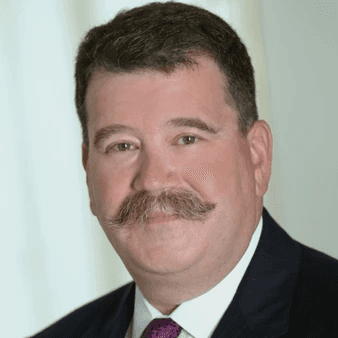
J.P. Natkin
Renaissance Capital, Troika Dialog, UralSib, Vanguard Petroleum, EuroSov Petroleum, Otkritie Securities, and ING Barings
Biography
J.P. Natkin is a co-founder of Macro-Advisory Ltd., where he currently serves as Chief Business Officer.
After studying in Moscow for a summer while in graduate school, J.P. moved to Russia in the summer of 1991, serving as the CIS Manager for London-based EuroSov Petroleum. For over three years, he managed the local operations for the first post-Soviet foreign investment in new oil field development for EuroSov and its parent firm Vanguard Petroleum, an Australian resource venture capital boutique. He later ran the resource practice for London-based consultancy Central Europe Trust, where he supported Western multinational companies with a range of M&A and market entry strategies in Russia, Ukraine, and Central Asia.
In 1997, J.P. returned home to the U.S. to help launch the New York operations for Renaissance Capital. He worked in the investment banking world for over 14 years, building successful brokerage franchises and working on many high-profile transactions including the IPO and secondary offerings for VimpleCom, the first Russian company to list on the New York Stock Exchange. He helped launch the U.S. broker dealers for other Russian banks including Troika Dialog, Uralsib, and Otkritie, as well as expanding the emerging market franchises for European banks ING Barings and Credit Agricole Cheuvreux.
In 2014, J.P. teamed up with renowned Russia market strategist Chris Weafer in launching Macro-Advisory Ltd. where he continues to support investors in Russia, Ukraine, Central Asia, and the Caucasus. He advises leading multinational companies on quantifying risk and identifying opportunities in the markets of the former Soviet states and continues to regularly travel to the region.
Summary of Main Topics Covered
J.P. Natkin’s interview traces his path from a Cold War–era fascination with Russia—shaped by his grandfather’s immigrant story and early Russian language study—to becoming an on-the-ground participant in the Soviet Union’s collapse and the emergence of Russia’s energy sector. After studying at Boston University and SAIS, Natkin entered Russia in 1991 through an unconventional opportunity with an Australian-backed venture, EuroSov Petroleum, focused on developing Siberian oil assets with Western financing and technology. He played a key role in navigating local political and business realities, including relationships with regional power brokers such as Yuri and Sergei Shafranik, and remained in Tyumen during the August 1991 coup—an act that helped secure trust and ultimately the deal. Natkin emphasizes that success in Russia depended less on formal qualifications than on language ability, cultural understanding, and adaptability, noting the critical distinction between being bilingual and truly bicultural.
Natkin’s experience highlights both the opportunities and volatility of early post-Soviet business, including the creation of the joint stock company Sinco, the development of the Yuzhnoi field with EBRD financing, and the gradual reassertion of Russian control over assets. After leaving Russia in 1994 due to burnout, he transitioned into investment banking and advisory roles with firms such as Renaissance Capital, Troika Dialog, and Uralsib, contributing to landmark transactions like the VimpelCom IPO. Reflecting on broader themes, Natkin argues that Russia rapidly developed indigenous managerial and commercial expertise by the late 1990s, reducing reliance on foreign professionals, and that Western misunderstandings often stem from a failure to grasp Russia’s cultural and historical context. He concludes by stressing the importance of rebuilding Russia-focused education and expertise in the United States, warning that the erosion of language and area studies capacity poses long-term risks for policy and business engagement.
Daniel Satinsky: Okay, so thank you for agreeing to sit for this interview. I’m going to ask you to begin the way I have with most everyone I’ve interviewed and tell me how did you get interested in the Soviet Union? What was it about that that pulled you in?
J.P. Natkin: Yeah, well, my standard answer is it was all my grandfather’s fault. My grandfather emigrated to the U.S. as a young kid with his mother, and actually, his father came over quite some time ahead. My grandfather barely knew him. He was an infant when his father came over. His father had raised horses and cattle in Russia and moved to Chicago, worked in the stockyards, saved money, got his papers, and eventually sent for my great-grandmother and my grandfather. He was about seven or eight years old when he came over. And it was just fascinating for me—
Daniel Satinsky: Where did they live in…?
J.P. Natkin: They lived in Chicago. So, he moved to Chicago. He worked in the stockyards. His father opened up a butcher shop. My grandfather worked in the unions for the Amalgamated Meat Cutters and Butcher Workers Union and eventually became a labor arbitrator. He left school when he was probably 11 or 12 to work, not to buy comic books and candy, but so that his younger siblings, who were all born in the U.S., could go to school. And he eventually went to University of Chicago at night, and he got his bachelor’s—he was in his 30s—and then eventually got his graduate work. And he worked for NLRB, and then eventually became a labor arbitrator and worked till the day he died, when he was almost 90 years old.
Daniel Satinsky: Wow, wow. Where were they from in Russia?
J.P. Natkin: So, they were from north of St. Pete, not in, but not far from Petrozavodsk, and there was family from St. Pete. There were other parts of the family that were more sort of affluent—not wealthy, but you know. But yeah, I mean, for me it was this mysterious place with this really cool alphabet, and I was the only grandson. My grandfather and I were super tight. And I decided early on I wanted to learn Russian.
And for me also, a child of the Cold War, this was before Ronald Reagan, but it was the evil empire, and I wanted to learn Russian, and wanted to go kick some Soviet ass, and saw this was a part of the world that was important, that my grandfather, but for the grace of god, you know, here I am thanks to him. I could have been, you know, he could have stayed, or his family could have stayed, and it would be a very different kind of existence. But he was a classic example of the American dream, a guy who came over here with a family with very little, and left school early, and eventually graduated from one of the top universities in the country, worked his butt off, and did very well for himself.
Daniel Satinsky: Yeah.
J.P. Natkin: And he never let me or my cousins or my sister forget that. He was a big advocate of education, but also an incredible believer and case study of the American dream. So, for me it was kind of a no-brainer. I knew early on I wanted to take Russian. And as a kid growing up in Connecticut, I knew I wanted to go to a school, a private school that had Russian, and that’s why I ended up going to the private school for high school I went to. Interesting enough, Victoria Nuland and I were at the same school. We were in classes together when we were 14, 15. Ended up going very different directions on the Russia scale. But it’s interesting because we both started off as sort of young Cold Warriors, and I remember her telling these emotional stories about sitting on her bubbie’s lap and hearing stories about the Cossacks raping and pillaging in the shtetls. But she had this deep-seated sort of antipathy towards Russia that went beyond the Soviet side but was more sort of cultural or whatever. But anyway, yeah, I mean—
Daniel Satinsky: Where was this high school?
J.P. Natkin: It was the Choate School. And interestingly enough, it’s also where Hedrick Smith went, who wrote “The Russians.” And a lot of people in my day, in the early ‘90s in Moscow, came out of the various prep schools that had Russian programs. I mean, you know Marcus Montenecourt. He went to Lawrenceville. There was a large contingent that went to Andover. What’s really sad is—I can’t comment on the other schools—but Choate abandoned Russian, and they actually had not only Russian language, they had a Russian studies center at the school, and they got rid of Russian about, I don’t know, 12, 15 years ago and picked up Arabic and Chinese.
And it’s not so much a commentary on Choate as a school, but we’ve seen this happen throughout academia where Russia studies programs and Russian language in secondary schools, colleges, universities have really kind of fallen off the cliff. And it’s something that I personally think is having very bad impact on our policy. There’s this huge gap of subject matter expertise. Because it ultimately starts very early.
Daniel Satinsky: Yeah. And so, you graduated in what year from high school?
J.P. Natkin: I graduated from high school in 1978. They for years had an annual trip, and they would go over to the Soviet Union, and a year or two before I got there, they had an incident where some kid thought it would be very funny. He got a postcard of Lenin—and again, this is mid 1970s. I don’t know the whole story, but I think his roommate was either Israeli or had strong connections to Israel, so he took the Lenin picture and a pen and he put an eye patch and tried to make him look like Moshe Dayan, and then he put all these comments on the front and mailed it to his buddy at Choate.
And I think within 48 hours there was a knock on the door at the hotel, and he was brought in for questioning. And that was it for the Russian trip for many years until after I was there. And I don’t know the details, if it was the Soviet side said forget it or if the school basically said, uh, you know what, that was a close call, we don’t want to risk anymore of these little prep schoolboys getting gobbled up by the KGB. But the bottom line is unfortunately, for me, I didn’t get to participate in that.
Daniel Satinsky: Yeah, so you didn’t get to go.
J.P. Natkin: Not until many years later.
Daniel Satinsky: So, where did you go from there with this interest?
J.P. Natkin: So, you know, I continued my study of Russian in college at Boston University. And at that point I started focusing more on the world of business. And there wasn’t a lot of opportunity to use Russian. And one thing kind of led to another, and even though I still had this passion for it, it kind of just sort of waned a bit.
And fast forward to 1986, I had an opportunity to go on a trip over to the Soviet Union that was organized by, of all things, the Columbus, Ohio art museum. And it was basically friends of my parents were trustees there, and they were going on the trip, and they knew I had an interest, and they asked if I’d be interested in going, and I’d always wanted to go, so I went. And it was January, February of ’86. It was—I’ll never forget, it was right after the Challenger disaster, and it was also not long after Reagan’s evil empire speech, or I don’t know if it was the evil empire or it was when he said, the hot mic and he made the comment, ladies and gentlemen, in five minutes we’ll commence bombing the Soviet Union. Which to this day I don’t think was an accident. I think that was also very intentional. But whatever.
So, it was a fascinating time getting there. And on one hand all the Russians I met were like, you know, so actually sincere and emphatic in their sympathies for what happened with the Challenger, and then in the same sentence would immediately shift and like why does your president want to kill us? Why does he want to start World War III?
And it was interesting because in America, in the American political context, especially a young person in their 20s, what he said, we kind of laughed about it. It was almost like a “Saturday Night Live” punchline. And at the same time people in the Soviet Union, even people I met who were black marketeers, or sort of Refusenik[^1] types or whatever, who were by no means KGB types or KGB plants—and believe me, there were plenty of those, and you could spot them a mile away—were so sincere in their concern.
And it really struck me that this was not a language divide, it wasn’t even an ideological divide, there was this huge cultural divide. And that was when I first started to understand that there’s a big difference between being bilingual and bicultural. And I think growing up with Russian relatives, you know, in my family we had an expression. My mother, one day somebody was being really dogmatic, and she was just getting really frustrated, and she said stop it, you’re being like my Russian relatives—stop being a Russian relative. And that became a term in my family for when somebody just became irrationally dogmatic, and it didn’t matter what you did, what you said, you could come up with all the empirical evidence and data, but they were not going to budge.
And I point that out because I think those experiences helped me out enormously in my time in Russia because it drove home that language is only half, if not less than half of the battle, and understanding things in a cultural and historical context is as important as being able to pick the right words.
So, that was a fascinating trip, and it really kind of reawakened this desire in me to do something with it professionally. So, a few years later I made the decision, I was thinking about business school and I decided no, I’m not going to go to business school and do a traditional MBA. I decided I wanted to go to SAIS. And I applied to SAIS and a bunch of the other IR foreign policy schools. I got into SAIS.
And meanwhile I had spent a lot of time in Berlin, where again, I—this all happened sort of simultaneous with the Russian thing. I guess again this goes back to when I was in 8th grade and in civics class we had to do a term paper, and I did this term paper on Berlin and the division in Germany. And I was interested in that because I again remember as a little kid going with my parents and seeing “Torn Curtain” with Paul Newman and Julie Andrews, the Hitchcock movie, and then around the same time seeing “Funeral in Berlin” with Michael Caine. And as a little kid, and, you know, little kids think about everything in a very logical and rational way, I’m like wait a minute, it’s one country, it’s one city, why would you get shot trying to go from one end to the other? That would be like if you lived in Boston and you’re trying to go from Back Bay to Cambridge, and if you do that you get shot and killed. I don’t get it.
So, I spent a lot of time in Berlin, and initially became fascinated with divided societies, the Germany’s, the Korea’s. And I was really kind of torn about maybe studying German, maybe studying Russian, and I felt like I really wanted to go to Berlin. And I started SAIS in the fall of ’89, after spending a good part of the previous summer in Berlin.
And one day I came home from class—we didn’t have cell phones or text messaging then—and there was like, I don’t know, 30 messages on my machine, and everybody is like, are you watching TV? Did you see what happened? And I’m like no, what happened? I’m like what the hell is going on? And one of my good friends called a bunch of times, and I’m about to, like, put on the TV, I’m trying to figure out what the heck’s going on.
And the phone rang, and it was one of those friends. He’s like, dude, have you seen the TV? And I’m like, no. And he’s like, put it on. I said what channel? He goes, it doesn’t matter. And I went, and it was, you know, this is November, I guess 9th, 8th, 9th, whatever, and he’s like what do you think? I said I think I got to hang up and I got to call Pan Am because I’ve got to go to Berlin. And I called all my professors, and I said you know me and what—and they’re like no, we get it, go, we’ll figure it out, whatever. Everybody was supportive except for my Russian teacher. Do you know Natasha Simes at SAIS?
Daniel Satinsky: No.
J.P. Natkin: She runs the Russian language.
Daniel Satinsky: The Simes part is familiar, but…
J.P. Natkin: She’s the ex-wife of Dmitri. I had both of them at SAIS. She was like no, you can’t go. And I’m like, well, guess what, I bought a ticket and I’ll see you in a week. And it was an incredible experience. But it became very clear to me at that point it was unsustainable, that there were dominoes and it wasn’t if, it was when. So, I made a decision that summer I wanted to go spend the summer in Moscow. I wanted to work on my Russian.
Again, Natasha Simes was livid that I didn’t stay in Washington to take her Russian program at SAIS. And I was like why would I take a Russian program in the classroom on Mass Ave when I can do it at MGU[^2] and spend the whole summer in Russia? I’m not asking you, I’m telling you. Natasha and I never got along well. But anyhow. So, I spent that summer on a program at MGU that was organized by ACTR, and it was a phenomenal experience. It was a weird experience.
Daniel Satinsky: And that was the first time you were in Russia?
J.P. Natkin: No. The first time was that trip in 1986.
Daniel Satinsky: Oh, I’m sorry, ’86, right. So, this was—well, then it was the Soviet Union and you—
J.P. Natkin: It was still Sovietsky Soyuz, but by this time it’s—
Daniel Satinsky: It was still late Soviet period when you were there.
J.P. Natkin: It was the summer of 1990. So, I’m all excited because here I am, they had programs at like Moscow Financial Institute, all the different institutes, but I wanted to go to MGU, because that was it, and I wanted to live in the main building. And I got there, and I was so excited. And then I realized that this wasn’t really MGU, it was they were using the MGU facilities. And it was really mediocre language classes, but more so I was on the floor that was all Americans, Canadians, and Australians. The floor below us was French, the floor above us was like Hungarians. You know, it was basically we were completely segregated.
And when we would go to the obshezhitiya[^3], you know, we’d go down to the cafeteria, and we’d sit down, and there were Russian kids, and we’d be like hey guys, we’re from America, talk to us. They looked at us like we said we had cholera and they just picked up their trays and left because… And it took me a while before I realized that these guys, besides joining Komsomol and everything else, getting there was a huge deal. This was not only a huge privilege and an honor, but it was something that a lot of people worked very hard for, and to risk it by hanging out with and talking to a bunch of Americans, they weren’t about to do that. And it became very clear who the plants were because they were the ones who were very friendly and solicitous, and came over, and then would very loudly say, yes, Soviet Union sucks, I hate communism, I want to make lots of money, can we start trading money? And it was just like, seriously? But my roommate—you may have even come across him—was at the time a student at Columbia SIPA, a guy named Blake Marshall, who later worked with Gene Lawson at…
Daniel Satinsky: Oh, yeah. AmCham. No, U.S.—
J.P. Natkin: Yeah, U.S.-Russia—
Daniel Satinsky: Business Council, right?
J.P. Natkin: And Blake’s a great guy.
Daniel Satinsky: Yeah, I knew him fairly well, actually, in the day, yeah.
J.P. Natkin: Yeah, Blake’s a great guy. We were roommates at MGU. And we kind of, after a while, stopped going to class and just started meeting people. And he was a big basketball player, so he got to know people playing basketball. And we joked, Blake and I joked that we were going to learn Russian with Vietnamese, Hungarian and Nigerian accents because those were the people we were meeting at the university.
And it was eventually through black market stuff, you know, I brought over the mother lode of Levi’s, condoms, tons—I don’t smoke—I had more…I had enough Marlboro Reds to kill a small size Soviet city. And that’s how we eventually started meeting people.
I also, I played rugby in college and in grad school, and for a couple clubs in the D.C. area, and I ended up that summer I met some of the guys from the British embassy through some of the expat circles, and I played rugby with them, and got to meet some of the Russians from one of the Russian clubs. And that was really a big breakthrough. That’s how I really finally got to meet people. But I also got to meet a lot of people in the expat community. One of my teammates in rugby was Chris Steele.
You know, it was an interesting time and an interesting crowd. And I loved the community in Moscow, and I basically said I’m coming back. And I remember like my last week there going to all these parties, and people were like, well, you know, stay in touch. And I’m like no, I’ll be back. When? Well, probably next summer. What are you going to be doing? I don’t know, but I’m going to be back. That was my decision. And that became my focus.
So, when I was job hunting, it was an interesting process, because at SAIS they had a lot of these very prestigious corporate recruiting training programs like Mobil and J.P. Morgan, and I went through all those. I actually got job offers from both of them. They were hyper competitive. And when I turned down the J.P. Morgan one a lot of my friends and classmates were really angry. They’re like, you know, if you weren’t really serious about that you shouldn’t have even gone that far because I would have had—I wanted that job, or whatever.
But I realized, and like I was talking to Credit Suisse First Boston. At that point it was before Jordan and Jennings launched the business in Russia. And they were like look, we really like you, Russia’s something on our target, we’re going to do it, don’t know when we’re going to do it, but would you be interested in being in London or Budapest or Prague? And I was like I want to go to Russia. And it all happened, it was again, you know, life works in weird ways.
I got a call from my mother, and she said—they had this friend, and he was much younger than my parents. He was younger than them, older than me. And I knew him, but he had like a year before gotten married to this Australian woman, and they were living in England, and he died in this tragic car accident. And they said listen, Peter’s wife, she’s really in bad shape, so she’s decided she’s going to travel around America, clear her head, take some time out. She’s going to be in Washington, D.C. We know you’re busy. Would you mind, it’ll be your good deed of the day, meet with her, take her out for coffee or lunch or something. So, I rolled my eyes and said okay, okay.
And I met with her. Super nice lady. And we’re talking about what I was doing. And I knew that she came from a family of, you know, her father was an incredibly successful, well-known entrepreneur and businessman in Australia. And we’re talking, and she’s like, you know, you really should talk to my father. He’s been working on some projects related to Russia, and I don’t know the details, they’re energy related, but he’s really frustrated because just dealing with them, and none of the people he has working for him seem to understand how to do things there, and you should talk to him. She’s like would you mind? And I’m like no, I’d appreciate it.
So, I started this weird thing with this guy where he would call me—and my friends and I joked about it because he would call me like every few days, and I wouldn’t even call it an interview. We had these conversations. Every time I talked to him, he was in a different country, in a different time zone, and every conversation was interrupted by a knock on the door and his room service being rolled in.
So, I was always kind of like is he having lunch, dinner, breakfast? And after the third or fourth call he said, listen, I got great people who work for me. He goes they’re finance guys; they’re geologists, they’re engineers. He said we’re working on this oil project, he goes, but they don’t understand Russia. He’s like I don’t know if I have a job for you. He goes; I may not. He goes, I don’t even know if this is going to go anywhere, he goes, but I’ll tell you what, can I commission you to do this analysis? And his whole premise was their view was they were looking at developing resources. And you’ve got to keep in mind this is…by now this is like—
Daniel Satinsky: Yeah, when is this?
J.P. Natkin: —December ’90, January, February ’91. This is probably early ’91 because I think I met her like around Thanksgiving or just before Christmas break in ’90. So, this is my second year at SAIS, and I’m going through all these interviews, and I had a couple offers, and I’m waiting for others. So, yeah, let’s say it’s first quarter ’91.
And he said look, this is my view, he said, I don’t know anything about the Soviet Union, I don’t know anything about these places. I’m just a guy who lives in Australia and knows how to make money off of resources, he said, but I do know this: he who sits on the resources controls the resources, and he who controls it ultimately is the guy you deal with, because he said if you deal with anyone else, ultimately you’re going to get screwed, he said. And we’re not Exxon, we’re not Mobil, we’re not ARCO, we’re not Amoco, so our whole approach is to go to the smaller, you know, to the guys on the ground. What do you think of that? And I said I absolutely agree that’s the way to go. I said things are changing, things are going to change even more and change faster.
So, he said I’ll tell you what, I’m going to commission you to do a report. He said it doesn’t have to be long; I don’t want a lot of citations. You can footnote it all you want. I’m not going to read them. I don’t give a crap. He’s like I just want to know why you think this is the best approach given the way things work in the Soviet Union and Russia, etc. So, I write this thing up. Oh, and he’s like and we’ll pay you for it. Send it to me, we’ll figure it out afterwards, but if that’s okay, don’t worry, we’ll compensate you for it.
And this whole thing, by the way, again, the way we’re doing this is I’m faxing these things to his office in Australia that’s faxing it to him to Papua New Guinea, to New Zealand, to Argentina. I mean, this guy is literally like living off of room service all over the planet. So, like a few days later I get a call from him and he’s like hey, listen, I just finished reading this, and I read it to my guys, and I passed it on to So-and-so—what you said is absolutely, he said I agree with it, he said, and I didn’t tell you everything, but that’s the approach we’re taking. He said I want to tell you more, but we’ll have to put an NDA in place, but in the meantime, I owe you something for this, but I’ll tell you what, what I want to hear from you is what could go wrong?
And I kind of laughed. I’m like what could go wrong? You know, you want me to tell you what could go right? It would be a lot shorter than what could go wrong. And he’s like, well, can you do a SWOT analysis, what are the scenarios of things that could go wrong, but also how these could ultimately be catalysts for change. And he’s like we’ve got Gorbachev, and he seems like he wants the right things and he’s going the right direction—what could change it, what are the biggest risks to him, and ultimately could that be really bad or potentially a positive catalyst?
So, I wrote this analysis, and I wish I still had it because it was basically a coup scenario of exactly what happened in August of ’91. And my analysis was it would go one of two ways: it would get really bad and the bad guys would secure power, or it could ultimately be a catalyst if all the ducks were in a row in the right way. I put a lower probability on that, but I said if the right person stepped up at the right time, it could be a positive catalyst that could actually speed up the process of giving the regions more control.
So, he called me up and he’s like okay, what I didn’t tell you is this: we have a meeting in ten days in London, and we’ve got all these guys coming over from Siberia, and they’re coming over from Tyumenneftegaz, and Nizhnevartovskneftegaz, and we’re actually talking about making this thing happen. And our plan is we want to create a private company with Russian assets, with British, Australian leadership and financing and management that we can list in London or on a Western exchange. And he said we’re working with Morgan Grenfell, we’re working with these lawyers.
He’s like I know we don’t have the NDA in place, but this is all happening—would you come over here? We’ll fly you to London, you’ll spend a week here, we’ll print you up business cards, you’ll be part of our team. Your job is going to be the guy who, at the table, when we’re negotiating stuff, keeps your mouth shut and your ears open. I want you to also get to know these Russian guys because the guy who says he’s the boss with the fancy business card, I know that guy’s not the boss. He goes; I want to know who’s the real boss. And he said and I mean the guy who actually is going to control what happens to the assets. He said, and I want you to be the guy like when we’re not in meetings can sit down with me and my team and help us understand who’s who and what’s what. And he goes, and when you get over here, we’ll talk about what I owe you for those two papers you did. And we’ll figure out a proper way to compensate you for your time.
Daniel Satinsky: Okay, so when was this meeting?
J.P. Natkin: So, this meeting was immediately after school got—or it was right after exams ended, and it was like two weeks before graduation.
Daniel Satinsky: Okay.
J.P. Natkin: So, this is in that, you know, I had just finished my last exam when we had talked, and the next day I get on a plane to London. And this whole thing is at the Ritz, so I’m staying at the Ritz. I’ve got room service, everything. You know, he’s like order whatever you want. And I’m hanging out with these Russians. And the long and short of it is like halfway through that week it became clear that we were on track to have a deal. And he said, listen, I want to talk to you. And I sat down with him and two of his guys and they’re like, here’s the deal: this is going to happen. Whether we have the final agreement this week or not, we’re definitely going to have to take the next step. He said we need somebody on the ground—how would you like to go to Moscow and be our guy on the ground, and be the point man in Russia on this project?
Daniel Satinsky: Wow.
J.P. Natkin: And he’s like I know we owe you for the other stuff, but here’s what I’ll offer you, and we’ll pay you X amount, we’ll provide housing, we’ll do this, we’ll do that. And it was like, okay, I’m on. I’m in. And it was funny because I—
Daniel Satinsky: He took a big risk taking someone as young as you, and even though you spoke the language and you had studied, you didn’t have any on the ground experience or experience in the industry at that point.
J.P. Natkin: I didn’t have a flipping clue. But let me tell you, this guy—his name was Alan Burns—he was an amazing man, and he was a guy who grew up, originally born in Scotland. The family emigrated to Australia. He grew up in and around construction sites, and he just, he built himself a massive fortune because he was a risk-taker with huge confidence and belief in his insights, and enough belief that when he failed—and he failed on many occasions—he didn’t get discouraged, he learned lessons from those experiences and then did better in the next one. And his batting average was—we all know in baseball if you’re batting over .350, you’re having a hell of a season. And his philosophy in business was the same. And he took chances on people, and he took a chance on me. But I’ll tell you something. That was the thing that was fascinating about Moscow in those days, looking back in hindsight. You know Joe Crowley? He worked with Marcus. He was at Sea-Land and then—
Daniel Satinsky: No, that’s a set of people I didn’t know.
J.P. Natkin: Oh, okay. Joe’s a great guy. I mean, he’s one of my better friends from my Moscow days. We joked about it. I mean, I look at all the guys that got there when I did—me, Marcus, Joe—and nothing against them or me. We were all way out of our league. We were in positions that we could never have had or should never have had under other circumstances. But the combination of the fact that A, we understood the language, and B, more importantly, we were willing to go there, and move there, and living in that kind of environment is how we got started.
And look, when I got back from that London trip and I told these friends of mine at SAIS not only am I not taking the job at J.P. Morgan, or at Mobil, or at Credit Suisse, but I’m moving to Moscow to work with some crazy guys from Perth and western Australia who think that they’re going to make the next British Petroleum on nothing, everybody was like you need to have your head checked, like are you insane? But my philosophy was I’m in my 20s, I have no debt. Worst case scenario this thing goes belly up and implodes, the worst that’s going to happen is I’m going to have a few good stories, a couple interesting experiences, and I’ll have a wealth of knowledge to learn from.
Daniel Satinsky: Absolutely, yeah.
J.P. Natkin: And when I looked at your questions, the first one you said “attracted by business opportunities, a chance to reform, participate in history, the adventure, the exotic,” it was yes, all of the above.
Daniel Satinsky: All the above, yeah.
J.P. Natkin: So, for me, I thought it was the easiest decision I ever had to make. So, by this time, this is in June of ’91, so right after the graduation I packed up my place in D.C., I sold my car, I flew over to London, spent time with the team in London, which was the operating hub for everything, and flew to Moscow, and moved into this apartment that… They had hired this local fixer who was just a complete, what we call a square rooter, working all the angles, who in due course I figured out was working too many angles, but got me started, and there was a place to live and everything. Eventually focused on doing things the proper way, getting accreditation, etc. But mostly focused on developing the relationship with the guys first in Tyumen, and once we really got the foundation agreements in place it was really more on the operating side. And from that point on I was back and forth to Nizhnevartovsk. And I had the great honor of being able to say I had apartments in both Moscow and Nizhnevartovsk.
And let me tell you, Nizhnevartovsk in late 1991, you would take a shower, and you’d be dirtier after your shower than you were before you got under the water.
Daniel Satinsky: I was going to ask you what it was like in Nizhnevartovsk at that time. Were there other foreigners there at the time?
J.P. Natkin: So, out in Siberia, Nizhnevartovsk there were, not a ton, but they were in pockets. There was a lot cycling in and out. And same in Tyumen. People were coming in and out and negotiating. But White Nights had been operating for a while north of there. And they had people. I mean, you’d land at the airport in Nizhnevartovsk, and you would see like five white Ford F350 dually pickups. [Laughs.] With the Soviet yellow foreign venture plates with like an Oklahoma license plate underneath. And the service companies were coming in. But it was a fascinating time. But what I didn’t tell you about is really the big turning point for us, though, was the coup in ’91.
Daniel Satinsky: Right.
J.P. Natkin: And so, the venture that we were involved in… So, the company I worked for was EuroSov Petroleum. And that was this company put together by the Australian guy I told you about, and his company was Vanguard Petroleum. And on the Russian side we were dealing with the Shafranik brothers, Yuri Shafranik and Sergei Shafranik. Are you familiar with them at all?
Daniel Satinsky: I remember the names, yeah.
J.P. Natkin: So, brothers, very close. And it’s interesting because when we started out and we had that first meeting in London, that was before the Shafraniks were involved, but there were other guys. And it became very clear right away that Sergei was the main guy. Sergei’s brother Yuri Shafranik, he was the chair of the Oblast Soviet in Tyumen. In other words, he was basically the governor. So, Sergei was really handling the local GR. We met with Yuri once or twice.
And the guy who was my boss when I first started was an American, a very knowledgeable oil and gas guy, had done a lot of oil and gas stuff, but he had never operated outside the English-speaking world. He’d done stuff mostly in North America, he did stuff in Australia, Papua New Guinea, and the work he did in Australia and the South Pacific, he got to know this guy Alan Burns, who hired me. So, he was running the project, and he was a very smart petroleum guy out of Denver but hadn’t spent a lot of time in exotic cultures, shall we say, let alone Russia, let alone the Soviet Union, and spoke zero Russian. I’ll put it to you this way: like the first time he and I went out to Siberia together up to Tyumen, this was the ‘90s, and drinking was a huge part of the relationship-building process. Really—you know, people called it relationship-building—it was relationship vetting. It was them vetting us.
Daniel Satinsky: Right.
J.P. Natkin: And at one point he’s like, well, I think they do this to weaken us so they can take advantage of us. I said no, they do it to weaken us so they can get to know us. That’s what they’re doing. They don’t want to see the façade. I said it’s actually important to get loaded with these guys so they see we’re here for all the right reasons. And that’s okay, you know, they’re going to trust you more for it. But I knew we were in trouble the first time we went out, the vodka bottle came in, and he insisted on getting a Fanta and mixing it with his vodka. And you have to understand these are Neftyanniki[^4] from Siberia. These are not…these aren’t even foreign economic relations guys in Moscow or KGB guys or whatever, these are a bunch of roughnecks, Siberian roughnecks.
Daniel Satinsky: Right. They probably had never seen someone take a Fanta and mix it with—and ruin vodka like that.
J.P. Natkin: You know, with that I didn’t want to say anything inappropriate, but they proceeded—and they knew he didn’t speak Russian—they proceeded hitting me with a lot of questions about his gender identity and sexual preferences. And, you know, at that point their attitude about him was they could never trust him because anybody who mixes vodka with orange Fanta is not trustworthy. Whereas I was taking one for the team, and, you know, I… My grandfather taught me a lot of valuable tricks, and the ability to drink tea from a glass, in a scalding hot glass with a cube of sugar between your teeth is one, and the other was how to drink vodka straight up warm. So, anyway.
Daniel Satinsky: And this guy was the London office, and you were the Moscow office?
J.P. Natkin: Yes.
Daniel Satinsky: And was this a joint venture? What was this?
J.P. Natkin: So, it was very interesting. The whole principle was rather than a joint venture, rather than doing work over—up until that point White Nights, everything else, they were all work over projects. The whole principle behind this was to take new fields that had not been developed, new fields that were off the grid, but had huge commercial potential, and develop them using Western money, but also Western standards and technology. Not doing White Nights where they even brought in like, as I said, they had pickup trucks. They had Ford pickup trucks; they had Parker rigs. Security Drills did all the drilling programs.
The idea was to use as much Russian as we could, but use Western technology and equipment when and where it made a competitive difference, but to actually create a joint stock company that was jointly owned by Russian and Western interests, and that this joint stock company that was developing new fields could ultimately be listed on a Western exchange.
Daniel Satinsky: Okay. So, it was a Russian joint stock company.
J.P. Natkin: Correct. Now this was, again, we signed—this is all still the Sovietsky Soyuz. This is all leading into the coup. So, this guy from—my American boss and I flew out to Tyumen, and we had a bunch of meetings scheduled that week. And I always had my little Sony shortwave radio with me, and at night and the early morning I would listen to VOA and BBC World Service to keep tabs on what’s going on. And I woke up that morning and I flipped it on, and it was like mid broadcast, and they’re talking about what became very clear was a coup. And after I like kind of jolted out of my…had my holy shit moment, I got dressed super-fast, didn’t even bother showering. I ran downstairs.
And we were staying at a guest house that was owned by Tyumen Geologia, Tyumen Geology, which was outside of the city, a beautiful spot, but again, it was very Soviet in that they had you isolated. And it was immediately clear something different was going on. The ladies in the dining room weren’t there, there wasn’t music playing, there were people you could hear in the back room in very hushed tones, there was no activity, there were no cars and drivers outside waiting.
So, I went back up and I banged on my boss’s door, and I told him what’s going on, and he instantly went into panic mode. He’s like a headless chicken running around throwing stuff, we gotta get outta here, we gotta get outta here. I’m like John, first of all, we’re probably in the safest place you can be within the Soviet Union, okay? Nothing bad is going to happen here, and they’re not going to let anything bad happen to us because they have bigger fish to fry, okay? So, whatever happens, we may be trapped here, I don’t know. We’ve got to learn more about what’s going on. But A, we’re physically safe, B, until we talk to the guys in charge and that—we were already scheduled to see Shafranik—there’s really nothing we can do, okay, so calm down and whatever.
Of course he’s downstairs. He’s like we gotta get outta here, we gotta get outta here, we gotta get outta here. And I learned very quickly on that trip that the power of the ability to speak the local language is really important not just for communicating with them, but when you’re with somebody who’s panicking and doesn’t know what they’re doing, but they don’t speak the language, you can filter out their nonsense.
Daniel Satinsky: Yeah, yeah.
J.P. Natkin: I finally was able to—the lady who kind of ran the place, who was clearly deeply concerned—and it made a lot of sense because this is a place that was designed to house guests, whether they were Soviet or foreign. I’m sure the KGB local folks were on top of them and would debrief them after everybody came through, or whether they were working directly for them or not, who knows, whatever. And I told my boss look, anything you say will be used against you in a court of law because this whole joint is wired. But she was very honest, like we just don’t know what’s happening. And she didn’t want to talk about it. I said, well, I need to call Shafranik’s office. And she’s like, well, I don’t think that will be possible. And I’m like no, it’s really important because we have this meeting.
And anyway, long story short, eventually two of the guys who had been to London pulled up in a car, and they were very shaken. And in hindsight, in later conversations we had over the next year, I learned more about these guys and their life stories. And in hindsight, these were people who grew up in the Stalin era, a lot of them, and they were older, and they grew up as a kid hearing, in the middle of the night, like 2:00, 3:00 in the morning, the sound of a car idling, and running out to the window and seeing a parent or Uncle Oleg or Aunt Ludmila being pushed into the back of a Chaika never to be seen again. So, these people were in a state of quiet, calm terror because they didn’t really know what was going to happen.
And one of these guys who I got to know really well, who was a wonderful, kind guy, who was a geologist, he kept like, I could see he was getting teary, and he’s like not just shaking my hand, but holding it, and he’s like should anything happen I just want you to know it’s been wonderful, in a short time you’ve become a friend, and I really am so happy that you’re here, and whatever happens, I hope everything is good for you and your family. I get emotional thinking about it now because it was one of the many moments in my time in Russia that underscored lessons my grandfather tried to teach me about how much we take for granted.
But anyway, long story short, that afternoon, or later that afternoon. Shafranik’s brother came and he said listen, you’ve got to give us some time, it’s a crazy time, we’re going to see my brother tomorrow, okay? He’s definitely going to meet you, he can’t today, I’m sure you can understand. And I’m like no, I get it, we’re good. And he stayed. We had dinner with him, we drank, you know, sto grams, dvesti, trista[^5], whatever. Hit the banya, got all kinds of banged up. My boss is mixing it with the Fanta, and Shafranik is just like koshmar[^6].
Daniel Satinsky: [Laughs.]
J.P. Natkin: Anyway, so the next day we go to Shafranik’s office, and it was really interesting, because you have to understand while we had the radio and we listened to BBC World Service and VOA, we still didn’t really have a window to what’s going on in the ground in Moscow, and I was trying to contact friends of mine there, but it was not possible. So, the next day we go and we see Shafranik, and this is at the Oblast Soviet, and when we got in there, he had two guys with him, one in uniform, one not, and he’s like these are Mr. So-an-so and Mr. So-and-so, they run the oblast division of the MVD[^7]. The guy who was in the suit I assume was actually KGB, but whatever.
He’s like look, I don’t know what’s going to happen, but I do think these people are going to regret this, I think that this is going to be a huge moment in Russian history—not Soviet—Russian history, I think we’re going to turn a corner, but there’s a lot that’s uncertain, he goes, but I’ll tell you what, if you’re not feeling comfortable, I get it, I understand. He’s like they’ve arranged it; we have a car; we can take you right to the airport. They will get you on the whatever, the 2:00 flight. Their contacts in Moscow will meet you at the flight, they’ll take you to the other side of Sheremetyevo, and you’ll get right on the BA flight to London. We’ve already made sure there’s seats for you on both those flights.
And my boss was like yes, we gotta go. And I basically said no, John, we’re staying. And he’s like you work for me; I’m ordering you. And I’m like John; we’ll discuss this later. Trust me. I said this is the safest place we could be right now.
Daniel Satinsky: Right.
J.P. Natkin: So, I told them, I said we came out here to do a deal with you and we’re going to stay here and do a deal with you. We’re not leaving you. We’re going to stay and see what happens. I found out quite some time later from both Shafraniks that two of the majors—well, one of the big European companies and one of the majors had teams out there also, and they all left. And honestly, that was a big part of why we ended up getting the deal, because we didn’t get on the plane and we did stay.
Daniel Satinsky: Right.
J.P. Natkin: So, the next day a car, a driver shows up and he’s like I’m here to take you to see Shafranik. And I’m like oh, Sergei? He goes no, Yuri. And we’re like, ooh. So, we go to his office, and he said I’m glad you guys could be here, I’m glad you guys stayed. We’re going to have a big ceremony and I want you there. And they were the first oblast, to my knowledge, that lowered the Soviet flag, and they had an MVD honor guard come out with the tricolor, and they raised the tricolor. And it was one of the first to do so, and he voiced his support for Yeltsin. And Yeltsin rewarded him. First, he became the first actual governor, and then subsequently Yeltsin brought him to Moscow, where he became Minister of Energy.
Daniel Satinsky: Okay, that’s how I remember the name, yeah.
J.P. Natkin: Yeah. And it’s actually really interesting because I, after years I reconnected with Yuri Shafranik in Moscow back in late 2021 and early 2022. I actually had lunch with him in February ’22, which is the last time I was there. And it was actually organized by Matt Rojansky, who got to know him quite well, and he was very involved with the Dartmouth conference. And after all those years we were talking about 30 years later, and he shared with me about how the others left, and that we stayed, and he said that…he was very honest. He said I didn’t really know what was going to happen. He said I knew that there was a possibility, well, the guys who were with me from KGB and MVD, they were on my side, he said, but they could easily have gotten a call from their bosses in Moscow who said hey, listen, you like your children? You want to see them tomorrow?
Daniel Satinsky: Yeah.
J.P. Natkin: And it was one of those things that it was wafer thin margins, but it worked out. But it was also really interesting hearing from him, his perceptions of my boss the Fanta guy, but also really about how it was really ordinary people, not just in Moscow, but in the regions, that made it very clear that they weren’t going to put up with this anymore, that Pandora’s box was open, and that was what opened up the floodgates and led to—
Daniel Satinsky: Yeah. You know, this story about staying is similar to what I heard from Stan Crampton, who was with U.S. West at the time. I don’t know if you know him, but he—
J.P. Natkin: I remember him. I haven’t seen him or heard that name in years.
Daniel Satinsky: Well, he’s passed away.
J.P. Natkin: Oh, okay. Hence why I haven’t seen him lately.
Daniel Satinsky: Yeah. But when we did the interview he talked about what it meant that he and his wife didn’t leave as an indicator of their commitment, that it made a huge difference for him in terms of how he was dealt with by the then Russian government, as opposed to the Soviet government that he had been dealing with, so it’s similar in that sense. That sense that you were with them in that period probably was a huge difference. So, you signed this agreement, you created the joint stock company. Did you drill in any—did you open up these new fields or not?
J.P. Natkin: Okay, so yes. So, here’s… When we first started out the assets that were in this company were mindboggling. This was the treasure trove, the mother lode. Many of these were core assets that ended up being part of Yukos or other companies. Now my bosses and our investors were over the moon. And this is one thing where I was warning them that in Russia, if something looks too good to be true, that’s because it’s really too good to be true, and that in all likelihood they were essentially being parked there for future reference, and that we would, without a question, have some good resources, good assets to play with and develop, but we were not going to get everything that was in there. That just…these guys were not stupid, they weren’t rubes, they weren’t bumpkins. They may not have worn very fancy suits, but I was always saying don’t let the gray plastic Romanian shoes fool you, these guys are shrewd and sharp, and when it comes to—
Daniel Satinsky: And they knew their business. They knew that.
J.P. Natkin:They knew their business. And it’s interesting, because the guys who worked for us, the geologists and the engineers all—and these are Scottish guys who had worked all over the world, and they all had the same comment, these guys could hold their own in west Texas or in the North Sea. These were real pros. They may not be polished, they may not understand the economics or how to finance a lot of these things, but they knew the asset base and they knew the value of what they were sitting on, and they were not going to do anything dumb or desperate.
And over time it became increasingly clear, and my bosses kind of began to realize that and accept it, because at the end of the day we were doing fine. We ended up focusing primarily on a field called the Yuzhny field, which was south of Nizhnevartovsk, so that was the first focal point. And to bring it online we actually got one of the first big financing projects in Russia from EBRD to construct a pipeline to tie it into the Transneft grid. And it was interesting, again, it shows the creativity and the ingenuity of the Russians at the time, getting approval to give a license to an entity that was owned by Westerners that wasn’t a work over was not going to be easy. Being the first to do anything in any market is not easy, especially Russia at that period. But they used the environmental card. So, here’s a fun fact. I first went out to the Samotlor Field—I don’t know if you’re familiar with Samotlor.
Daniel Satinsky: Yeah, yeah, that was the first giant major or whatever they—
J.P. Natkin: One of the biggest fields in the world. Their first big development I think back in the ‘70s. And the Samotlor Field, when I first went out there in ’91, they flared as much gas in the Samotlor Field in one year as Britgas produced, and that was when Britgas was producing a lot of gas. I’m sorry, they flared that much gas, not produced, they flared as much.
Daniel Satinsky: They flared.
J.P. Natkin: And in February, at midnight in February in Samotlor you could read a newspaper without a flashlight. When you’d come into Nizhnevartovsk you could see this glow, like the sky was on fire, and as you made the approach it was just unbelievable. It was the amount that they were flaring.
And it goes back to the Soviet times. It was the bureaucracy. There was the Ministry of Oil and then there was the Ministry of Gas, and then there was the Ministry of Geology. So, the Ministry of Geology would find the oil, they’d develop the well, they’d get it to the point where it could be extracted, then they would cap it and leave it, and then it would shift over to either the Ministry of Oil or Ministry of Gas. Now, if it was primarily and oil producing well they just flared the gas. If it was primarily a gas property the liquids, they literally just dumped it on the ground. And that was the other thing, like up at Samotlor and some of these places, talk about, you know, you think Love Canal is bad. I mean, these things were total Superfund sites.
So, the angle was we were getting a Western company, a Canadian contractor, with North American fabricated, and most importantly, coated pipe. The pipes that the Russians were using were just metal. They didn’t have any coatings on the inside, so pipeline had a five, six-year life span versus 15 or 20 years. And the gas was going to be separated on site. We were bringing in experts out of Scotland to bring in separating equipment, and they were going to build twin pipelines, and the gas would be collected and sold, some used on site for power, and the rest would be sold into the Transneft and to the Gazprom grid, and the oil would go right into the Transneft grid.
So, it was really the environmental card that enabled us to get this thing off the ground. And it was how they were able to keep it out of other Russians’ hands. Now, the other part of how they were able to keep it out of other Russians’ hands is that that’s where this massive portfolio of properties were bit by bit this got given here, that got given there, that got taken here, that got taken there, and over time the asset base shrank enormously.
Daniel Satinsky: And the “they” that was there was a board of this company, this Russian joint venture, and it wasn’t controlled by you guys, it was controlled by the Russian management or the Russian owners who did this parceling.
J.P. Natkin: In theory the company, the joint stock company, because it wasn’t a JV, it was effectively 50-50, but honestly, they really had the control over it and its destiny. Which is frankly what the guy who originally hired me, who was—he didn’t own the company. He was one of the investors, but he wasn’t the chairman or whatever. But our chairman was a British guy named Kevin Burke. Very smart guy. Not a Russia specialist, but he had done work all over the world and he understood how these guys operated.
And there was a realization that ultimately, he who sits on it really controls it, and everything was always a negotiation, but that ultimately, they were going to do whatever they ultimately wanted to do. We could fight, but… You’ve got to remember in the 1990s, as soon as you had to lawyer up, you lost. And that was one of the things I used to tell people all the time. If you have to…if you think you have to go to the courts to resolve a commercial dispute, you already lost. Now, things started changing eventually. And the thing is in Russia it got to a point where actually you could have a fair fight in the courts, even against a very powerful Russian interest. But at that point in time, you know, it’s…
The thing people have to remember is it was interesting for me because at the time I thought, looking at countries like Poland, where they—Poland took the complete opposite approach to privatization than Russia. Poland was very slow in privatization, but they created the institutions and the ecosystem to support and sustain a market economy and to resolve commercial disputes, etc. The thing also is Poland had a leg up because they had a commercial culture up until World War II.
Daniel Satinsky: Right.
J.P. Natkin: And even then, under socialism it was very light, socialism light. And then they did privatization. Russia, because of the situation, and the circumstances, and the political issues, they had to really aggressively privatize things quickly. And people forget there was a legitimate fear that Zyuganov and the communists would come back, so they had to get everything out in public hands as fast as they could, which created the oligarchs, and created chaos. But they didn’t create those institutions or culture for quite a while. It took a while to put that in place. So, when you got involved, unless you were nuts or really foolish, you kind of had to understand the rules of engagement and that there were things you could fight and then there were things where it wasn’t worth it.
Daniel Satinsky: Yeah, so how did you, just out of curiosity, how did you learn that? I mean, you’re a young person, right? Is it because of your family background, and you just, it was your intuition or how did you learn how to operate and made you different than your boss?
J.P. Natkin: You know, I think a lot of it goes back to learning and understanding the difference between the culture—you know, like that first trip to the Soviet Union in ’86 and understanding it’s way beyond language. A friend of mine, who went into recovery and gave up drugs and alcohol a long, long time ago, I’ll never forget he was going through the whole 12 step thing, and I may be paraphrasing it incorrectly, but the expression recovery is the first step towards—I’m sorry—"acceptance is the first step towards recovery.”
Daniel Satinsky: Okay.
J.P. Natkin: And I use that all the time, almost every day in my business, because looking at what we do with companies that we work with, and with our clients, before you can fix things you have to really kind of accept the reality, whether it’s the reality of what you’re doing wrong, the reality of the limitations you have, and the control you have and don’t have, the environment, all these things. And I think that there was a certain understanding that… And I don’t mean to be passively accepting of stuff that exists around you. And trust me, I got there, I was a young neocon, campus Republican, grandson of a Russian immigrant who believed in the American way, democracy, and the market system, and that everything communist and socialist was just patently evil, and I was there to change things, goddamn it, if it killed me.
Daniel Satinsky: Yeah.
J.P. Natkin: But I also understood that there were some things that transcend systemic or other limitations that are ultimately cultural. I mean, a lot of the things that a lot of people labeled as being Soviet tendencies were really more just cultural Russian tendencies that were just as messed up in the Czarist era going back hundreds of years. And a lot of the things people associate with Marxism-Leninism you could argue are more Russian.
Daniel Satinsky: Yeah. Well, so did you—because you had the language, right, did you learn some of this because you had Russian friends and you were more integrated into a non-Western environment so you could see it and sort of absorb it?
J.P. Natkin: I think it was a mixture of things. I had a series—I was single at the time—I had a bunch of Russian girlfriends. My first serious Russian girlfriend, she was the daughter of a Polkovnik[^8]. Her father was a big deal in the army, and she grew up mostly in East Germany, and she didn’t speak any English. And first of all, it was a great relationship in terms of helping my Russian, but also dealing with her, I mean, she was an incredible pain in the ass. She was really complicated. And I used to joke that dealing with a Russian girlfriend is sometimes like trying to defuse an IED. If anybody says American women are difficult, they clearly haven’t dated Russian women. And it gave me a lot, I think, of field training to the Russian mindset, obstacles, cultural and otherwise.
I think, like I said, it goes back to acceptance is the first step towards recovery. And it was really a matter of like this is messed up, it makes no sense, but it is what it is, it’s real. And that doesn’t mean I roll over and just throw my hands up and be passive, but I need to adapt, improvise and overcome, as the Marine Corps says.
And that’s something else. I’ve always lived by the Marine Corps creed: adapt, improvise, overcome. And it’s one of the things, you know, if one of my three kids was sitting here you’d see them rolling their eyes because they’ve heard that like umpteen times every day, and it’s something I stress to them in life, if I teach you anything you need to learn to adapt, improvise, overcome, and if you can do that in life, whether it’s in a professional, or personal, or relationship setting, or whatever, you’re going to be okay. You may not win every battle, but you’ll have a better chance of survival.
Daniel Satinsky: Right.
J.P. Natkin: So, I think in a sense it was that adaptability that helped me out a lot. And I was lucky because after the orange Fanta guy, after that trip, that was it. They basically said you’re a good guy, we’ll work together on other projects, but you’re just not suited for this, this isn’t, you know.
Daniel Satinsky: Who said that? His bosses?
J.P. Natkin: Well, he went back and told them that they should fire me because I disobeyed his direct orders. And they basically said, you know what, we’re firing you because what he did was bold, and arguably insubordinate, but it was the best thing for the company, and you’re a good guy, and we’ll probably work with you on other things in the future, but you’re not suited for this project.
Look, these guys who were behind this, none of them knew Russia, but they all had been involved in other parts of the world, ranging from China, to Thailand, to Papua New Guinea, to South America. So, again, acceptance is that first step. They understood what they didn’t understand.
Daniel Satinsky: Right.
J.P. Natkin: And I think that they came out of that with a significant amount of confidence in me in that they knew I wasn’t going to tell them how to prioritize which reservoir base or what the production capacity could be, and definitely not coming up with the best financing schemes, because I was useless in all that. But I understood how to get stuff done. I understood how to scan the horizon and determine what were risks and what were opportunities.
And in our business now we talk with our clients about there’s real risk and then there’s CNN risk, and our job is to help our clients to not home in on the CNN risk. And no offense to CNN. We could easily call it FOX risk, MSNBC risk, Al-Jazeera risk, whatever. But you know what I mean. It’s to focus on what are the real issues. And that’s the challenge, and that’s what we do every day at Macro-Advisory. We know our environment and we help our clients identify challenges and risks ahead on the horizon and be better prepared to deal with the real risks, and not get distracted by the noise.
Daniel Satinsky: So, let’s go back to this oil joint stock company and how did it end up? What’s the bottom line on this, and how did you then move on from it?
J.P. Natkin: Well, after just over three years—and these were probably the three most difficult years in Russia, not counting the Second World War. Not to imply what I went through was like the siege of Leningrad, not even close. But short of that, probably three of the most difficult years to be in that country. I was at the point where I was grinding my teeth, I was just…I got really burned out. And that was one of the challenges in those days in Russia. It was very easy to get burned out. And I became increasingly cynical. I found myself being like some of the people I’d meet at the embassy who would say really rude and obnoxious things about Russians. I realized I needed to get out of Dodge. And I had an incredibly exciting, challenging, rewarding period. And there were other things going on. I just needed a break. I needed to get out.
So, where we were on the project—and I had earned equity and some other stuff, so I basically, we worked out a deal where I would transition out, and I left. And the irony is when I left in July of 1994, I’ll never forget being on that—first of all, the night before I left my friends in Moscow organized a going away party at the Budapest, at the Hotel Budapest. And I don’t know if you remember, like in the early days in Russia, in the expat community it was all a succession of going away parties or welcome back parties. And I was one of the drunkest I’ve ever been where I still remember my actions. And there was a stage, and there was a band, and there was a microphone, and somebody’s doing a toast. And I got up there and I was like, F you guys, I’m leaving, I’m never coming back again, have a nice life, bye. Mic drop. And everybody’s laughing.
And the next day, with that horrible hangover, I’ll never forget being on that flight. It was the Delta flight to Frankfort with all the Polish flight attendants, and I’m so hungover. And as we’re taking off, and hearing that rrrr, the landing gear coming up into the fuselage, I just let out this breath, and it was one of the happiest, most relaxed moments in my life. And I’ll tell you why. Because I didn’t think, I knew I was never going back again. Of course, fast forward, I was back not long after, and up until the war started I’ve been back and forth on a—I was back and forth on a very regular basis. And I was talking with—
Daniel Satinsky: Was that the last time you lived there, though?
J.P. Natkin: It’s the last time I lived there, but ever since then, I mean, before the war started I was in Moscow at least every other month. And when I left there my wife, we actually—it’s a long story—we actually met at SAIS in grad school, and we weren’t dating, but she ended up in Russia with the IFC. And we were good friends for years. It was kind of a “When Harry Meets Sally” kind of relationship. And we started dating really in my last month or so in Moscow, and she was still in Russia for another six months after I left. So, I left, and then I came back that next November, and I spent almost a month in Moscow hanging out with her. And of course I’m running into all my friends at various bars and they’re like, you swore you were never coming back.And I’m like I know, [words ago], I’ll eat it, yeah.
Daniel Satinsky: They came to haunt you. So, those three years were pretty formative. They probably felt like they were ten at least, right?
J.P. Natkin: They probably felt like ten, and they probably took 20 off my life span, but yeah, no, it was… I mean, you know, I was there for two coups, and an incredible period of transition, big ups, big downs. One of the experiences and one of the quotes I always use—I mentioned like when I first got there how White Nights was out there, and there was a guy, I can’t remember his name, who was one of the senior operations guys out on the site at White Nights. And I was trying to meet up with this guy. I just wanted to pick his brain. And it became very obvious that he really had about as much interest in meeting me as he did in catching a bad cold, but I was very persistent, and he finally relented. He’s like, well, if you’re going to be up here next week, I’m around, but, you know, I’m busy, whatever. I’m not good at reading the room, so I went out and…
And this guy was from Oklahoma, a very smart guy, very experienced guy. And I’m there talking to him, and in hindsight he’s like thinking why am I wasting time talking to this kid who’s from D.C.? What the hell does he want from me? And he’s got a coffee can, and I’m like so what’s it like? You know, tell me, what do I need to know about running and developing an energy project here in Russia? And he kind of squints, takes the can—ting!—you know, a big stream of dip into this empty coffee can. He goes, “Son, it ain’t dull and we pray for boredom.”
Daniel Satinsky: [Laughs.]
J.P. Natkin: And if I ever write a book, that’s going to be the title. And that really summed up the whole experience there. The other quote that I love is we were working with Allen & Overy, the law firm, and one of the partners at Allen & Overy was originally Russian, and when we had what was really ultimately the final big negotiation where we signed the real deal that became this company, we had all these people coming in from London, and I was there at the airport meeting them, at Sheremetyevo. And later that night we flew out on a charter to Siberia, but this Russian partner from Allen & Overy turned to all my colleagues, including our chairman, and he goes, “Gentlemen, prepare for the difficulties.” That’s another quote from that period I love.And we kept saying that we were going to make up team t-shirts with the company logo on the front and then on the back in quotes, “Prepare for the difficulties.”
Daniel Satinsky: Prepare for the difficulties. So, what happened to the company?
J.P. Natkin: So, the company, after I left, went through a lot of gymnastics and changes. Are you familiar with Sibir Energy, which was run by a guy named Henry Cameron?
Daniel Satinsky: Vaguely, vaguely. It’s sort of back there somewhere, yeah.
J.P. Natkin: Ultimately, they became the operators of that field we brought online and then another one of the fields. But over time it all got picked apart. Some of the original stakeholders still had a stake in what became Sibir Energy. The original joint stock company we created was called Sinco, Siberian Oil Co., not Sibneft, but it was Sinco. But it really got picked apart, and that field and another one were bundled into what became Sibir Energy.
Daniel Satinsky: Okay.
J.P. Natkin: And some of the guys I worked with out of London and a couple of the people in Moscow stayed with them. And I kind of lost touch. I mean, I basically cashed out after I left, and while I stayed in touch with a number of the people I worked with, it was, you know, I just kind of moved on. And it’s interesting because I left, I had a lot of really attractive offers to go back. The CPC team in Houston—again, this is like ’95, I think—they were really aggressively pursuing me, and I was like yeah, I’ll come to Houston. If I go back to Moscow I’m going to die. I just can’t do it. I just can’t do it. I mean, I’m happy to go back and forth, but…
You know, it was interesting because I moved to London and I was working in consulting and advisory, and again, it was back and forth. We did a lot of work with ARCO on the Lukoil relationship, among other things, and had the opportunity to go to ARCO, to Phillips, and a bunch of other companies that were clients that were active in the region.
And then out of left field Stephen Jennings reached out to me, because we were clients of Credit Suisse First Boston, and as an originally Australian company, a bunch of the Australians I worked with knew Stephen Jennings back from the Australia, New Zealand days before he moved to London, and so we had a close working relationship, and he reached out to me and said hey, we’re setting up this new bank—before they even had the name Renaissance—do you want to come join us?
And I knew a lot of the guys, and I was like I don’t want to move back to Moscow. And he’s like no, well, you can move to New York or London and help us launch the business. And I said to him, I said, Stephen, look, I mean, there’s a million brokers out there, like I don’t know anything about that business. He’s like, look, I can teach a Rhesus monkey how to be a broker and pass the Series 7 exam in a weekend. He goes; I can’t teach any of these guys what makes the Russian energy business tick. He goes, you’ve lived in Siberia, you’ve gotten drunk and done banyas with half of these guys. He’s like you know the story inside and out; I can’t teach that.
And it’s kind of funny because for years I said I’d live anywhere in the world but New York, and I had these job offers with clients in the energy sector, and the day he made me this offer to move to New York was the day my wife and I found out she was pregnant with our first. She grew up in New Jersey. Her mom and sister were living there at the time. And it was one of those things, like if I had gotten that offer months earlier or months later, probably would have stayed in the industry. But the idea of being in New York, working market hours, being a parent and being around, and having that support system for her.
I mean, Phillips Petroleum was a really exciting opportunity, new business development, but I would have been on the road 60 plus percent of the time, and she would have been barefoot and pregnant, or with little kids in a dry town in a dry county 45 minutes from the nearest wine store in Tulsa. Not that it’s all about wine, but for a girl from New Jersey who lived in Asia, and Russia, and all over the world, that wasn’t exactly an ideal. So, I ended up working at RenCap [Renaissance Capital], and that’s how I got into the investment banking world.
Daniel Satinsky: Ah, okay. And so, then you made your career, for a period of time, in—
J.P. Natkin: Yeah, still dealing with Russia, Eurasia. I went to RenCap and helped launch the New York office. We had a lot of fun. Worked on the VimpelCom IPO, and a lot of exciting things. And again, I learned—
Daniel Satinsky: VimpelCom was the first IPO for a Russian company?
J.P. Natkin: On the New York Stock Exchange, the first. The first New York IPO.
Daniel Satinsky: A number of people reference that as like a seminal moment.
J.P. Natkin: It was pretty amazing. And I’ve got to tell you that deal, that IPO was so exciting. The road show was like nothing I’ve ever experienced. Going back and forth for two and a half weeks hopscotching North America on a Gulfstream where we would literally like do three cities in a day. I didn’t realize the value of a corporate jet until we did that deal. We would literally like land in Chicago, have a breakfast, have three meetings, get on the plane, fly to Minneapolis for lunch, get on the plane, fly to Des Moines for a dinner, get on the plane, be in New Jersey the next morning. I mean, it was… But also getting to know and deal with that management team was really exciting. Great people. A great company. World class company that just happened to be in Russia with significant Russian ownership and significant Russian leadership.
And I think it was really important because it showed the market that Russia is not what McCain called a giant gas station. That there’s a lot more to it, and a lot of incredible talent and skill there, too.
Daniel Satinsky: Yeah. And was that deal kind of what made Renaissance Capital?
J.P. Natkin: No. I think it was one of the many. I mean, what made Renaissance Capital? I think what made Renaissance Capital was what made First Boston when those guys ran First Boston, and that’s that they were local and they were able to source information, liquidity, assets in ways that nobody else could. And it was a very important learning experience for me because looking at Macro-Advisory, I mean, unlike any of our competitors, we cover the region from the region. I’m the outlier spending most of my time in D.C. And I’ve got two guys who support me in Washington doing U.S. sanctions and policy stuff. But [Macro-Advisory Chief Executive] Chris Weafer and all of our analysts and consultants, everybody on the collection, analysis, execution and advisory side, they’re based in the region. They’re based in Russia, Ukraine, Kazakhstan, Uzbekistan, Azerbaijan, etc.
And I think looking back at RenCap being local, again, a hybrid. It was Western leadership, and Western structure, and Western standards, but being local and having access into the local market, and local information, and local analysis really was the big differentiating factor. I mean, we would—I mean, looking back at… Years later, when I was at places like ING Barings and Credit Agricole, I stopped telling stories to colleagues of mine about the kind of spreads and the kind of profitability we had on trades. And I stopped because they didn’t believe me. They thought I was just bullshitting them. No, I’m serious.
I mean, we would take a one-million-dollar order in some illiquid aviation stock and we would make $500,000 on that trade, at least on the spread. I mean, we maybe even made more in terms of other ends of it that I didn’t even see. And the client was thrilled because they were getting it for substantially less than any other broker because we were doing it locally. So, what was the real profit engine in that firm, I mean, it was a lot of things. The trading was profitable; the deals were incredibly profitable. Things like VimpelCom, having an IPO that high profile and managing it with DLJ and Merrill Lynch was a huge, huge victory. And then there were other deals, too, so it was an interesting experience.
And I was also very fortunate. I had some good timing. I had good timing that was intentional when I moved to Russia. I had very good timing that was fortuitous when I left RenCap. ING Barings reached out to me. The person who was running their EMEA desk in New York left and they were in a tough spot because they had already had turnover and they needed someone right away. And they made me the proverbial offer I couldn’t refuse, which came with not just Russia, but all of Central Europe, Egypt, Israel. Greece and Portugal which were still emerging markets then.
And yeah, so I left RenCap because I had this amazing offer in more markets, and Stephen [Jennings], who I was good friends with, was very angry with me for a long time. But it was also I left in July of 1998, and I dodged a bullet when the crisis hit. And RenCap and everybody else that was in the market got really slammed. I mean, RenCap, they’re smart guys. They ended up, you know, they clawed their way back and they were profitable again. They got whacked a few years later, they clawed their way back. They were some of the smartest people I’ve ever met, and I enjoyed my time with them. But that was a case of just really fortuitous… I’d love to say, like when I wrote those things for my boss, the Australian guy, that it was based on analysis, but it was really just circumstances and just dumb luck.
Daniel Satinsky: Right. And so, you were competing with Troika at that time, Troika Dialog.
J.P. Natkin: Yeah. And then actually I went to Troika. So, I went to ING Barings for a couple years, and then Troika made the decision to get into the U.S. market. So, I became like the go-to guy to launch businesses in the U.S. So, after RenCap, and I was part of the team that launched that, I went to Troika, launched their U.S. office. I launched the U.S. office for what was then NikOil, became Uralsib, and then I launched the New York business, the U.S. business and the U.K. business for NikOil Uralsib and then for Otkritie. But yeah, Troika. Bernie [Sucher] hired me in early 2000. And at the [recent GWU] event it was nice to catch up with him.
And I’m very open with Bernie. I’m still a little mad at him because he hired me and then the day I arrived in Moscow, my first day, he tells me, oh, by the way, I haven’t announced it yet, but you should know I’m quitting my role—I’m going to stay with Troika, but I’m no longer going to be running the business, but I hired this really great guy to replace me named Jacques, this French guy. And I’m like Bernie, maybe we should have had this discussion before I came. But, you know, whatever. I still like Bernie. But that’s where Chris Weafer and I got to know each other. We worked together at Troika.
And then in 2001 was when Uralsib NikOil decided to make the big push. And they actually reached out to three of us: myself, a woman named Sylvie Armand-Delille, who ran the European business. And she and I worked really closely together at Troika. She’s a great person. She was honestly one of the best brokers I’ve ever worked with—super smart French lady, awesome person. And Chris. And they were recruiting the three of us as a team.
Chris was really sort of sick of running a research department. He just wanted to be the strategist. And Uralsib NikOil basically said well, you can do that, but we need somebody to head up research, so come on board, you can do that, you can build up the research team and hire your replacement and then become chief strategist exclusively. And he didn’t want to do that, so he, at the last minute, decide to stay at Troika. He later came and joined us as chief strategist.
Daniel Satinsky: And so, I want to make sure I understand. That was…I want to say I read Uralsib, but you mean it was…I’m blanking now, but the nickel—
J.P. Natkin: NikOil. When we were recruited, when I first joined, it was still NikOil, and they had acquired Uralsib, which was a regional bank based out of Ufa, and they rebranded the whole bank as Uralsib.
Daniel Satinsky: Oh, okay. So, what is NikOil then?
J.P. Natkin: So, NikOil, interestingly enough, is a company that was a bank that was started by Nikolai Tsvetkov, who is one of the founders of Lukoil. Tsvetkov, I believe he was an SU-27 pilot. He was in the Soviet military. Incredibly smart guy, a multibillionaire. And he and Leonid Fedun and Alekperov were the founders of Lukoil. And Tsvetkov was really more the finance guy. He’s the guy who Langepas, Uray, Kogalym and kind of restructured this unified and consolidated group. Fedun was really more the technical production guy, and Alekperov was kind of the big boss.
And what started out as sort of the pocket bank to Lukoil became, at one point, the largest private non-government owned bank in Russia. And when I was there, they fancied themselves as the Citibank of Russia, and they were—retail, commercial, investment banking, brokerage, asset management. It was a fully integrated bank that, outside of Sberbank, where, you know, there’s a Sberbank at every post office in Russia, outside of Sberbank had the biggest retain branch network in Russia. Bigger than Alfa.
So, it was…I was there seven years, seven and a half years. It was a great company, a great job. We had terrific people. It was really one of the better managed financial services groups I’ve worked for. And they were big believers in the research product and the value of a brokerage business as a critical part of supporting all the other parts of their business.
But again, it was, like all the other situations, it was not a…it wasn’t RenCap, which was a Western bank that happened to be domiciled in Russia. Or Troika, which, again, yes, Ruben Vardanyan is not an American, but let me tell you something, Troika was an extremely Western organization, even though the majority of the people were Russian and it was based in Russia. NikOil and Uralsib were very Russian organizations. It had its troubles in later years, but when I was there it was a very well-run company and a very entrepreneurial one.
Daniel Satinsky: Right. And so, they somehow absorbed a lot of Western business practices. They hired foreigners or they sent people abroad to study, or probably some combination of all those things.
J.P. Natkin: It was a mixture. I mean, a lot of the Russians there, for example, when I was there they hired a new head of trading who was a Russian, but he worked for UBS for, I don’t know, seven, eight years, in Moscow, but also in Europe, and spent time in America, so he understood how the business was done. My boss for much of my tenure there was a Russian who later ran Alfa, Alfa Capital, ran the asset portfolio for Russian Railways, was one of the most commercial people I’ve ever met. Yeah, he’s Russian, but a lot of family in the U.S., spent a lot of time in America over the years. And I mentioned before like about how acceptance is the first step. He’s a perfect example, a guy who really was very pragmatic and didn’t have preconceived notions of what the best way to do things are. He was a total macro manager.
One interesting thing was—so I was originally hired by—they brought in a guy who, an Irishman who came from Goldman Sachs and worked at UBS, was a very seasoned investment banker, worked in corporate finance focusing on energy for years to build up this business and westernize it. And he didn’t really last that long. He was a great guy. It was really more he had a big family, a lot of kids, and his family just wasn’t happy making the transition over to Russia, so he left.
And they brought in this other guy who had been working in another group in the bank, and I was very skeptical at first because he didn’t have Western credentials, and I thought oh god, now we’re really screwed. And fast forward about a year, year and a half later, and I was complaining to my wife because this guy, who was my boss, was not…we didn’t really communicate a lot.
And she’s like okay, let me get this straight: are you happy with the way he’s paying you? Yes. What about your bonuses? I actually am very happy. He paid me more than I expected. And everything you need and want you’ve gotten? Yes. And you’re complaining that he isn’t calling you every day or—she’s like you realize I’ve had to sit and listen to you for the last number of years bitching and moaning about all these people you work for who micromanage you every day, and now you have a guy who leaves you alone and you’re complaining that he isn’t talking to you. And I’m like…point taken.
And I think that was a big part of the success of our business, was—this guy’s name is Igor Kolomeyskiy. I’m still in touch with him. He lives in Dubai now. Wonderful person. Honestly, one of the smartest people I’ve ever worked for, and I’ve worked for some really smart people. But was just an incredibly smart and effective manager.
And you know what? He knew what he didn’t know. Again, the acceptance part. He understood that he hadn’t worked in aspects of this business for years. But once people under him earned his trust and respect, he let them…he just, you know, he trusted them, and gave them what resources they asked for if he felt it was reasonable and made sense. And very just naturally commercial.
Daniel Satinsky: One of the sort of theories about, when I was writing the book and talking to people, was that by…that Russians absorbed this commercial culture in the period of the ‘90s, but that by 1998 they began realizing they didn’t always need foreigners anymore, that there was enough expertise developed to use Russians for managers at that point. Would you agree with that?
J.P. Natkin: I’m sorry, could you…sorry. I’ve got this client chasing me. I’m just reiterating I’m… Could you repeat that?
Daniel Satinsky: Yeah, okay. So, part of my conclusion or whatever, thesis, summary from many of the interviews and what I looked at for the book was that Russians were very anxious to learn Western skills, the opening to the West was to learn the commercial skills and the technical skills without ever intending to sort of give the country up to Westerners, which is not how Westerners actually saw it. But that by 1998, and the crisis in 1998, Russians had absorbed or had gotten almost to the point where they needed foreigners less.
J.P. Natkin: Yeah.
Daniel Satinsky: That that was a critical sort of turning period of, you know, they graduated enough, with enough skill level that they didn’t need then to pay exorbitant salaries to foreigners and all the benefits and everything else that went with it to get that expertise. Is that…would you agree with that?
J.P. Natkin: Absolutely. Absolutely. In fact, it was an interesting shift because for a long time it was a real challenge to recruit good people. Then it became much easier, and there was all this talent. And then it had the opposite challenge. So, like, for example, when I was in the U.S. it became very difficult to hire all these Russians who had gone to Harvard Business School, or Columbia Business School, or NYU and were in the U.S. because they were going back to Moscow where they were being paid more. They were paying 15% or 13% flat income tax. It became very difficult.
And there became this period of cycling out the expats. I mean, you know, as I told you before—and again, guys like me, Marcus, I mean, you look at the list of the people that were at that conference the other day, most of us were profoundly unqualified for the jobs we had, other than the fact that we had some common sense, and we spoke the language, and we were willing to subject ourselves to living there. And that really changed. And I look at RenCap as an example. Like when I was first at RenCap the number of people there that were front end jobs that were client-facing, the vast majority of them were expats. Well, fast forward a decade and it was the inverse.
And that’s one thing that—look, I look back at Russia over 36 years and I obviously believed in the Russia story. I gambled my life on it in the sense that I moved there. I turned down these great offers at Mobil and J.P. Morgan because I believed in it. Did it develop exactly how I expected? No. In some ways better and faster, in other ways not. I mean, it ended up evolving much more…much differently than what I expected. But I also think, at the end of the day, the transition to experienced, skilled managers, etc. was far faster than anybody expected.
Daniel Satinsky: Yeah.
J.P. Natkin: I think the learning curve—look, one of the things I learned, I did business for a while in Brazil when I was actually at Uralsib. We developed a pretty good niche of business in Brazil with Brazilian hedge funds, prop desks and some of the fund managers there, and the banks. And what I realized very quickly was that these people intuitively understood real emerging market risk better than most because it was in their DNA, literally.
Like when you grow up in an environment where there hasn’t been a default, but there have been many defaults, where there’s been coups, where there’s been disappearances of people at night, where corruption on the street is, you know, whatever, you understand some of these things intuitively far better than someone like myself, who grew up in Connecticut and went to a prep school is ever going to be able to learn. And I saw how well some of these Brazilians were able to thrive and excel in that market.
And one thing RenCap was very good at—and this comes down to people like Boris Jordan and Stephen Jennings—were really good at spotting talent in people that were coming from parallel markets. And they hired a lot of people who, in the beginning, weren’t Russian or Russia specialists, but could make that transition. In the way Stephen said to me, look, I can teach a Rhesus monkey how to get a Series 7 and be a broker; I can’t teach them, these brokers, what makes Russia tick. But at the end of the day, in Russia the level of sophistication and capabilities and talent.
And I also think for all of the conventional wisdom, view of Russia, I think the level of corporate governance, compliance, the way things are done, transacted in the corporate world as well as even on the streets, advanced and developed so many ways. I mean, VimpelCom was a classic example of a developing market leapfrogging. People who didn’t have telephones in their houses jumped right to cellular. And one of the selling points for VimpelCom, as well as MTS, was the saturation rate. Russia, at that phase in the late ‘90s, it was over 100% cell phone ownership. People had multiple cell phones. It’s the same thing when it comes to how things evolved like banking. People don’t go to a bank branch and have a passbook. Everybody does things online. So, they’ve leapfrogged, in so many ways, the West.
And I think Russia gets a bum rap because for all of its troubles, shortcomings, inefficiencies, corruption, whatever, it’s significantly more functional than it gets credit for, and frankly, significantly more functional than other countries in the broader region that the conventional wisdom looks upon as being more Westernized, democratic, and palatable. Again, I’m not commenting on Russia’s policy, on how they’ve prosecuted the war and conflict in Ukraine, etc. But I think the bottom line in terms of how things work there is if you read…if you watch CNN or you read the New York Times, or you read what Bill Browder writes, you’re going to have a very different view than I think what actually exists.
Daniel Satinsky: Yeah. Well, I guess that’s close to being my kind of wrap-up, but I think—I mean, my hypothesis here is that this transition to a market economy was accomplished, and that Russia is a market economy. It’s a Russian market economy. But that recognition of that transition is not well understood or not accepted, if you will, to use your earlier term.
J.P. Natkin: I think it’s arguably one of the most market-oriented economies of all market economies. Russian friends have joked for years—and it’s sad, but true—there are more communists and socialists in New York; in Cambridge, Mass; and Berkeley, California than there are in all of Russia.
Daniel Satinsky: Yeah.
J.P. Natkin: It’s different than our economy. I mean, even you look at companies like Lukoil, where there’s no government ownership, but Lukoil has always been managed and seen itself as a “guidon bearer” of the Putin Russian state economy. And they don’t need the Kremlin as a shareholder to call and say do this, do that. They understand exactly what they need to do, because it goes back to like when I was in Siberia and we had this portfolio of all these assets, and my colleagues, they’re high-fiving each other, and I’m like, guys… [finger wag; head shake] …it doesn’t work that way. These aren’t ours. These are parked here. We got plenty to celebrate, but not what you’re celebrating, okay?
Daniel Satinsky: Right.
J.P. Natkin: And the way these companies and the way things work in the Russian environment is it’s very difficult. But look, when I lived in Moscow in the early ’90s, being with an accredited foreign company, I had my yellow license plate. It was the British company, the mothership, the operational ship that was the accredited company, so I had a license plate that started 0-0-1. So, the Gaishniki, the traffic cops, would see me coming, and I could see the big fat smile as they pointed what we called the pozhaluysta[^9] stick, the little black and white baton, and they’d pull me over, and they’d come over.
And originally, they would start out with like ah, you know, you’re in violation of Article this. You know, they give you the little salute. You’re in violation of this, your license plate’s dirty, your directional signals aren’t bright enough, whatever. After a while they didn’t even go with the pretense, they’d just go hey, dude, come on, you know, I’m making $25 a month, what are you getting paid? Come on, davai, podarok[^10], you know, help me out, man. And it was a negotiation. They’d ask for a hundred bucks and you’d walk away maybe giving them five bucks. Sometimes I’d just use my best Russkiy mat[^11] and say horrible things about their mother, and they would laugh and send me on my way.
But there was a period where I literally couldn’t drive from one side of the town to the other. My wife, who was not even my girlfriend at the time, she was with the IFC, and the IFC and World Bank, they gave them full diplomatic status, so she used to joke that I used to like to have her drive with me because she would pull out her red diplomatic kartochka[^12]. After they’d pull me over, she’d pull it out, and then they would just like salute and send us on our merry way, and that ended the negotiation very quickly.
But fast forward, I remember years later visiting Moscow with a bunch of my buddies, and we’re on our way to Sanduny[^13], and I don’t remember why we got pulled over. Nobody had been drinking yet. We were all fine. But I was just impatient, and I’m like come on, man, let’s go, let’s go, let’s go. And my friend who was in the front seat, his buddy was driving. And these guys all speak far better Russian than I do. They all came from sort of the White Russian diaspora and learned Russian in the churches, and anyway, completely bicultural, bilingual, but they were still living there and understood the rules of engagement of the time better than I did.
And at one point I got frustrated, and I leaned forward, and I pull out like a handful of rubles, and I’m like looking at the cop. I’m like dude, what do you want, how much? And my friends were horrified, and they’re like oh, excuse him, he’s been drinking. And then they’re like, what are you doing? And I’m like, let’s just get out of here. And they’re like, they don’t do that anymore. They wear cameras. They have bosses, and sergeants, and lieutenants and captains that oversee them. Trying to bribe a cop in Moscow is no different than if you tried to bribe a cop in New York or Philadelphia—well, maybe Philadelphia’s different, but, you know. They’re like you just don’t do that, you know, where have you been? And it was a real eye-opening experience because I realized that I was still very much in touch with a lot of things culturally and business-wise, but there are other aspects where things have actually progressed far greater, far faster than I realized.
Daniel Satinsky: Right. Well, so I’m kind of at the point, I think, where I want to kind of wrap this up, but I’m wondering are there things that I didn’t ask you about that you feel are important that you would like to add to this?
J.P. Natkin: Yeah, I mean, how do you encapsulate the last 36 years in a conversation like this? It’s not easy to do. I mean, I think, you know, from my end I think I’ve made it pretty clear what I think were critical factors for me, and what I did, and where I…and qualities I saw help other individuals and companies succeed while others failed. And I think that comes down to understanding limitations and being bicultural as well as bilingual and understanding the historical context. I think that underscores the need for us as a country and society to get back to more education and bring back these Russia programs.
I have three kids. My middle one, my younger son is an officer in the navy, and he did what the navy ROTC calls the LREC program—language, regional, cultural. It’s like the army FAO program. So, his focus was Russia and Eurasia. And he asked me for a list of the top Russia studies programs, and I gave him a list of about a dozen. He came back to me a day or two later, looked at me like I was a complete moron. He’s like Dad, your intel is out of date. Only five of those schools still had a Russian program. And it’s a real problem. It’s a real problem.
I mean, I look at my clients, and just the major oil companies we work with alone, they’ve completely eviscerated the U.S. intelligence community’s institutional memory and subject matter expertise on Russia. And while I’m happy for old friends that they’re making more than they did in the USG, and they can send their kids to the college of their choice, on the other hand, as an American who loves my country, I worry because while we have a lot of really good public servants, how do you replace that institutional memory? And kids like my son, it’s great he has an interest in it. It’ll be another 20 years before he understands enough to be of any use.
Daniel Satinsky: Yeah.
J.P. Natkin: So, I think if there’s anything that as a country and a society we need to do, we need to, whether it’s the government funding it—and look, the fact that the navy has this program and they’ve identified Russian as important as Urdu, Farsi, Arabic, Chinese, is really positive. But we need more than that because at the end of the day the high schools and colleges are only going to, you know, it’s based on demand. It’s no different than P&L. Until there’s that demand, they’re not going to bring those programs back.
Daniel Satinsky: Right. No, I agree with you. I agree with you. And I think part of the reason for this archive is to preserve historical memory, whether hopefully there will be people who will be trying to gain that understanding that will find this useful, and give them some insight into how it was in that period, and a period of time when Americans and Russians spent a lot of time together. Whereas now, none. None at all on either side. So, yeah. So, thank you. Thank you.
J.P. Natkin: No, thank you for doing this. I think it’s…I think it’s fantastic you’re doing this because there’s so much that, you know, would be lost to history without it. If there’s anything I can do to help at any point in time, any follow-ups you have, you know how to find me.
Daniel Satinsky: Yeah. Good, good. Thank you. I appreciate it.
[^1]: From "refusal", typically Soviet Jews who were denied permission to emigrate by the authorities of the Soviet Union
[^2]: Moscow State University
[^3]: Dormitories
[^4]: Oilmen
[^5]: 100, 200, 300
[^6]: Nightmare
[^7]: Ministry of the interior
[^8]: Commander
[^9]: Please
[^10]: Gift
[^11]: Russian cursing
[^12]: Card
[^13]: Historical baths