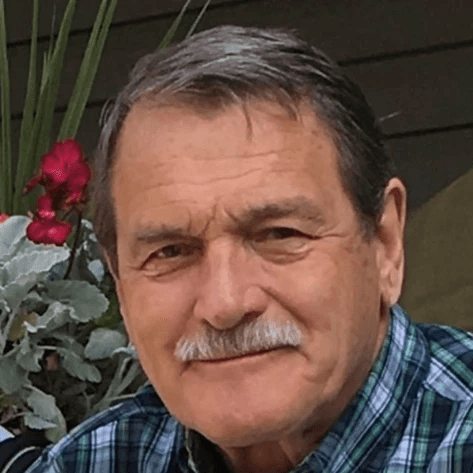
Stan Cramton
US West
Biography
Stan Cramton had a long and influential career with Western and Russian telecom companies in the modernization of the Russian telecom sector. Mr. Cramton joined US West International (USWI) in Washington, DC in 1988 as director of operations and business development. His first major project was the Trans Soviet Fiber Optic Line (TSL), a Joint Venture between US West and the Ministry of Communications of the Soviet Union and other major international telecommunications providers for an optical fiber system connecting the Far East and Europe via Russia.
Mr. Cramton established US West's first international office in Russia in 1991, as Vice President and Managing Director of USWI, he was responsible for all USWI business development, government relations and operations in Russia, the CIS and the Baltic States. He led USWIs active engagement with the rapidly developing Russian telecom market, including establishment of Westelcom, a JV with Rostelecom, the Russian government-controlled telecom company, providing international telecommunications to and from Russia and creating cellular companies, most notably the first cellular operating company in Russia, Delta Telecom. In 1993 he led the formation of Russian Telecommunications Development Corp. (RTDCI), a USWI holding company for funding, developing and implementing telecom entities in Russia. He served on the Board of Directors of Delta Telecom, Dontelecom, Westelcom and Moscow Cellular Communications (MCC).
Mr. Cramton left Russia in 1995 but returned to Russia in 1996 as President of his own consulting group, Diversified Communications International, Inc. (DCI). In 2003, Rostelcom Leasing AG, the new owners of RTDC, retained Mr. Cramton as President & CEO of RTDC. In this capacity, he participated on the Boards of Directors of Sky Link, a JV with Sistema, APEX (Chelyabinsk), KMN (Kaliningrad) and Saratov Cellular Communications System and was Board Chairman at Uralwestcom, all providing mobile wireless broadband services.
In 2004, Mr. Cramton joined the board of directors of Trivon Group AG a Swiss company providing broadband internet services in more than 65 locations in Russia under the Virgin Connect brand.
During his time in Russia Mr. Cramton was a founding Board Member of the American Chamber of Commerce in Moscow and Chairman of the Board of Junior Achievement in Russia. In 1995 he was recognized as an Academician by the Russian International Telecommunications Academy.
Summary of Main Topics Covered
Stan Cramton’s interview chronicles a pioneering role in the development of Russia’s modern telecommunications infrastructure during the late Soviet and early post-Soviet period. A Canadian-born telecom executive working with U.S. West, Cramton became involved in the Soviet Union through the Trans-Soviet fiber optic project in 1990, partnering with the Ministry of Communications in a major international consortium. Relocating to Moscow in January 1991 to establish U.S. West’s first office, he remained through the August coup while many foreign firms withdrew—an act that strengthened his standing with Russian leadership and enabled deeper collaboration. Although U.S. export controls ultimately prevented U.S. West from participating in the fiber optic backbone, Cramton shifted focus to more immediately viable opportunities, including the installation of international gateway switches and the creation of the Soviet Union’s first cellular network, Delta Telecom in St. Petersburg.
Cramton emphasizes the extraordinary speed and scale of telecommunications transformation, from a system requiring operator-booked international calls to widespread mobile connectivity within a few years. Through joint ventures typically structured among U.S. West, Rostelecom, and regional operators, he helped launch more than a dozen cellular companies across Russia and neighboring countries, relying primarily on Russian staff supplemented by targeted foreign expertise. He highlights the importance of trust, high-level government relationships, and strict adherence to anti-corruption practices in navigating the business environment. While U.S. West ultimately exited the market prematurely—selling what became highly valuable assets—Cramton continued his work in Russia for decades through subsequent ventures, including rebuilding telecom holdings, developing alternative mobile technologies, and participating in new enterprises such as Skylink and Virgin Connect. His experience underscores both the magnitude of early opportunity and the long-term consequences of strategic withdrawal by Western firms from Russia’s telecom sector.
Daniel Satinsky: When did you first become interested in the Soviet Union or Russia, and when did you first go there?
Stan Cramton: Well, I’ll try to capsulize it. I worked internationally for a number of years after leaving Canada. As you may have seen, I went to Brazil for a couple years with the UN, with ITU, and ostensibly I was going to go back to Alberta Government Telephones in Western Canada in Alberta, but I never found my way back. I ended up in Nigeria for two years, and I was working for a U.S.-based company, a company domiciled in Washington, D.C., and for my sins of doing so well in Nigeria they decided that I should move to the United States with family, so my wife and three children, who also moved with me to Brazil. And so, they managed to get us green cards, and we moved to Washington, D.C., ooh, heavens, ’78, something like that.
Daniel Satinsky: You were Canadian citizens at that time?
Stan Cramton: Oh, yeah. Yeah. We were born…all Canadians. And at any rate, I’ll try to make it really quick. But by being in Washington, D.C. I was with a company that did international consulting all over pretty much South America, the Middle East, Africa, Southeast Asia, a lot of different places.
Daniel Satinsky: Telecom consulting?
Stan Cramton: Always, yeah, in telecom. We were the retained consultants to the Ministry of Communications of Indonesia for their satellite business development, for example, so I managed to be in several satellite launches on the shuttle in the good old days.
So, at any rate, the company I worked with—well, I got recruited by a headhunter to go up to Pennsylvania to set up an international and domestic consulting group up there, and that’s when I started Diversified Communications, which is the company that I still am president of. And the guy that took over the consulting group, it was called Teleconsult in Washington, D.C., ended up selling it to US West. US West was one of the Bell operating companies. And I happened to be in his office one day, and he said okay, why don’t you…I need some help, why don’t you come back. I’d worked with him for several years with Teleconsult—why don’t you come back and be my director of operations, which I did.
So, we started doing business in Russia in the late ‘80s, US West International, with basically working out of a regional office in Washington, D.C. because they had bought Teleconsult. And we started a couple of different projects, a very large one called the Trans-Soviet fiber optic line, which is an optical fiber system that went from Moscow east to Vladivostok and then across to Korea and to Japan and all the way to Australia.
Daniel Satinsky: What year was that?
Stan Cramton: That was in 1989, 1990, I guess—1990.
Daniel Satinsky: Wow. So, you were working with the telecom monopoly of the state.
Stan Cramton: We didn’t have an office in Russia. We were the partners with the Ministry of Communications of the Soviet Union, US West was. The optical fiber system was going to go west as well through Kingisepp, which is in northern, near Petersburg, and down to Europe through the Scandinavian countries and then south through the Black Sea into that sector of the woods. So, we had a consortium that was just about every major telecom entity that could possibly brought in, from Deutsche Telecom, British Telecom, France Telecom, Spain. Then we had all the Scandinavians, and then we had, on the other side we had KTA from Korea, from Japan and also Australia. It was a huge consortium, but US West and the Ministry of Communications in the Soviet Union were partners.
So, that started us going, and then from there one day I was at a meeting in Italy, actually, and the president of our group walked me around a park near the Spanish Steps, I think it seemed like about three days, to convince me that we needed to open an office somewhere in Europe because we were doing so much international work. And of course, he left it up to me to decide where, and I said well, Dick, where do you think it could be, considering the bulk of our work is in Russia, or is in the Soviet Union. So, all that said, my wife and I moved to Russia in 1991 in January and started the very first US West international office in Russia.
Daniel Satinsky: Wow. Now, was somehow Gary Hart involved in this story?
Stan Cramton: Oh, yeah. I can definitely bring that in. What happened is then as we moved in January 1991, well of course in the summer of 1991 there was a little thing called a putsch[^1]. And in the meantime, we’d made quite a few commitments. One of them was to build—if you know what international gateway switches are, we were building, we were actually—I started at the company and we were going to put three international gateway switches, one in Petersburg, one in Moscow, and one in Kyiv. And we were still also doing cellular.
We convinced the minister—at that time he was the first deputy—that he needed cellular in Russia, and so we began operating or began setting up the very first cellular company in St. Petersburg called Delta Telecom. That was the very first cellular company in the Soviet Union. And then of course we had a coup, and everybody left town except my wife and I. We said we’re not leaving. And we stayed. A lot of big companies left. And later that year there was a big ITU conference in Geneva, if you’re familiar with the ITU.
Daniel Satinsky: Yes.
Stan Cramton: Minister [Vladimir] Bulgak had taken over, because when the coup took place and the communists fell, Gennady Kudryavtsev was the First Deputy Minister. He was no longer in a powerful seat. So, Minister Bulgak took over because he at that time was the Minister of Communications of Russia, now with the Soviet Union breakup and Russia was Russia.
So, he’s giving a little presentation, and we’re all sitting out in the audience. There must have been, I don’t know, close to 1,000 people there. There was a lot. And he said, well, it’s nice to see all you people here again, i.e., like he was back in Russia, but it’s nice to see you all here again, but he said the ones that I really like to see are the ones that didn’t leave. And he pointed out me, and he said like Cramton. They stayed. And that was the genesis for us to get going, because we just, in the process then of being in Russia for the next four years, I was able to be a cofounder of 12 cellular companies in Russia, notwithstanding one in Hungary, one in Czechoslovakia at that time, one in Lithuania. So, it just was…we couldn’t do enough things.
I went to Romania. I was invited to see the minister in Romania. He said oh, you’ve got to come back. And I went back to the US West board, and they said you’ve got enough on your plate, Cramton, cool your jets. That’s a long way of answering, but that’s how we ended up in Russia, was basically the TSL project, the Trans-Soviet Line project was the impetus for us to move there, and when we got there, we started all the other business activity.
Daniel Satinsky: Did the trunk line get built, the fiber optics?
Stan Cramton: So, funny enough, I don’t know if you remember CoCom, the Coordinating Committee for the [Multilateral Export Controls] Control of Export to… Well, we were busy applying for that.
And we had a meeting in James Baker’s office. At that time, it was before he became the Secretary of State for Bush. And we had this guy from the State Department whose name I will not utter, and he said, well, I think the Soviets are going to use that fiber optic line to launch ICBMs. And I said I don’t think they are because they don’t want to start a war, and besides, communism, in case you didn’t know notice, has collapsed. We went back and forth and back and forth. So, I said when was the last time you were in Russia? Oh, well, yeah. He kept dodging the question, and finally I said look, I don’t think your information is up to date. I live there. I know the Russians. And I’d really like to know when is the last time you were there. And his answer was well, actually I’ve never been there, I have too much knowledge in my head, I’m not allowed to go.
We did not build the TSL line because we couldn’t get approval for the switches that were going to be used because the Russians were going to use them to launch ICBMs. The U.S. State Department wouldn’t give us the process to go forward. All the other members of the consortium went ahead with it, all our good European friends. So, the TSL line got built, but we weren’t a part of it.
Daniel Satinsky: And the part that was built was from Moscow to Europe, right?
Stan Cramton: Yes. Moscow to Europe and also Moscow to Vladivostok.
Daniel Satinsky: Oh, it was also built? Did you follow the rail lines?
Stan Cramton: It pretty much did, yeah. Yeah, it pretty much did. But we just got out of that. And it didn’t get built in the manner that we had initially envisioned it because of all the political issues. But by that time, we were so focused on building cellular activities that…and then the gateway switches, that we really didn’t care about the TSL line.
Daniel Satinsky: Right. And the gateway switches were not subject to this kind of export control?
Stan Cramton: Well, that came a little bit later. We had to do a little dancing because we ended up putting in Ericcson switches. And by the way, the one in Kyiv didn’t get built, for reasons you can probably figure out, so we put two in Moscow and one in St. Petersburg. But our partner was Rostelecom. 50-50 partners. And I’ll tell you, Daniel, that was a license to print money. In those days, as you may recall, to make a call you had to book it.
Daniel Satinsky: Yes, I remember doing it.
Stan Cramton: And the calls were not exactly cheap, and they were difficult to make, and it was a real pain. So, if you think about it, it was a very fortuitous time for us to be there, for US West to be there, because the opportunities were just unbelievable. And to build and put into operation international gateway switches, to build and put into operation cellular activities was just phenomenal. It was as fast as we could do it we could get business.
Daniel Satinsky: Right.
Stan Cramton: If you think about it, when we went there in January—well, before, even in the ‘80s, or in January when we moved there in 1991, in order to make an international call you had to go to a booking station. Then you could go to the Savoy Hotel and make it from the pay phone in the lobby.
Well, in a year and a half—I think it was a year and a half, maybe it was a little bit more, had to be a little bit more—I am sitting in my car on my cell phone making an international call. So, it was just phenomenal.
Daniel Satinsky: Yeah, yeah, the speed of change. And were your customers at that point primarily foreigners and foreign companies?
Stan Cramton: Oh, no. No, the—you mean for the gateway switches?
Daniel Satinsky: Well, no, I don’t mean your partner. I mean the users.
Stan Cramton: Well, the users, cellular was the big bricks, as you may recall. They weren’t convenient and they certainly weren’t cheap, so there were a lot of foreign customers. And to those Russians who had the wherewithal, they became customers as well. But to start with it was pricey. The calls, we kept the rates—I don’t remember offhand what the rates for the international calls were—but we didn’t sock it to them at all, like you were paying five or six dollars a minute for an international call before. But it was just, I mean, we honestly had a little bit of a difficult time convincing Minister Kudryavtsev that cellular was going to work. And then at that time there was a guy by the name of Leonid Reiman. Do you remember him?
Daniel Satinsky: Oh, yes, I remember him.
Stan Cramton: I know Leonid very well. He’s a good friend. And when we started raising money for cellular, he was part of the St. Petersburg group. He was the deputy to…oh, good heavens, how can I not remember his name? Super nice guy as well. I’ll think of it anyway. But he was the guy, he was my counterpart, because he basically was responsible for all of our activities in St. Petersburg when we were building Delta Telecom.
And we were raising funds one time, and I think it was in New York, and he was telling me afterwards—this was several years later—he said, you know, Cramton, when we were looking for raising funds, if we’d have told those guys, those people who we were looking to raise funds from that the number of cellular users in Russia would be at that time whatever it was, four or five million, he said they’d have sent us directly to the funny farm. But it just, it was unbelievable, it truly was.
So, the businesses took off. We started Delta Telecom with the St. Petersburg group. But in every single cellular company that I was involved in getting started we had a third US West, a third Rostelecom, and a third the local Electrosviaz. And we never, ever had a problem with any of the partners. We never had any issues. We adhered to the Foreign Corrupt Practices Act to the letter. We all knew it. The good news was, and it was a little easier, is that if somebody waltzed into my office and said I’ve got a real big opportunity for you, and it only takes this or that, I would say well, you know what I’ll do, you know Gennady Kudryavtsev —oh, yeah. Well, I’ll discuss it with him, and if he thinks it’s a good idea, drop back again and we’ll discuss it. Well, of course they never came back. If we needed anything, we were lucky enough to be dealing with the top people.
Daniel Satinsky: Right. And so, for those top people you were a source of technology and expertise that they recognized that they needed. Is that correct?
Stan Cramton: That’s correct, yeah. US West was a pretty major player in cellular in the U.S., but the footprint US West had in those days was very adaptive to Russia, because it wasn’t the largest operating company by revenue, but it was the largest operating company by territory. So, we had a natural relationship with Russia because they could see it. We ended up taking the minister on a little tour of the US West cellular to convince him that it was going to work.
And I think, in all fairness, I am an American citizen, a very proud one, I will hasten to add. When we moved to Russia in 1991, we became American citizens because our green cards would have been whatever. But I think our background from Canada was a big help. Where I grew up, when both my wife and I grew up in Western Canada in Alberta there were a lot of first-generation immigrants—Ukrainian, Russian, all sorts, Polish and so on—so we knew how to deal with people.
Daniel Satinsky: What do you mean by that? Explain that in a little more detail.
Stan Cramton: Well, ethnically. Even language-wise. A lot of the people who immigrated to Alberta, their parents, the people who we grew up with, their parents were immigrants from other countries, so foreign dialects and foreign languages were not as big a challenge to us as they were to some people from Midwest in the U.S. who had a little more difficulty understanding some of the things that were coming down. And I think we just assimilated very well.
My wife was an enormous asset to US West when she was there. She became involved with the international women’s group. She got to know the wives of a lot of the people when other people said they’ll never invite Eileen—my wife’s name is Eileen—they’ll never invite her to their homes because that doesn’t happen. A good friend, and still is a good friend of Kudryavtsev’s wife, they exchange emails all the time.
Daniel Satinsky: And she learned Russian?
Stan Cramton: No, she’s Canadian and Norwegian.
Daniel Satinsky: So, neither one of you spoke Russian, but you—
Stan Cramton: Not a word.
Daniel Satinsky: —just were comfortable being in a multilingual environment.
Stan Cramton: Well, we lived in Brazil and had to learn to speak Portuguese, and that helped a little bit. But Russian is a hard language to learn. I stumbled through it. Eileen became far more proficient at it than I did. I had the benefit of an extremely great staff, both Russian and non-Russian, and so our business language—we were in the Mezh[^2], if you remember the Mezh.
Daniel Satinsky: Oh, yeah, sure.
Stan Cramton: Our business language in the Mezh was English.
Daniel Satinsky: Was English, okay. And so, you’re describing building out this company very rapidly, and smaller companies around. How did you staff that? Did you hire Russians and train them? Did you bring in expats? How did you actually develop.
Stan Cramton: All of the above.
But I didn’t bring very many expats. And I had a CFO who was a Brit. I had a director of operations. I had brought him in, actually, on the pretext that we were going to be doing the TSL project, because he was an outside construction guy. I had, let’s see, a couple of other… We had a guy by the name of Dmitry Kononov, who was an American, but parents spoke—moved from Russia, so he spoke Russian. He was involved in the Petersburg operation. He eventually became the CFO of Megafon. But most of the other staff were Russians. But we pulled in a lot of people from—US West had an organization called Advanced Technologies, and that was kind of like the Bell Labs, if you remember Bell Labs for AT&T. Advanced Technologies was the Bell Labs equivalent for US West. And so, I had the capability of bringing in all sorts of technical, very smart guys when needed, so we did a lot of stuff in country, in Russia, and we did some off site in Colorado.
Daniel Satinsky: Did you send Russians to Colorado for training and…?
Stan Cramton: Oh, yeah. Yeah, we did. Actually, believe it or not, we actually sent selected people from our staff in our office because—it’s kind of a little funny aside. When we set up the office in the Armand Hammer building, we set up a very modern, up-to-date office. We had the corner offices for the senior people, but the bulk of them were kiosks. And it was really…the Russians loved it and the Americans in Denver who would be calling in—we didn’t have video in those days—they’d say who’s this and who’s that. So, we sent a group of our girls, women, and we went and visited Denver, the US West people, and then the people from US West in Denver came and saw us. And obviously the ones we sent were English as well as Russian speaking, but… So, yeah, we did, we definitely exchanged a lot.
Daniel Satinsky: And did you find that the skills the Russians needed were business skills, or technical skills, or both?
Stan Cramton: Both. We provided…I have to say this delicately. We provided the impetus. I mean, let’s face it. They didn’t have the technical skills in cellular because that wasn’t their forte, but we did have that. They didn’t have the business skills, but they were damn fine partners and quick learners, so we didn’t have a problem with business skills at all.
Daniel Satinsky: So, how big a staff did you—like how did your staff grow? What were numbers, sort of?
Stan Cramton: I think by the time I left…that’s a good question. I’m trying to remember how many we had. We probably had maybe 50 or 60.
Daniel Satinsky: Okay, well, that’s not huge.
Stan Cramton: But that’s counting, if you look at, for example, Moscow, Moscow Cellular was the second cellular company that we started, and that was actually—one of the big players there was [Svyatoslav] Fyodorov, if you remember him. The eye surgeon.
Daniel Satinsky: Yeah, vaguely.
Stan Cramton: He was kind of a political appointee, but he was on the board. He was actually the chairman of the board. And a good guy, super interesting character. But again, it was a US West, Moscow—what the heck was his name? Jeez. Great guy. This huge, great big guy was the head of the Moscow…the Moscow operating telephone company. And then of course Rostelecom were a third.
Daniel Satinsky: Right. So, what did you…you used contractors to construct your cell towers and build out your infrastructure?
Stan Cramton: Yeah.
Daniel Satinsky: And so were these Russians who built—
Stan Cramton: Oh, yeah.
Daniel Satinsky: Okay. So, you just provided them blueprints and specs and they performed?
Stan Cramton: We put out specs, and they were bid. Especially for the gateway switches. That became quite a horrendous show because we had some sly people who were trying to slip through the cracks in terms of the gateway switches were pretty pricey, and they were going to do something if we would do something. But we never had an issue at all. I started to say we put the gateway switches in. We had them built in…they were Ericcson switches, but they were built by Nikola Tesla, under contract, because the Nikola Tesla people had that agreement with Ericcson. So, the switches were really built in Croatia and brought to Russia, but the design and all the capability was Ericcson.
And they didn’t have the same… There were certain software elements, and the software that we were going to use for the TSL project that we had a little, quite a little pushback, again, from the State Department, we were able to avoid that. I mean, simply because we said look, these switches are being built everywhere, and if you don’t allow us to get them then it’s just going to go to somebody else, so they gave up, and it became a straightforward thing.
Anyway, you asked me about Gary Hart. When Gary Hart ran for president and ended up having a little fallback, he was a senator from Colorado, and he needed some help fundraising because the Democrats basically cut him off. And at that time when he was on the Senate, he was the chairman of the Foreign Relations Committee. So, US West hired him for his international savoir faire, so to speak, and he was actually really, really good. He didn’t do a whole hell of a lot in terms of getting to know the people because by the time he got involved we pretty much had it in place.
And when the first coup took place, he offered to come over, and the chairman of the board of US West said do you want him or do you want me to send the corporate jet over to pick you and Eileen up. And I said I don’t want any more people. All of the expats that were here we sent out. And we’re staying, and there’s no reason to send a corporate jet because firstly, you probably couldn’t get it into Moscow, so I’d have to get to Petersburg or someplace, and I’m not leaving.
But Gary offered to come in, and I said thank you, but no thanks. He did provide some high-level help on certain occasions. But our relationship with the minister was not done by Gary Hart. He was just a very high-level umbrella that we used. And I became very confident that Gary could have and would have been a great president. He’s a very smooth operator. He did not take credit unless he earned it. He was really a decent guy.
Daniel Satinsky: So you may have said this already, and maybe I’m just blocking on this. How did US West make that initial contact? You say it was already there, and I understand you built it around this fiber optic cable project, but somebody got that first contact.
Stan Cramton: It started when we were still in Washington, D.C. A guy by the name Andrei Espondei, who was at that time one of the senior executives in US West International, and who had worked with me—I had worked with him in Teleconsult. He became aware of it, as far as I know. I’m actually not sure who initiated it. It could have been Dick Callahan, who was the group president. But somewhere along the line somebody got word of the fact that the Russians were planning, or the Soviets were planning on building this bit optical fiber line and we got involved with it, and went over, and took a delegation over, and visited with the top people from the Ministry of Communications, and one thing led to another.
Daniel Satinsky: Okay. Well, so your understanding of them, were they committed at that point to expanding access to telecommunications, or was it a modernization project to just keep up or—
Stan Cramton: They certainly were not committed to cellular. We had to pretty much drag them through the knothole for that one. As I said, we took the Minister and some of his top people to Seattle, to US West cellular operations to show them what it could be. But Gennady Kudryavtsev is a really sharp guy, and as I said, a very good friend. And he could see the opportunities. And if you remember, the infrastructure in Russia at that time was pretty bad. I mean, the wires—
Daniel Satinsky: There were like 20 year waits for copper lines in your apartment.
Stan Cramton: It was a perfect…cellular was a perfect solution for Russia, without any doubt whatsoever. And as a result, Gennady saw that, and he saw how we could leapfrog all the old infrastructure and just put in cellular. So, that is why today I think there are more phones per capita in Russia than any other country in the world.
Daniel Satinsky: Right. So, he saw that, he recognized it, the potential of the technology, and was a willing partner. It was like—
Stan Cramton: Oh, no, he was definitely a willing partner. Once we got him convinced to do cellular, he was a very big help. In fact, he was even a big help, when we finished the gateway switch in Moscow, he said to me one time in a little private tete-a-tete I think you ought to take a little trip back to Lithuania, because I’d been to Lithuania when we were doing TSL, and I’d met the Minister. He said I think you ought to go back and see Minister Kuzmo, I think it was. They’re planning now—because that’s when Lithuania broke away—and they’re planning to put in their own gateway switch, and you probably may want to have a little chat with him. So, I immediately did a little chatting, and the end result was we started a gateway switch company in Lithuania, as well as a cellular company.
Daniel Satinsky: Were you the first in there or were there other people doing cellular at that point?
Stan Cramton: In Lithuania?
Daniel Satinsky: No, in Russia.
Stan Cramton: Oh, no. There was another company there called Belle Mead [International Telephone Inc], and they really tried to make it like they were a part of the Bell system, which they weren’t. And then there was a company called MCC…not MCC, what was it? It was a Scandinavian company. They were partners—actually, they were partners—come to think of it, that’s not correct. It wasn’t a third/third/third for Moscow Cellular. That was all the other ones. Moscow Cellular was a combination of—well, the…gosh, I can’t think of the numbers now, the division, but the eye surgeon had a small piece, the operating telephone company from Moscow had a piece. This other company—gosh, I can’t think of—they were pretty big in Europe. Gosh, that’s terrible, I can’t think of the… It wasn’t Moscow Cellular, but it was something like MCC. And they had a piece, and then of course US West had a piece. Actually, I think I’m wrong. I don’t think that Rostelecom were a part of that, now that I think about it. It was pretty fragmented, that partnership.
Daniel Satinsky: Okay. So, your buildout of cellular really accelerated after the collapse of the Soviet Union.
Stan Cramton: Yeah, it did. In the summer of, August of 1991 we were just basically focusing on Moscow—or rather Delta Telecom and Moscow Cellular. And neither one of them were operational at that time.
Daniel Satinsky: Okay. And did you…how about Sovam Teleport? Did you have any—
Stan Cramton: We actually took a real hard look at that, and I was a big proponent of it because I’d done satellite work in Indonesia before, and they were setting up an office, actually, in the Metropol Hotel. But I was not able to convince the gurus at US West that we should take another dive into another technology because at that time US West wasn’t doing too much in cellular—in satellites, rather.
Daniel Satinsky: I see. So, just two different technology approaches then.
Stan Cramton: Cellular and gateway switches, yeah.
Daniel Satinsky: Okay. And where was your gateway switch located in Moscow?
Stan Cramton: I can’t give you the exact address.
Daniel Satinsky: Was it Tverskaya in that telecom building?
Stan Cramton: No. Neither one of them were in that telecom building. That was where the Ministry was. Neither one of them were there. They were…gosh. You know, I have had dozens and dozens of meetings, but I can’t tell you where they were located. One was in southwest, and one was in central, and then there was one in Petersburg.
They were located where there were cable—because there had to be cable access, big cable access.
Daniel Satinsky: Yeah. And did you have any relationship with the development of the Russian trading system and the stock market? Did you service them?
Stan Cramton: If we did, I couldn’t tell you who the customers were. I mean, I was beyond getting into the details of who the good customers were or who they were not.
Daniel Satinsky: So, you were managing at the installation and the top level—
Stan Cramton: Yeah, exactly.
Daniel Satinsky: Okay. And how long were you there?
Stan Cramton: I was with US West in Russia for over four years, four and a half years, something like that. Then US West decided—we were only supposed to be there two. And when we first went there, if you remember what Russia was like in those days, it was kind of a little bit of a challenge.
So, by that time US West had opened their international main headquarters in London, in Berkeley Square, and so I think it was probably more the wife of the group president, Dick Callahan’s wife who said okay, Dick, I don’t care what you do with Stan, but Stan’s wife has done hard time, they need something better.
I’m being facetious because by that time US West decided that they were going to get into satellites. And I had been involved with satellites in Indonesia, and I’d been in Russia for over four years, and so I moved to London and became the vice president of satellite business development. And we cut a deal with a couple of satellite companies, and we were really going forward pretty well when US West had a new guy take over as chairman of the board. He was a college professor, didn’t really understand international at all, and didn’t really like the domestic operation that much, either. He came over to Russia, toured around Russia, and I thought man, this is not a good sign. And a couple years later he decided to sell all the parts of US West off, including—
But in the meantime, he decided to sell off all the other operations. By that time—I give him credit. What he was focusing on was doing cable, and so that became the genesis of US West’s operations domestically. But before that US West had cable operations in London and a few other places, and of course all the international operations in Russia, in Hong Kong, in a few other places, in Poland and so on.
So, the US West Russian operations were sold to AT&T. And then AT&T sold them to another company and that company sold them to a guy by the name of Jeff Galmond. This was a company called RTDC, which was basically the company that we started that was the holding company for all of US West’s assets in Russia. Russia Telecommunications Development Corporation. It was a Delaware company, and had a hard time explaining why a Delaware company was, you know, but you know the story why it’s Delaware. So, RTDC was sold to AT&T, and then sold to another company from the U.S., and then ultimately was bought by Jeff Galmond. He was a Danish lawyer who was retained—well, he was a lawyer for the Russians when we started Delta Telecom. US West, of course, had their own cadre of lawyers. And then after we formed Delta, we had to hire a corporate lawyer, and we retained Jeff Galmond as our—
Daniel Satinsky: Was he resident in Russia?
Stan Cramton: Oh, yeah. Yeah, he was in St. Petersburg. He had a law office in Petersburg.
Daniel Satinsky: And this RTDC was in Russian regions, too, wasn’t it?
Stan Cramton: Well, sure because it was the holding company for all of the cellular companies, so if you had a company—for example, Don Telecom in Rostov-on-Don, RTDC was the third shareholder. The same thing in all the other companies that we started. RTDC was the shareholder, even though it was US West, but RTDC was wholly owned by US West.
Daniel Satinsky: I see. And so, I think I encountered them maybe in Perm.
Stan Cramton: Yeah. What was the name of that company. Was it Ajax? No, that was… Yeah, there were…I don’t even remember the names of all of them. And of course, they all got changed and all got bought out.
Daniel Satinsky: So, they all got bought out and became regional cellular companies
Stan Cramton: Sadly enough, when US West decided to sell out, I knew all of the operating cellular companies. Who started Beeline? Dmitry [Zimin]…
Daniel Satinsky: Oh, yeah.
Stan Cramton: I knew him. He came to us and wanted us to do a deal with him, and unfortunately, by that time I was on my way out to London, and the guy that was taking over me said nah, we don’t need that guy. Well, that guy started Beeline, which became one of the dominant companies in Russia. But when I left to go to London US West’s entities were the largest operating cellular companies in Russia.
Daniel Satinsky: Wow.
Stan Cramton: It was Beeline, Megafon, and of course MTS. None of the three were as big as the combined all three, or all of US West’s holdings at that time in Russia.
Daniel Satinsky: Really? So, where did those companies come formal those Russian companies? I mean, you came in, you knew the technology, you had the business background. Somehow those Russian companies sort of sprouted. Where did they get their base from?
Stan Cramton: Russians are smart businesspeople. I have a very high regard for them. And they saw what was happening, and so it became a competitive thing to get licenses. So, Megafon was closely aligned with Leonid Reiman and Dmitry Kononov, who used to work for US West. Beeline…I don’t remember how it got started. But Dmitry—I’ll think of his name anyway. He just died, actually. And then MTS. So, they were all a part of the telecoms hierarchy in Russia.
And there was enough people there that had enough money that when licenses started being issued, they were able to gather up some as well. So, if you look at the market value today of any one of those big three, that’s basically who’s left—MTS, Beeline and Megafon. I’d guess individually, any one of them individually is probably worth four, maybe more billion dollars. I mean, they saw the opportunity and they capitalized on it, whereas unfortunately US West left at a very, very bad time because Dick Callahan, who was the group president, worked very, very hard to try to convince the US West board in Colorado to spin off the international group and don’t sell it, even though they were selling everything else, to keep that intact. And he unfortunately wasn’t successful because they just said no, we’re getting out of it. So, they walked away from a huge potential business.
Daniel Satinsky: Yeah. And there’s a… Did you have foreign or American competitors in cellular, aside from these three big Russian groups?
Stan Cramton: Only that one. Only the one that I think is MCC or something like that.
Daniel Satinsky: They were the only ones, yeah. So, the market was just occupied by—
Stan Cramton: Wait a minute. I think Deutsche Telecom had a holding, had some ownership in MTS.But I’m not sure about that. That was after I left.
Daniel Satinsky: Yeah, okay. And you never had, I mean, there was Comstar, there was Bell something, Bell…
Stan Cramton: Belle Mead. That was the one that was supposedly a partner in Moscow Cellular. They were bidding for the license, but it got a little dicey. But I think we ended up easing them out the door.
Daniel Satinsky: Okay. And Comstar was just satellite. No cellular.
Stan Cramton: No. They had some domestic long distance, but not satellite. I mean, not cellular.
Daniel Satinsky: And were you involved with the country club and golf and all that stuff?
Stan Cramton: Oh, I lived there. We were the first residents in the Moscow Country Club.
Daniel Satinsky: Really? What does that mean you were the first residents?
Stan Cramton: Well, because when the Moscow Country Club was started, there was a group, Fraser Lawson, who still lived in Russia, and a partner, and some group that they worked for were developing the dachas[^2] in and around the golf club. The golf club was run by the UpDK[^4]. And the senior guy, who was a big entrepreneur, was building dachas. And Fraser—and I’d known Fraser—managed to convince us that we needed to have a dacha built by the Finns. And so, we moved to the country club, along with the head of General Motors, Max Danovich, if you remember that name.
Daniel Satinsky: No, I don’t.
Stan Cramton: Max is obviously not there, but he was there as the head of General Motors. We were there as head of US West. And there was another couple from an oil company. But we actually moved into our dacha. We were the first occupants of the Moscow Country Club. In fact, we lived in the hotel for a couple of months because the dacha wasn’t finished. So, yeah, we know the—
Daniel Satinsky: And that was when you first moved to Russia?
Stan Cramton: When we moved in 1991, we actually stayed in the Savoy Hotel for several months. And then I was walking by the Metropol one day and I saw a big sign saying “Intercontinental opening soon,” and I thought I’d died and gone to heaven because when I worked with the company from Washington, D.C. the Intercontinental Six Continents Club was my go-to place. So, we were also the first residents of the Metropol when it opened. And we lived there for, oh havens, close to a year, maybe longer. My wife would certainly know because i was very happy. I mean, it was central, easy to get to and so on. We watched the first coup from the Pierre Cardin suite in the Metropol Hotel. And I can tell you that was a pretty sad day because I was looking out over towards Red Square and I can distinctly remember it today. The moon was shining and I’m thinking there it is, August 1991, all the time we spent here, and it’s going to get flushed. In fact, we had a direct line put in by the Minister, fortunately for us. It was easy for him to monitor that way as well, but…
Whatever the case, I had a call with Reuters, and I had an interview with a guy. But the end result anyway was that we lived in the Metropol for quite a while. My wife decided that enough was enough. She found a dacha on the edge of town in a nice development that was…it wasn’t really nice; it was pretty dismal. But we did a remont[^5] of one of the buildings, which she looked after, and we lived there for a while. And then we moved to the Moscow Country Club.
Daniel Satinsky: I see, okay. So, that was your primary residence there.
Stan Cramton: The Moscow Country Club? In the final analysis it was, yes.
Daniel Satinsky: Okay. Are you a golfer?
Stan Cramton: I pretend to be. I still have a membership there in the Moscow Country Club. I don’t know if you heard that that beautiful, beautiful clubhouse burned down.
Daniel Satinsky: Okay. I’m not a golfer. I was never there.
Stan Cramton: It was a gorgeous clubhouse. It really was gorgeous. And it burned down a year and a half ago.
Daniel Satinsky: A suspicious or…?
Stan Cramton: I don’t know. It probably was, you know, there were a lot of different activities going on. There were two or three fireplaces. There were several kitchens. It’s hard to say.
Daniel Satinsky: And how important was the country club as a center of expat life?
Stan Cramton: It was pretty important. I wouldn’t say it was the center, but there were certainly a bunch of guys that hung out there. You know, if you remember the name Jeff Combs, who was a great golfer, Robert Conroy—or no—yeah. Mark…. He was a real estate guy. So, there were a lot of guys that hung around out there.
Daniel Satinsky: Would you say it was a place where people made business contacts or not?
Stan Cramton: I never made any contacts there that were business-wise. Maybe a few peripheral for some other type of activity, like you needed some sort of side activity like a car or something like that, but nothing really that had to do with telecom, no.
Daniel Satinsky: And did Russians join?
Stan Cramton: Oh, yeah. There was a lot of very good Russians, very good Russian golfers. In fact, Eileen, my wife, actually was the marshal for one of the women’s events, and she just told me a couple days ago she’s got to look up some of those golfers to see if they’re still around, what they’re doing.
But I’ve got to say that after US West sold all their assets, we decided to… I still had my company, Diversified Communication—well, we parked it on a shelf. We were working in London, and we were at a big trade show, and I met a guy by the name of Olof Lundberg, who I’d known before. He was the head of a company called ICO Global, one of the satellite companies, and asked me what I was doing, and one thing led to another. So, I went back out to Russia and headed up ICO Global Telecommunications. And the guy from Beeline was Dmitry Zimin. Dmitry Zimin and Beeline became partners with ICO Global, and we started development of a satellite business development system in Russia, which unfortunately would have been a great success had GSM not kind of taken over. So, we were using a different technology. We were using NMT 450—rather, CDMA 450, and they were using GSM. But I think it still has a couple of satellites floating around somewhere.
I ran ICO for oh, I guess two or three years. And then Jeff Galmond, who had bought RTDC, by that time it wasn’t doing so well, so he asked me if I could rebuild it using a different technology. So, I ended up going back. And as I said to Jeff, you want me to rebuild Humpty Dumpty? And so, I went back and put RTDC together again.
Daniel Satinsky: Living there or remotely?
Stan Cramton: Oh, yeah. Well, when I moved back, when we were in London—we’re taking up too much time here, but when we were in London my wife said it would really be nice if she could be reintroduced to her furniture, which was in storage. So, we ended up having a house built in Florida. So, she became—if you know what in Florida rules—she became a homesteader here. She had to be there 181 days. I started back in Russia with ICO, and a few others and I became a permanent resident, so I had to be there 181 days, so we did quite a bit of back-and-forth travel.
When I first moved back to Russia from London, I stayed in no other place than the Metropol. And then a guy that was the general director of the Marriott Royal Aurora Hotel found out i was there and he said look, we have a beautiful suite here that the former general manager lived in with his two kids. It was a big—it wasn’t a hotel suite, it was actually built for the resident manager to live in. He said I’m not living in the place I’m managing, I’ll cut you a deal. So, we leased it. So, we actually lived in the Marriott Royal Aurora Hotel for all during the time I was there.
Daniel Satinsky: And so, what did you do to rebuild RTDC?
Stan Cramton: We ended up rebuilding it on the basis of a different technology, CDMA 450. And we brought a number of different companies back to life that were the old technology and started out building companies that were providing cellular, but as I said, a different technology. And we did partnerships with two or three other locations, and then we started a company called Skylink, if you know the company Skylink.
Daniel Satinsky: It sounds vaguely familiar. Is that a TV—
Stan Cramton: Well, basically Skylink was all the companies that we started under one umbrella that we bought under the RTDC mantle. And that eventually, when I left that was sold to Rostelecom.
Daniel Satinsky: And when did you leave that time?
Stan Cramton: Well, at the same time while I was there, I was on the board of a company called Trivon, which was doing other kinds of cellular activities. It was a company that on that board, or rather the investors included Richard Branson. And so, they started, we started a company called Virgin Connect, which is still operating in Russia today.
Daniel Satinsky: Cellular?
Stan Cramton: Yeah. But both cellular and interconnection. So, it was more of a different technology, but it was more…it was basically almost internet, what was internet. Pretty much internet, focused on internet.
So, I was on the board of that, and then I became chairman of the board, and i was chairman of that company for a couple of years. Richard Branson was one of the investors. International Finance Corporation, EBRD, and a group from Switzerland.
Daniel Satinsky: So, what years were you back when you were back the second time? What years were you there?
Stan Cramton: I’m trying to think when did I go back? I moved to London in 1995, and I was there for a couple years, so I guess it would have been ’96 or ’97.
Daniel Satinsky: Before the crash.
Stan Cramton: Oh, yeah. Then in 2003, that’s when…hm. I’m trying to think. I’m looking at my CV here to see if I had it right. I went back to Moscow in 1996. 1996 to 2003 I was involved with ICO and several other different entities in Russia. And then in 2003 Rostelecom Leasing, which was obviously a subsidiary of Rostelecom, were the new owners of RTDC, asked me to become the president and CEO of that company. That was connected with Jeff Galmond.
Daniel Satinsky: And how long were you there then?
Stan Cramton: I basically ran that business until 2019. Or maybe that was—no, that’s not quite accurate. I ran that business, but it was ultimately sold because there was a company in Chelyabinsk, Apex. There was a company in Kaliningrad, KMN, in Saratov, in Ural, Ural Westcom, which was one of the US West companies, and in Lake Baikal, Baikal Westcom and so on. Anyway, in 2012 then I became chairman of the board of Trivon. And that’s when I…that was a full-time working board position. So, in 2012, and I was there until 2015 or ’16, and then in 2019 I started working out of the U.S. here.
Daniel Satinsky: And are you still active in telecom?
Stan Cramton: I am still working for a company called Raygent, which is a U.S. based company, trying to get them established in a foothold in Russia. And it’s a challenge in today’s world, given what’s happening. And if we can get that over, and I think it will be over, then I’ll be probably going back sometime in April or May.
[^1]: Soviet coup d'état attempt
[^2]: The Mezhdunarodnaya (International) Hotel, which has become a hotspot for expats
[^3]: Summer cottage
[^4]: Directorate for Diplomatic Corps Services under the Ministry of Foreign Affairs of the USSR
[^5]: Renovation