The Satinsky Archive
Citizen diplomacy in the 1980’s
Western Impact on the Transition to the Russian Market Economy
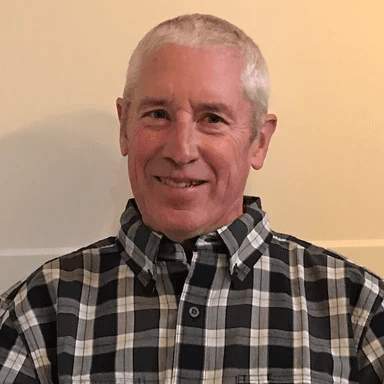
Tony Allison
Marine Resources Company (MRC)
Biography
Tony grew up in Seattle, Washington, where he began studying Russian in high school. He graduated from Williams College in 1976 with a double major in History and Russian. Tony’s first trip to the USSR was in 1972 on a language exchange program, and in 1976-1977 he served as a bilingual guide on an American exhibit “Photography USA” touring the Soviet Union. Tony then began working for a Seattle-based US-USSR joint fishing venture, Marine Resources Company (MRC), as the at-sea Operations Manager, and subsequently as the firm’s Co-Director of its Nakhodka, USSR, branch office. From 1986 to 1988 Tony was the Co-Director of MRC’s new Moscow office, and from 1990 until 2001 he was the company’s General Manager, based in Seattle. After MRC’s closure in 2001 Tony became a high school history teacher, and in 2010 he founded a nature education exchange, based in Washington State, for collaboration with colleagues in the former Soviet Union. Tony holds Masters Degrees from the University of Washington in International Studies and Marine Affairs, as well as an Executive MBA. He has recently completed a manuscript for his memoir about his experiences in Russia and the USSR.
Summary of Main Topics Covered
Anthony (“Tony”) Allison’s interview chronicles a Cold War–era journey from language study to hands-on U.S.–Soviet economic cooperation, illustrating how individual initiative and people-to-people engagement shaped bilateral relations beyond official diplomacy. The interview centers on Allison’s work with Marine Resources Company (MRC), the only Soviet American joint venture of the period, where he participated directly in cross-border commercial operations linking American and Soviet fishing and processing enterprises. He reflects on the practical challenges of operating across political systems, cultures, and currencies, as well as the trust and personal relationships that made cooperation possible. Allison’s account offers a valuable historical perspective on how joint ventures contributed quietly but materially to U.S.–Soviet and early U.S.–Russian engagement during a pivotal era.
Daniel Satinsky: Okay, thank you, Tony, for taking the time to share your experience with me, and I want this to just be a conversation, and let’s just begin with how you got interested in Russia in the beginning and how that grew into the experience that you had, so why don’t you just start with that?
Tony Allison: When I was in 9th grade in Seattle, in junior high school, I was going to study—sorry, I was in 8th grade going into 9th grade—I was going to start language the next year, and the options were German, French, Spanish, and then this guy showed up named Victor Obrastov, and at an assembly he said we’re going to offer Russian, I’m teaching at the high school, but each day I’ll come up here for the last period and teach Russian. And he was very dynamic, and funny, and had a charming accent, and I thought why not? It was the middle of the Cold War, and by then I was old enough to understand what the Cold War was, and a good idea to learn that language.
So, I started and spent four years in junior high and high school, and then I went away and went to college, I continued it, although I really hadn’t learned very much in high school, it turned out. But a big turning point was after my freshman year—and I’d just finished second year Russian because all those four years amounted to like one year of college Russian—and I went on an exchange program. CIEE, which you’ve probably heard of, was running exchange programs. And I went to Leningrad and spent six weeks there with a group of American students.
Daniel Satinsky: And what year was this?
Tony Allison: 1972.
Daniel Satinsky: Okay.
Tony Allison: So, suddenly all the study I’d done became real lively, exotic, and compelling, and I came back with the knowledge that I was going to try and learn the language well. And I ended up—there’s a long story about which colleges I was at and so forth—but I ended up majoring in Russian, along with history. And then, when I got out of college, I got what was considered then to be sort of the top job for Russian majors, which was to get accepted to serve as a bilingual guide on an American exhibit that was touring the Soviet Union. And so, this was part of the cultural agreement between the two countries, the Soviet Union and the U.S., that allowed each to run exhibits in the other’s country for a very set amount of time, it was hour per hour quid pro quo.
Daniel Satinsky: And what year again?
Tony Allison: So, now we’re in ’76, is when I graduated from college. And this exhibit, you know, it was 22 young people around my age. I was actually one of the younger ones. And everyone was fluent in Russian. And we weren’t even in Russia. Our exhibit went first to Kyiv for two months and then to Alma Ata, as it was called then, and Almaty today, for two months, and then to Tbilisi, Georgia for two months, so complete contrast of places. And in each one we would…our job was to help set up the exhibit physically and then to staff it for Soviet citizens who would come in and see it.
The theme was photography. But very quickly, after asking a couple questions about cameras, they would ask about American life, you know, how much do blue jeans cost, why do you kill your presidents, why are you such racists, why do you lynch people? I mean, everything, the whole gamut. And actually, most of the questions were friendly, they were not provocative, although in the audiences we assumed there were provocateurs, people who were going to make things harder, or watching what other people said and did, so it was a very kind of, you know, fascinating and interesting experience.
And of course, for someone 23 years old to have, you know, quickly you’d draw 20, 30 people to you as you started to talk in Russian standing up on this platform, it was kind of a, what, an ego trip, and a thrill, and using the Russian. So, when I finished that—and in between cities we were given time to travel while the exhibit was transferred from one place to another, so we had like two, three weeks to travel in the Soviet Union, which we did.
Daniel Satinsky: Did you travel by train?
Tony Allison: Train, bus, plane, whatever you wanted. Some people went out to the Far East. I went down to the Black Sea and the Caucasus the first time with a group, a subgroup, and the second time I went from Almaty to meet my brother and dad who came over, and we traveled in Central Asia together, and so I kind of split off from the group and then ended up in Leningrad with them and so forth. But that was a life-changing experience, that total of eight months.
And when I was trying to figure out what to do next, I was in Washington, D.C., and my older brother worked for the…he was a staffer for the Commerce Committee, Senator Magnuson from Washington. And the Commerce Committee was involved in marine affairs, the Coast Guard and management of what became the 200-mile zone. And my brother’s colleagues said, well, maybe your brother Tony would like to go out on a Soviet fishing boat, because we’re now putting observers, the National Marine Fisheries Service is putting observers on these boats, and having a language is great. And I’d had college biology and knew a little bit about fish.
So, I got that job, and I arrived in Seattle, and had just a fairly quick turnaround. I traveled a while after the exhibit was done. So, anyway, in spring of, I guess it was maybe May of 1977, after some training, I went to Dutch Harbor, Alaska, which is the start of the Aleutian chain, and a Soviet factory vessel came in, and I boarded it and spent two months on this boat, the only non-Russian, non-Soviet, sampling the fish and gathering as much biological information as I could about what they were catching. And also I was effectively a—I didn’t have enforcement duty, but I was looking out for if they brought salmon or other prohibited species in. They were supposed to discard them right away, and they did. But that was also a great experience, especially for the language, right, because I had no chance to speak English.
And I’d just come from the Soviet Union recently, so my language was good. And I learned all kinds of obscenities that I’d never learned prior to that, all kinds of fisherman’s expressions. And then when I got back from that—I’ll condense things a little bit here—but when I got back from that I was thinking about going to law school, and actually got admitted, but I found out that this joint venture was starting up, and it was going to be doing something that was brand new, never been done before, which is running fishing operations where the American catching boats would deliver their fish to the Russian processing boats, the kind that I had just spent two months on. So, I contacted the people who—
Daniel Satinsky: The name of the company was?
Tony Allison: The name of the company was Marine Resources Company International. That was the formal name of the company, or MRC. It later became MRCI. There was some reorganization of the structure. It was called MRC until, I think, 1984 and then after that MRCI.
So, I got a hold of the people who were setting this up and told them about myself, and they said well, yeah, there’s a Russian boat visiting Seattle right now to promote this thing, come on down, you can tour it, we can meet. So, I did. Eventually, you know, they could—I was a unique person for them because I had the fluent language and had been out at sea on the boats, and I was from Seattle, so they hired me as the first operations manager.
And so in 1978—and a lot of this is detailed in the book, maybe even more than you want it to be—we finally got the permits to do the first ever, actually the first ever joint venture fishing in U.S. waters, to my knowledge, let alone the first ever joint Soviet-American company which was 50% Soviet owned and 50% owned by Americans, actually Bellingham Cold Storage in Bellingham, which was the company of Jim Talbot, who was really the initiator of the whole thing, going all the way back to 1973, when he wrote a letter to the Minister of Fisheries that was not answered, and then he wrote another one saying maybe my letter got lost. And he got contacted by the Soviet embassy in Washington, D.C. by the fisheries attaché saying let’s talk. And there’s a whole ‘nother story about why the Soviets were interested in this at that time having to do with the introduction of the 200-mile zone.
But in any case—I’m sort of backtracking into the background—but I went out and was the operations manager coordinating the first ever operations between American fishermen and Soviet fishermen in the fall of 1978. And at that point my boss told me that their office in Nakhodka, which is about three hours up the coast from Vladivostok, there was an American stationed there, and that I was in line to become the next American a year later. So, I served as operations manager in 1979. The operations expanded pretty dramatically, because they were successful, and the American fishermen were very interested in having this new market.
And then, in the fall of 1979, I went to Nakhodka to serve for two years as the American co-manager of the office. In each of the offices there was a Soviet manager and an American manager with equal authority. So, I’ll stop there. You asked how I got involved, and I’ve taken you way into how I got involved, but that’s sort of the core things that happened early in my career. When I went to Nakhodka, I was 26 years old, so it was still early in my life, in retrospect.
Daniel Satinsky: Right. And just out of curiosity, how did the Soviet officials you had to deal with in Nakhodka react to a 26-year-old American?
Tony Allison: They were surprised I was so young. But…and there were many, many difficulties about communication because the main decision-makers were in Vladivostok, and I couldn’t go to Vladivostok, it was a closed city.
Daniel Satinsky: Right.
Tony Allison: And so, I’d be trying to call on the phone, and the phones didn’t work very well, to put it mildly. And so that was a difficulty. But they would come to Nakhodka, as I would persuade them to, so I could meet with them directly. And, I mean, I think it basically went pretty well. There were people, like we were talking a minute ago, who I got along with well, and others that I didn’t, and didn’t trust. But overall, you know, they had a stake in this thing. They owned 50% of it and they needed access to U.S. fish, which they had had for decades before, before the 200-mile zone, and this was a way for them to continue to have access to these enormous fish stocks off the West Coast and Alaska, so there was a motivation on their part.
But I would say, you know, by then I was very fluent in the language and in the culture, pretty much, and in the culture of fishermen, and so overall I got along well. I was the only American you could say permanently stationed, or full-time stationed in the whole eastern half of Russia, as far as I know. Americans would come in on projects once in a while, but this is 1979. So, I was treated well. I mean really, I was treated well. And there’s another sub story there. I got to play for a Nakhodka basketball team, and that’s in the book, to a pretty large extent. That was a core experience that helped my loneliness and helped my need for an outlet of friendship and sports.
Daniel Satinsky: And in terms of business and understanding of business, obviously Soviet Union private business was illegal, private property was illegal, but these were people who were dealing with international markets. What did you notice in terms of how they saw business, the way they conducted business, the differences between that and what was going on at home in Washington?
Tony Allison: Oh, man. Let’s see. Let’s start with the fact that they had a bureaucracy that had very specialized parts to it, so the people I dealt with really didn’t know much about international markets out there in Nakhodka, and they marketed their fish, prior to us, and even when we were there, too, through an organization in Moscow called Prodintorg that was out on the international markets all the time, meeting with the Japanese, meeting with the Kor—not with the Koreans. That’s another story, because they had no relations. But they were pretty sophisticated, I mean, hardheaded commercial people.
Sovrybflot, our co-owner in MRC, also Moscow based, was running joint ventures all over the world. We were maybe, I don’t know, the 6th or 7th that they had. So, they were quite sophisticated internationally and commercially. But out there in Nakhodka they were what you’d call production units, production branches of the Ministry of Fisheries, and their plan was how much fish can you produce.
Now they had a standard, a Soviet standard of quality that they had to meet, and then we would use that standard when we marketed fish to send from Nakhodka to Japan or South Korea. So, they were quality conscious to that extent, but they really weren’t savvy to new products on the market or new market niches or that kind of thing. And that’s, I think, what we really provided. We had a strong marketing department back in Seattle that guided our efforts.
And let me say one other thing that you probably saw somewhere already, but they couldn’t—so when we delivered that fish, which grew into the thousands, and then into the tens of thousands, and then into the hundreds of thousands per year, fish delivered by American fishermen to the Soviet processing ships, we had to pay the fishermen for doing that, MRC did, so okay, and if we don’t, they’re going to quit the next day, because that’s the way fishermen work. So, we had to in turn be paid by the Soviets because that fish was almost all going back to the Soviet Union on transport vessels from U.S. waters.
And the ruble was non-convertible, and they had very limited amounts of foreign currency even at places like Prodintorg or Sovrybflot, so what we developed early on was a barter system where they would pay us…for the fish through American fishermen they would pay us in other fish that they had in the Russian Far East that was much more marketable on the international markets than those species they were catching in American waters. And I’ll stop in a second. But the key was the ones in American waters were low value, high volume, and they had, at that point, a pretty limited market value in the U.S.
Daniel Satinsky: Yeah, the Americans didn’t eat those species.
Tony Allison: Well, you know, it’s more complicated, like always. They did because that fish would end up getting processed in South Korea into filets, and those filets would go to the U.S. and turn up in your fishwich at McDonald’s or frozen fish sticks at the—
Daniel Satinsky: [In the malls.]
Tony Allison: They got back there, but they couldn’t go right from the high seas to those places. So, anyway, those high volumes, like I was saying, up to hundreds of thousands of tons a year at the peak, were paid for with lower volumes of high value species that we would receive in Nakhodka to inspect and then ship out to international markets. And that would be things like salmon, herring, crab, pollack roe, the eggs of the pollack, which was one of those species from the zone, very valuable in Japan. So, that’s how the—
Daniel Satinsky: Those were fish and crab that were caught locally in the Russian Far East?
Tony Allison: That’s correct. For the most part. Again, it’s always a little more complex. Because, for instance, we had one boat, or maybe a couple, at the start just one—no, two, I guess—that could make filets on board, and those might come into Nakhodka, and we might inspect them and then ship those out.
Daniel Satinsky: Okay. And you were…out of Nakhodka you were marketing the fish species that you were receiving as barter. Is that correct?
Tony Allison: That’s correct.
Daniel Satinsky: So, where were you—so you weren’t shipping king crab back to Seattle to be sold in American restaurants, or were you?
Tony Allison: Not right away, but eventually we were, yeah.
Daniel Satinsky: Eventually, okay.
Tony Allison: I mean, you just named one product. And they were catching king crab. They were actually canning it mostly then, or I think they might have been freezing it a bit. And that was a kind of an exotic thing for the U.S. market, so it wasn’t a focus. At least in my years in Nakhodka it wasn’t.
Let me give an example. So, I remember that when we would ship pink salmon, or Gorbuscha, or Humpies, as they’re called in the Pacific Northwest, the most inexpensive form of salmon, but it’s one of the major subspecies of salmon, 10.5 tons of frozen and gutted pink salmon, which we received in Nakhodka FOB vessel to ship out, 10.5—I’m sorry, I reversed it—10.5 tons of whiting off the West Coast delivered to Soviet processing boats would be paid for by one ton of frozen salmon that we would ship out of Nakhodka.
Daniel Satinsky: And how did you work—you did do your own calculations as to what those values were as international sales prices?
Tony Allison: Not me personally. I didn’t know enough. But our marketing folks and our general manager were very savvy, and that was the whole ball game, because if you got that wrong, you’d be underwater, or if the market shifted suddenly, right? So, it was risky. And at times we had to ask for and got what we called advanced barter. So, since we were a small company just starting out, we couldn’t finance, you know, between for months paying all that money to U.S. fishermen and then waiting, so they would, you know. And again, they had a 50% stake in the company, so in a way it kind of comes back to Jim Talbot’s vision of this shared stake that would make it survive over time.
Daniel Satinsky: So, your marketing department would come up with these coefficients, and then the Soviet officials would have to say yes or no, or we think it should be adjusted this way?
Tony Allison: Yep. And those were knock-down drag-outs in Moscow a lot of times.
Daniel Satinsky: Yeah. But those weren’t things you did. You weren’t involved with that part.
Tony Allison: I was involved more as time went on. You know, I was an operations guy, really. And then I would, as I kind of moved up in the company to the level, then later I was in Moscow, and that’s another part of the story. But I would be part of the directors’ meetings, so I was part of it, but I wasn’t driving it, those negotiations. And sometimes the company would just say this isn’t going to work because they think it’s more valuable than we do or whatever, and you need to find ones that do work.
Daniel Satinsky: And then where did you market the fish you received in barter? You were selling—
Tony Allison: In my years it was going really two places, either to Japan or to South Korea.
Daniel Satinsky: And was MRC then profitable as a company?
Tony Allison: Yes. Now, I just want to mention South Korea, because that was another key. I think I said a couple minutes ago that there was no relationship, no diplomatic relationship between South Korean and the Soviet Union. It was during the Cold War and the Soviet Union was close to North Korea. And our ability to work with South Korea, which was an up-and-coming economy that really handled a lot of fish, and different kinds of fish, and also reprocessed fish for shipment to Japan or to the United States, that was another key factor and I think a benefit that we provided for the Soviet fishing industry that they had outlets to those markets.
Daniel Satinsky: I see. So, you were the neutral intermediary for that kind of trade and contact, yeah. So, how long were you in Nakhodka?
Tony Allison: Two years almost exactly.
Daniel Satinsky: And were you rotated out by the company, or did you want to get out, or how did that end?
Tony Allison: Well, I would say both. It was kind of set up as a two-year stint. The guy before me has his own stories, because he went over there without much Russian, and he was the first, and he had to live in a hotel for the first winter while the office and apartment were getting ready. And that’s quite a story because the hotel in Nakhodka was not a luxury gig, to put it lightly. So, anyway, he was there two years and then I came. I came over there with him and with our boss, the general manager, and he sort of showed me the ropes and then left, and then I was there for two years and did the same for the next person.
Daniel Satinsky: Okay. And so, you were ready to leave at that point.
Tony Allison: Well, yes. They offered me to stay longer, but I, for a number of reasons, some of them personal, some of them kind of career, thinking about career. But yeah, I was ready to go.
Daniel Satinsky: So, where did you go when you left Nakhodka, back to Seattle?
Tony Allison: I went into grad school at University of Washington. And was in grad school. As I was kind of finishing grad school, I ended up getting two master’s degrees because I was kind of moving back and forth, and then I was, I guess I could say, delayed as I was waiting to hear from a couple of possible job opportunities. And one of them was the company opening a Moscow office, which they had been trying to do, Jim Talbot had been trying to do almost from the day the company started. He thought that it would be really important, since so many decisions are made in Moscow, to have a presence there. And it just didn’t fly until 1985, after Gorbachev came in and things started to relax. I think that was a key factor. So, he had told me before that I was in line for that if I wanted it, and I did. I was ready. I was done with grad school. And of course it was very intriguing to go to Moscow. Completely different from the Nakhodka experience. So, I went over there—
Daniel Satinsky: Just a minute. How different? What do you remember as to what struck you?
Tony Allison: Yeah, yeah, I was going to get into that. Just for the timing part, I left Seattle I think on New Year’s Day 1986, so Gorbachev had been in for what, nine months or something then.
So, already things were talking changes, but, you know, there was a lot of skepticism are things really changing or not. And I took a trip with a bunch of fishermen and company folks to Nakhodka, where I hadn’t been since I left in August of 1981, and renewed my contacts there, and was there to learn about what the company’s doing now, because I’d been a little bit removed. And then I went on to Moscow and opened the office there and lived in a hotel as we got the office ready, in the National Hotel.
Daniel Satinsky: Ah.
Tony Allison: Jim Talbot had already been over there, and I’d been there once with him kind of picking out furniture and so forth. And then eventually the office was ready, and later on in the spring the apartment was ready, so I ended up living in Moscow for two and a half years.
Daniel Satinsky: Where was the office?
Tony Allison: In the National Hotel.
Daniel Satinsky: Okay, so you had like a suite or…?
Tony Allison: Yeah.
Daniel Satinsky: Was the office. You were—
Tony Allison: Eventually much later got moved to the Budapest Hotel and then to more of an office, you know, standalone office. But that was much later. So, my two and a half years were there.
Daniel Satinsky: When you were there, there were no offices. I mean, there were no commercial offices that you could locate to at that time, I mean, I think, unless you took one through…there was an agency of the foreign ministry that provided offices to foreign companies.
Tony Allison: UPDK?
Daniel Satinsky: Yeah.
Tony Allison: Yeah, they provided the apartment. I don’t know if—that’s probably true because Chilewich, who had been in Russia a lot longer, had an office down the hall in the National, so…
Again, I don’t know where Caterpillar or where those guys were, because they had reps in Moscow. But I can’t really recall… Well, Satra had something different. Anyway, I can’t…I’d have to go back to figure it out. Jim Talbot—it’s a shame you won’t get to interview him, but you read his memoir—he liked to do things in a, I won’t say high class, but in a stylish way, a nice way, a way that really you could keep your head high and be proud of it, and so for him the National Hotel was great. And it was great for me because what a location, and what a…
Daniel Satinsky: Yeah, yeah.
Tony Allison: Go down the hall for lunch in this gorgeous restaurant. So, it was… And you wanted to ask, I think, about something overall about my time in Moscow, but maybe you could ask again.
Daniel Satinsky: Yeah. So, you said it just struck you the difference between Nakhodka and Moscow, and I just wanted you to sort of comment on what things struck you about that difference and maybe merge that into a little bit what were your duties there as opposed to in Nakhodka.
Tony Allison: Well, I mean, everything was so different. But let’s just start with that I was the only American in the whole eastern half of Russia—well, in Nakhodka the only other non-Soviets were with the Japanese consulate. There was a small Japanese consulate, and there was the North Korean consulate, and I didn’t have anything to do with those guys, so I was just extremely isolated. And I survived because I had fluent Russian and got to play on the basketball team and so forth—I mean, survived psychologically and emotionally and so forth.
And in Moscow it was totally different. I mean, from day one there were quite a few other Americans. It was still a small community, but there were people whose names I mentioned earlier today. You know, they were hanging out, we were playing tennis, we were going to…there were a couple of bars. There’s one, there was a pub night at the Australian Embassy. We got to play platform tennis at the U.S. Embassy together. The Embassy was there. We could go there for lunch if we wanted to.
So, it was just way less isolated and way more cosmopolitan, obviously, than Nakhodka. You could go out and see music; you could go out and see theater. And then the other part that’s key is that the times were changing, right? So, suddenly we also weren’t as isolated from Soviets. We didn’t have to be as careful, and they didn’t have to be as careful, so it was easier to have those relationships.
Daniel Satinsky: Yeah.
Tony Allison: As far as my duties, so I think there were two main things. One was those fishing operations I described were, by 1986, at their peak. We were doing like 230,000 tons a year, so there was constant need for contact and negotiation with the Ministry of Fisheries, and with Prodintorg and others in Moscow. And so, I was a kind of coordinator. I wasn’t really establishing policy, but my job was to make sure that we were doing the best we could and getting answers. A lot of times you were just trying to get answers to questions. I’m sure you witnessed that in Moscow.
So, that was part of it. And then the other part was we started a side business soon after I came to Moscow in representing U.S. companies on the Soviet market. And at that point we had already had 10 years of experience in the Soviet Union, which very few others did, really on the ground, and really with good contacts, especially in the Russian Far East, which no one had except us.
So, like the timber equipment manufacturers in the Pacific Northwest were very interested in seeing if we could help them sell their equipment to Russia, especially the Far East. They had a huge timber industry. There were companies that made fishing equipment that now suddenly, you know, the shipowners out in the Far East wanted new equipment. So, anyway, we started this side business representing first a handful of kind of targeted companies on the Russian market. And that was really led by our Moscow office, by me and by some new people in the Seattle office. So, those were kind of the two—
Daniel Satinsky: Those people came to you through the Seattle office? They understood who you were and they contacted you, or did you go out and try and solicit business with these—
Tony Allison: Well, no, we solicited. Some people would find us through word of mouth, but the Seattle office would be the coordinator on the ground with the companies in Oregon or Washington state or wherever they were, and then they would often come to Moscow for meetings or for a trade show or something, and then I would be directly involved with them.
Daniel Satinsky: Yeah, okay.
Tony Allison: Yeah, in those days it was telexes, right? Not even faxes, let alone emails. But yeah, that kept us very busy. And we had several stumbles and then finally some successes in that 1986-7 period.
Daniel Satinsky: Yeah. This was, yeah, the later years of perestroika, as perestroika developed, and…okay. So, any of those successes that you can talk about?
Tony Allison: Yeah. I think we were most successful marketing fish-related equipment to the Ministry of Fisheries, for kind of obvious reasons. We knew them better, and they knew us, and we knew the equipment better. And one interesting example is there is a company in Iceland—so I said the U.S. northwest, but we actually represented some European firms as well. And one was an Icelandic company that made the state-of-the-art fish weighing equipment, scales.
And that sound primitive, but actually they were electronic scales that you could adjust and really make sure that you were not—you know, if you overpack fish, if you’re selling it as one pound and it’s really 1.2 pounds, you’re losing a lot of money, right? And out there in the Russian Far East, in most parts of the Russian industry, they were starting to get savvy to that, and they needed scales on virtually all their boats. And they realized, they could see the payoff, and these Icelandic guys were very sharp about illustrating and presentation how you can save a whole lot of money by…this scale will pay for itself in a matter of months. So, that was just an example of a clear need.
And also, let’s see, the Ministry of Fisheries had some hard currency earnings because of their overseas operations, and, you know, that scene was shifting all the time with decentralization and what different ministries could do that they couldn’t do before perestroika. So, anyway, that was an example of some success we had.
Daniel Satinsky: Okay. And so, when you were in—just curiosity—did the Russians you dealt with speak English, or you were also the language intermediary along with the business intermediary?
Tony Allison: Yeah, in my field I don’t remember very many that spoke English well enough, and my Russian was better, and so we spoke in Russian. And I think maybe, as I recall, at Prodentorg there were a couple people who were fluent in English. And that was helpful when the group came over from Seattle, which they often did, and we could just do the negotiation in English, in one language, but that was by far the exception.
Daniel Satinsky: And did you notice the community of foreigners start to expand in Moscow during those years or not?
Tony Allison: A little bit, but not much by the time I left in mid ’88. It still felt like a community where most people knew each other, where that, you know, whatever it was, that Friday night at the Australian Embassy was the same set of characters. And in was still young, you know, I was…compared to a lot of those guys. I was in my early 30s. And there were some guys there who were much senior to me with some of the larger companies. But then there were a couple other guys about my age, the ones I mentioned.
But it was intimate. I mean, look, to go over to the Embassy we would get to use their…to play on their court and then use their sauna, and it just was fine because there were so few people who wanted to do it. I think that must have changed pretty dramatically within a few years, but it was a small—I would play tennis with the Ambassador, you know, I mean, so a different time.
Daniel Satinsky: I know shortly, in the early ‘90s, I’m told, that a lot of expats used the Embassy to play basketball. There was a basketball group of entrepreneurs who played there who all knew each other, and some number of whom I’ve interviewed for the—
Tony Allison: I did that, too. Did that, too. I forgot about that. Pickup basketball. There was no league like there was in Nakhodka, but yeah, we played quite a bit of basketball then.
Daniel Satinsky: So, the Embassy was a really comprehensive kind of social center in that sense.
Tony Allison: Yeah, they had a—maybe you went there—they had a place that was called Serebryany Bor, like silver forest or whatever you translate that as, and they would allow us to go there, and again relax. I think they had a place you could spend the night. But, you know, again I think that was partly a function of there not being too many Americans like there were later on.
Daniel Satinsky: So, in those years were you, let’s see, were you able to have social relationships, friendships with Russians?
Tony Allison: Yes. And I was in Nakhodka, I did in Nakhodka as well, but just it was much more limited.
Daniel Satinsky: Yeah. More limited in Nakhodka.
Tony Allison: Oh, yeah.
Daniel Satinsky: Okay, all right. So, you weren’t in an isolated community of expats, but you were somewhat integrated into the society?
Tony Allison: Well, I think each person has their own story. The people I hung out with outside of work were not the people I worked with. And they were people I knew from other…in other ways. And…I mean, I remember thinking about this and even writing about it at the time. You know, I would spend my day trying to solve business problems with Soviet bur—well, yeah, still Soviet bureaucrats, and I’d spend my evenings at the sauna or in a kitchen with some Russians who were just a different kind of people. And, you know, the common saying then in ’86, ’87 was this could all change tomorrow and probably will. I mean, it just can’t…this can’t be happening the way it is.
Daniel Satinsky: You just had a feeling of change that was imminent.
Tony Allison: Well, no. I mean, the feeling that it could all be reversed in a day, that Gorbachev could be removed and that—because it’s just unbelievable that this is happening. No one could imagine. You know, I say this in my book, but there was this joke that, you know, one friend says to the other, did you see what was in Pravda today? And the other guy said, shh, we can’t talk about that on the phone. You know, like they were still like we can’t talk on the phone, but it was on the front page of Pravda” you know. So, it was this disconnect. It was unreal. I mean, it was literally unreal to a lot of people. Because they didn’t believe that the Soviet Union could reform peacefully like that. It just didn’t seem feasible and, you know, every day brought new examples of it. So, it was an extremely—you asked about an overall thing—it was just an extremely exciting, rewarding time to be in Moscow.
Daniel Satinsky: Yeah. And, you know, I know, because of sort of experiences with other Americans and people I’ve talked to, it seems like those foreigners coming to Russia either loved it or hated it, and almost immediately they formed an opinion that they loved it or hated it. And those that loved it somehow also came to love or appreciate Russian culture itself. I mean, did that have an aspect—does that ring true for you?
Tony Allison: Yeah, for sure. And we had, you know, Americans come over that we were representing, or even people in our company who couldn’t wait to get out of there, like can we leave a couple days earlier or something, you know. But a lot of it is your familiarity with the culture, and like any culture, to some extent, right? If you go to any country and you know the language, and you’re familiar with the culture, you’re going to have a different experience than someone who doesn’t. But I think it’s accentuated in Russia, for a number of reasons it would take a long time to discuss, probably.
But for me it’s, you know, I had been involved with Russia since I was a teenager, you know, literally, and so I already knew that I was fascinated by the culture and got deep rewards from knowing the literature and knowing the history. So, that was…I was maybe an unusual category to be a businessman in Moscow.
Daniel Satinsky: And so you left again in ’88, is that right?
Tony Allison: Yeah. I think it was June of ’88.
Daniel Satinsky: Okay. And why?
Tony Allison: Well, a mix of reasons again. On a personal level I’d gotten married in Nakhodka to an American who came over and stayed the second year, and then we ended up getting divorced. And then I met—I got married and lived in Moscow to another American woman, and we had our first child in Moscow, so…and that was my first child at all. And we went to Finland for the birth because we didn’t want to do it in a Soviet hospital. So, I had a little baby, and I also wondered where my career was going, because again, I mean, who knew what was going to happen in Russia. And so, I wanted to get reestablished back in the States. So, actually what happened was the guy that was doing the work, the main guy doing the work with me on representing companies on the Soviet market came and took my place in Moscow. That was Paul. That was Paul Iremonger.
Daniel Satinsky: Oh, okay.
Tony Allison: And I went and took the place of running the business from Seattle.
Daniel Satinsky: I see.
Tony Allison: So, there was a niche for me to land in, and then at the same time I was kind of looking at the bigger world and trying to figure out where my future was. By then I was what, 35 years old, something like that.
Daniel Satinsky: So, you came back with the same company, but you were Stateside then.
Tony Allison: Yeah. I mean, same office I’d worked in before, and the same…
Daniel Satinsky: And how long were you in that position?
Tony Allison: Well, interestingly, what happened was when I was in Moscow the director of economic development for the state of Oregon, and the head of agriculture for the state of Oregon, and a congressional aide from the state of Oregon came to explore the market, because now it was interesting, right? And they heard about us through our fishing activities off Oregon and so forth, and they came. And I was kind of their guide and host. And we went in, I think it was, January of ’88, we went to Vladivostok, and I had never been there in all my years. And we went there and we were received like VIPs and had a tour. Went up on the top of the big hotel office complex there where you could see everywhere. I mean, before you couldn’t…you weren’t allowed to get anywhere near the place.
Daniel Satinsky: That was in—
Tony Allison: Have at it and look around, you know. So, then we took a side trip down to Nakhodka on a tugboat and we talked to people down there. Anyway, they were evidently impressed by what I could do, and they were really interested in Oregon finding opportunities with the opening of the Soviet Union. So, in the spring of the next year, 1989—and of course everything was changing all over the world in 1989—they approached me to become their director of international trade. And like I said, I was kind of looking for possible other opportunities career-wise, and so I took it, and we moved down to Portland. And I was down there doing that job for a little over a year, and that’s again a separate story. I did travel to Russia twice with delegations from Oregon.
But the governor decided not to run for a second term, and this position I had was essentially a political appointee because the guy above me was, and he would choose who was going to do my job, so that was questionable. And at the same time Jim Talbot approached me because they were looking for a new general manager of the company in Seattle, the top job. And so we were ready to move back to Seattle. We had a lot of ties there. So, we moved back to Seattle, and I took the top job in the summer of 1990, and was there till 2001, when we closed the company.
Daniel Satinsky: Ah, okay. So, summer of 1990, all right. So, what were you thinking when the coup happened?
Tony Allison: I was thinking…I’d have to really see if I could find a diary or something, a diary entry, but what I recall thinking was this could have happened at any point. A lot of people thought it was going to happen. It’s not a surprise. It’s a shock, but not a surprise. And then when the coup was put down, I remember I had to pull over to the side of the road. I was very emotional. They did it, they did it, they staved it off, and we’re going forward. And, I mean, who knew?
Daniel Satinsky: And so, were you really surprised by that and then the subsequent dissolution of the Soviet Union?
Tony Allison: Surprised by the fact that the coup didn’t succeed, you mean?
Daniel Satinsky: Yeah.
Tony Allison: I don’t know. I don’t know, Dan. I mean, I think I was shocked by the coup, immensely pleased, and probably surprised that it happened the way it did and things went forward. And yeah, I mean, at that point I didn’t know what to be surprised by because we were in completely uncharted territory. So, was I surprised that the Soviet Union was dissolved so quickly? Yeah, I think I was.
On the other—you know, I’ve got to say, I mean, I was responsible for what was by then a pretty large company, and I was kind of totally focused on how are we going to negotiate this.
Daniel Satinsky: Right.
Tony Allison: Let me add something here that’s a little bit of background, but it’s kind of key to the story. And again, it might have been in the thing you heard, and it’s in the book. But gradually, as the U.S. built their own processing fleet, they displaced foreign processing fleets, so our company peaked in about 1986, ’87 in terms of tonnage, and then it went down because the fish was now being allocated to American vessels. And everyone knew that was supposed to happen. It was the idea behind joint ventures. But it meant that our business was being phased out, essentially.
So, one of the really interesting and what would I say, for me fateful co-changes was that change in our core business at the same time that Russia opened up. So, I was really focused on that transition because it was like do or die, you know. So, what I did was I had a lot of knowledge and contacts in the Russian Far East, including in the fishing industry. We basically hit the road and started to develop businesses with shipowners in the Russian Far East, by then already getting into the Russian Far East, not the Soviet Far East. So—
Daniel Satinsky: You were making direct relationships with FESCO or other shipping companies that owned—
Tony Allison: Yeah, not so much FESCO, but the fishing companies.
Daniel Satinsky: The fishing companies, okay.
Tony Allison: Who we knew because I had met with them in Nakhodka, but now they had autonomy, and now they were breaking up in a chaotic way, and later on being privatized, you know, all this stuff was going on. But they were the ones that now had vessels, and fish they could fish for, and they could deal directly with foreign entities. And they desperately needed—I don’t want to put it too strongly—they needed upgrades in their fleet [to be] efficient producers of fish for international markets especially.
And so that’s what we took on. We revamped our personnel to get more technical people in there who could do that kind of work and we began bringing Russian vessels over to Seattle to be refitted to produce new kinds of products, and even to fish newer kinds of species, in some cases. And sometimes sent U.S. captains over to help them get oriented on how to do that, how to operate the equipment and how to pursue these species that they hadn’t so far.
Daniel Satinsky: So, the fact that your partner in the joint venture was part of a government that no longer existed, and changed, I’m assuming, changed its legal status and format, it didn’t have the same impact as it would have because you were already trying to move into other lines of business. Is that fair?
Tony Allison: Yeah, I mean…yeah, it is fair. Sovrybflot was going through its own changes, obviously, because its former life was gone.
Daniel Satinsky: Was gone. And so, did they remain your joint venture partner? Were they partners with you in this ship refitting business?
Tony Allison: Well, they were still 50% owners in the company, so yeah. But, you know, we were running the company there in Seattle. I still had a Soviet or Russian co-general manager, because that’s the structure that was set up. As of about 1996 we went away from that model, and I became the CEO by myself. But Sovrybflot remained a 50% owner, and they were supportive of what we were doing in terms of revamping our business out to folks on the part of shipowners. They knew a lot of people there, so…and they were not about to stand in the way of the company being profitable because that’s what we had to do.
Daniel Satinsky: Right. And were you able to make that transition?
Tony Allison: I mean, yes, we were profitable. We had one very difficult year, which was the year I took over as general manager, where we lost money. And then we were able to turn things around, develop this new business I was just describing, and then we were profitable after that.
Daniel Satinsky: Okay. So, these were Soviet fishing vessels that came to American ports, and refitted or re-equipped, and you got a commission or some kind of fee for having brokered that process?
Tony Allison: Yeah, I mean, we did more than broker it. We would bring the boat into a shipyard, and our people would be down on that boat overseeing the refitting. We had hands-on type of people by then because we needed to have, and that was one of the things that I had to do, restyle the company for this new business.
Daniel Satinsky: So, was this business of assisting other companies in the Russian market, was that still ongoing at that time, too?
Tony Allison: Yeah. Yeah, it was. And it became…we really became more of a hands-on fishing company ourselves. I remember that we had one key meeting where we said, you know, at the center of our business is the Russian fishing vessel, and if that vessel is successful, then we can be successful. If it’s not, then we can’t be. And we were financing a lot of these refits. Then we would be paid sometimes by the revenue from the product that boat would produce, right? So, it had to be…it had to work. And as I say, we would send captains over at times, our own people sometimes over for the initial startup of the operations and to make sure that things went well.
So, as far as representing other businesses in Russia, I think it became a little more focused around our fishing operation, so we represented like fish packaging companies. Those scales were still important, the Icelandic company. Sort of adjunct companies that were selling separately to Russian shipowners, but also were kind of part of our fishery development business. We were also still representing timber equipment manufacturers and some of the other businesses that we’d been working with since the late ‘80s.
So, the answer is yeah, we were doing that, and we would have—our Moscow office was expanded, so we had… And we also Russianized our offices. so, we used to have an American in Moscow and an American in Nakhodka, because after me in Nakhodka came, I think, four more people for two years each. And then the office got moved to Vladivostok when that was possible. But we removed the Americans because now we could hire Russians, and incentivize them, and select them and so forth. And as I said, our American office became U.S. run, and the Russian office became Russian run, so that original structure that was so successful that Jim Talbot came up with was gradually phased out into a more traditional one, I guess.
Daniel Satinsky: Did you begin to see more Americans coming into the Russian Far East at that time?
Tony Allison: Yes. I mean, a lot. Basically, the U.S. West Coast fishing industry, or I’ll say the Pacific Northwest fishing industry was very interested in opportunities there, and so some of them would work through us, and many of them went independently and had their own experiences of sorting out who was who in that key question of who is your partner. And in the ‘90s, the early ’90s, the fishing industry in particular was rambunctious, let’s say.
Daniel Satinsky: [Laughs.] Yeah, yeah, yeah. So, you and I were talking earlier about the issues of who you do business with and trust, you know, so having a contract, you as a company were advancing funding to a Russian entity that was going to pay you back, and there’s lots of horror stories from those days of people not being paid back at all, or contracts which you thought were the means of guaranteeing repayment meaning nothing because you had no leverage over the company to actually make them pay. But you were doing that, and that was because you knew who you were dealing with? Is that a correct way of doing it, that you trusted these shipowners and companies that they would pay you back after you went through this?
Tony Allison: Yeah, that’s basically true. We were very careful who we picked, and some of these people I knew from before, and some of them I met early on in the ‘90s, and yeah, I mean, you have to make your judgments, and we did. We also could demonstrate pretty effectively, especially after a couple of examples, how much they could improve their operations by doing this.
And at least for a while they were fairly dependent on Western expertise to operate these vessels and equipment. And we were a small company. We were very mobile and able to make decisions quickly. And I spent a lot of my time—I think I was probably roughly a third of my time was traveling, and most of that in Russia, or to Russia. We had an office on Kamchatka in Petropavlovsk. We had one on Sakhalin in Yuzhno-Sakhalinsk. We had one in Vladivostok, and we had the one in Moscow. So, I would sort of make the circuits, you know, what, three times a year or something like that. And that was key, coming face-to-face.
And then we ended up with an office in Busan, South Korea as well because the Russian fleet was being serviced there because Russian ports were problematic in various ways in the ’90s, so some of the ship repair and refitting we did was there in Busan, so we had an office there as well.
Daniel Satinsky: Uh-huh. And so, this business continued through the ‘90s, this line of business? Was it your main line of business for the company until the company closed?
Tony Allison: Yeah. Another thing we did is we brokered a few—not very many, but a few Western vessels into Russia, like an American crab vessel that could really do better in Russia than it could in the U.S. We brokered that into Russia. So, there were various sort of little nuances or types of things we would do that differed year-to-year, but essentially that was our main business through the ‘90s.
And one thing I would say is that—and again, this is in the book—but I just described to you why our business in the ’80s had a natural sunset to it, right, that was foreseen in advance and could be planned for, but was in some senses inevitable once things got going a certain way, where the Americans were going to take the fish.
In Russia, talking mainly about the Russian Far East, which is what we focused on, there was something similar in that once they got their fleet renovated, and once they got the fleet up to speed to essentially use the available fish to the best degree, your business was also going to eventually tail off because there’s not an unlimited number of vessels to refit or unlimited number of new species to catch that will be profitable, so that was starting to go on in the late ‘90s. Along with some changes in the sphere of who was getting those quotas, and how they were getting them, and how much Moscow was controlling compared to the autonomy that the Russian Far Eastern entities had had earlier in the decade. So, those things were going kind of hand-in-hand.
Daniel Satinsky: When did you notice that, more of the centralizing? Was that after Putin took over from Yeltsin or before?
Tony Allison: You know, I’d have to check my memory better, but my memory is that it was—there was always kind of a push and pull, a tug-of-war thing, but I think that by the late ‘90s it was getting to be more intense and more of an uncertainty as to how the quotas were even going to be allocated. They were going to go to an auction system. They did go to an auction system at some point, but what kind of an auction really was that? Who was going to end up…? Because that’s the whole game, right? It doesn’t matter if you have a boat if you don’t have fish to catch. And then there was marketing the quotas, you know, fees for the quotas, so all that created a great deal of uncertainty, particularly if you were thinking about financing anything.
Then after Putin came in and there were a lot of things being said about the role of foreign businesses in Russia and movement away from that model, I guess you could say, and those things together caused us to make a deliberate decision, rather than to kind of struggle with all that and maybe make some bad decisions, to liquidate the company, which we did in 2001.
Daniel Satinsky: In 2001. So, it wasn’t the 1998 financial crisis, that didn’t push you in that direction?
Tony Allison: No.
Daniel Satinsky: So, thank you for taking the time to do this. I think we’ve covered what we needed to cover, unless you think there are—I mean, you and I may continue on on some of these things and tangents and so on in many different directions, but unless you think we haven’t covered something, then I think we may wrap it up. Or what do you think?
Tony Allison: Well, here’s what I would just say that’s important to keep in perspective about us maybe versus a lot of the other people you’ve been talking to. We were a joint venture, and we were 50% Soviet owned and American owned, but we were a Washington state corporation operating out of the U.S. We were not investors in Russian infrastructure or, you know, we operated offices there. And so that’s a different mode than a lot of the people I think you’re talking to.