The Satinsky Archive
Citizen diplomacy in the 1980’s
Western Impact on the Transition to the Russian Market Economy
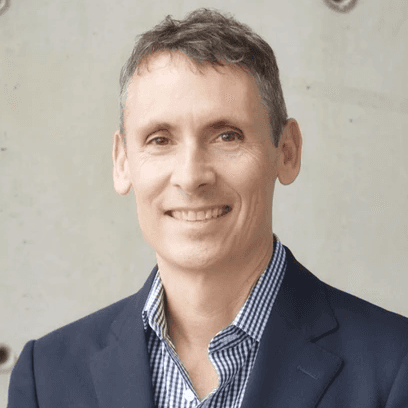
Stowe Talbot
Marine Resources Company International (MRCI); Bellingham Cold Storage Company; Talbot Group
Biography
is the son of Jim Talbot, the American partner in the first ever Soviet-American joint venture company, Marine Resources Company International (MRCI) also known as SovAm. MRCI was a successful fishing venture in Alaskan and West Coast waters, active from 1977-2000. For a period in the 1980’s MRCI was the largest buyer of pelagic fish in the world. Stowe worked for MRCI after college as translator onboard Soviet processor vessels from 1987-1990. Stowe also was owner of Bellingham Cold Storage, which participated in several Russian-bound shipping ventures from 1994-2012. Stowe has been active in many cultural and business exchanges between the Pacific Northwest and the Russian Far East over the years, including the establishment of the Bellingham-Nakhodka Sister City link. Stowe is currently a real estate developer in Bellingham, WA. He attended Yale University and is a fluent Russian speaker.
Memoir of the Founder of Marine Resources Company
Summary of Main Topics Covered
Stowe Talbot’s interview provides a vivid, firsthand account of U.S.–Soviet and U.S.–Russian economic engagement in the Pacific during the late Cold War and post-Soviet transition, seen through the lens of the fishing, shipping, and food trade. Talbot traces his family’s pioneering role in Marine Resources Company (MRC), a large and innovative Soviet American joint venture formed in the 1970s that linked American catcher boats with Soviet processing fleets in U.S. waters. Operating despite Cold War tensions, non-convertible currency, and geopolitical shocks, MRC pioneered barter trade, technology transfer, and shared management between American and Soviet partners, while creating deep person-to-person ties among fishermen, managers, and regional officials on both sides.
Extending into the 1990s and early 2000s, Talbot’s narrative follows the evolution from joint ventures to post-Soviet trade in the Russian Far East, including large-scale frozen chicken shipments (“Bush legs”), logistics partnerships with Russian trading companies and Far Eastern Shipping Company (FESCO), and the growth—and eventual contraction—of regional autonomy amid Moscow-led consolidation. Alongside business history, the interview highlights citizen diplomacy, sister-city relationships, Alaska Airlines routes, and U.S. consular and state-level engagement in Vladivostok and Nakhodka. Talbot’s reflections capture the optimism, experimentation, and ultimate reversal of a pivotal era, making this interview a valuable record of how regional commerce and personal relationships shaped—and were later constrained within—U.S.–Russia relations beyond Moscow and Washington.
Daniel Satinsky: So Stowe, we don’t know each other. This is really the first conversation we’ve had. My understanding is your involvement with the Soviet Union and then Russia goes back at least to the ’80s, and through the ‘90s, and into the 2000s, your family’s involvement goes back even earlier, and so we have a lot of things to cover, and I’m really interested in learning more about what your experience was, particularly because of the Far East and the Far East’s relationship with the West Coast. So, why don’t we just start briefly about your father and your father’s initiation of this joint venture in the 1970s and then move into how that impacted you in your own career from there.
Stowe Talbot: Thank you. Thank you, Daniel. Yeah, yeah, I’m happy to jump in. So, yes, 1970s I was probably in middle school, and my dad, who was owner of Bellingham Cold Storage—we lived in Seattle, but our family business was in Bellingham just about 90 minutes north of Seattle. And it was a company started by my grandfather. My father had inherited it. And it was one of the larger warehouses on the water on the West Coast.
And my dad was looking for opportunities to expand the business there, and one of the things he noticed was that there was a big Russian or Soviet fishing fleet off the coast of Oregon and Washington fishing up to about 12 miles from the coastline, and he thought, well, maybe there’s an opportunity there to invite them to come in and offload at Bellingham and sell into the North American market.
Well, just about this time in 1975, ’76, our senator, Warren Magnussen, had extended the Exclusive Economic Zone (EEZ) of the United States from 12 miles out to 200 miles, and so that meant if the foreign fleets like the Soviets wanted to fish close to our shoreline, where the resource was, they were going to need to work with the American government, get permissions. And one of the things that entailed was that they needed to do their fishing with American catcher boats.
And so my dad, who was not really involved in the fishing industry, but indirectly involved in the seafood business, because he had a public cold storage, he wrote a letter to the Soviet Ministry of Fisheries in 1975 or so and just asked about hey, let’s start a venture where I can help you coordinate with American fishermen and allow you, you and the Soviet fleets, to work in American waters. And he didn’t get very far, but my dad is just very persistent, and wrote letters and letters, and finally got a meeting in Washington, D.C. with the Soviet Minister of Fisheries.
And I don’t know, one thing led to another. It was just by my dad’s tenancy and probably a dose of good luck they did set up a joint venture company. And it looked…it functioned nothing like my dad had initially thought, but that’s the nature of entrepreneurship, is that sometimes just things evolve the way they evolve, and it actually turned out to be a really interesting, innovative, big Soviet-American joint venture company where American catcher boats were hired to fish for these huge Soviet mother ships, processing vessels.
The product that was produced and frozen on board the Soviet vessels didn’t ultimately come back to Bellingham Cold Storage, they went back to the Russian market, but it was a successful venture. And the Soviets didn’t have hard currency, so they learned how to pay with barter, with sending us king crab, and so that developed this joint venture of having a marketing department that dealt with all kinds of seafood products.
Daniel Satinsky: What was the name of the joint venture?
Stowe Talbot: The joint venture was called Marine Resources Company, MRC.
Daniel Satinsky: MRC. And I don’t mean to interrupt the story, but, you know, I know that later joint ventures in the perestroika period had to wait until there was a law that allowed for joint ventures, so in this period of the Cold War, like was there any problem setting this up legally on either the U.S. side or the Soviet side?
Stowe Talbot: I don’t believe so, although given the Cold War animosity and the challenges diplomatically between these two sides it was not easy going. And probably your interview with Tony Allison on Thursday will shed more light on it. He’s writing a book on this himself, so he knows the details of it, and he’s been involved since the very outset in the 1970s through the end of the company in the year 2000.
Daniel Satinsky: Right. So, I interrupted you when you were talking about the barter system. It’s very interesting because the Soviet currency was not convertible into U.S. currency, and this was a business. Your father went into this as a business. So, just talk a little, just please continue with that business aspect of what this was.
Stowe Talbot: Well, my father was proud of the fact that he was only 50% partner with the Soviets, and so the company itself was completely open book, and any money that was earned was shared equally, equitably between the two partners, and he thought that that was one of the key elements that helped the company survive through all these difficult political times, given the Cold War, and then the invasion of Afghanistan, and the downing of Korean Airlines, and it goes on and on and on. And difficulties in negotiating between the Russians and Americans. But like I said, the fact that they were 50-50 partners kind of forced them to come to agreements whenever there were difficulties like that.
But yeah, the initial years I think they paid with hard currency, but that was not sustainable. The Soviets at that time had very little hard currency, and so they needed to find another solution, and so that led to another really interesting aspect of the business, which was they paid for the products that they were taking from American waters, which was pollack and Pacific whiting, and Atka mackerel, and yellow fin sole, sort of low value species, and paying for that with higher value product such as frozen king crab. And then there was a coefficient developed. For every ton of, say, pollack would equal a certain weight of king crab, and then the exchange was made.
And MRC developed their own very proficient marketing department which sold into North America, and Europe, and Asia, and indirectly the Soviets kind of began to learn those international markets themselves because the company had American and Soviet co-directors in Seattle. That was also very important. They shared that leadership role. And then in the Soviet side, in Nakhodka, which is a small town near Vladivostok that was open to foreigners, that was our Russian office, and that also had an American director and a Soviet director. So, indirectly the Soviets were learning this along with us, how to access international markets, what products were worth, and how to go about shipping and logistics.
Daniel Satinsky: And so how did this impact you as a young man in terms of how you saw things, what your experiences were? When did you become involved with this? A little bit about that.
Stowe Talbot: Sure. Yeah, so I kind of experienced it indirectly as a young man in middle school, and high school, and college. My father would have Russian businessmen come over often, entertaining them. I went on several trips to the Soviet Union with my dad in those years. Neither of us spoke Russian. My dad tried a couple times, but it didn’t go anywhere.
In 1978 my father sent me to a summer camp in the Soviet Union, and that was a very formative experience for me. I went with some other Americans, and we were kind of the American delegation in a big summer camp on the Black Sea, in Crimea. Spent a month and a half there. And then later on in college I took…started to take Russian. And then I just remembered—I was a history major—this is at Yale University—and I wrote my senior thesis on the American intervention into Siberia in 1915. So, it was called “On the Wrong Track, Misguided Ideals: the American Railway Assistance Program to Siberia During the Russian Civil War.” So, I must have had an interest in Russia to write that thesis then.
So, yeah, I learned Russian, and then my first job after college is I went to work for my dad’s company, MRC, and I used my Russian. I was one of the translators, called company representatives, on board the Soviet mother ship to be kind of on the radio and to translate between the American catcher boats and the Soviet shipmaster, the captain, coordinating the deliveries of fish products, of nets of fish. And we worked round the clock out at sea. We were away from port for, I don’t know, three months at a time. Really difficult, but my Russian got really good, and I have enough memories for a lifetime. Lots of, lots of good stories of being the only American on a ship of 150, 200 Russians.
Daniel Satinsky: Right. And how did they react to you?
Stowe Talbot: They loved it. You know, they…for them it was, you know, one of their first experiences with a Westerner, and so lots of questions and, you know, curiosity about the West. That was super fun for me. And occasionally we would have port calls where the boats would come in to re-provision and get fuel, and that would typically happen in Astoria, Oregon or Dutch Harbor, Alaska, so the Soviet crews occasionally got a couple days’ worth of, you know, seeing what it was about. Granted, those were tiny little towns, but it was something.
And then the other thing that would happen is occasionally, when there was a lull in fishing or there was a storm or something, the Americans would come up alongside the Russian boat and they would…the American catcher boats, usually a crew of five or six people, they would come on board the Russian boat and share a meal, and tell stories, and joke about. If I was the company rep on that boat, I would be the interpreter for those gatherings.
Daniel Satinsky: Wow. And were those transfers of fish difficult? Was that dangerous or difficult?
Stowe Talbot: Interesting story of itself because it was this venture that developed a technique for transferring fish at sea, on the high seas, by a detaching cod end—and that’s a fancy word for a detachable net. So, the American trawlers would catch a load of 10, 20, sometimes 30 tons of fish at a time, they would bring it up behind their ship. It would be kind of…the net would be floating, they would cinch it up like a purse and then detach it, and then put a buoy on it, and then kind of drag it behind themselves. And then the Russians would come alongside, grapplehook the buoy, and then pull that net up onto their vessel, and then process it over the course of the next, you know, 10, 12 hours.
Daniel Satinsky: That’s interesting. I had no real imagination of how that transfer would take place. So, that kind of a process isn’t particularly dangerous to anyone. The only danger is that you lose the fish, right, that it floats away somehow.
Stowe Talbot: That’s true, yes, yeah.
Daniel Satinsky: And did you form friendships with the Russian sailors, or would you say that, that you were friends with them?
Stowe Talbot: Yeah, absolutely. I mean, any time you spend, you know, three months at a time working side-by-side with people like that you form great friendships, and for many years I would still correspond with some of the people that I met on those vessels.
Daniel Satinsky: Yeah.
Stowe Talbot: And not only friendships, but there were hundreds of Americans that were indirectly involved in this venture, and maybe thousands of Russians that were working on these vessels, so it really involved a lot of people. In the heyday of the 1980s it was one of the—Tony Allison can probably give you the real numbers—but it was, I believe, the largest buyer of fish in the world, of seafood, because it was such an efficient way of harvesting undervalued, very abundant fish species that they were producing, just a lot of seafood.
And the other thing I was going to say is that the American catcher boats that were doing this fishing, they made a lot of money, and many of those fishermen parlayed that success building their own larger vessels, their own catcher-processor vessels, and that was really part of the demise of MRCI in the late 1980s. It was baked into it, and part of the design was this was a temporary phase where the Russian participation would eventually fade out as Americans would build their own catcher-processors and could harvest all this seafood quota themselves. And so that started to happen in 1986-87, and gradually, by about 1990, there was no fish quota left for MRC because the fishery had been Americanized and taken over by American-hulled vessels.
Daniel Satinsky: Okay. Well, maybe this a little odd question, but it seems that initially these were species of fish caught that weren’t popular in American markets, but the Soviets canned them, took them, froze them, processed them, canned them, sold them into their market, so as that becomes Americanized then somehow the market in the U.S. has to have grown for those species of fish or somewhere else, right? Is that what happened?
Stowe Talbot: Exactly right. Exactly right. What I’m guessing happened is that there were particularly—well, two main uses of that fish. One was fish and chips. The Americans have learned how to take Alaska pollack, in particular, which is the most abundant species, and take blocks of frozen fish filets, and you could then cut them into little blocks and bread and batter them, and they became what we now know as fish and chips.
And the other product that they learned how to produce through Japanese technology was artificial crab, kamaboko (surimi). And that was something that was also developed on these boats, is the ability to produce, out of pollack, artificial crab. And that was popular both in Asia and in North America.
Daniel Satinsky: So, on the Soviet side, they lost a big source of protein, and did they replace it somewhere else, or do you have any idea how they managed the loss of a large input into their fish diet?
Stowe Talbot: You know, that’s a really good question, and I hadn’t really thought about it until you asked it. I’m going to speculate that it was a problem because it was a huge amount of protein that was going into their markets. This is late 1980s, so they’re kind of losing control of their historic sources of food production. Things were a little bit in turmoil. I’m guessing that they replaced them with other fisheries throughout the world, you know, off the coast of Africa and South America. And I know they got involved with New Zealand and Australia. So, they probably found some other prospects like that.
And maybe indirectly they, a little bit later in the 1990s—and we’ll talk about this. This is kind of Chapter 2 of my story, is the shipment of frozen chicken from the U.S. to Russia. And I think that was also kind of a stopgap measure to provide Russian populations with some form of protein.
Daniel Satinsky: Oh, interesting, interesting. So, your career with the company, how long did you work on the boats themselves? Did you go out…how many years did you do that, and then what did you do at the company transitioning here into Chapter 2?
Stowe Talbot: Well, very briefly, I probably did two tours of three months each, so I was only out there a half a year. But that was enough to get my Russian up to par. And then I worked in the office. And this is now late 1980s, so the fishery itself is starting to wane. MRC is recognizing that the fishery is going to go away and has to reinvent itself if it’s going to survive, so the late ‘80s were a period where they were looking for other avenues of business.
One of them was okay, well, let’s use our knowledge of the Soviet Union and our contacts there to sell equipment, for example. It could be fishing equipment. So, we got involved with being the sales rep, basically, for many different seafood processing equipment manufacturers. And then we did the same thing for timber harvesting and wood processing. We did that for a while. And so, I took several trips over there and visited trade shows and did translating for the equipment manufacturers here on the American side and had somewhat limited success. But we were trying everything.
And so, I did that for a while, and then I left the company and I went to work for another of my father’s ventures. You know, I had mentioned these boats that—Americans started building their own catcher-processors. Well, my dad did that as well, and he was an investor in a large catcher-processor, and so I went to work for that company for a couple years. And then eventually moved up to Bellingham and worked for my family cold storage business, which I mentioned earlier.
Daniel Satinsky: Right. So, what years were those? What years were you sort of doing the cold storage business?
Stowe Talbot: So, the cold storage business I started, I moved up to Bellingham in 1993.
Daniel Satinsky: Okay. Did you miss the Russia business? Did you miss being involved with that?
Stowe Talbot: Absolutely. Yeah, I did. I did. Fortuitously, about a year later, I had this opportunity to get back involved in the Russian business in a completely different line of work, and that was the chicken, frozen chicken shipments.
Daniel Satinsky: Okay. Who was doing the frozen chicken?
Stowe Talbot: Well, let’s see, how do I explain that? It was an activity that actually had started on the East Coast when somebody had figured out that American poultry producers had a surplus of dark meat. Basically, Americans love their chicken breasts, and they didn’t buy as much of the—they’re called leg quarters, the dark meat of chickens. Well, it just so happens that Russians absolutely love the dark meat, actually prefer it, so this perfect match of wants and needs, and they started shipping large quantities of frozen chicken leg quarters from the Gulf of Mexico to St. Petersburg for the larger populations there in Western Russia.
Daniel Satinsky: These were the famous Bush legs, the—
Stowe Talbot: Bush legs.
Daniel Satinsky: Yes? Okay. This was during George Bush then. Then these were actual sales, these weren’t sort of aid or humanitarian assistance. They were sales, right?
Stowe Talbot: Actual sales, yeah. And I’m guessing that that started in about ’93 or ’94, and then somebody in the Russian Far East figured out hey, you know, we’ve got a much smaller population here, but the same dynamics, economics work, and so I was the lucky recipient, as kind of the nearest cold storage warehouse available for them to ship to Vladivostok. So, there was, from what I remember there was like about five trading companies from the Far East that would make these purchases, and then the—
Daniel Satinsky: These were Russian trading companies or foreign trading companies?
Stowe Talbot: Russian trading companies, and they typically had a representative here on the West Coast, and their main company was in Vladivostok, and they had, yeah, I think… It would have been very difficult for a Westerner to navigate all the import regulations to get into the country.
Daniel Satinsky: I see.
Stowe Talbot: But these were—yeah, five or so competitor importers, and there was a shipping company called Far Eastern Shipping Company, FESCO, that was the main Russian shipping company on the Pacific Ocean. And so, I worked with them and these trading companies, and we had, by about 1995 we had worked it out where FESCO would dedicate a vessel to go back and forth between Bellingham and Vladivostok.
And so, my role in this at the cold storage was to receive product over the course of a month. It would typically be shipped in by rail, sometimes by truck. I would consolidate it, keep track of it, keep it cold, and then I would use my stevedores to load the vessel once the vessel arrived. And loading of the vessel took maybe five or six days, and then another ten days to go across the ocean, unload three or four days, and then back. And it was just like a monthly cycle, and it was just kind of a beautiful thing that happened from about 1994 till the ruble crashed in the fall of 1998.
Daniel Satinsky: Okay, so this was a fairly substantial amount of chicken, correct?
Stowe Talbot: Correct, yeah. Five thousand—
Daniel Satinsky: What would a ship like that hold?
Stowe Talbot: Typically, four to five thousand metric tons. And it was once a month, so you can multiply that by 12 (months) to get the annual amount. Still a tiny amount compared to what was leaving the Gulf of Mexico, maybe, you know, they had probably five or six times as much from there. But still it was a substantial quantity. And it was good business for us. It was just one of many lines of business that I had at the cold storage.
But it was fun for me because I was back involved in doing stuff in the Russian Far East, but I had no real skin in the game. I had my…my business was operating just fine, and I could kind of get as involved as I wanted to be in this thing, and I just kind of chose, out of curiosity and maybe a kind of curious about how things were developing in the 1990s, a super interesting time, as you know, where the Soviet system had fallen apart, and there was kind of a strange kind of freedom happening, and the possibilities of something really substantial happening to this nascent country.
And for us in the Pacific Northwest, we just kind of had this idea that maybe there was something, kind of a special relationship between what we have and what the Russian Far East has, kind of a, maybe there’s a compatibility there, and we could be part of something, the growth of this. We were curious about whether the Russian Far East would kind of develop its own identity and kind of independence away from Moscow. And the 1990s were all about that, just sort of seeing how it would develop.
And so for me, in this chicken trading business, I got to know my counterparts on the Vladivostok side, their cold storage. Super interesting to me just to see how they were operating. And maybe with an eye to could this develop into something, is there an opportunity for me here. I wasn’t really interested in the trading side of the business, but certainly something to do with infrastructure, or logistics, or shipping, or what there might be there. And so, like a lot of people I got very involved and saw the growth of optimism, and then slowly sort of the disillusionment with like this is a really tough place, and there’s a lot of unknowns. And I think—
Daniel Satinsky: When did that disillusionment or reality bites kind of moment start happening? By 1998? Was it the crash that did that?
Stowe Talbot: It was the crash, and some businesses, when I was very aware of some of the other ventures that were going on at the time, and talked to a lot of other people that were doing kind of similar things that I was doing there. So, some of the things survived the crash and continued on to the early 2000s.
But definitely after ’98 there was this idea that it’s tougher and risker to do business here than we had thought and that maybe, you know, one thing was that Americans were maybe actually less predisposed to working in that environment than, I’ll say—I’m talking about the Russian Far East—but the Japanese, and the Koreans, and maybe the Chinese, to a lesser extent were kind of better positioned to deal with that kind of environment where there was this kind of gray area with, I’ll say, corruption or lack of clarity about what is ethically right or wrong. Yeah.
And certainly, the Americans were typically individual small players, whereas the Japanese and Koreans were part of bigger corporations’ infrastructure that were deeper pockets, more willing to take on risk, and had a more Asian mentality about how to navigate those uncertain waters that was Russia in the 1990s.
Daniel Satinsky: Right. So, those companies, those trading companies, did they grow and become big enterprises out of all this trade, or were they also small trading companies that stayed small, but someone became very wealthy from it? I mean, could you describe—
Stowe Talbot: Are you talking about the chicken trading?
Daniel Satinsky: Yeah, the chicken trading. Those Russian trading companies, I’m curious about their development as you saw it in this period.
Stowe Talbot: Well, my memory is foggy, and I wish I had more…I had kept more information about those companies, but I can recall in maybe three of the five instances they were companies by people who had made their money elsewhere, or were former government employees that had special contacts that sort of came with their own sources of money, of ways of dealing with this. But in a couple instances there were true entrepreneurs, younger people that had managed to beg, borrow or steal enough money to kind of start the shipments, and had made enough money on each shipment to put it back in, and sort of grew their company up.
And I don’t know what became of those five trading companies now, whether they faded off into the… You know, in many cases, at least in the Russian Far East—I can’t speak for Western Russia—but if you became a successful entrepreneur and made money, very often you would jump ship and move to New Zealand, or Canada, or the U.S., and base your operations from there, and then you could easily just divest completely as things changed.
And of course, as you know—well, I’ll speak for the Russian Far East. There was this dynamic going on in the 1990s where we watched a certain level of independence on the part of business entities there growing on their own, but towards the end of the 1990s they started to be bought up by Moscow companies, larger companies, and there was kind of a consolidation, you know, very…hard to notice at first, but very apparent by the 2000s, that larger entities from Moscow were taking over the Russian Far East entities. And so that idea that the Russian Far East was going to become kind of its own, head its own base of power, that was quickly swept away.
Daniel Satinsky: Yeah. And the shipping business, ports have the reputation of being criminalized, and particularly Russian customs in those days. And when you were saying operating in those conditions, is that partly what you were referring to? I mean—
Stowe Talbot: Yes, indeed.
Daniel Satinsky: —did you encounter that criminality in terms of what you were doing?
Stowe Talbot: Well, some of it I just wasn’t exposed to, or I could maybe see glimpses of it, but when I would go for visits or visit people that aspect of the business I didn’t really see directly. So, I’ll talk about one interesting aspect of the frozen chicken trade, which was when we were shipping out of Bellingham, it was shipped by bulk, which means basically pallet loads of chicken, boxes of frozen chicken loaded onto the vessel just like that in the hull of the vessel, very exposed to…visually you could see exactly what was coming on and off, so there was less opportunity to kind of fudge the numbers, I’ll say.
After ’98, when the frozen chicken business—that business did start to come back after six months or so. It came back not through Bellingham. They ceased altogether shipping by break bulk. They would ship inside containers. And that opened up the opportunity, from what I’ve been told, to fudge a little bit on what was being imported into the country. So, you could ship several different things, but you would hide certain items in the back of the container, and it was much harder to kind of see, and there was much more opportunity to kind of work with the customs brokers who were kind of in on the action a little bit, and yeah.
Daniel Satinsky: Yeah. Where did that trade for chicken move to? What ports did it go through?
Stowe Talbot: So, after ’98 it started to come back a little bit, and then more and more, like I said, by container. And that would typically be leaving from Seattle, or Oakland, or Long Beach, and then go through Busan, Korea, and then loaded on a smaller feeder vessel that would go into Vladivostok or Nakhodka.
Daniel Satinsky: Oh, okay. And did you lose money in 1998? Did people default on anything with you?
Stowe Talbot: I can remember just only one instance where we were due probably, I’ll say, 30 or 40 thousand dollars of past storage due, and I tried to get it out of the person, and I actually went down to San Francisco to visit him just to beg and plead and negotiate a deal, half off or something like that. I think the deal was we actually were holding some of their product, and he needed the product to be released from the cold storage, but he wasn’t paying his storage bills. So, on a promise I released his product, and he never paid me. He reneged on his promise.
Daniel Satinsky: Well, so your chicken business out of your cold storage kind of came to an end with 1998.
Stowe Talbot: That’s right.
Daniel Satinsky: Did that end your involvement with—oh, let me, before I go there. So, while you were involved with this, was there a community of people in your area who were also involved with the Far East, Russian Far East, in various businesses, and were you all aware of each other? Did you have associations? Did you have informal conversations? How did that work in terms of its impact on a business community here?
Stowe Talbot: Yeah, so I can remember that there was…the U.S., for one thing, had a consulate in Vladivostok, and then for several years in the late ‘90s Washington state even had a trade representative there. They hired somebody and had an office. And again, part of that kind of initial euphoria about the opening up of Russia. And there were lots of entrepreneurs from the Seattle area that I would keep in contact with and discuss. Alaska Airlines, our local airline, had a…started operating a direct flight through Anchorage to the Russian Far East, and that made going to Russia a lot easier. You didn’t have to go through Japan or Korea as you did previously. And that operated from, I’m going to say, ’97 to 2001 or something.
So, there was, yeah, a lot going on business-wise. I’m probably missing some great examples there. But on the cultural side as well. We had established a city sister relationship between Bellingham and Nakhodka, and through that relationship many different exchanges took place, and a lot of people came over from Nakhodka and visited us, and lots of groups came over and visited them. Summer camp exchanges. Kids went back and forth. Yeah, a lot of different really interesting activities and exchanges, and friendships being formed, yeah.
Daniel Satinsky: Yeah. So, the citizen diplomacy side of things developed alongside the business, right?
Stowe Talbot: Indeed, yes.
Daniel Satinsky: Yeah, yeah. So, maybe I’m jumping ahead, but what do you think the impact of those experiences was on the Russians who participated, and the Americans, I guess, and do you think it lasted, that whatever that impact was, is it having a lasting impact or not? I’m just curious what your thoughts are.
Stowe Talbot: I do. You know, it’s unfortunate that the politics turned out the way they are and that there’s kind of been a re-closing of that window, because a lot of the contacts and the changing of mindsets that happened during that period kind of all came to nothing. And for me personally it was…I would never take that away from my—I mean, it’s a beautiful thing that contributed to who I am as a person, and I’m sure for a lot of the Russians that had the opportunity to either work with or to make friendships with Americans was something just irreplaceable.
Daniel Satinsky: Yeah. So, was there, after ’98 was there a Chapter 3 for you for activities dealing with Russia?
Stowe Talbot: I’d say it was kind of a slow wind down. I’ll take two examples. Although the frozen chicken business did evaporate, I still continued for about 10 years to work with one trading company that had a business, just one shipment per year that happened in September, and they would load up different kinds of not only frozen product, but chilled product and dry product, basically an entire grocery store in the hull of a vessel, and they would take it up to the far north, to the Arctic Circle. So, they would go to about five different ports up on the Bering Sea and unload just before the ice set in.
Daniel Satinsky: I see. But just once a year.
Stowe Talbot: Just once a year, yeah, so it was just a…
Daniel Satinsky: So, were those considered exotic or luxury goods for those folks that purchased them, do you know?
Stowe Talbot: Well, it was apples, and potatoes, and oranges, and bananas, and—
Daniel Satinsky: Okay, staples. Staple kind of food.
Stowe Talbot: Staples, yeah. And then they would always throw some snowmobiles on there, and a couple aluminum hull boats, and equipment, and whatever those kinds of villages would need to get them through the winter.
Daniel Satinsky: I see. So, that continued for some period of time.
Stowe Talbot: Yeah, till about 2012, I would say. That was also—it jogged my memory—it was that one of the oligarchs had made himself governor of Chukotka, I think, and so he was infusing—
Daniel Satinsky: Roman Abramovich, yeah.
Stowe Talbot: That’s right. And he had infused that particular province with a lot of money, so they were able to afford this for a while.
Daniel Satinsky: I see, I see. I see. Interesting. Okay, okay. And so, after that wound down, there’s no business ties, really, that survived into the 2000s beyond that. How long did that shipment go on, that once-a-year shipment?
Stowe Talbot: Probably from 2000 to 2012 or so.
Daniel Satinsky: Oh, all right. Okay.
Stowe Talbot: And I’ll mention one other ill-fated venture that we tried. And Tony Allison, who you’ll talk with on Thursday, he was involved with it as well. But there was five or six of us ex-MRCI people that threw our hat into a venture of we thought, well, you know, we should try to do business with some of the Russian Far East fishing companies. They have an old, aging fleet that is in need of renovation, and can we come up with some sort of consulting business where they pay us to take their vessel, and we would either renovate it in a Chinese port, or a Korean port, or even in Seattle to modernize it and make it more efficient. And that didn’t really go anywhere. That was probably 2014 or so and lasted a couple years.
Daniel Satinsky: Why didn’t it go anywhere? Did they have other alternative ways to do the same thing, or they weren’t interested in modernizing? Which was it?
Stowe Talbot: Well, I think in retrospect one was the fishing companies at that time was a little bit in turmoil, so it was really hard to get a decision out of somebody who could actually commit to a $2 million ship renovation project. It was also the start of the period in the fishing industry where big Moscow money was starting to come in and buy up and consolidate these fishing companies, so that made it also a little bit difficult. And also thirdly I think they looked at a North American company and saying, you know, why do we need—I think we have the resources to figure out how to renovate our own vessels, if you’re taking it to Korea or China, we can do that ourselves, we don’t need to pay you.
Daniel Satinsky: Yeah, we don’t need you. We don’t need to pay you to do that. Yeah. Do you think they were right to think that?
Stowe Talbot: Perhaps. Some of these companies, given, if they had found the right people, there was certainly… The Russians are super sharp people. If they find the right project and the right people to put on it, yeah, they could have done it. I think what actually happened was there was a shipbuilding, kind of a national shipbuilding program that happened that brought a lot of new builds onto the scene in the Russian Far East, and a lot of older boats, instead of renovating them, I think they just kept the quota and put the ships to the scrapyard, and ended up not renovating them.
Daniel Satinsky: I see. So, it just sort of occurs to me. So, you dealt with all these shipping companies from a period in which they were part of a society which had no private business, and they had very little experience with international business practices, to a period in which they could say well, we can do this stuff by ourselves, we don’t need you. I mean, can you talk a bit about how you saw them change over this period of time in terms of the sophistication and how that related to their interactions with you and people in MRC?
Stowe Talbot: Yeah, well, you know, the period that I was most involved, in the ‘80s and ‘90s, there was a desperate need for Western innovation and modernization, and that came by fits and starts, some of it successful and some of it not. I can say that hearing third party in the 2000s in the Far East in the fishing industry, in particular, in the fish processing industry, there have been built some really state-of-the-art vessels that would hold their own to any country. And also, shoreside fish processing facilities in Kamchatka and Sakhalin, salmon processing facilities, crab processing that are really, really top level that are actually even better than some fish processing facilities in North America. So, somehow, they figured it out. I mean, the Russians are very smart people, and innovative, and given the right circumstances they will be the best of the best.
Daniel Satinsky: And so when all this, when you were participating in these years, did you feel like okay, this change in Russia that I’m participating in, this is permanent, this relationship between Russia and the rest of the world, and the United States was going to continue to grow, even though it would have ups and downs? Did you think that there was no way this was going to go—well, I guess the way we’ve turned out?
Stowe Talbot: Yeah. That’s a really interesting question, and I think if you had asked me at the time, in the ‘90s, for sure, I would have said this is irreversible. And what I’m witnessing here, as the Soviet system has dissolved, this new freedom will allow the great potential of the Russian people to rise up and, you know, more of a market free enterprise system.
But I think in retrospect what we were witnessing then was not true freedom, it was more about… Because true freedom is something that is locked in with the institutions that are guaranteeing fairness, and freedom, and recourse, and kind of a tolerance that’s baked into the institutions. That’s what we’re used to in the West. Whereas what we were seeing in Russia at the time in the ‘90s was not that. It was just the absence of what was there before.
And so what began to happen in the late ‘90s and early 2000s was as institutions began to regain control, it didn’t necessarily happen in the same Western tradition of guaranteeing business rights, and fairness, and equity. It was more about state control. And that’s different. It didn’t have to go that way.
And it brings up an interesting question about how history evolves in general. Is it about kind of the inexorable inertia of a society and its systems or is there a role that individuals play in the evolution of history. And I don’t know what the answer to that is. That’s kind of almost a philosophical question. But I think with Putin coming on the scene, and given who he is, and his needs, I think Russia reverted to a kind of, let’s see, authoritarianism is maybe one way of putting it, but kind of a patrimonialism, maybe, sort of more of an Eastern style situation where the ruler is taking the state and having it serve his own needs rather than the needs of the citizens.
Yeah, and so there’s, you know, I think Putin has taken some tendencies of Russia, you know, this idea of pride, and patriotism, and nationalism, and the Orthodox church, and traditionalism, and he’s kind of used them to his own ends to make this consolidation. And unfortunately, in the short run it makes for a cohesive, successful country, but in the long term it doesn’t harness the power of individuals, and individual companies, and I think in the long run it will not play well for the Russian system.
And it makes me think of something that a historian George Kennan, I think, wrote back in the day, that Russian history seems to have these waves of moving towards the West and then rejecting the West, and then moving back to the West and rejecting it, and I think what we see here is just one—we’re in the midst of another Cold War rejection of the West and its values here.
Daniel Satinsky: Yeah. Well, so are there things that we missed that you wanted to talk about? Because, I mean, I think we’re…it seems like you just provided a pretty good summary of how this…the end point of this long period of involvement. But are there things there, stories and examples, things that we didn’t talk about that you really wanted to, that we missed?
Stowe Talbot: No, I think we kind of covered the big bases. And for me it’s a really interesting story of just kind of, as an observer of history, what we’ve witnessed in Russia is, taking out the disappointment and the emotions from it, it’s just kind of interesting to follow what has happened, and we’ve witnessed some really interesting times there.
And I think maybe the one piece of optimism I can take away with it is that in my lifetime I hope to see kind of an opening up again of Russia to the West and Western ideas, and maybe there’s some involvement for me there. It’s been so rewarding for me to have that window on this strange foreign place. I remember in the 1990s going there with my new Russian language skills, and I had this business opportunity that I could kind of pursue, but I had no skin in the game, so I didn’t really have any risk.
And it was fun going to Vladivostok and seeing this kind of culture that was newly opened up to the West, newly visible, and here they were, they look like Western Europeans, and yet their kind of their mentality was so different, and they had grown up with something totally different, and kind of isolated, and how does this play out. And it was just super interesting to me just as kind of an observer of this. I had the good fortune of getting married to a young woman from Nakhodka, so now I have family in the Russian Far East. And that’s another kind of interesting window on kind of cultural ties there.