Patricia M. Cloherty
Chair and CEO Delta Private Equity Partners
Biography
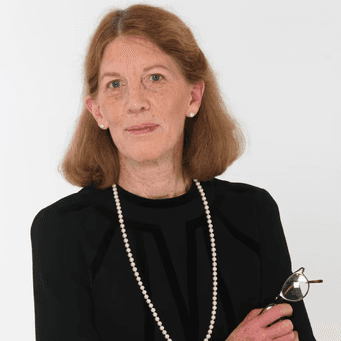
Patricia M. Cloherty was a seminal figure in the post-Soviet foreign private equity investment community in Russia. As the manager of the US government-funded private equity company, The US Russia Investment Fund (TUSRIF), that transitioned into Delta Private Equity Partners, LLC, she was one of pioneers of Western direct investment in Russia’s new private economy. As a leader in this new financial sector in Russia and by virtue of her personality, Patricia was a highly visible and influential business leader among the foreign business community. She was named “Businesswoman of the Year” by American Chamber of Commerce in Russia (AmCham) in 2004. She is particularly known for her astute management of the TUSRIF portfolio and the return of capital to the US government that led to the formation of the US Russia Foundation. She is also known for her impact on her Russian employees who learned about private investment from working with her, including Kiril Dimitriev, former managing director of Delta Private Equity Partners, who later became the CEO of the Russian Direct Investment Fund.
Given her importance in the private equity sector of post-Soviet Russia, she should be included in this archive. Unfortunately, there is no video of the interview and information she provided for the preparation of Creating the Post-Soviet Russian Market Economy. Ms. Cloherty passed away in September 2022 foreclosing any opportunity to record a new video interview. So, in collaboration with Cynthia Wing, the representative of her estate and trustee of her trust, we are including here a variety of information sources about Ms. Cloherty. In place of the video, we have included her written response to interview questions that she submitted for Creating the Post-Soviet Russian Market Economy and several news articles about her work in Russia.
Summary of Main Topics Covered
Patricia Cloherty was a pioneering figure in post-Soviet Russia’s private equity sector, bringing decades of international venture capital experience to a market that was only beginning to develop the foundations of private enterprise. Initially drawn into Russia in 1994 through a U.S. government initiative, she became a central leader of the U.S. Russia Investment Fund (TUSRIF), later transforming it into Delta Private Equity Partners. Under her leadership, the firm invested hundreds of millions of dollars into more than 50 Russian companies across sectors such as financial services, consumer goods, media, and technology, helping to establish entirely new categories of business including mortgage banking and consumer lending. Cloherty emphasized that her mission was not to “reform” Russia but to build viable, profitable companies in a high-risk environment, demonstrating that private enterprise could succeed and scale within the Russian context.
Cloherty’s impact extended beyond capital deployment to the development of human capital and entrepreneurial culture. She built and led predominantly Russian teams, fostering professional skills, transparency, and incentive structures such as profit-sharing that were novel in the local environment. Her investments achieved strong financial returns and were largely exited successfully, while also contributing to the emergence of a new generation of Russian business leaders. She remained skeptical of the idea that Russia would or should adopt a Western economic model wholesale, instead viewing its evolution as inherently distinct and driven by local conditions. Her legacy reflects both the possibilities and constraints of foreign investment in Russia: while institutional transformation was limited, targeted private equity investment proved capable of catalyzing new industries, shaping managerial practices, and integrating Russian companies into global markets.
Patricia M. Cloherty was Chairman and CEO of Delta Private Equity Partners, LLC, manager of The U.S. Russia Investment Fund and Delta Russia Fund, L.P., two venture capital funds with over $500 million invested in 55 Russian companies. She was also a senior advisor to UFG Private Equity, partner firm to Delta Private Equity.
Ms. Cloherty is former Co-Chairman, President and General Partner of Apax Partners, Inc. (formerly Patricof & Co. Ventures, Inc.), a multi-billion-dollar private equity company. She was also a past President and Chairman of the National Venture Capital Association of the United States.
In 1981, Ms. Cloherty was the founding President of the Committee of 200, a prestigious organization of the country’s leading women entrepreneurs and corporate executives. She held various directorships and was a former Trustee of Columbia University, a Trustee for Life of International House, and Trustee Emeritus of Columbia University’s Teachers College. She served in the Peace Corps in Brazil from 1963 through 1965.
In preparation for a telephone interview with Ms. Cloherty, a set of questions was sent that she answered in an April 23, 2021 email, with two background points sent by email on May 2, 2021, both quoted below.
April 23, 2021, email from Patricia Cloherty.
My answer follows: to be read with your questions. Response #1 is long. In order to place the setting of my going to Russia, but use what you like.
Satinsky question: When did you get involved in Russia and why? Were you attracted by business opportunity, the chance to reform Russian society around American & Western principles, the opportunity to participate in history, the experience of adventure in the exotic “Wild East” or something else?
Cloherty answer: I got involved with Russia at the end of 1994, and that was totally by accident. I was involved in extremely high risk investing for almost four decades in five countries – the US, UK, France, Israel, Japan – all to secure higher than average returns for investors to adjust for the risk. Higher than average returns is defined as the return higher that on other asset classes, such as marketable securities, oil and gas, real estate, or any other asset classes, in any given year.
Russia as a target? Never thought of it. I had read a Kissinger book in the early 90’s; the chapter on Russia said the country is “sui generis”. Given its’ unique history and geography, it will define itself, post-Soviet Union. I never saw myself as an actor in this evolution.
However, at the end of 1994, the White House Personnel Office called to see if I would go on a mission with President Clinton, to see President Yeltsin, to discuss “deliverables” from the US to the struggling country.
Here is the summarized conversation:
WH: Will you join POTUS on a mission to Russia to discuss private sector development?
PMC: Russia? I’ve never been there and don’t speak the language.
WH: They told us you would quibble.
PMC: Quibble! I’m a Latin Americanist and speak only Spanish and Portuguese. (More discussion.) He explained that the Secretary of State, Condoleezza Rice and able aides, in 1989, had conceived of a plan to assist Eastern and Central European Countries to privatize economies after the Berlin Wall fell and Russia was bankrupt. Russia was added by legislative amendment in 1994.The first such entity for this was the Fund for Large Enterprises in Russia (“FLER”).
I agreed to this challenge against a background of ignorance and joined the mission. While there, since I wasn’t an official, I took time to hire a helicopter to visit a couple of companies, a plywood manufacturing plant north of Moscow and a brewery to the south. I found nice, smart people, but the companies, as such, were catastrophes.
I told the White House group to dump me after the mission, as I had full responsibilities with my firm and our industry. But they did not “do the dump”. I stayed on and got immersed in Russia for years after my retirement.
Satinsky question: What organization or company did you work for? What were the goals, purposes and activity of that company or organization? What were your goals & responsibilities?
Cloherty answer: I worked for Patricof & Company Ventures (now Apax Partners, UK). When we started in 1970, we financed mainly early-stage companies. The venture capital industry itself was early stage at that time. We grew in both capital under management and geographical scope over the years.
When the “Russia gig” came up, I was President and General Partner of my firm, and extracurricular, I was President of the National Venture Capital Association. Our goal always was to make higher than average returns on invested capital. With my partners, I hired/fired professionals who worked in teams with us to select promising companies in which to invest.
Satinsky question: What was the frequency and nature of your interaction with Russians, both professionally and personally? How deeply do you think you got involved in Russian life? What cultural differences stand out to you and what role did cultural differences play in your interactions with Russians?
Cloherty answer: I had little interaction with Russians, except for one scientist we backed out of IBM, making semiconductor chip packages pursuant to patents purchased from IBM.
In Russia, of course, it was different. My staff of 33 was Russian, except for two or three, and virtually all were multilingual. The financial professionals were highly educated, many in the US or UK. The support staff, i.e., driver, cooks, administrative personnel, were smart, loyal, hard-working and open to new ideas from me, a strange American. I attended their christenings, weddings, and birthdays with great joy. Mutual trust was the key.
Satinsky question: What impact do you think you had on the Russian economy, Russian institutions and Russian life? Looking back what were your successes and failures? Were your successes what you intended or something unforeseen? If you had failures, what factors led to those failures?
Cloherty answer: Our impact was substantial. Our firm’s first name when the US Government (“USG”) was involved was The US Russia Investment Fund (“TUSRIF”). When USG stopped funding after two years, (It’s idea of long-term investing), we raised another $500 million privately around the world and became Delta Private Equity Partners (“DPEP”).
We launched 55 new companies – first mortgage bank, first credit card issuing bank, first bottled water company, etc., all managed by Russian entrepreneurs. In 2001, we launched The Center for Entrepreneurship, to train in such skills as managing cash flow, hiring and reward key people, and so on. Fifty-two of the companies were sold for extraordinary returns. Our failures were insignificant, given the business we were in. In addition, all the employees shared in profits from investments, a totally novel concept of “sharing the wealth” with investors.
Satinsky question: What impact do you think your experience in Russia and your interaction with Russians had on you professionally and personally?
Cloherty answer: I grew to respect deeply most of the Russians I worked with and their country. We are still in touch today. Regrettably, I fell on the ice walking home, thereby exacerbating existing back problems. Thus, I left for extensive surgery in the US. Some colleagues visit my hobbling self, though since the Pandemic, we are all just emailing and telephoning.
Satinsky question: Do you agree that Russia ended up rejecting the US model for its economy and institutions? If so, why do you think this happened?
Cloherty answer: No. Like Kissinger, I do not think Russia is bent on emulating any other system, except at the margin. I was at the entrepreneurial margin, which they loved, because if you do it right, you can support yourself and your family, without resorting to stealing heifers, digging up railroad tracks, or prostitution for a few rubles. Having oligarchs fleece the country is not an acceptable alternative to entrepreneurship for normal people, but they will have to sort that out.
Hope this is helpful. Good luck with your book.
May 3, 2021, email from Patricia Cloherty:
Two background points:
DPEP was in private investment markets, the primary risk of which for investors is profound and often sustained illiquidity. Mike Calvey, Drew Guff, a a few other smaller groups were in that hitherto untouched area. Most investors, world-wide, invest in public securities markets where, at least theoretically, you have liquidity. Come a downturn, sell, without the heartburn of living through any broad correction that may or may not, occur. Bill Browder, for example, was a very successful investor in public markets. Though a good friend and always straightforward with me, he wouldn’t touch private markets, for that reason.
Interviewees should know that I disagree with your major premise. We were not reforming a country. It was all we could do to build 55 companies from scratch where no legal, regulatory or entrepreneurial climate had existed since early in the Twentieth Century. If we succeeded, others might emulate (and, hopefully, bring us deals). But our goal was the health and value of our portfolio companies.
In 2004, DELTA Private Equity Partners, published a small volume containing separate success stories of Russian and American entrepreneurs some that were financed by The US Russia Investment Fund, managed by Delta Capital Partners and some that were not. The foreword from Ms. Cloherty and introduction give a brief history of TUSRIF, as quoted below.
This book was inspired by our work over the last decade with Russian entrepreneurial management teams and the companies they created. That experience reinforced our conviction that the true engine of Russia'seconomy should be and will be the many smaller, growth-oriented companies that continue to emerge.
In Russia today, one hears much about mega-companies and their owners and managers, the so-called oligarchs. But while the oligarchs dominate the headlines, a new class of entrepreneurs is hard at work – growing companies, taking risks, innovating, and in many cases reaping remarkable rewards for their efforts.
The new entrepreneurs are active in diverse fields, from high technology to consumer goods, from marketing to finance to media. The include men and women. They are from Moscow and other parts of Russia, from former Soviet republics and from Europe, America and elsewhere. They come to entrepreneurship often from very different backgrounds, with different ideas and aspirations.
As a group, these entrepreneurs are laying the groundwork for an increasingly dynamic, market-driven Russian economy. Individually, though, each entrepreneur has a highly unique story to tell.
For a decade, The U.S. Russia Investment Fund has been providing risk capital to Russia's new entrepreneurs. For a decade, we have been assisting Russia in developing the culture of entrepreneurship. As the Fund celebrates its tenth anniversary, we want to share some of these remarkable stories with you.
We thus thought it fitting now to publish a small book featuring some of Russia's ground-breaking businesspeople. The centerpiece of this book is a series of 12 candid portraits of entrepreneurs. Some of these entrepreneurs were financed by The U.S. Russia Investment Fund, others were not. We have also included a short introduction on Russia's entrepreneurs of the 18th and 19th centuries, since there are interesting and important antecedents to today's activities.
We thank all of our supporters for their assistance over these ten pioneering years. We continue to move forward, as a team, to demonstrate that your support was well-founded.
We hope you enjoy reading the book!
Sincerely,
Patricia M. Cloherty
Chairman and Chief Executive Officer
Delta Private Equity Partners
“The U.S. Russia Investment Fund ("TUSRIF") was formed in Russia in 1995 under private management, but with the United States Government as its sole financial sponsor. TUSRIF's mission was to promote the development of a free market economy in Russia by providing investment capital –equity and debt – to well-conceived, potentially high-growth entrepreneurial companies. This was to be combined with technical assistance to management teams seeking to grow productive, transparent and valuable companies. Once such a program was established and working well, the TUSRIF Board of Directors was to form a private successor fund. Additionally, it was to propose to the U.S. Government a plan for future use of the capital re-flows from TUSRIF's successful investments, a plan that would seek to further accelerate entrepreneurship in Russia. 2004 marks ten years since the Fund's inception. The primary mission has been accomplished. A successor private fund, the Delta Russia Fund ("DRF"), has been formed and planning for use of capital re-flows has begun. Delta Private Equity Partners ("DPEP", formerly Delta Capital Management) has managed TUSRIF over this time. DPEP has invested approximately $300 million in some 44 entrepreneurial businesses in Russia, including the following:
DeltaCredit Bank, a leading mortgage bank.
DeltaBank, a leading consumer lender.
DeltaLease Far East, a regional equipment lessor.
Lomonosov Porcelain, a historic and well-known manufacturer of high-quality china.
Saint Springs, a leading bottled water company.
StoryFirst Communications, a leading television network.
USP Compulink, a rapidly growing systems integrator.
Two SPAR supermarket chains, one in Moscow and another in the Middle Volga region.
The dynamism and increased liquidity that have characterized the Russian financial markets since 2002 have contributed greatly to the success of TUSRIF's investment program, reflected in several recent sales of investment positions at substantial capital values. These conditions also provided the necessary market momentum for TUSRIF to complete its transition to a purely private fund at this time. Uniquely, the U.S. Government's development assistance to The U.S. Russia Investment Fund was the catalyst for DPEP's entry into, and contribution to, Russia's nascent private equity market. Now, with the private Delta Russia Fund also under management, DPEP can build in future years on that valuable foundation.
This small volume, Taming the Wild East: New Russian Entrepreneurs Tell Their Stories, is dedicated to those who, with imagination and great patience, first created then supported Delta Private Equity Partners and The U.S. Russia Investment Fund over the years.”
The following article describes the award ceremony naming her AmCham Businesswoman of the Year, 2004, and here remarks. It includes important details of her career in Russia.
AmCham News
By Paul Hinshaw
April’ 2005
Special Event: Businesswoman of the Year
Delta Private Equity Partners’ CEO Claims 2004 Title
“The American Chamber of Commerce in Russia recognized her work as a pioneering venture capitalist during its Annual Awards Dinner by naming her 2004’s Businesswoman of the Year.
“I am overwhelmed,” the venture capitalist said in accepting her award on April 2. “We look forward very much to working with all of you in developing businesses with young, energetic teams that have great ideas.”
She continued, “I would not have missed this for the world, and we will (continue to) work on both the policy dimensions that create an entrepreneurial economy and the related policies that permit risk capital to flow prudently to the growth companies. We invest equity, so we are always on the bottom of the balance sheet, and I understand that. But we also know how to put it together and make it work.”
The road that Patricia Cloherty – or Pat as acquaintances call her – has taken to achieve her current success has not been the typical one, although the term “trailblazer” could describe most of her work. Pat was one of the first Peace Corps volunteers in the early ‘60s and spent two years in Brazil working to improve the lives of rural youths through teaching women about sewing, cooking, health, hygiene and horticulture, and young men about animal husbandry and agriculture. Despite teaching so-called traditional gender-specific tasks for men and women, Pat did not see limitations placed on what she could achieve in her life.
Returning to the U.S. after her Peace Corps service, she pursued a career in international economic development. Upon her graduation from Columbia University with an M.A. and M.I.A., she held a series of jobs working in Latin America. This work led to an offer from Patricof & Co. Ventures, а venture capital firm, which Pat joined in 1970. The firm, now known as Apax Partners Inc. has $10 billion under management. In 1977-78, Pat took a leave from the company when she was asked to serve as the deputy administrator of the U.S. Small Business Administration in the Carter Administration. It was to be the first of five presidential appointments for her.
In 1981, Pat co-founded the Committee of 200, an international non-profit organization of leading women executives and entrepreneurs. She was its first president. A decade later, President George Bush tapped her to chair the Investment Advisory Council. In 1993, President Clinton appointed Pat to the board of the U.S. Russia Investment Fund; she became its chairman in 1998 and served as its pro bono director until 2003, when its board elected her CEO, the position that brought her to Russia.
The fund, under private management, was originally allotted $440 million by its sole investor – the U.S. government – to back entrepreneurs and growing companies in Russia through direct equity investments in Russian companies in the financial services sector, consumer-related industries, the media and ITC field. Delta Private Equity Partners (formerly Delta Capital Management) was established in 1998 to assume management of The U.S. Russia Investment Fund. With its founding, TUSRIF was able to privatize operations and replace government capital with private sources of funding (Delta Russia Fund) as it returns capital to the US Government. Pat serves as chairman of the board of Directors and CEO of Delta Private Equity Partners, which manages The U.S. Russia Investment Fund and Delta Russia Fund To date DPEP has invested approximately $300 million in 44 Russian companies. In 2004, it sold DeltaBank, which it founded in 2000, to GE Consumer Finance, the global consumer lending unit of the GE, for $100 million. The sale of the bank became the largest deal on Russia’s financial market in 2004.
Pat, however, doesn’t just focus on making investments grow. She believes in helping others grow their potential as well. She has found time to serve as a director, trustee or advisor of 25 not-for profit organizations and 30 profit-making companies over her career. She still actively works with six, including the Center for Entrepreneurship in Moscow, Lexicon Genetics, Inc., Columbia University Teachers College, Columbia’s School of International and Public Affairs and International House at Columbia University.”
Ms. Cloherty further explained her approach to investing in Russia in a September 2007 interview with Reuters, quoted below.
REUTERS
September 13, 2007
MOSCOW, Sept 12 (Reuters) - So you have cash to invest in Russia, but where? Here's some advice from Patricia Cloherty, chairman and chief executive of Delta Private Equity Partners.
"We do not do real estate, we do not do privatizations, we do not do oil and gas, no commodities of any sort, we do no pure technology risk, and we do very few greenfields," Cloherty, a 37-year veteran of the private equity business, told Reuters. An American, she spent much of her career with private equity pioneer Apax Capital Partners before getting involved in Russia in the 1990s as adviser to a U.S.-backed investment fund. That evolved into Delta Private Equity Partners, which has invested around half a billion dollars to date. Cloherty has been here full-time since 2003, and Delta's most recent fund has generated realized annual returns "in the low 200s" percent.
So where are the best returns to be made in a country seen by many as politically risky, plagued by corruption, lacking legal redress and where standards of transparency can be poor? "We do that whole diverse range of products and services that are in demand by Russia's emerging middle class," Cloherty told the Reuters Russia Investment Summit. "It's been concentrated in three areas -- financial products and services, technology, media and telecoms and broadly consumer products and services." Small is beautiful for Delta, an early-stage investor that invests $8 million per deal on average. It has stakes in digital and pay TV firm Almirida, clothes retailer Veshch and OneGlobe, which runs an airline booking system. Recent disposals include Compulink, a systems integrator, at 4.8 times initial investment, and Independent Network Television Holdings, operator of Russia's TV3 channel, at 12.8 times cost. Delta is poised to launch a new fund, its third, and is aiming to raise around $550 million from institutional investors. It will keep its focus on the consumer and treble the size of its typical investment, she said.
POCKETBOOK ISSUE
Transparency is key for Cloherty as she examines prospects in the business-to-business and business-to-consumer spaces. Owners are starting to understand that clarity, especially of ownership, is increasingly key to unlocking value. "It improves your ability to realize value. Having 10 times earnings as your reward, rather than a single tax shielded stream of income, is a pocketbook issue of the biggest sort," Cloherty said at the Reuters office in Moscow. Unlike some of her peers, Cloherty does not consider having ownership control to be vital: "But you have to be very careful with the people that you deal with. You want to deal with people you trust." She does insist on the right of veto on strategic decisions, however. "Elements of control are always built into a minority position, so this is not going naked," she said.
FINDING THE EXIT
Delta has already exited five of the 10 investments made by its second, $120 million fund, set up in 2004. "The Russian market is moving very, very quickly. This rate of investment and exit you would not find in a mature market," said Cloherty.
Disposals so far have been through strategic sales, rather than initial public offerings of stock. "Best price," she explains. "I don't want to complicate my life. Price works." Delta is, however, looking to float one of its companies on the London Stock Exchange, she said, without identifying it. Private equity in Russia typically operates with no leverage. That means the global credit crunch caused by the U.S. subprime mortgage crisis won't have a direct impact on the ability of players like Delta to do deals. Rising company valuations should not pose an obstacle either, said Cloherty, whose career specialization has been in high-tech and life sciences. "There's always a deal," she said. "I'm 37 years in the business. If I thought, we were going to run out of deals, I would have hung it up years ago. Anywhere you go in the world, I can find a deal on a crosstown bus. It's amazing."
30 November, 2007
SUPPLEMENTS – Russian Review 2008
PE's doyenne speaks out
Patricia Cloherty is quite a distinguished figure in the world of international venture capital and private equity. She joined the industry back in 1969 as an analyst with Patricof & Co. Ventures (now part of Apax Partners) when Venture Capital was an obscure corner of financial markets. In her 30 years with Apax Partners she rose to the positions of general partner (1973), President (1993) and finally co-chairman (1998). During her tenure with the company, she was among pioneers of venture capital in Western Europe in mid-eighties and in Japan at the beginning of nineties.
In mid-nineties she was sent to Russia, appointed by the White House to serve (for free) on the Board of Directors of $440 million US-Russia Investment Fund (now Delta Private Equity) financed by the US government. And in 2003 she was elected CEO of the firm.
What made you come to Russia for the first time?
In 1995, when I was a president of Apax Partners US, a $10 billion private equity company, President Clinton appointed me to the Board of Directors of the U.S. Russia Investment Fund. At that time there were neither private equity business in Russia nor people to run such companies.
The US government promised to invest $440 million. But do you know any government to fulfill its promises? Actually, we got $329 million. We successfully invested this fund and are returning all money we got till the last penny. This fund stopped investing on the 16th of June 2004, having invested in 44 companies and sold all of them but the last four. In 2003 a successor private fund, the Delta Russia Fund (DRF), was formed. I returned to Russia to become a CEO of the new management company to manage both funds. DRF already has made 11 investments. Five of them have been sold, with a healthy internal rate of return.
What level of IRR do you expect in Russia?
Mid-double digits. We have already sold a number of companies with better results than that. And we have many new projects in the pipeline. But I don't want all EVCA (European Private Equity and Venture Capital Association) members to be here to compete with us. So, we better not write about it.
What was your most profitable exit in Russia?
Maybe Channel TV3. We invested in eight rounds of financing into this company starting in1995, and we sold it with a return of 14.8 times the investment.
You spent time with private equity companies around the world. Do you think that basic principles of PE are universally applicable?
In most parts of the world, private businesses, mainly family-owned businesses, predominate. They don't like to sell shares (ownership), preferring to borrow instead. This is true for most societies. Such wealthy elites often have banks of their own from which they borrow. PE and venture capital businesses flourish best in societies that believe in equal opportunities for everyone. This morning, I finished reading a book about US Revolutionary war. The US was then a new country. There were no classes, as such, in the US then. Everyone was an entrepreneur. Private Equity and venture capital are natural businesses for such a country where everyone can be and wants to be an entrepreneur.
Do you think that Russian society believes in equal opportunities?
When the old world of the Soviet Union dissolved, everyone had to become someone else because their old world disappeared. Everyone had to figure out how to make a living. In the mid 90’s in Russia, private business was new, very much in a developing stage. Now it is becoming more and more disciplined and sophisticated. People are looking for opportunities, and they are finding them.
Do you plan to launch a new fund?
Yes, we are doing so. We plan to raise $500 million. This is first time in my career when we are using an agent to help in raise money. It is all about communication across long distances and time zones. An agent in the West is very useful in this respect.
Working in Moscow do you feel competition with local financial powerhouses?
Quite the opposite - we generally co-invest with local funds. We have had projects with all major players here – Basic Element, Alfa Capital, Nafta Moscwa and others. We supplement each other. And this is the way to spread risk and to increase deal flow.
It is part of Delta's strategy not to invest into natural resource's projects. Why?
We don't have expertise in investing in natural resources businesses. Working with various commodities requires specific knowledge we don't possess.
How many projects do you have to consider to find one to invest in?
Usually, we invest in one of every 50 projects. In APAX US, we considered 2,000 projects per year to invest in 10 or 12. But it is not correct to compare these situations. In the US it seems everyone is writing business plans and sending them to financial institutions. It is like a publisher who receives thousands of unsolicited novels per year from amateur writers. Most of the business plans were turned down because they came from unqualified people.
Do you regret any projects that you’ve turned down?
I do not regret things. But I have one good example from my experience in the US. It was not my project, and I was not a decision maker in this case. But I asked a young investment manager who was reviewing the business plan of Starbucks, “Who would pay US$3.00 for a cup of coffee?” It was in 1989. You could buy a cup of coffee for 50 cents. Well, it turned out that half the world would pay US$3.00, and more! I couldn't imagine that. This is a story of my experience in retail advice.
You mentioned retail. There is a public notion that retail is one of the best sectors for investment in Russia. Do you agree?
I think that retail is interesting, but it is a difficult area, mainly because real estate is very expensive in urban Russia. This hampers the effective development of retail. We are looking also at technology, media and telecommunication. And we are interested in financial services. Generally, the most promising area for us is consumer-oriented services and products, which include the three areas I mentioned.
Are you taking the political risks of modern Russia seriously?
We are diversified to limit risk. We never invest in strategic or state-controlled areas of the national Russian economy. We think about political risks, of course. But we have never been affected negatively by political issues. In Mr. Putin’s State of the State speech this year, he mentioned as priorities innovation, entrepreneurship, education for a modern economy, and diversification. That is exactly what we are doing. So, it was music to my ears.
What is the main problem for PE in Russia?
The lack of experienced managers. This universe is expanding year-by-year but good management is still a scarce commodity here.
What is Delta's way of looking for new projects? Do you call prospective companies yourself?
Yes, we do call. But we also have other sources. In 2002, we launched a training center for entrepreneurs, The Center for Entrepreneurship, and established the award for Entrepreneur of the Year Award Program. These help us locate able people.
Do you think that the Olympic Winter games 2012 in Sochi will boost the region. Do you plan to invest there?
We are ready to invest in every region of Russia for the appropriate opportunity. I think it is a good idea to organize Games in Sochi. There will be many opportunities, such as in the area of training. A large number of people will be trained to world class hospitality industry standard, which will benefit Russia generally.
You are one of the most seasoned Western managers in Russia, what is your general experience from working here?
Being risk investors, we must be interested in Russia. Change is the essence of our business, the art of making change a positive fact in people’s lives, not a negative one. This is a country of dramatic changes. Therefore, it offers large opportunity.
IPOs are very fashionable in Russia at the moment. Is private equity an alternative solution for Russian companies?
I'd recommend considering PE before doing an IPO. It is not easy, nor is it cheap, to be a public company. It requires a very high level of transparency. Finding a professional private investor is the best way to prepare one's company for going public.
What kind of services can your fund provide to Russian companies to help them to raise their capitalization?
We do not manage or micromanage companies in which we invest. Their managers do that. But we help them to optimize their businesses, to find new partners, particularly in the West, to raise the level of transparency, and to develop smart strategies. That is the value we can add.
© Thomson Financial Limited 1992-2007. All rights reserved.
Tue, 18 December, 2007