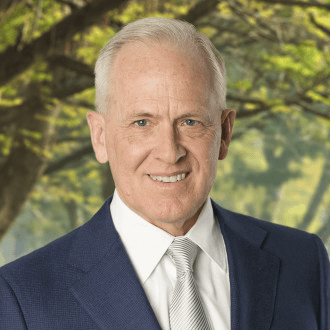
Lee Timmins
Hines, Atlas Realty & Development
Biography
Mr. Timmins is CEO & Founder of Atlas Realty & Development Ltd, which is the successor entity of Hines International, Inc. and its thirty-three-year track record of providing superior international quality real estate management and development.
Mr. Timmins served on the global Executive and Investment Committees for Hines – one of the world’s largest global real estate investors. He has been instrumental in leading the start-up and growth in multiple international markets as well as establishing and deploying development and acquisition funds including the Emerging Markets Real Estate I & II Funds, HC Long Term Hold Fund, Hines India Fund, Hines India Residential Fund, and HRPF. His experience includes over four decades developing, managing and investing in office, residential, retail, and logistics projects across numerous Asian and European markets.
Mr. Timmins received a BBA from the University of Texas at Austin and a MBA from the Cox School of Business at SMU in Dallas, Texas.
Summary of Main Topics Covered
Lee Timmins, formerly a senior executive at Hines, describes his role in building Russia’s post-Soviet commercial real estate sector through some of the earliest U.S.–Russian joint ventures, beginning in 1991 with UpDK (the Main Administration for Services to the Diplomatic Corps). Relocating to Moscow in 1993, he led the development of landmark projects including Park Place Moscow, Pokrovsky Hills, and Ducat Place, introducing Western standards of design, financing, and property management into a market that had previously lacked private ownership and basic infrastructure. These projects were initially funded through global private equity and later supported by Russian financial institutions such as Sberbank and VTB, reflecting the gradual maturation of domestic capital markets. Over time, Hines expanded into partnerships with Russian firms including the Zimin family (Beeline), Belaya Dacha, and UFG, helping to scale development across residential, office, retail, and logistics sectors while building a multi-billion-dollar portfolio.
Timmins emphasizes that success in Russia depended fundamentally on choosing the right partners and cultivating long-term, trust-based relationships rather than relying solely on formal contracts or institutions. He challenges the prevailing narrative that American business engagement in Russia failed, arguing instead that it produced enduring structural impacts: the professionalization of real estate development, the emergence of globally competitive Russian developers and contractors, and the integration of Russian firms into international business practices. Despite the decline in Western investment following geopolitical tensions after 2014, he contends that these contributions persist in both the physical transformation of Russian cities and the capabilities of a new generation of Russian entrepreneurs, demonstrating that American commercial engagement played a lasting and underrecognized role in Russia’s economic evolution.
Daniel Satinsky: Well, one of the things that’s really become clearer as I’ve done these interviews, a couple things, were the importance of certain sectors of the economy, which pretty much didn’t exist in the Soviet time, and real estate being one of them. You don’t have private ownership, you don’t have a real estate market, obviously. So, the development of that and the role of foreigners in the development of the real estate industry, particularly Americans, is really something of interest that I obviously want to focus on with you. And then once we sort of work our way through that, what is the size of the role of foreigners and Americans in the current real estate market. We all, as Americans, we sort of take ourselves as the reference point to judging things, and I want to try and step out of that for a minute and put it in context. But I’m getting ahead of myself. I would like to start with the development of that market post-Soviet times, and particularly what brought you to Russia, when, and how your career developed there.
Lee Timmins: Okay, great. Maybe just as a bit of background. I don’t know if you have any information about the company I work for, but we’re one of the largest real estate developers and investors in the world, so I think about $160 billion in assets. You may know some of our projects in Boston. We’re doing a South Station development right now. We’ve done several things in Back Bay with Robert Stern, Philip Johnson, etc., so we’re a large real estate developer and investor.
Daniel Satinsky: Okay.
Lee Timmins: And I was working for Hines. And if you need any background information, I think my CV is on—I’m on our executive committee, which is our board of directors for our global firm and our global investment committee. But I didn’t start out that way. I was working for Hines in the United States in the state of Texas at the time, back in the early ‘90s, and I’d been working for this firm for about five years when things obviously started happening internationally and in Europe as the Berlin Wall fell.
And back to the point about why I ultimately decided to make a move over to Russia, mostly because I’ve always had a bit of a spirit of adventures, so there wasn’t any master plan of me going over to change the world or anything of that nature. But I’d always been interested in it. In fact, I was in Prague during the Velvet Revolution back in ’89 there on Wenceslas Square, and so the entire transition just really intrigued me tremendously.
And at the time we had two of our board members that were charged with looking at activities or potential markets that we might move into. One of them was charged with looking at Western Europe, and we ultimately set up an office in Berlin, for the same reason, because of the transition from the communist era to the modern era. We set up an office in Berlin. That was the first office. And then my boss, who was the board member, whose position ultimately I took over when he retired, was looking at Eastern Europe. So, we looked at everything from Czech Republic, Poland, Russia, and we ultimately decided that we would open up an office in Russia because—and this was actually before the Soviet Union fell, which is kind of interesting. We did one of the first joint ventures in real estate with an entity called UpDK[^1]. And just to give you a little bit of background, this entity was set up back in the ‘20s to look after embassy facilities for various embassies and to provide services to diplomats. So, UpDK, stands for the Main Administration for Services to Diplomatic Corps. And most people viewed them as a KGB front organization to look after, basically spy on and look after the foreigners. That was why they were set up in the ‘20s. Well, what happened is they had a lot of real estate. They had the embassies and they had excess cash flow that came from the foreign payments in hard currency from embassies.
And so what they did was they start building a project that was commercially oriented, but they didn’t have any idea about how to attract commercial tenants. So, we negotiated with them a deal that we signed in 1991, so before the Soviet Union fell. We negotiated a joint venture to take over this project in Moscow called Park Place Moscow. And Hines—now that was actually before my time. There was a guy before me that negotiated the joint venture. But they needed somebody to run it. And so—
Daniel Satinsky: Can I just ask you q quick question? Do you know how Hines and the Upek…
Lee Timmins: You can just call it UpDK.
Daniel Satinsky: UpDK. How UpDK found each other?
Lee Timmins: Yeah. Another kind of interesting story. If you remember back in, I guess—I can’t remember when it was—when the Soviet Union began letting Jewish people out of the Soviet Union there was a guy who was named Mikhail Barash, who was, basically he was a concert violinist. He left the Soviet Union, somehow wound up in Fort Worth, Texas, decided he couldn’t really make any money as a concert violinist, so he got involved in real estate as a broker, and got to know Hines, our firm, through one of our big projects in Dallas called the Dallas Galleria, which we developed a big project there.
So, when—I think he maybe read a press report that Hines was looking at going into Eastern Europe, or going into Berlin and other places. He contacted us and said look, I can go back, and now that things are really changing dramatically, and if you don’t mind me going in and effectively trying to find people that may be interested in connecting with international businesses, I’ll do that. And so he went over there. He went to Moscow, came here, and he was a broker, basically, a real estate broker. And he ultimately ran into and met with the UpDK guys, and then he introduced us.
They were interested in how do they take their old mentality of just managing embassies to now a very big commercial complex which you need to lease out to corporate, and lease out both housing and offices, and how do they complete a project. They were doing this first development. They’d never done a development of this scale. So, he introduced us, and we ultimately signed up for the joint venture.
That was also at a time where Russia was very anxious to engage with and do these joint ventures, the Soviet Union was. I think it was the first real estate joint venture with this group called UpDK. Then the deal was we came in and we couldn’t own the real estate. It was a bit complicated. We put last money in, and it became first money out, and in exchange for that we then had a deal with them for 20 years where we would get a share of cashflow—it worked out to be roughly 11% of the cashflow for this project for 20 years.
And I remember everyone saying to us at the time—and then, anyway, long story short, they needed somebody to go run the business. I was… You know, there was a memo that was sent around the office at Hines. I said this is interesting. I raised my hand. I said I’ll go there for two years, I’ll commit to two years. And that was in 1992. I came over here in April of ’93, so April 15th of 1993. And I’m still here almost 27 years later, 28 years.
Daniel Satinsky: Wow. A two year commitment morphed into 27, 28.
Lee Timmins: Yeah.
Daniel Satinsky: Did you know any Russian when you came over?
Lee Timmins: No, I didn’t. I didn’t know any Russian yet. And I, you know, I was a young guy up for adventure, and this is what I did.
Daniel Satinsky: Right. And this was the Park Place project? Is that…? It sounds so familiar, but remind me where is it?
Lee Timmins: It’s in Yugo-Zapadnaya on Leninsky Prospekt. It is fairly—
Daniel Satinsky: Is it near Paveletskaya?
Lee Timmins: No. No, it’s not. It’s quite a bit away from the center. So, Yugo-Zapadnaya is, you know, it’s not…it’s probably three kilometers out from the outer orb of the MKAD[^2], so three or four, maybe. And that was our first project. Everyone told us that…a lot of the people that we knew said yeah, they signed a 20-year agreement, they’ll never live up to it, they’ll kick you out, etc. And the Russian government lived up to it to a tee. They lived up to it fully. And actually we stayed a little bit longer than that. We no longer have that project, but we did it, I think, for 22 years.
Daniel Satinsky: Wow, yeah.
Lee Timmins: So, that’s what got me here.
Daniel Satinsky: And was it targeted towards foreign tenants and foreign residents?
Lee Timmins: Yes. Yes, it was. And we had both offices and residential, and so, you know, basically if you were a small company trying to set up a representative office it worked out well because you could have your residence in part of the complex and have a small office in another part. And, you know, it worked out well.
Daniel Satinsky: And at that time there weren’t too many alternatives.
Lee Timmins: Not really, no.
Daniel Satinsky: Rosinka[^3] was there at that time?
Lee Timmins: That was later. Rosinka happened probably, I would say—I don’t remember exactly, but I think it was probably ’96, maybe, ’95, ’96, so two or three years later.
Daniel Satinsky: It was ’96.
Lee Timmins: Yeah.
Daniel Satinsky: Okay. And what was the other one, Pokrovsky?
Lee Timmins: Pokrovsky Hills[^4].
Daniel Satinsky: Hills, yeah.
Lee Timmins: Yeah, that was—maybe I’ll just give you a brief—that was our project as well, so we did that.
Daniel Satinsky: Oh, okay. Sorry, I’m getting ahead of the story.
Lee Timmins: So, basically we did that first project, and then we did a second project with UpDK, and then we did some management projects. We did Ducat Place II, which was a management project. And then by 1996 we decided that we—Hines was doing a global emerging markets private equity fund, and it was a concept that was brand new. Nobody had really thought about a real estate emerging markets fund. And we ultimately committed about 25% of the capital from that first fund into the Pokrovsky Hills project. Originally Pokrovsky Hills, we’d planned to do it for about $80 million, but we ultimately, because of various changes in tax legislation, etc., we invested $100 million of equity in that project.
And it was…you know, something that came about from the early days of Park Place Moscow, we knew that the Anglo-American School was desperate for some new, modern facilities. They’d come to us to ask us is there anything we can do to help. And around that same time we did a project in Prague where we did International School of Prague plus housing as part of a project, and it was working very well. So, we decided we’d do the same thing here in Russia.
And I went to the mayor of Moscow, [Yuri] Luzhkov, and asked for some support. He didn’t really give support, per se, but he had one of the city guys try to help us in finding a site. And went to the Ambassador, U.S. Ambassador at the time, and the idea was we’ll put the school together, and then the U.S. Embassy would be the anchor lessee, the anchor tenant, and lease 40 houses from us for an eight year period, and on the basis of that we could put the deal together, acquire the land, and then develop Pokrovsky Hills, which is ultimately what we did.
Daniel Satinsky: With the anchor tenant and the commitment you were able to have the, what, the financial backing to do that then.
Lee Timmins: Well, yeah. We funded it all equity, but the school had to fund it themselves, which they did through selling seat fees in advance. So, they basically, the school had some capital and then they sold seat fees. So, they’d go to a corporate, and the corporate would say I’ll commit to five students, and I’ll pay you a seat fee of, it was maybe $15,000 or so, so I’ll give you $75,000 for the right to have five students in the school. And they would go to all these corporates. And then ultimately they got a loan from Raiffeisenbank, but they had to have the guarantee from three governments—the U.S. Embassy, the British Embassy, and the Canadian Embassy.
And great story, at the time, before they had—they had one final approval to get for the embassies, it was the British Embassy, and the banker was in the closing room, and he said, you know, we’ve got to have the okay, the green light from the British. So, they called the embassy, and then the embassy basically put them through to Buckingham Palace, and the assistant—this is the story, I think it’s true, the banker told me it was true—he said that the aid to the Queen said her majesty fully supports the school. And with that, the loan was closed for the school, and so the school went forward, which meant our project went forward, and then we built out all of Pokrovsky Hills.
Daniel Satinsky: Wow.
Lee Timmins: But we had a few tough moments. In the midst of our first phase the price of oil plummeted to about $8 a barrel, and we were sweating quite a lot on that. But we kept going, and ultimately we, you know, it turned out beautifully. We ultimately sold it and made about $200 million of profit on a $100 million investment, so it was the most profitable deal we had in the entire global emerging markets fund.
Daniel Satinsky: Yeah, that’s very impressive. And how big was—how many units was it when you built it out?
Lee Timmins: 207 units of housing, and then the school was a school for about 1,250 students. So, we didn’t finance the school, except that we gave them land and we built all the utilities, so we basically financed the land and the utilities, and then the school paid for the vertical themselves through this loan and the capital contributions. And then we built out all the houses. Embassy leased 40 and then we leased out the rest of it to basically corporates.
Daniel Satinsky: And was it always your intention to build it and sell it to a permanent owner?
Lee Timmins: Yeah, that’s, you know, these private funds, that’s the entire idea, is that we build and add, we create the value, and then ultimately we exit. So, we’ve done several of these in Russia now. We’ve funded things through, let me think, two global private equity funds—sorry, three global private equity funds. The total of each of those was about $1.4 billion, of which around a quarter of it went to Russia. Then we had a number of other, what we call, separate accounts, or one investor and then Hines. And then we’ve done a series of one-off deals where we would finance things just with us and one other investor for a single project.
Daniel Satinsky: So there was no real funding for this inside Russia at the time, correct? I mean, this…
Lee Timmins: Right, right. In the early days when…so we did…the early days we did all of our projects without debt—I mean, with equity only, so we did 100% equity through our private equity funds. We did the same with our Ducat Place III project and Ducat Place complex. We did that. Which was on a subsequent fund. That was an office building. So, the first deal we did was residential. The next major investment we did was office. And we actually had a great success on that one, too. At the time we’d sold our Ducat Place office building it was the single most profitable office deal single project we had done in the entire Hines history globally throughout the entire history of our firm, which is since the 1950s, so it was very, very successful.
Daniel Satinsky: How long did it take you to sell Pokrovsky Hills?
Lee Timmins: I think we sold it…we started the project in ’97 and we sold it in 2005 or 2006—2005, I think.
Daniel Satinsky: Okay. And to a Russian owner?
Lee Timmins: No-no-no. We sold it to AIG and Deutsche Bank. And then actually, interesting enough, we then bought it back with Goldman Sachs, and then we sold it again to a large Middle Eastern sovereign wealth fund. By the time we sold it to the Middle Eastern sovereign wealth fund the final price was $370 million on this project that we built for $100 million, so it was quite successful.
Now in fairness, the values now, with the price of oil and with the ruble, are down fairly dramatically to probably, you know, two-thirds of that $370, so maybe even a little bit less.
Daniel Satinsky: So, the Middle Eastern sovereign wealth fund has had to take the weight of that.
Lee Timmins: They have, yes.
Daniel Satinsky: And Ducat similarly, to a large investment group?
Lee Timmins: No. We sold that to a Russian company called O1, so yeah. And that we sold in, let’s see, we finished it in 2006 and we sold that to O1 Properties in 2012, I believe, so that’s six years there. Normally the kind of hold period that we do can range from around three to five years, three to six years after we finish it.
Daniel Satinsky: This must have been kind of a star inside the Hines world that you were able to make these kinds of returns.
Lee Timmins: Yes, it was a very good story. I would say the great story went from around 2000 to 2014. And then following 2014, as politics intervened with the Crimea affair and then oil prices weakened, the last six years have been more challenging. Although we’ve done quite a number of other things. We’ve done—I can give you a couple statistics. So, the amount of assets that we developed were about $1.6 billion U.S., the value of everything that we’ve developed, and then we’ve acquired about $2.2 billion, so just under $4 billion in assets over this period in Russia.
And the development has been in, you know, started with Pokrovsky, then office buildings, then warehousing, and then retail, and then we started buying offices, warehousing, and retail. We bought a large mall and then various assets. So, we’ve gotten…you know, so probably, I would say the most challenging period has been between ’15 and really ’19, that period of time. So, that four years was probably the most challenging.
Daniel Satinsky: And so is the majority of your business then operating and managing existing assets more than currently being in development?
Lee Timmins: No. Actually, we’re still doing development. We’ve got… In fact this project that’s on my screensaver, this way you can see. This was an outlet mall, outlet project that we just completed with Gucci, Ralph Lauren, Loro Piana, Valentino, about 100 tenants. This is one that we just completed in June of last year. And I can show you just images. It’s probably a little bit easier. I’ll show you a couple other ones. Hold on a second, I’ll… This was one of our first outlet villages that we did with Belaya Dacha. Here’s the last phase a couple years ago. And then we did another project. This is one in, let’s see, this one right here. This is in St. Petersburg, if you can see that.
This one we just finished the last phase also last year. So, last year we finished two outlets in 2020, the last phase of this one, and the first phase of the first screensaver. And starting the next phase of this one—sorry, we start the next phase of the first one that I had on the back next year. So, we’re still doing development. We have about $3 billion of assets under management right now.
Daniel Satinsky: You started in Moscow, and most of the projects you’ve mentioned have been Moscow, except for the one you just showed me in St. Pete, so have you ventured outside of Moscow beyond St. Pete, or what…?
Lee Timmins: Well, my responsibilities are actually in a number of countries. So, in Russia we have just Moscow and St. Pete, and then in Poland and Czech Republic we have Prague and then 11 cities in Poland, and then in India, which is also my responsibility, we have now four cities in India.
Daniel Satinsky: Wow. You’ve got a big geographic spread to cover.
Lee Timmins: Yeah.
Daniel Satinsky: And cultural, too.
Lee Timmins: Yeah.
Daniel Satinsky: So, how would you describe sort of the general state of the real estate market when you started? I mean, you had a particular strength, and international connections, and an excellent partner to begin with. But what did the market in general look like to you when you entered it?
Lee Timmins: Well, there was nothing. I would say probably the thing that people would never…always were surprised about is the head count of how many people we had, how many employees we had. And much of that was because you didn’t have anything. We hired our own security guards, we hired our own cleaning company, we hired our own teachers to do Montessori schools, we hired our own people to run our health club, drivers, accountants, leasing people, engineers, property managers, development personnel.
So, the count at its peak was probably around 300 people in Russia. Today we have—and 300 people with only a couple projects. Now we have still a very big head count, about 220 people, but a lot more projects, assets that are, you know, the first two projects which were probably $300 million we had almost 300 people. Now we have $3 billion and we have 200 people, so that’s probably the big difference.
In the early phase, early days, I mean, you know, you couldn’t pay your people. You had to pay them in cash, you, you know, it was nothing, really. But people learned, people grew. We’ve had a couple different guys within our business that went out, struck out, and probably four or five companies that have struck out on their own and been very, very successful, spinoffs—not spinoffs, that’s not the right word—but outgrowths of our firm with Russian companies that have become very, very successful.
One group called AB Development, which is very successful, run by a guy that we hired originally as a health club attendant, and now he’s one of the best and strongest developers in Moscow. We had another company called Storm Development—another guy named Michael Belton who then started a firm called Storm Development. And then he had some spinoffs from his. So, probably four or five companies that have come out of our firm. And so I think in many ways that was probably a relatively large legacy that’s happened from our business.
Then we also, while early on we had private equity funds which would be institutional investors around the world that we would pool the capital, so pension funds, sovereign wealth funds, people like GM, CalPERS, California Pension Fund, New York State Teachers Retirement. Later on we had groups like several sovereign funds from Korea, from UN pension fund, so a lot of these global investors came into Russia for the first time with us. GIC, Government of Singapore, was one of the early investors.
But then later on we began having local partners, so we had the partner that started one of the largest mobile telephone companies, the Zimin family, that then set up…they were a partner on Ducat Place III. With us they made around $100 million in profit, and then they set up what is now…was kind of the Russian version of the Carnegie endowment. It’s called the Dynasty Fund. And they funded—
Daniel Satinsky: What was it again?
Lee Timmins: Dynasty Fund. And they basically funded the arts and engineering education in Russia. Their entire mandate was to try to keep Russian engineers and talent in Russia, and they fund this. And we had, you know, we contributed a pretty meaningful amount of capital to that fund through the profits we made on a joint…two projects. They did Ducat Place II and Ducat Place III with us.
Daniel Satinsky: Which mobile phone were they connected with, which company?
Lee Timmins: They started Beeline. The family is called the Zimin family, Dr. Dmitri Zimin and his son Boris Zimin. And they not only…they started doing one-off developments with us, and then they became investors with us elsewhere around the world, and we’ve continued to do things. You might do a web search—and this is about Boris Zimin and Alexei Navalny. You might find that interesting if you do a web search on that. After you do that you’ll understand it more about the significance of what I just told you.
Daniel Satinsky: Okay.
Lee Timmins: Anyway, so they were a partner. And then we had other partners with a group called Belaya Dacha, which was an agribusiness firm that did a lot of work with McDonald’s. With them we developed warehousing and our first outlet center, and then the outlet center that’s behind us, they were a partner on that. And so, you know, we’ve had a number. And then we did partnerships with a group called UFG, so we had a number of… So, the first part were the private equity companies. Then we did Russian partners and, you know, we were engaged with various Russian groups, partnering with them, selling to them, buying from them, spinoffs that happened from our company through development. So, I guess the point is, as I read your summary, the premise was America’s engagement in Russia was a failed experiment. In my experience nothing could be farther from the truth.
Daniel Satinsky: You know, I took that point of view because I read it in the academic literature, and it was almost a provocation, if you will. So, as I’ve gone along, there have been any—many, many of the people I’ve interviewed have said the exact same thing as you have, which causes me to change the title of this book. I don’t want to be…you know, like I’m sure you’ve dealt with many journalists. They have a story and they look for quotes to support the story that they’ve already thought up. I don’t want to do that. I want this book to reflect what I’m hearing through the interviews. And what I’m hearing through the interviews is there’s long-lasting impact not appreciated very well. Is that a fair statement?
Lee Timmins: Absolutely fair. I mean, I think about, you know, we as a developer, we think about the built environment—how can we change cities to make them more beautiful, more long-lasting, more enjoyable, and if we do that well, we’ll make a good profit from it, we’ll succeed financially. And I guess my view is we have tried, and we have, I believe, succeeded in creating great projects, and people that used to work for us have now started companies that created their own projects, and Moscow is a better place, St. Petersburg is a better place for that. And I think we and the people that have worked for me, partners that have partnered with us, I think are very, very proud about that. And I think, you know, there has been success, both financial as well as physical success that I think has come from that.
And I also think we’ve had probably, if I were to think about all the people that have worked through or come through our company over time, that have, I think hopefully we’ve instilled a way of doing business, you know, proper, fair dealing, high quality, you know, all of the things that you want to see that is kind of the, you know, I would say the prototypical American mentality of—I wouldn’t just say American—but international mentality of how to do things well. We’ve had maybe 1,500 people, maybe 2,000 people that have come through our organization, and it could be even more, that hopefully are adding to the communities they’re working in, and businesses, and life and, you know, etc. I think the effect is going to be long-lasting. We’re pretty proud about it, actually.
Daniel Satinsky: So, you were kind of part of the internationalization of Russian economic life, and also helped bring successful Russians into the world economy as well, right? Is that fair?
Lee Timmins: I think so, whether it’s consultants or banks. I mean, now our largest lenders are the two largest Russian banks, Sberbank and VTB. They had never done an international oriented real estate loan until they did it with us. Now we have a billion dollars of lending from Sberbank and $400 million from VTB, and these are banks that I think—I mean, it would be presumptuous to say we taught them about that, but certainly we said this is how we approach it. And, you know, we began to do lending on that.
So, I think it’s, you know, it’s not just people and projects, but it’s also bankers, engineering companies, contractors, subcontractors, now Russian contractors. We started building a project with international contractors—Italian, Swedish, Turkish—and now our contractors are completely Russian. They are using a standard of quality that is absolutely as good as you find anywhere in the world, and so what you’re seeing behind us or the St. Petersburg projects were all Russian contractors. That’s hopefully an impact as well.
Daniel Satinsky: Yeah, no, that’s got to, I mean, that’s a hugely significant change. I mean, in a sense, sort of, I remember reading about McDonald’s and how long it took them to build out their supply chain and to guarantee the back end. And I said this to someone I spoke to the other day about restaurants, and they said opening the restaurant was only the beginning. It was behind the scenes logistic support and training of staff that was even much more impactful than the physical restaurant itself. And it sounds like there’s a kind of analogous story here for you.
Lee Timmins: Yeah, a lot of the contractors we have today started off as subcontractors for the international contractors, and now they’ve started their own firm, and they’ve grown and effectively supplanted the international guys. And the same thing happened with banks. The first Russian bank we did lending with was they participated in a loan that we did with UniCredit, a big Italian bank, and the Gazprom bank participated, and then later on they did their own loans directly. It’s the same principle, I guess, in many ways.
Daniel Satinsky: Yeah. But it’s also obviously you were open to that approach and you sought out reliable Russian partners, which—
Lee Timmins: Absolutely. And I think also the other thing that really, you know, we had—a lot of times people thought—they had this…they came to things with saying your Russian partners are going to screw you, they’re going to steal from you, they’re going to do whatever. Starting with UpDK, and the 20-year contract which went through exactly 20 years, plus two years, to our Russian partners, we couldn’t have asked for better partners. They were some of the finest partners that we’ve ever had in the world. And what’s interesting about it, though, we chose to contract with some partners—we always steered clear from what I would say were the Russian corporate raiders, the guys that were basically stealing assets. We tended to partner with people that built their business, like the Zimin family with Beeline or the Semenov family with Belaya Dacha, or Charlie Ryan and his partner Pavel Fedorov of UFG. These were guys that built the business from the ground up, so they understood what’s proper business, what does having a good partner mean, what does a contract mean, how do we get trade supplies from suppliers. If you’re a mobile telephone company you have to get equipment, and you have to hire your contractor. So, they understood that, and then they turned out to be fantastic partners on the real estate side, really great.
Daniel Satinsky: So, how do you account for those reputational…the reputation that you had to deal with, with people saying—how do you account for how people got the opinion that the Russians were going to steal from you?
Lee Timmins: Well, some of them, I think, chose the wrong partner that did steal from them. And I remember we were considering one partnership with a major Russian oligarch, who, he basically made money through stealing assets at the early phase, but then was trying to do partnerships with major institutions. And they were really courting us to join up with them.
And I’ll never forget there was a meeting which I had with this very senior person, and he came into the room, and I just saw how all of his people responded to him, and it made me feel extremely uncomfortable, that just the—it was just the personal interaction, watching the physical part of how they responded to him that made me feel like I would not be able to trust this guy. And it turned out that was correct because a number of years later he had some partnerships that turned out very badly.
So, you know, I think there were a fair number of international firms tied up with the Russian oligarchs to corporate raiders at [the start]. And it’s hard, if that’s how you make money at the beginning, which is kind of stealing assets, it’s hard to stop doing it that way. And so I would say that’s where the reputation came from. And those people deserve that reputation, where the kind of partners we had did not.
Daniel Satinsky: Yeah. But the kind of partners that you have had don’t get publicity, so good news is not news, right, yeah?
Lee Timmins: Yeah, because most of our partners, you know, today they might be worth a billion dollars, but at the time we partnered with them maybe they were worth $100 million. They had some good insights, they’d built some good businesses, but they weren’t the high-flying oligarchs that were worth $5 or $10 billion through their corporate raiding. And so yeah, they weren’t really…
The supplier—one of our partners is the supplier of lettuce and tomatoes to McDonald’s, so they made their money by building a business to supply lettuce and tomatoes to McDonald’s. Now you’re not going to read about them, but they have good real estate sense, and we partnered with them, so they would be very much under the radar screen. The Zimin family a little bit higher profile. They built a new stock exchange listed Beeline, but we actually managed a building that they owned and we saw how they treated us as a service provider, a management company, before we together did a hundred million dollar office building, so we were able to see how they dealt with people and make our judgment on that basis.
Daniel Satinsky: Right. So, as what someone told me, very early on in Russia, that while in America they say the three most important factors in real estate are location, location, location, in Russia the three most important factors of business are partner, partner, partner. And it sounds like you’re confirming that little saying, huh?
Lee Timmins: I’d definitely say in the emerging markets. And by the way, Russia is not alone. This is true in India as well, you know, it’s partner, partner, partner, and location, location, location. And then the third thing I would say is quality, quality, quality. So, if you build a quality product at the right location with the right partner, absent some major exogenous shock, you’re going to do extremely well. And we have.
Daniel Satinsky: Yeah. And would you, I mean, how much did those Russian partners add to your success?
Lee Timmins: I think a fair bit. I would say that having a partner that’s there with you when the going gets tough, as oftentimes happens, is always a critical thing. And what I mean by that is, you know, on our Ducat project we had some pretty nasty surprises where the city extracted an extra $9 million from us, the city of Moscow did, and it was pretty painful. And then from tax law changes it cost another $10 million. So, we went from a project that was planned to be $75 million up to around $96 million. And, you know, if you had a really tough partner—and our partner was funding along with us, right? So, this was pretty tough going stuff. But they stuck with us, and, you know, then, as I said, it turned out to be the most successful project we’d had in our history at the time we sold it. We again sold it for about $370 million on a $96 million investment, so it was extremely successful.
And I think the other aspect, the partner, you know, the partner on another project, they were responsible—they had the utility connections, and that was an important point. Land entitlement, that was an important point. So, all of those things I think are really, really critical issues.
Daniel Satinsky: So, how important were political connections of your partners?
Lee Timmins: You know, it varied. Our partner the Zimin family, they didn’t really do anything except contribute a site and capital, and we handled everything directly with the city. And Belaya Dacha, another partner, they were more important because they were the biggest taxpayer in the satellite city on the edge of Moscow, so they definitely had the ability to make the phone calls and get the city to act.
You know, we were very, very careful, because of the FCPA[^5] and all of those things, we were very careful with our partners to say no kidding, this is no kidding. So, if the city is to come back and require something more of us, we will pay it, but we will not pay a bribe. And our partners were fantastic in this way. At the same time, when you’re the largest taxpayer in a district and the largest employer, you have political influence, and our partner was able to exert some political influence to have people do what was required of the city under a, you know, with a relatively good time frame.
Daniel Satinsky: I mean, it was of course an era in which everyone sort of believed that in order to get a license, or a utility connection, or an electrical connection you had to grease somebody’s palm to get those.
Lee Timmins: Well, we always had to be smart about how we managed things. On our Pokrovsky Hills project the city was delaying and not giving us approval, and we ultimately did what we might do in San Francisco or Boston, which is say, look, we will pay for utility capacity for this entire district, and that will be our contribution to the city, and will that be acceptable for you. And they agreed with it. Now, all of the adjacent sites benefited from that, and all of the developers benefited from that, but that’s the kind of stuff that you can realistically do. So, we had to find ways to do that in each of our projects.
Daniel Satinsky: Yeah, so you were able to provide a civic benefit rather than someone extracting a personal benefit from—
Lee Timmins: Sure, right. And a civic benefit paying for utilities that frees up the development of adjacent sites that are around us after we are doing development and creating value, so we definitely created value for the adjacent real estate developer, Russian real estate developers that were benefiting from our investment.
Daniel Satinsky: Did you face pressure to hire someone’s nephew, or son, or brother, or any of that kind of stuff?
Lee Timmins: No, we’ve never faced that. We’ve never had that.
Daniel Satinsky: Okay, and obviously—I mean, I have to ask these questions because they’re perception questions that always come up—so you didn’t have to deal with krysha[^6], no squeeze on you from sort of criminal elements that you had to protect yourself from?
Lee Timmins: We never did. Now, you know, maybe some of that is we originally had a partnership with what was effectively the Russian government of UpDK, and we had that partnership for 20 years, and we did exactly what we were supposed to do, and they were a fantastic partner. And I think that certainly made an impression. That was our initial decision to do that, again, when the Soviet Union still existed, and I think it was a very, very good thing for us to do.
Daniel Satinsky: It’s what got you on the right path, so to speak.
Lee Timmins: Yes.
Daniel Satinsky: Did you find that when you first came in the market that people had any idea who you were, or the capabilities that you represented?
Lee Timmins: No, not in Russia. I mean, everybody—well, Hines as a company is one of the world’s largest. Most people in Russia, the only thing they knew about Hines was the ketchup, so they thought Hines was ketchup. So, the good news is now they don’t, now our counterparties don’t, but certainly at the beginning it was challenging.
Daniel Satinsky: And did you use public relations firms? I mean, how would you, in terms of, were you also a…well, a source of business services developing in legal and PR and those things? Were those also things that you spawned?
Lee Timmins: Well, I wouldn’t, you know, I would say that we certainly helped the businesses of various law firms or advertising firms as we did retail projects, in particular, but I would say that’s more as a client. We were a client for all these firms. As I mentioned. So, yes, we did not do public relations, per se. And only the advertising—you know, we certainly advertised, and the advertising became much more meaningful and important once we had a significant investment into retail, because you do a lot more advertising, promotion, and things of that nature in retail. But, you know, just other typical consultants. We’re a major client of an Ernst & Young, of various law firms, and mostly the Russian homegrown advertising firms would be the group that we would hire. We didn’t typically do the big McCann Erickson or groups like that.
Daniel Satinsky: I assume the demand was pretty high from foreign firms for space and living and office space at the beginning. Has the demand profile shifted away from foreign firms towards Russian firms, or is it pretty much oriented towards foreign or international firms?
Lee Timmins: Definitely it’s shifted more to we have a lot more Russian companies. But still I would say we have a significant amount of foreign firms as well. But you have to keep in mind, let’s take retail, for example. We have maybe 700 retail spaces, so quite a large number. All of them, I would say probably 90%, are…85 or 90% would be international names. But that isn’t necessarily just a national firm, because you might have Russian companies that have the distribution rights or the franchise rights for those international firms.
So, one of our major tenants is a group called Mercury. Now Mercury is a group that has TsUM[^7], the TsUM department store. Another group that we have in Bosco, di Ciliegi, that has GUM. And then they have franchise rights for Valentino, Loro Piana, a lot of these franchise rights that they have that will still operate. So, they’re Russian companies that have the international name.
Then I would say our office tenants, still we probably have about 75% international, but the Russian firms are growing quite a lot, so the Russian firms will take more and more space. On our residential it’s about probably 60/40 international versus Russian. And then warehousing is 100% Russian, so all of our tenants in our warehouse projects are all Russian.
Daniel Satinsky: Wow. And this has been a whole trajectory since when you began to where you are, and I assume projecting further in the future it’s more of this direction, this trajectory. Is that correct?
Lee Timmins: Yeah. I think certainly if we do more in residential obviously our clients will be Russian. And I think definitely the Russian firms will take a much—and that’s the way it should be. I mean, I think as time goes on you should, of course, have a large part, and maybe even a preponderance, even in the very top end real estate, should be Russian companies. And that’s the way it should be.
Daniel Satinsky: Did you learn Russian, by the way?
Lee Timmins: I learned reasonably well, but not as well as I would like, which is… I would say probably the reason why I didn’t learn as well as I would like—by the way, my wife is Russian and my son is Russian, so we speak a reasonable amount of Russian at home, but we also speak a fair amount of English, because we’re trying to make sure he speaks English, to a degree.
Daniel Satinsky: I think almost everybody that I’ve spoken with who has been successful and integrated, the language is obviously crucial to that.
Lee Timmins: Well, I would say even more so having Russian friends, right? So, I would say that probably, you know, 80% of my friends are Russian. And the other percent would be international, so that’s also, I think, an important part.
Daniel Satinsky: Right. That is an important part. I was always struck, in the years when I was traveling back and forth, we, the companies I worked for were much smaller, obviously, and we rented apartments. I didn’t stay in hotels. I later then stayed with friends in Moscow, Russian friends, not… And I was always struck by there was a portion of the expat community that was so self-contained that one of my Russian friends once described it to me as like treaty port China. You know what the treaty ports were in China, right?
Lee Timmins: Sure.
Daniel Satinsky: I’m sure you do. But that some of the institutions were like that. They were a foreign enclave sitting on Russian territory.
Lee Timmins: Well, I mean, that’s what Pokrovsky Hills was for some, you know, and many of the embassies. I mean, they’re definitely kind of foreign enclaves. And I don’t think that’s good because I think there’s a lack of cultural understanding that maybe, you know, it’s not great for the embassies, frankly. But that’s changing a little bit because now we’ve got probably 40% of tenants at Pokrovsky Hills that are now Russian, so that’s changing. And the same thing in the international school, more and more Russians going to the international school.
Daniel Satinsky: So, have ambassadors, as they’ve come and gone, consulted you about Russia and what you’ve learned about it?
Lee Timmins: Early on, yes. I would say in recent times, and certainly I think…you know, recently I would say there’s been so much of a focus on the negative aspects about the Russian-U.S. relations that I wouldn’t say that we had people that consult now. I would speak with the Ambassadors either through my role here as being one of the larger landlords of the U.S., British, and Canadian embassies, and therefore I still have engagement with the Embassy to some degree. Not so much the Ambassadors. I don’t think I’ve really engaged with the Ambassadors for the last two or three Ambassadors, except through my role in the American Chamber of Commerce, where they help with connectivity on that.
And I think unfortunately, I remember one of my colleagues, a friend in business here, his wife was a pretty senior person at the State Department, the U.S. State Department, and his wife asked him to speak with some of her American friends that are in Russia and ask them what they would want to ask the Secretary of State. And my question I asked was do the people in the State Department know anything about history? Because it sure feels like they don’t.
Daniel Satinsky: [Laughs.] I bet you didn’t get an answer to that, did you?
Lee Timmins: No, I didn’t. But I think maybe one of my interesting dinners I had was when I was invited to a dinner with the then current Ambassador and then the previous Ambassador, former Secretary of State James Baker, and a number of kind of oligarchs, I would say. Mikhail Fridman was there, and Oleg Deripaska was there. And we had an off the record comment—and this was right when the reset was happening. I don’t know if you remember this.
Daniel Satinsky: Yeah, of course. Yes.
Lee Timmins: Right when the reset, and they wanted to have an exchange of opinion and ideas. And that was an absolutely really, really fascinating dinner, and it was the dinner at which James Baker, who was the Secretary of State when the Soviet Union came apart, when George Bush, George H. W. Bush was President.
And Baker, you know, I remember him saying, and he’s been quoted as saying this before, that he was advocating admitting Russia into NATO at the time the Soviet Union came apart, and he said “I was not successful with that”, and definitely had a fair bit of pushback. And it was one of those dinners where people on the political front were saying what could have been from the politics side. And it was really a fascinating dialogue between—by the way, his counterpart was also at that dinner, so the Soviet Foreign Secretary was also at that dinner, so it was a fascinating dialogue with them.
Daniel Satinsky: [Yevgeny] Primakov?
Lee Timmins: No, it wasn’t Primakov, because Primakov was not the Foreign Secretary. I forget his name, but he was as the Soviet Union came apart.
Daniel Satinsky: Okay, yeah, you’re right. Primakov was the Prime Minister, so…and later.
Lee Timmins: Yeah. It was a fascinating time, a fascinating dinner.
Daniel Satinsky: Yeah. But that was many years ago.
Lee Timmins: Yeah, it was.
Daniel Satinsky: Did you know, I mean, do those kinds of informal exchanges still go on?
Lee Timmins: Not so much anymore, and I think that’s part of the problem. And I think the informal exchanges, you know, I found from our early partnership with UpDK it was the informal aspect is as important, and perhaps more so than the formal part. Certainly it was with us in our engagement with UpDK. And even, you know, I remember when we had one of our difficult projects, when we were in the midst of trying to work on approval for the multiyear project, I wanted to have a meeting with the mayor of Moscow, but it was virtually impossible to get in to meet with him in Moscow. And we found that he was going to be part of this conference in Los Angeles, so I and one of my colleagues got on a, whatever it was, 20 hour flight to fly to Los Angeles so we could sit down with him on an informal basis in Los Angeles to deal with our project in Moscow. And that was critical. I mean, that was what it took.
Daniel Satinsky: Yeah. You know, that’s funny you say that. I remember that that was often true in that period of time, that people, while they were in Russia, were so busy it was impossible to see them, but outside the country they suddenly had free time because they weren’t being constantly bombarded, and they actually were easier to talk to.
Lee Timmins: They were easier to talk to, they were more, I would say, constructive in their way of trying to find solutions, and it was, yeah, I mean, it was… I took a 20 hour flight to solve a problem we had in Moscow with the mayor of Moscow.
Daniel Satinsky: Yeah. And this aspect of personal relationships is obviously a big part of Russian culture and business that usually, in smaller—and again, maybe in a different level of business—people like to do business with people they know and trust, so that means they went to school with them, or they worked with them, or some way in which they knew each other to vouch for their reliability. They didn’t do RFPs like the U.S. does, and work with strangers.
Lee Timmins: Exactly. Let me give you another example. So, recently my son, we wanted him to go to a specific Russian school, and to get that, because we’re not in the district for that particular school, the director said you need to have a recommendation letter from the City of Moscow. So, I called my old friend who’s the head of the International Department of Moscow, Sergei Cheryomin, a wonderful man who knows us because he was involved in the private sector before he went into government, and he was involved with one of our partners, a group called Sistema. He knows us, trusts us. We have helped them by helping the City through the Mayor meeting with certain other mayors in cities around the world that we work with for engaging with international relations, so we’ve helped them. So, when I called him and asked him could he help out with a letter of recommendation, he was very happy to do so. And there’s no bribery, there’s no anything. It’s we helped them with something that’s important for them, and then they helped me. So, that’s the kind of, I would say, friendly things that you can have happen if you have people that know and trust you. And we found that from the early days with our UpDK friends.
So, I think people have just forgotten that. Maybe they don’t understand from the U.S. perspective, where we have a hundred years of jurisprudence and institutions that work, and contracts that have worked. In a place like Russia, this is developing, right? The economy, the legal system, you know, there’s so much that was not formed. It will be a hundred years from now, but not today, and not ten years ago, or 20 years ago. More so today, but even today you’ve got to have people you know and trust and that you can help them in a very fair and transparent way, and then in a likewise fashion they will do the same for you. I mean, that’s been our experience.
Daniel Satinsky: Yeah. And so in the earlier days, like the informal meetings, I assume this is vodka, banya[^8], dacha[^9], food.
Lee Timmins: A little bit, but I would say it was more than that. We originally, in our first joint venture, we would have board meetings, and we would always do them in nice, sunny, warm places. And so we would go to Cyprus, or Bali, or Spain, or the Cayman Islands—actually, St. Thomas, not the Caymans, but St. Thomas. And we would do these board meetings where we would get together, we’d be able to eat, swim. I think the vodka thing is maybe a little bit overblown. We would have that sometimes. And sometimes it would be, you know, I remember one boat trip I took up the Moscow Canal with our partner, and I tried to sneak having a glass of water instead of vodka, but they caught me, and that was off the road, so…
Daniel Satinsky: [Laughs.]
Lee Timmins: The next thing I remember is we were playing cowboys and indians on the banks of the Moscow River with our ties wrapped around our heads.
Daniel Satinsky: [Laughs.] I once took a cruise from Yaroslavl to Nizhny Novgorod that was sponsored by the Yaroslavl Regional Administration and the Chamber of Commerce. I was the only foreigner on board for that, and there was, for breakfast, on this breakfast table, the choice of drinks was beer, vodka or wine. And I quickly realized there was no way I could keep up with these guys, but, you know, there was another aspect of it, was being, you know, “nash chelovek,”[^10] being sort of, you know, which is important.
Lee Timmins: It’s critical. I did the same thing in Sanduny Banya. I don’t know if you’ve been to Sanduny Banya, but I’ve been there many, many times with our partners. This is like the historic banya in the center of Moscow that’s 150 years old or something.
Look it up. It’s fantastic. And if you ever come back to Moscow, it is absolutely fantastic. You go into it and you’re like in a 19th century palace kind of thing, and it’s the banya. And then you beat each other with the birch tree leaves, and eat this dried fish, and drink some vodka, and yeah, it’s fantastic.
Daniel Satinsky: Yeah. I went to one of the historic banyas in St. Petersburg, and at the time I spoke almost no Russian, and I just was looking at people, trying to mimic what they were doing. But they had a very hot, the Russian dry banya, and then they had a Swedish sauna, and they had the pool. And I left after about three hours, and I remember the attendants saying why are you leaving so soon?
Lee Timmins: [Laughs.]
Daniel Satinsky: But I didn’t know anybody, so it was a different experience. But those old historical banyas are, I mean, so important for social life as well, you know.
Lee Timmins: Yeah, I mean, I think—and that gets to, I think, the core of the issue that I think people have to understand the culture, and they have to really drink it in and experience that. And if you do that I think you can be successful. I think when people come and just try to be very mercantilist, and very, very commercial only, I don’t think that’s a way to success. And the same is true about our business in China, and the same is true about our business in India. Like I say to…you know, I go to our partners’ weddings, and the banya, and all of these types of things, and that’s what I believe really is pretty critical. And back to the political side, I think that’s what we’re missing as well. And I think people aren’t reading enough and understanding guys like George Kennan, who you may know is a, you know, the… And I think all of these things matter.
I remember at the dinner—I’ll never forget this—at this dinner I was talking about with the various Ambassadors, one of the provocative questions that James Baker asked the various groups, including the Russian guys and the Americans, what would be the one thing that would say to the counterparty you’re serious about the relationship improving. I think the U.S. Ambassador, then U.S. Ambassador, said to release Khodorkovsky, who was in prison at the time. And I remember it was Oleg Deripaska that said for the Americans to give the proper respect to the Russians for the Russians’ role in World War II, as we celebrate—I forget which anniversary was coming up.
And it really struck me that this is two thousand and whatever it was. I can’t remember, it was 2010 or something, whenever the reset was happening. I’m thinking my god, this is, you know, how many…? But that’s what really was on their minds. And I don’t think the average American has any concept that that kind of thing was important to the Russians.
Daniel Satinsky: I agree with you. I’m sort of veering into my personal opinions and not getting yours, but I just can’t…it’s sort of… I remember being, I think, in St. Petersburg or Moscow when the 300th anniversary of the Russian navy was being celebrated, and it was a televised event that lasted the entire day on Russian TV. And I watched a lot of it, and I thought there’s nothing comparable to this in the American experience except possibly the Super Bowl. And how different this was, and as a unifying concept of the country behind something at 300 years or, you know, the siege of Leningrad, or, I mean, all these things which we are fairly cognizant of, I think, within our education and within our understanding of that country.
Lee Timmins: I think what’s fascinating about it, and what you’ve seen in like the resurgence of religion, irrespective of whether you’re talking about the Orthodox church or the resurgence of Judaism, or the resurgence of Islam. Moscow is building a big mosque. I think what people don’t really quite appreciate is that Russians are sentimental people, very sentimental people. They’re very conservative. And from our experience, extremely loyal. I think that’s something that people don’t really understand.
And I think when it gets down to particularly anything to do with the very challenged times they had in the 20th century, such as the sacrifices they made during World War II, I think people in the U.S. just don’t understand how that touched every single family. I mean, you think about the people, you know, World War II was very, very far away from any thinking I had, but my wife’s family, or one of her grandmothers was behind enemy lines with the partisans and basically ultimately came back. Another one was in the military in the air force, you know, on and on and on. Touches everyone. And I think that’s something that unfortunately is not really well understood.
And I think the other aspect, one of your points about, well, how did the failed experiment or the aspect about… I think… I remember when America, when the U.S. was extremely involved in the political behind-the-scenes in Russia. I mean, I remember the guys that came over with satchels of cash to basically pay people so that Yeltsin, a very unpopular Yeltsin, would win. You’re talking about interference with elections, it was massive. American interference in elections.
And I think that… I think in many ways certain aspects about the policy kind of maybe crossed the line—not maybe—definitely crossed the line. And I think from that perspective Russian people probably lost a bit of their innocence, in many ways, and their kind of enthusiasm when I think they began to see that politically there was a lot of steps that would really influence the way the Russians would think. Now, the down side to all of that is that through that chaos—and I remember thinking at the time, in the late 1990s, I actually wrote a summary of who I thought the next leader would be, and—
Daniel Satinsky: After Yeltsin.
Lee Timmins: After Yeltsin. And I definitely thought it was going to be a strong man, a guy that was going to be a strong man. And there was a person who I thought was the kind of guy who it would be, and he was a general named Alexander Lebed, who was in Transnistria, and he ultimately died—
Daniel Satinsky: I remember him, yeah.
Lee Timmins: —in a helicopter accident. He was the guy that I thought could be, and might likely be the leader, because I thought it was inevitable that it was going to happen, given the enormous chaos that Russians experienced in the 1990s. And it turned out to be, you know, we thought it was someone who was maybe a little bit more forward-thinking than Putin, but then, you know, he was obviously the strong man.
Daniel Satinsky: Yeah. I mean, I think the narrative that sort of formed the background to where I started with with the book is the narrative of there was we won the Cold War, Russia was coming in as a junior partner to the international order that was dominated by the U.S., Yeltsin was our guy, he was part of this romance with America, and that ended, and Russia, while there were, as some people would have said, you know, stop telling us how to live was an attitude that developed, and that therefore Russia was out of our orbit by the early Putin years.
So, this is how this narrative of the U.S. as a victim in this process has emerged. It’s not a narrative I subscribe to, but it’s a narrative that we have to deal with. And I hope, in a small way, to chip away at that narrative through the book that I’m writing, and through the experience of people like you and your reflections on that experience. So, I really hope that we can make a contribution to some alternative narrative of this time, you know, so…
Lee Timmins: You know, I agree with you, and I think on the politics side, definitely politics have negatively affected us since Crimea and the 2014, etc. I mean, that’s not been a fun period. The hardest…I would say ’93—I kind of think about Russia in three big periods from my time here—’93 through basically 2000, which was the extraordinarily exciting, extraordinarily stressful… I mean, I remember I would come home from work and just lie on the couch watching reruns of, I think it was, “Bonanza” because I couldn’t think, I was just I was so exhausted because who would get assassinated, what hit would happen, on and on and on. I remember when…I was there when they were firing on the White House, and they had the putsch, and the sniper bullets were going overhead. I remember in, I think it was—
Daniel Satinsky: That was ’93.
Lee Timmins: ’93, fall of ’93 I was on the phone watching CNN when they were speculating whether they were going to call in the tanks. And I was talking to a friend in America, and I said they’re coming, because they were rolling right outside my front door on Leninsky Prospekt, and the building was shaking, to the point where I thought, well, I need to call CNN and hold the phone out the window and say they’re on their way.
But I think—so the three periods were ’93 to 2000, then 2000 to 2014, and now 2014 to ’21 so far. And I think my fundamental premise is the moment it went wrong was March of 2008, when it was George Bush and Cheney sending the delegation to, I think it was in maybe Budapest, NATO summit, where they effectively announced that they were going to bring Ukraine and Georgia into NATO. That was in March of 2008. That is the moment. That is the moment it went wrong.
Because I think an earlier article, a New York Times article when George Friedman interviewed Kennan, George Kennan, after they were bringing the Baltic states, Estonia, Latvia, and Lithuania, into NATO. And Kennan was just scathing. You ought to look up the article. It’s a fascinating interview between George Friedman and George Kennan, when he was talking about the stupidity of the Western nations, led by America at that time, that don’t you understand that you’re stepping on the toes, you’re treating Russia as if they do not exist, and it will definitely be a bad thing that will go wrong. At some point there will be a reaction and it will be not…and we are being stupid in doing this. Read the article.
But actually, Russia took that pretty well. But in 2008, when they said Ukraine and Russia, that’s the moment it all went wrong. And then the Georgian war came, a short war happened. Okay, we lived through that, reset happened. It would have probably been okay, but then obviously when Ukraine, Maidan and etc. happened, that was the moment when, you know, then it became Crimea, etc.
The other time it went wrong, and I think Biden was probably very correct when he said to, when he basically was begging Putin not to step back into the presidency after Medvedev. But I think that was really a reaction, in many ways, to what was seen as weakness on the part of Medvedev in the Georgian conflict, and then ultimately Libya afterwards. And, you know, I just think there were so many missteps where it didn’t have to go this way. And I think if we’d had the wise old men like Kennan, or Kissinger, or other people like that that could have dealt with a back channel discussion, it would not have gone wrong. But unfortunately, we’re all now paying a price for that. We pay the price commercially by having impact on our business.
Daniel Satinsky: Do you get pressure to pull out completely because of the political situation?
Lee Timmins: You know, I would say some of our investors, depending on which investors, some of our investors are unhappy about Russia, definitely. I would say the investors that are more understanding right now are groups like the Middle Eastern sovereign funds, who are far more understanding that you don’t go from 70 some years of communism to a liberal democracy overnight. Many of these are not liberal democracies, either.
I would say those are most understanding. My view is that it’s not probable we will have North American or Western European investors for probably another ten years. I think the only investors that will probably make, you know, have the confidence to do something here would be Middle Eastern or Asian. And definitely it’s not comfortable with the dialogue, because the kind of political dialogue that you and I have had just now will not easily be had with someone that sits in California or New York or Florida. You understand why. It’s not—
Daniel Satinsky: Yeah, I do.
Lee Timmins: These people haven’t read George Kennan, don’t necessarily subscribe to the realpolitik view of Henry Kissinger, and therefore they don’t…no one wants to admit, I would say, that some missteps on both sides have led us to the path where we are politically at this point.
Daniel Satinsky: Yeah. I think it’s frustrating, and I’m sure you must feel that frustration, that the expertise and understanding of the country that has been developed largely through entrepreneurs and business there is not utilized in the political sphere. It’s just not. It’s invisible or irrelevant, I’d say. So, that’s, to me, a serious error.
Lee Timmins: I agree with you, and I think, you know, I don’t really think there’s any—I mean, there is connectivity between American Chamber of Commerce and the political sphere, but people don’t really want to hear it. They frame their view, their worldview, and they don’t want to have anything that challenges that worldview. I would say that is absolutely true of the political class, and mostly true with the State Department as well, unfortunately. Do you know former Ambassador Jon Huntsman?
Daniel Satinsky: Yeah.
Lee Timmins: He was Ambassador in China for two years, I think, and then Ambassador to Russia for a couple years. And he said something to a group that I was, you know, part of the American Chamber Of Commerce group that I thought was very clever, very wise. He said you have to understand China and U.S.-China relations will always be able to find their way through because the bilateral trade with China is so enormous.
Business interests are so dramatic that China can threaten Hong Kong, have a genocide against the Uyghurs, can do all sorts of things that are really not…that will cause them to be the worst offender by Amnesty International in human rights, and yet you won’t really have the ability to have the kind of pressure on China. This is his opinion. The fact is that the bilateral trade with Russia and America is so tiny that there’s no check on any aspect about the political stuff that happens. And I think that’s an unfortunate reality. We don’t have that much business between Russia and America. It’s not true of Europe, and this is why I think the European-Russian relations will improve far more rapidly in the next decade than the U.S.- Russian relations.
Daniel Satinsky: Yeah. So, what would you say are the lasting impacts of American entrepreneurs, American entrepreneurial business in Russia as it entered the ‘90s and then matured in the 2000s? What’s the lasting impact?
Lee Timmins: I can speak to our company. I think we hope that we have left these cities more beautiful cities. We’ve had some contributions to make there. We’ve, I think, contributed to the success of Russian partners, success of Russian counterparties, whether it be our partners, banks, contractors. And I think we have hopefully built a class of business people, many of whom have their own companies, their own businesses now, that approach things in a fair, honest, high quality and noble way. And I think we’ve done that, and had success in doing so. I think that will be a lasting impact. The physical realm, the human realm. And I think that has, you know, we’ve been able to contribute to that, and I think it will have very serious and lasting impact.
And I think, you know, we’re…you know, just take one company, a group called PIK. I was on the board of directors for this Russian company that’s a Russian housing company. And I was involved in the process when they went public, and it was very successful. Then it came down during the downturn, and now it’s back up to being the most successful Russian residential development company there is. And I think that’s not our company, it’s another company. And they are extremely successful. So, I think those kind of things have created a lasting impact on the cities that we work in.
Daniel Satinsky: Yeah. Well, you know, I know you’ve paid attention to the questions that I framed for you, and I don’t know whether we’ve covered everything that you had thought about, and I want to make sure that I haven’t left anything out. Do you have other things that I haven’t asked you about that you would like to sort of include in this interview?
Lee Timmins: There’s one story that is kind of a fun one. Maybe I’ll just tell it to you and you can decide. So, when I came over here in 1993 we did the joint venture with UpDK. And one of my colleagues that came from Boston, a guy named David Lawrence. He was in the New York office at the time, and David was relocating to Beijing, China, another emerging market, and he wanted to call—and he called me up to ask me what’s it like working in this kind of frontier location. And he called me up, and I think I was on the mobile phone. I said I’m on my way back from a meeting with our partner UpDK about our management contract. And he said, well, how did it go, how was the meeting? And I said, well, they said they had two questions: what’s management, and what’s a contract?
Daniel Satinsky: [Laughs.] That’s great.
Lee Timmins: That, to me, sums up what it was like when we arrived in ’93. Today there are no questions about what’s management and what’s contracts. And I think the institutions that frame themselves, the knowledge set, the human understanding, everything associated with that, that probably is the lasting impact. And through that we’ve been able to, hopefully, I think had some pretty good success. We were just a contributor in that. There were many other contributors, whether it’s our common friends or others. I think even though many people have left, that’s the impact. And the people that have continued, I would say that, and I would say the people that have continued, that came engaged, and became engaged, and did business with us. Hopefully that kind of impact is a lasting impact that will last generations.
Daniel Satinsky: Right. And, you know, probably I’ll want to include that little vignette story in the book because I think it does really capture the times. But it’s only going to work if it’s in contrast to where they are now, because I don’t want to add to stereotypes of unsophisticated and whatever awkward people, because I know that’s not true.
Lee Timmins: No. And I would say now there are many thing I learn from Russian counterparts on a daily basis. And we sit down together and decide, choose the architects together, think about design, think about marketing, all of the other aspects that we sit down now with our partners that are as sophisticated, as worldly, as globally knowledgeable as anyone. And I think people that come to Moscow today will see that. And they see… This is why we never hire a foreign contractor anymore, because the Russian contractors are world class. They didn’t exist in 1993. Today they’re world class. That is the difference. And maybe that has a lasting impact on all of us. You’ve got world class quality, world class firms, world class knowledge. And you contrast that with my first story about what’s management and what’s a contract. That’s the difference.
[^1]: Directorate for Diplomatic Corps Services under the Ministry of Foreign Affairs of the USSR
[^2]: Moscow Ring Road
[^3]: An international residential complex for expats near Moscow
[^4]: Residential complex
[^5]: Foreign Corrupt Practices Act
[^6]: The roof; mafia protection
[^7]: Central Universal Department Store, founded in 1885, nationalised during the Russian Revolution
[^8]: Steam bath, sauna
[^9]: Small summer cottage
[^10]: Our man