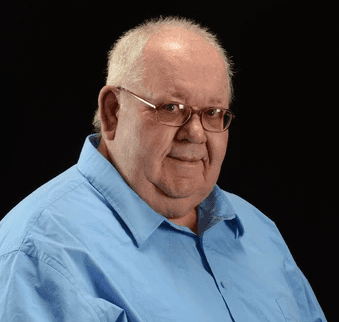
Michael Cooper
Agricultural consultant in Siberia
Biography
Michael “Mike” Cooper was a dedicated agricultural professional whose career spanned decades and continents. He spent a lifelong journey rooted in the land and its cultivation.
Mike spent many years farming in Bremer County, Iowa, where he developed a deep understanding of agronomy and rural stewardship. His expertise later took him beyond Iowa’s fields to international consulting roles in Russia, Ukraine, and Mexico, where he advised on agricultural practices and shared his knowledge to improve crop production and sustainability.
Mike's work advanced into specialized seed production, particularly with challenging inbred lines. He played a key role in developing white corn hybrids by backcrossing Rio Grande Mosaic virus resistance from yellow corn into white corn. His commitment to agricultural innovation extended internationally through his involvement in the USAID-funded Food System Restructuring Program in Russia. This initiative, designed to transition food systems from subsistence to market-based models, aimed to supply supermarkets with locally sourced goods—meat, milk, and vegetables. Mike's leadership helped bring seed projects to fruition using a combination of local resources and modern agronomic technologies, including seed farms and drying equipment. The seed varieties that he introduced revolutionized agriculture in Siberia securing his legacy there. Mike Cooper exerted a little-known, but profound American influence on the development of commercial food production in Siberia.
Summary of Main Topics Covered
Mike Cooper, a veteran agricultural specialist in seed technology, describes his role in early U.S.-supported agricultural reform in Russia’s Far East beginning in 1990 through a USAID Food System Restructuring program. Working in Ussuriysk and Vladivostok, he offers a blunt assessment of why large-scale Western efforts—led by organizations like USAID and TPC Giant—failed when they tried to impose American systems on a fundamentally different economic and cultural environment. In contrast, Cooper’s hands-on work introducing new corn and soybean seed genetics helped create the region’s first viable cash- grain agriculture, laying the foundation for major downstream industries such as poultry and dairy. He highlights key figures like Martin Tate and institutions in the region while emphasizing that long-term success came not from top-down policy but from adapting Western techniques to local realities. The interview also captures the human impact of this period, with stories of Russian colleagues who went on to build major businesses, and offers a grounded perspective on how U.S.–Russia collaboration produced lasting, if often unrecognized, economic transformation.
Mike Cooper: Well, you’re recording so I’ll tell you now that anything you get that is includable, you’ve got blanket permission.
Daniel Satinsky: Okay. Great, thank you. So, you know, I found out about, learned about you through Martin Tate, who was effusive in his praise of your role in agricultural reform in the Russian Far East, so I’m really anxious to hear how you got involved, and what you did, and how you saw it as it was going on. So, if you will, just tell me how did you get involved?
Mike Cooper: Ah, let’s see. Long story. My first involvement was with a USAID project in late 1990.
Daniel Satinsky: Late 1990, okay.
Mike Cooper: And the actual, it went on the ground in ’91.
Daniel Satinsky: And this is an AID project for Russia?
Mike Cooper: Right, for [Asia]—
Daniel Satinsky: You’d never been to Russia before.
Mike Cooper: I hadn’t been to Russia before, although strangely enough, years before that I’d talk with people in various places, and I had a curiosity about Russia, and I wanted to go, and then this opportunity dropped in my lap.
Daniel Satinsky: Okay. So, you had, in the back of your mind, like many of us, this was a kind of a mystery place, in a way, right?
Mike Cooper: Well, it’s just a…I wanted to see for myself.
Daniel Satinsky: What were you doing at the time? What is your background to prepare you for this?
Mike Cooper: My background has been seed and seed technology and general farming, agriculture my whole life. I guess if you want to call it career, it started with trials and testing for various hybrid companies and eventually into a specialized production of difficult inbreds, where they would have inbreds that would make a good hybrid, but they couldn’t find people who could understand the timing of the males to females and make the adjustments that it took even sometimes chemically, such as an application of phosphoric acid will speed the female up by about five days and 2,4-D will have the opposite effect. So, anyway, I was doing that.
Then came an opportunity in Mexico working with white corn, trying to back cross, it’s called Rio Grande Mosaic virus resistance from yellow corn into white corn, because yellow corn had it and white corn didn’t. That’s what I was doing when I met a guy named Andrew Watson, who was there working with the same growers that I was on vegetables. And he said would you have any interest in doing part of our food restructuring program in Russia? And I said yeah, why not? So, that USAID project was then how I got to Russia, and it was called the Food System Restructuring program, which was an abject failure, basically.
Daniel Satinsky: Yeah, that’s what—Martin kind of hinted at that, about things, positive things coming out of failures.
Mike Cooper: True. If you don’t learn from it, yeah. I mean, every scientific principle you have to have failures to judge successes. You can’t…yeah, so you’ve got to know what went wrong to know what went right.
Daniel Satinsky: Well, so tell me what happened and what went wrong. I mean, did you move there, or did you…?
Mike Cooper: Yeah, I lived there, oh, basically two months at a time.
Daniel Satinsky: In Vladivostok or Khabarovsk?
Mike Cooper: In Vladivostok—actually in Ussuriysk. And the academy in—well, it’s now an academy, it was an institute at the time—in Ussuriysk is pretty much the agricultural hub of Far East Russia. Because they were a research institute, and the director at the time, he and I became good friends, and his deputy director was a soybean breeder, so we had breeding programs going. We actually produced a, what you could call, an autogenous seed crop of corn, and it was all sold before it was harvested. There was that much interest and demand in those things. And there’s a lot of directions I could go telling you about this, but…
Daniel Satinsky: So, the goal, and why you were sent was to bring expertise in new types of seeds and plants that they could use in Russia?
Mike Cooper: Well, basically they were starving, and the food system restructuring program, the idea that the NGO gave to the academics in Washington, was we can do this, and we can create supermarkets, and we can have branded vegetables, and a whole pile of crap that was 50 years from ever happening. So, that’s how I got there. The result was that the institute and the various farmers that we worked with realized that the real deal was a whole bunch different than they were being told by these NGO upitty-ups, I will call them.
I mean, to inspect our progress a congressional—what do you want to call it—junket actually chartered a helicopter to fly out to these fields in Vladivostok, and they had no idea what they were talking about or what they were thinking about, and no realization whatsoever of the fact that nobody had the idea that you can’t take people who have never worked in a capitalistic system, they have no concept of what capitalism is. They’ve been told it’s a bad thing their entire life. So, for any of them, they started a whole bunch of different programs about small farmers.
A guy named Harry, Harry Waters, I think, was in USAID at the time, Jack Walters. Jack Walters. And he had this thing about get a whole bunch of tiny little tractors and a whole bunch of tiny little farms and create a cooperative and so on and then get a revolving credit bank set up and so on and so forth. And I said do you realize you’re just describing the system they came from?
Daniel Satinsky: [Laughs.] Yeah.
Mike Cooper: You know, I said 500 85 horsepower tractors to farm X-teen thousand hectares is the worker bee theory. It doesn’t work. It just does not work. Unless you’re in a small society and there’s one central point, which Shaka Zulu proved back in the 1800s. Well, anyway, we went through that up through ’95—
Daniel Satinsky: I’m sorry, let me ask you this. What was the name of the organization that got the grant from USAID?
Mike Cooper: TPC Giant. And they operated under Giant Foods. TPC was a large supermarket chain at the time.
Daniel Satinsky: Okay. I know Giant superstores. It seems like—I grew up in Indiana, so it seems like I remember them from Indiana, but…
Mike Cooper: That could be. But the Giant, they got the grant, $30 million worth. And the objective was to…our part of it was supposed to be to provide the goods—vegetables, meat, milk—to this supermarket. Well, we all told them from day one it’s a bad idea. Russian women are not going to buy more than they can carry home on the goddamn bus. That’s why you got these little “magazines”[^1] around where they go shopping every day, they get what they need for a day or two, because that’s, you know, ten kilos, five kilos, and they’ve got to carry it 16 blocks.
Daniel Satinsky: So, how did you know that? I mean, you knew that because of being there and observing how people actually lived?
Mike Cooper: Well, observation and just common sense. I mean, I’m the type, when I see something that I don’t quite understand, I start asking why, and I start looking for reasons why they’re doing it this way and not the way we do. There’s got to be a reason.
Daniel Satinsky: Yeah. Now what you’re just describing to me, in my experience, is something not…there’s a substantial number of Americans who did not do that, who arrived there and said, well, they’re doing it this way because they’re backwards and they don’t know any better, and we’re going to tell them how to do it better, and if you yell loud enough you’ll get the results you want.
Mike Cooper: That’s what I call the transplant theory. A whole bunch of Americans came over there believing they could transplant the American system into Russian society. It can’t be done. It’s not an American society. Now there are things of the American industrial complex that they could use, and that they could learn, because they are now forced into a capitalistic situation. And I would ask some of the newbies, I would call them, that would come over, I’d say what would you do if I suddenly handed you a piece of paper that said you now own 40 acres? Go make a living.
Daniel Satinsky: Go make a living, right.
Mike Cooper: With no credit, with no equipment, unless you steal it from the previous cooperative, or sovkhoz, or collective farm, state farm, whatever. You’ve got no fertilizer, you’ve got no seed, but here you go. Here’s your certificate, go be successful. Fat chance.
Daniel Satinsky: So, you arrived before the Soviet Union dissolved, correct?
Mike Cooper: Yeah, just before it was totally done. And then from ’92 to ’95 consecutively. Well, ’91 to ’95. And that’s when we had brought our seed project to a fruition. And we did that in a combination of using available technology. In other words, they had a seed farm, they had seed drying equipment. It was pretty rudimentary. But if you went from Point A to Point B it got the job done. Not very efficiently, but it got the job done, which was the important part.
Some of the big companies had had spectacular failures in trying to transplant American systems into Russia and/or Ukraine, or Romania. I’ve been in all of those. And the story is the same everywhere. You just can’t transplant American wishes into their society. You’ve got to learn what works, figure out how to make it work better with what they’ve got, and then gradually—and Martin will tell you it’s been 20 years since we first got together.
And I have a picture of day one with just me and Martin standing in a field with a rented old “Kirovetz” tractor plowing up some ground that’s not been farmed for 20 years. That’s it. A pair of plyers in my pocket. That’s all we had. Now it’s a 30,000-hectare operation, a $200, $300 million outfit. It’s been bought and sold three times now, but Martin still maintains some ownership in it. And the crew that I trained is still there.
Daniel Satinsky: Still there. Yeah. So, I’m trying to get the sequencing, I’m sorry, because I led you off and did different tangents here. So, the AID program lasted how long?
Mike Cooper: Until December of ’95, and then Newt Gingrich and the boys pulled all the foreign aid from almost all the programs, and that was one of them. And for the next two years I worked on a hybridizing of rice project in the United States, which was a joint venture between a Texas company and a Chinese institute. [Laughs.]
Daniel Satinsky: [Laughs.] You’ve covered all the bases.
Mike Cooper: Yeah, I’ve been around.
Daniel Satinsky: Yeah. And so, the ’91 to ’95, so during that period you said you worked with Martin in creating or—
Mike Cooper: No, I didn’t start with Martin during that period. During that period—
Daniel Satinsky: Oh, okay. Okay, ’91 to ’95. And the plug gets pulled on the program, and you started by saying that program was a failure.
Mike Cooper: The overall program was. The portion of it that I was involved in, I actually tried to continue that program privately. And I don’t know if you ever heard of a company called ICI.
Daniel Satinsky: It’s vaguely familiar, yeah.
Mike Cooper: Rhone Poulenc Chemical Company. ICI bought a company called Garst Seeds, and I went to them, and I said look, there’s potential there. It’s going to require some investment. And they actually funded a trip for me back over to that institute with an offer that they would send one container load of seed, but the institute only had to pay the freight. But they couldn’t get the funding. They had to get the funding from Moscow, because they’re an institute. And Moscow drug their feet and drug their feet, and so that died on the vine. And then that’s when I went to the rice project.
Daniel Satinsky: What was the competitive advantage of the seed that you were developing there? Was it for a particular climate? What made it competitive in the market?
Mike Cooper: Basically—and this is going to sound conceited—but I created the concept of corn and soybeans for grain in Far East Russia. The advantage of the genetics that we could bring—not all genetics are exportable because of the prices and so on—but even those genetics that we could bring had a tremendous yield advantage and dry down so that they could be harvested without mechanical drying and used as a cash crop and/or a feed, forage, rather than strictly silage. And until then soybeans and corn both were only planted for silage. And so, this expanded their market opportunity tremendously.
So, based on those first years of grain for cash, or cash grain farming as we call it in the U.S., other companies made investments. A Danish company invested in a broiler operation with a Russian partner, and they now do one million birds a year. There are two or three egg laying operations. Because the feed source was now available of a decent quality.
Daniel Satinsky: Oh, I see.
Mike Cooper: Prior to that you couldn’t, if you had a million birds you couldn’t feed them. They don’t like wheat.
Daniel Satinsky: Yeah. So, the corn and soy, it was just what, it was ground?
Mike Cooper: It could be ground up and mixed together, and some vitamins and minerals, and then you had it rationed, you know.
Daniel Satinsky: Okay.
Mike Cooper: You’d vary the percentage of corn to soybean for the protein content that you want. Another company then expanded, called NGK, their oil crushing facility in Ussuriysk and started generating. They now export soybean meal, where previously—
Daniel Satinsky: MGK is also a…is a chemical company, correct?
Mike Cooper: I think they have divisions now that are ag suppliers. The MGK we’re talking about is…I can’t remember exactly what the K stands for.
Daniel Satinsky: Oh, okay, so it’s not Sumitomo?
Mike Cooper: No-no-no. Although I don’t know currently. I haven’t been back there for a couple years. I don’t know currently. Sumitomo may have acquired them just because they were very interested in them, and Mitsui and Mitsubishi were all interested in producing the rapeseed oil for etching of metal in manufacturing. They wanted to do 100,000 hectares of that and crush it, so they may have formed some sort of joint venture, who knows? At this point I can’t tell you. At the time, the last time that I knew, one of the primary owners of MGK was the governor of Primorsky Krai.
Daniel Satinsky: Okay. I think we’re talking about two different companies that have the same name.
Mike Cooper: Probably. The same acronym anyway.
Daniel Satinsky: The same acronym, yeah. So, then what your project, your part of this food system reform was to create this source of feed through your seed hybridization, if I’m using the right words, right?
Mike Cooper: Yeah. Essentially.
Daniel Satinsky: And that part was successful in creating the conditions for a broader expansion of agriculture.
Mike Cooper: Exactly. Which has now expanded to over 800,000 hectares of commercial agriculture, corn and soybeans.
Daniel Satinsky: Wow. So, this combination of corn and soybeans, it was that it wasn’t grown previously, or that it was an improved variety that you brought to it? What was the innovation there?
Mike Cooper: The innovation was growing it for cash grain rather than as a forage.
Daniel Satinsky: Okay. And with the varieties of seed they had they couldn’t have done that previously?
Mike Cooper: No. The institutes, most of the breeding for their, call it, in-house varieties came from Czechoslovakia, and when the union split, that breeding was cut off, and they were left with what they had, which is an institute in Krasnodar, and they were heavily of a genetics called flint. And flint is considered the type of corn you need to grow in northern latitudes because it can withstand cold temperatures for germination and so on and so forth. However, flint takes years to dry down, so if you harvest it in the fall, you have to artificially dry it, and because of its nature, the kernel’s structure, it takes a tremendous amount of energy to dry it, and what you’ve got left is still flint corn, which has got a higher percentage of the pericarp, or higher percentage of insoluble fiber versus the starch level, which is where the feed comes from.
So, we have, in the U.S. we have yellow dent and iodent. The iodent variety can be bred into very early maturing varieties but has characteristics of drying down naturally in the field. So, the first one of—a side story—first several years that I was involved with Martin [Tate], he said we can’t grow corn because we can’t dry it. You get the right genetics you don’t have to. What do you mean? I said we can grow corn without a dryer. If you’ve got a place to put a little aeration on it, we’re good to go. He says well, what would that be? And I says I know exactly which hybrid that should be.
So, for the next four or five years we grew corn, and everybody in the region—this is one of the things that really turned it on—all the farmers in the region would drive by on the roads watching us harvest, and watching the trucks go straight to the elevator for sale at moisture, and so on. So, we had a lot of those caravans. We actually were on TV when we brought the first flex head John Deere combine over their combine means.
Daniel Satinsky: Wow.
Mike Cooper: Yeah, been on TV several times with that.
Daniel Satinsky: But that was later.
Mike Cooper: That was after 2004, right.
Daniel Satinsky: Okay, yeah. But the seed project that you were working on initially—and I’m sorry I keep going back to it, but who owned that? Was there the seed, who actually owned the rights to that?
Mike Cooper: I shared the rights with the institute. We had a contract for the use of these genetics, and I had a license from the people in the United States, and the funding was supposed to come from TPC Giant. Well, when that left, it left us with a contract wherein we had 50% of nothing, essentially. We had done some cross breeding of Russian and American varieties, trying to improve their varieties, because they had more of that available to use in production than importing. It’s pretty expensive to import parent stock from the U.S. So, that contract still exists. That’s still in the drawer, in the desk of the director. And in fact, now I’ve got a new one where we’re going to cooperate on a parent seed production enterprise, and third parties will take those parent seeds and produce the actual F1 seed. And Martin is one of those who will produce F1 seed.
Daniel Satinsky: Okay. So, once your program was over, you had produced a seed or a hybrid, but there was no capacity then to use it, to put it into general use at that time.
Mike Cooper: Well, everything we produced on the first full year was sold before it was harvested. Where the fallback, or where the downfall came, or the drought, if you want to call it that, was the lack of funding instigated by Gingrich and his boys to bring new parent seed. We were at the point, now we were right at that point of expand it and blow it up, and we couldn’t do it. There was no funding to follow through. The Institute didn’t have any funding to speak of.
Daniel Satinsky: And Giant wouldn’t fund it.
Mike Cooper: And Giant got booted with the rest of the programs with the congressional deal. They just got the tap turned off, end of story.
Daniel Satinsky: Yeah.
Mike Cooper: And they had a ton of money invested in a store, two stores, actually, they had built, but they couldn’t put goods in them. They couldn’t put anything in them. They had acres and acres of shelves. All they had was the same stuff that the Russian “magazines” had. And 99% of that from Japan and China.
Daniel Satinsky: So, they had figured that they were going to do like McDonald’s did, was to build out the whole supply chain—
Mike Cooper: Yes, we’re going to roll this out across Russia. We’re going to roll this out across Russia.
Daniel Satinsky: Well, there were—supermarkets did develop much later, but you know—
Mike Cooper: They have, but they’ve also developed in what have since developed, the suburban areas. Now supermarkets are in the suburban areas. They’re not in the downtown. Well, the old GUM stores, some of those have been repurposed. But in general, all the supermarkets I’ve seen are in what we would call a shopping center.
Daniel Satinsky: Yeah. I’m just trying to—I’m thinking of the ones, I mean, ones near my friends in Moscow. I used to walk to this—
Mike Cooper: Moscow is a whole different ball game. You can’t put Moscow in terms of any analysis with Russia. That’s a city-state.
Daniel Satinsky: Yeah, you’re right. So, you were, during that first period you were coming back and forth, you weren’t—were you living there?
Mike Cooper: Right, right. I was spending six months a year.
Daniel Satinsky: Yeah. That’s a lot. And then you were cut off, and you didn’t have—you tried to keep it going, but that didn’t work, and so how did you get—
Mike Cooper: Just couldn’t get the funding.
Daniel Satinsky: —how did you get back involved in it then?
Mike Cooper: Martin [Tate].
Daniel Satinsky: How did you know Martin? When did you meet Martin?
Mike Cooper: I think Martin and I actually met in ’90 something at a place called the Vlad Motor Inn in Vladivostok. I don’t know if you’ve ever been there or not.
Daniel Satinsky: I’ve been to Vladivostok, but in 1990 before any of this happened.
Mike Cooper: That was a Canadian venture. The guy actually built this motel/hotel on barges, and floated it to the beach, and drug it up onto the beach, and parked it on a foundation. It was a guy from Canada. And he…I mean, it wasn’t cheap, but he had North American stuff. If you wanted steak, you get it, he had it. And all of the NGO people, because they had these huge per diems, and expats, loved staying there. So, he made good money with that. It’s still going and it’s still Canadian owned.
Daniel Satinsky: It’s still Canadian owned and it’s still operating. And there was a pretty big NGO expat community, relatively large, right?
Mike Cooper: Yeah, at that time. The Peace Corps was there, a dozen other efforts. Some were related to accounting. One of the guys I met was trying to convert Russian businesses from their debit oriented, I guess, accounting system to the U.S. style or Western style, and he was pulling his hair out. And I said just give it up, man. Look at the bottom of the page. Have they got the right number or not? Well, yeah, but Jesus, I can’t read—well, that’s your problem, not theirs. They can’t read yours either, you know.
We had another group that was there on this part of the TPC Giant thing on the vegetables, and they were going out to little farms around where they would see a patch of vegetables, and they were trying to sell them on the idea of putting a sticker on their vegetables when they go to the market so they have a branded vegetable kind of thing. Well, 90% of those vegetables weren’t going anywhere but right in the kitchen, and the other 10% they would sell at the local bazaar without paying anything for stickers.
Daniel Satinsky: Right. They weren’t interested in commercial or truck gardening.
Mike Cooper: It’s a case of opportunity first, storage. So, you produce a whole bunch of cucumbers, let’s say. Where are you going to store them while you sell them off? You’re not going to sell them all off in one day unless you’re going to sell them for nothing. Potatoes. Wintertime is when you want to sell potatoes, but you’ve got to have proper storage. Their old system of burying them in the ground with straw, sure, it sort of works. It will keep you alive until the next crop, but they’re not very nice, you know. They just could not relate between subsistence level gardening, farming, to capitalistic gardening, farming.
And that’s still a big gap there. I mean, there’s no…I at one point in time talked to a couple of guys who wanted to come in and do an IQF freezer factory, and I said what are you going to freeze? Well, sweet corn, green beans. Where are you going to get it? Are you going to grow it? Well, no. Well, then you might as well stay home and save your money. It’s just not happening. Realizing those things as you go along, by trying to put yourself in the other guy’s shoes is, I guess, one of the biggest advantages you can have, if you can actually do that. Rather than take it from the top down and think you’re going to enforce top-down ideas management in culture.
I don’t know that I got really ingrained in the culture to know it well enough, but I did become friends with a lot of people, and they have friendly relations still back and forth with me. And you just know certain things that they do within their culture that seem a little odd to us, but it’s how it is. You have to have the funeral the next day because preservation is not common. It does exist, but it’s not common.
Daniel Satinsky: It’s not common, yeah.
Mike Cooper: And once the funeral’s over, it’s over. You know, it’s the king is dead, long live the king. And until you really understand what that means, a lot of these other things are going to seem odd, strange.
Some success stories that came out of it. We have one, two, three, four, five people who worked for us or with us during those years who are now captains of their own businesses. And the one gal worked as a translator, and she was observing all the things we were talking about. She said so how the hell do I start a business? Well, that’s amen question No. 1. And we said put together a letter of what your abilities are, and your idea, your business plan idea, what you think can work and send that to as many companies as you can get, see what you get for replies. Well, her idea was the little coolers with ice cream in front of the ”magazine.” She started that.
Daniel Satinsky: Really?
Mike Cooper: Really. Mars Company answered her letter, flew her to California, and had a meeting, and they said so how would this work? Well, you’ve got to furnish these little coolers, but for every piece of your goods that gets sold out of that cooler you get the normal profit, plus you get a license fee, a royalty of two cents or something, because Russians love ice cream, and they love all kinds of ice cream. So, they said well, here’s what we’ll do. We’ll give you ten machines, and we’ll give you a container of product. If you can come back and buy another container from what you get out of that, we’re on. She is now the president of Mars Russia.
Daniel Satinsky: Oh, my goodness. Whoa.
Mike Cooper: Another young fellow who studied as an agronomist, but while we were there, we could pay so much more than anything else, he worked as a driver for us, but over the days going here and there you get to know people. And he had kind of the same question. I said well, one of the things in the future that’s going to be a big deal is ag supply—seed, chemical, machinery. He now owns the largest ag chemical supplier and [Klos] dealership in Far East Russia.
Daniel Satinsky: Wow.
Mike Cooper: So, those are kids that have taken our training and guidance. Another young guy that was a driver now owns and operates an appliance store with all the electronics and so on. And he’s well-known throughout Far East Russia. So, there’s…
Daniel Satinsky: And these were all people who came and worked for you in this—
Mike Cooper: For the NGO.
Daniel Satinsky: —initial grant period.
Mike Cooper: Yeah. But were my personal acquaintances.
Daniel Satinsky: Right. So, you said there were five of them?
Mike Cooper: Yeah, there’s another guy became the director of that million bird facility. His name is Oleg Mamaev, and now he works for Martin. The Avon girl. Mary Kay. Estée Lauder. She’s now one of the top people in Estée Lauder in Moscow. Moscow is, like I said, it’s a city-state. Those women spend money on paint and filler.
Daniel Satinsky: Right, yeah. And so, these folks, some of them learned the agricultural business and some of them just learned business.
Mike Cooper: Business in general, yeah. Well, things that were personally, you know, the cosmetics thing is a woman who had a big interest in cosmetics. And rather than pay somebody a whole bunch of money, somebody pay me, you know.
The girl with the Mars candy bars and stuff, the ice cream, she just wanted to start a business, and she took some of her basic knowledge of Russians. This is where the Russian culture, she knew that ice cream, in any form, was going to sell, and if it had an American—for some years there if it had an American label it was going to sell twice as fast. Just like the blue jeans and the so on and so forth.
Daniel Satinsky: So, approximately when did she start that business?
Mike Cooper: It would have been…she was in the process when things closed down, when Giant closed down, but it would have been in ’96, ’97. She kept it going. One of the guys from the NGO that I worked with on various other projects privately around the world lived in California, and he kept in touch with her a little more than I did during that phase.
Daniel Satinsky: That was pretty forward-looking for Mars as well. I mean, I know Mars was heavily involved in Russia, probably before that, so they probably could understand where she was coming from a bit. Whereas other companies, not so much.
Mike Cooper: I think they were so big. We’ve got this girl who, if it works, it’s a home run, if it doesn’t work, so what, it’s the gnat on our ass. And I think just like ICI taking a shot to send a container of seed over and so on. It’s a “so what” to them. They’re big enough. It’s like buying a lottery ticket. Costs them a dollar, and if it scratches off good, we’re a home run.
Daniel Satinsky: Right. Well, on the other hand there were a number of companies, even they were huge, who would have required prepayment as proof that the person was serious, were much more reluctant to take any kind of risk. And so, I mean, I know that from personal experience and from listening to other people that really a lot of that period was like Russia? You’ve got to be kidding me. Prove it, you know.
Mike Cooper: Yeah, and they’re sitting on the outside looking in now. Which, okay, you know, good for them. Some of the things that have been done aren’t necessarily good for Russia.
Daniel Satinsky: What do you mean?
Mike Cooper: Well, John Deere has got some joint ventures with China and with Russia, and all that accomplished was concentrating wealth in the hands of the people least likely to distribute it.
Daniel Satinsky: Ah, okay. You mean their partners in Russia became little oligarchs, yeah?
Mike Cooper: The oligarch system has just exploded there in the last five, seven years. And you can’t fight—I mean, you can fight it, but you’re not going to win. Especially with Putin as president. If you look back you see that Yeltsin and Gorbachev had the most realistic view of where Russia fit in the world until along came Putin, and his cronies, and they’ve turned it into a slave state again.
Daniel Satinsky: So, before we—well, you started back in there, so you had this gap of years and then you started back with Martin. Let’s go back to this. You met Martin at the Vlad Motor hotel.
Mike Cooper: That would have been in ’90 something when he was first starting to come over there.
Daniel Satinsky: With the dairy board, right?
Mike Cooper: Yeah. And fiddle-diddling around. He’s kind of a quirky guy. But we chatted, you know, and so on. Well, then when he decided, he thought about going to farming. The way we got together was he called the U.S. State Department through the Embassy in Vladivostok and asked them I know you had some people over here before, who would you recommend that I get in touch with about an agricultural project? And they said well, duh, here you go. And so just a blind contact.
And I was in Romania, actually, at the time, and had a time frame that I could come across, so I went from Romania to Vladivostok, and knew people. I mean, got to meet up with friends again and things like that. And then went around about with Martin looking at various places that he wanted to…thought about buying the entire collective farm or whatever. Which, that didn’t necessarily turn out that way, but he had a good team of people that just kept buying up the pie. And then eventually the pie, you could say I’ll exercise my rights on this piece of ground, and it would match up, you know, 200 hectares, 400 hectares. He managed to put together 7,000 continuous hectares. And it’s just expanded from there. But that farm was nice. That was nice.
Daniel Satinsky: And around what years was that?
Mike Cooper: That was ’04 through ’10, that first four or five years.
Daniel Satinsky: And so, what happened to your soy and corn varieties after you left? Were people using that type of plant or did that—
Mike Cooper: The soy varieties that I brought over, Martin will tell you they’re still being planted. Now the chain of ownership and rights and so on has long been negated by the back door stuff, which Martin’s guilty of himself.
Daniel Satinsky: Yeah. And so, because you said the Danish poultry farm depended upon the existence of this feed stock. And so, it must have exploded after you left, the use of this exploded, right?
Mike Cooper: Yeah, the genetics that we used, because of licensing and difficulties, we ended up using Pioneer genetics on the corn. But I knew the genetics, and I got them the variety that they needed to be able to grow corn without artificial drying and still get a decent yield. We used that particular cross for four or five years, and then Pioneer’s—I have a good friend and a colleague that I worked with for many years in Pioneer research, so I had a little bit of an inroad there.
And we would start selecting their newer varieties that had similar characteristics, but different yield parameters and so on. Up until now, I mean, basically we made Pioneer the No. 1 seed in that region. And Martin tried to have a dealership for a while. He’s done a whole bunch of different things, some to a degree of success, and some not so much, but he’s kind of a shotgun approach kind of guy.
Daniel Satinsky: Yeah. But the Russian farmers who adopted this, they were buying the seed from Pioneer then?
Mike Cooper: Yeah. Through the local AgSTAR store. Like our friend, our young guy, he handles a lot of seed. He’s got Syngenta and he’s got, you know. All of the big companies discovered that, goddamn, there’s a market here. And now that includes—
Daniel Satinsky: You broke that open for them.
Mike Cooper: Yeah. Created it for them. But didn’t get a dollar out of it.
Daniel Satinsky: Right. And then the Russian farmers were growing this soy and corn stock, and that allowed for the Danish chicken farmers—
Mike Cooper: And dairy. Big dairies in there now.
Daniel Satinsky: Yeah. And those came in when, in the late ‘90s?
Mike Cooper: No, in the mid 2000s.
Daniel Satinsky: Mid 2000s, okay.
Mike Cooper: ’07, ’08, ’09. It’s really matured now. They’ve shook the bugs out and they’ve got them working now as pretty substantial operations.
Daniel Satinsky: So, it’s taken 15 years, at least, for the Russian Far East to begin to solve some of its food problems.
Mike Cooper: Right. And what’s happening now is the same thing that’s happened in the United States. Now the small farmer, if you want to call them that, there were quite a number of guys who were acquiring U.S. type equipment, at least European, but lots of equipment, farming a larger number of hectares that they either rented or buy by 1,000, 2,000, 3,000 hectares. Now comes companies like Armada, which is a Chinese joint venture with a Russian partner. They come in and they’ll take 10,000 hectares [each batch], 20,000.
Another one is called Rosagro. That is directly involved with Moscow. The funding comes from the state budget. And they just wipe the floor clean of anybody that gets in the way. They’ll take 100,000 hectares. Well, then Putin threw them a bone of theirs the federal reserve land, which is all the old state farms that are not being farmed. So, rather that recreate state farms he said well, here’s the deal: if you take the land and cultivate it for two years, it’s yours. Which was a bone thrown directly at companies like Rosagro because they had the funding to acquire all the additional equipment, everything it took to take on these expanded acres, and the private guys had less of that ability. But even like the broiler company got involved in pretty large-scale agriculture.
Daniel Satinsky: Which company?
Mike Cooper: The chicken company. Chicken broilers. Yeah, they started…they’re looking at all right, we’re buying corn by the ton, by the ton, by the ton, by the ton; why don’t we grow it? So, they looked at it as a vertical integration. And they do some, but they didn’t really have the success that they thought they were going to have.
Daniel Satinsky: What does that mean?
Mike Cooper: They were under educated or under knowledge based when they started it, and they relied on Russian agronomy, Russian agronomists and managers, whereas they needed to at least work in a blend, which is what Martin has done, has a blend of—which is what I’ve told everybody that would listen. You can’t replace their system. You’ve got to figure out what works between the two systems. You’ve got to allow some of what they do to stay because that’s the only way it works. You may not like it, but it’s the only way it works.
And you’ve got to put your attention, your finance, your effort where you can improve the total system, and you end up with a blended, what we, in one business plan we called the Russian American model. And that’s… So, the broiler company didn’t…they were a little bit iconoclastic in their thinking, we can do this without any outside influence. And they found out they couldn’t very well do that.
Daniel Satinsky: They couldn’t properly farm that land?
Mike Cooper: Right. Some of the academic agronomy—I’ll stand up to almost any Russian agronomist. They’re very academically well educated, and they’re generally smart people. It’s when they get stubborn and afraid to take on some new ideas, or some ideas that are counter to what they were taught that things start to go south.
Daniel Satinsky: So, do you think that they get stubborn because it’s a kind of national pride, just like I don’t like to be told what to do, or you’re acting superior to me, or stuff? Why do you think that that happens?
Mike Cooper: All of that plus personality. The hardest thing to do is admit you need help, no matter who you are or what you’re involved in. And the even harder thing is to accept it. So, yeah, there’s some guys I’ve run across that it’s just personal ego, because they don’t know about these various things, or they’ve always done it this way. And I know that, but we can try it another way and see. We don’t have to change everything, but let’s just change something and then see how it works.
Daniel Satinsky: Right. But the kind of success stories that you talk about must have had some impact on them and their thinking.
Mike Cooper: It does, yeah. It does. Particularly the Russian Far East. Now in Central Russia, I deal with some people in Central Russia, too, around Krasnodar and Voronezh. And the Far East being more culturally diverse to start with because of their proximity to China and Japan, they have learned from the others more than—Central Russia is just an island, you know, and if it ain’t Russian, it ain’t shit, it don’t exist. Whereas the Far East has had various, I mean, all through history. I mean, I know a guy that was over there in 1978 on a potato project, so throughout their entire history the Far East has not always been Russia, so there is a multitude mix of cultures there that have made the people a little more acceptable and a little more freethinking.
Plus, the fact that they are not Russians. Multiple numbers of them are diaspora Ukrainians Russia transplanted in the late 1860s. They transplanted a whole bunch of people to the Far East to bring it under cultivation and so on, so their bloodlines, and they’re all mixed up now, but their bloodlines actually go back to Ukraine more than they do to Mother Russia.
Daniel Satinsky: Do they hold onto that culturally?
Mike Cooper: Yeah. They can still speak Ukrainian, some of them. I joke with them. Instead of saying “dosvidanya [good bye in Russian]” I’ll say “do pobachennya [good bye in Ukrainian.]” Things like that.
Daniel Satinsky: That’s interesting. I never thought about the Ukraine…I mean… So, their sense of themselves is a little different than…?
Mike Cooper: Yeah. They’ve got a little more of I don’t know what. I wouldn’t say it’s entrepreneurial spirit, but a little more self-sufficiency spirit. They don’t like the government as much as Central Russia pretends to like the government.
Daniel Satinsky: Right. So, this is off the… So, there’s a couple other questions I want to ask you in a different direction, but while we’re talking about this, and Krasnodar, you know, Russia is what, now the largest wheat exporter in the world.
Mike Cooper: Right.
Daniel Satinsky: And so, something has gone right with Russian agriculture, agricultural reform in the breadbasket, because that’s not coming out of the Far East, that’s coming from the breadbasket of Russia and the black earth areas. So—
Mike Cooper: The Golden Circle, they call it.
Daniel Satinsky: What went right there? Or is that something that you’ve followed?
Mike Cooper: Well, I have because I’m actually currently providing some seed stock to a Russian company near Krasnodar. There have been improvements in wheat genetics in general, so the Russians aren’t immune to that. The balance of that is the fact that they’re the world’s largest exporter does not mean they are the world’s largest producer. It only means that they need cash. So, if you look at their other crops, they’re one of the world’s largest importers of sunflowers.
Daniel Satinsky: Uh-huh. For the oil?
Mike Cooper: For the oil, for fats, and protein, animal protein. So, it’s a Peter to Paul thing. Never take one figure out of a Russian report and figure it’s true. You always say but if this is true, then this should also be true, and it’s not. So, they should not be importing any feedstuffs if they were the world’s largest exporter, that means they have an excess crop, and they don’t. It’s like China exporting canned goods. In the early days of trade between Russia and China after the Wall came down, the Chinese people were getting hungry, but they were exporting canned goods because they could sell them for cash.
And the same thing with the Russian vodka. In the very beginning that was their commodity, that was the currency. We’ll give you a shipload of vodka, you give us a shipload of wheat or whatever.
Daniel Satinsky: Right. You must know that old story about Pepsi and Stolichnaya vodka. Do you know that?
Mike Cooper: No, that one I don’t.
Daniel Satinsky: When Pepsi went into Russia in the ‘70s they negotiated a deal where they swapped Pepsi syrup for Stolichnaya vodka, and so their cash out for Pepsi was the sale of the Stolichnaya vodka. And so, in America Russian vodka was always Stolichnaya or Stoli, as everybody says, because Pepsi marketed it, and there was no other Russian vodka available, and it was Pepsi’s…it was the determinant of how much syrup Pepsi would ship into the Soviet Union. The more vodka they could sell, the more syrup they could ship in, and the more they could occupy a monopoly of that soft drink. So, that’s an interesting footnote to history, I guess, of how that worked.
Mike Cooper: Those are the personalized knowledge and experiences that let you be well aware when you listen to somebody talk bullshit.
Daniel Satinsky: Yes, absolutely. And so, it’s interesting then, the agricultural reforms, there are reforms, there have been changes. There is, as you said, a cash crop of wheat, but then there are imports to make up for the fact that they haven’t fully reformed the agriculture enough, at least with—
Mike Cooper: They’ve got a trade balance problem same as we do. But their economists are never going to report that.
Daniel Satinsky: Right. No, that’s not the way the statistics are ever presented. So, back to… When you went there did you have the idea that you were going to change them, that you were sort of bringing a superior methodology or science there and going to either help them or change them? How would you characterize what you were thinking?
Mike Cooper: Basically, I tried not to have preconceptions. My goal when I went there was A, to experience some of Russia, and B, to see if my ability to select genetics and crop production techniques would work, so that was the No. 1. The other things became extensions of that. So, my curiosity, I guess, I think on your questionnaire was, well, curiosity would be right up there along with a little bit of ego about being able to provide proper genetics for a first shot out of the box. In fact, one of the—here’s another conceited statement—but one of the guys from TPC Giant, noting the success of our first year of test plots, said what you did is the equivalent of shooting a bottle rocket to the moon.
Daniel Satinsky: [Laughs.] That’s a good one. I might put that quote in the book. I like, you know, to kind of pepper a few quotes in there. That sounds like a good one.
So, let me ask you this. How do you think Russia changed you? Or did it?
Mike Cooper: Well, yeah, it did. I mean, you can’t be even partially immersed in another culture without some thought of expansion of thought, recognition of humanity, in general, and understanding that friendship and common caring for each other is not a cultural thing, it’s an interpersonal thing. And it doesn’t matter who you are, where you’re from, or what you do, if you’re a true friend to somebody, you’re a true friend. And that’s why I’ve got people there who I consider as much as family.
Daniel Satinsky: Do you think there’s something particular about Russians and their notion of friendship versus American notions of friendship?
Mike Cooper: Yeah. Americans talk about friendship as somebody they know, and they can call. Russians look at friendship more like a…oh, I don’t know, like a godfather relationship or a baptismal sponsor type relationship, although it’s nothing to do with religion. It’s if you’re a friend to somebody, you call them, they help you, no questions. If your friend calls you, you help them, no questions. And that’s a piece of culture that the United States does not have, and probably never will.
And I don’t know exactly what makes that in Russia so much stronger than it is around in the United States, but the United States somebody calling you a friend is like so what? You’re a friend as long as they remember your name or whatever. After that, so what? The other cultural difference, though, that really sticks out is the alcoholic problem in marriages. And we have it, but we look at it from a different perspective. But it is really a big problem in some areas.
Daniel Satinsky: Did you encounter that—I mean, my sense is that when I started there in the early ’90s, a huge problem—
Mike Cooper: It’s gotten better.
Daniel Satinsky: And then by the 2000s people, businesspeople in particular, were like they didn’t have time for that. They had too many other things going on to spend time getting drunk and then recovering from it and clouding their judgment. They couldn’t be bothered with it.
Mike Cooper: Exactly. Another interesting note is that when we first started in Russia a 2:00 meeting was anywhere from 2:00 to 7:00, you know, they would show up. Now, believe it or not, if they call for a 2:00 meeting and you’re 15 minutes late, you catch hell. They learned that business etiquette from us in that respect.
Most of the people who now are engaged in these larger-scale ag operations that have come from, I will say, our foothold, or our training, our roots in Far East Russia have adopted our policy, which was I don’t care what happens, if you show up drunk, you’re gone. I don’t care if you’re the boss, I don’t give a shit who you are, you show up to work drunk, you’re gone.
But we treated them—we paid them well. Martin always argued with me. I said you’ve got to give this guy a raise, and you need to move this guy from here to managing that. I was pretty good at picking those people out. And he would argue sometimes. And I said well, guess what, I know somebody that will pay him then.
Daniel Satinsky: [Laughs.] In 2004 going forward, were you actually partners with Martin in his agricultural thing, or were you—
Mike Cooper: No, I was a consultant. I was a consultant to him. We behaved like partners, though, in some respects. I told him from day one, my first statement to Martin when we were driving around looking at this land that he wanted to start the following spring, and I said, have you got a million dollars up your sleeve that you don’t need that won’t affect your kids’ groceries or college tuition or anything like that? And he said what you mean? I said you have got to have a million dollars that totally can get burnt up and turned to ash before you even think about going into this project. If you don’t have it, then don’t do it, because you can’t save yourself.
Daniel Satinsky: And did he go get it?
Mike Cooper: Yeah. He gulped and he said well, okay.
Daniel Satinsky: But that was the kind of advice he needed.
Mike Cooper: Yeah. The other piece—the same day—the other piece of advice I gave him was I said people who acquire land anywhere in the world, who acquire land, in 20 years are multimillionaires. And that’s happening.
Daniel Satinsky: So, are there things that I haven’t asked you about that you wanted to talk about in this discussion?
Mike Cooper: No, we pretty well babbled it out. I mean, there’s a lot. We could talk for weeks. But it probably just boils down to different examples of the same thing. I think No. 1 was I think you wanted a sense of cultural inclusion or exclusion.
Daniel Satinsky: Yes, I did. But I also wanted those examples of the real results of the interaction.
Mike Cooper: Yeah. You won’t find anybody in Primorsky Krai that doesn’t think there’s been a positive result from the root start of what the NGO did, even though I would say it was a very limited effect directly from the NGO. But the effect happened afterwards from the people who were involved in the NGO, so it did have a catalyst effect.