The Satinsky Archive
Western Impact on the Transition to the Russian Market Economy
Citizen diplomacy in the 1980’s
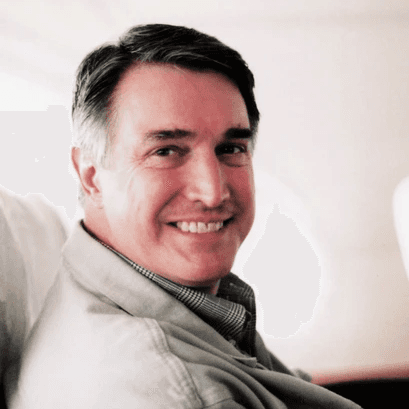
John Reuther
Perestroika, J.V.
Biography
John Reuther played a seminal role in the development of the commercial real estate sector during the late Soviet period and into the transition period of the early 1990s as the general director of the joint venture, “Perestroika.” This joint venture developed Pushkin Plaza as the first private commercial office space in the Soviet Union and in the process developed the unique funding mechanism that allowed for real estate finance in a system that had no commercial lending institutions.
John Reuther is a member of the Reuther labor-union family and had an unusual path to a career that mixed periods of US political campaign activity with a long-term career in the Soviet Union and Russia. He is in the process of publishing his own memoir of his experiences and graciously consented to include an abbreviated portion of his interview with Daniel Satinsky in this archive that focuses on John’s early experience in the Soviet Union and the initial formation of Perestroika. Those who are interested in the complete story of both Reuther’s personal journey and the broader transformation of U.S.–Russian business relations at the twilight of the Cold War are advised to consult his memoir.
Summary of Main Topics Covered
John Reuther—heir to the prominent Reuther labor union family and an early U.S.–Soviet specialist—offers a remarkable account of his unconventional path from political activism and Soviet studies to becoming a pioneer of commercial real estate in late Soviet Moscow. Drawing on early experiences living and studying in the USSR in the late 1960s, and later working in trade through firms like Satra Corporation, Reuther recounts how he became general director of the groundbreaking joint venture Perestroika, formed with Soviet construction authorities such as Mosinzhstroi under Andrei Stroyev. At a time when no commercial real estate market or financing mechanisms existed, Reuther and his partners developed Pushkin Plaza, the first private office building in the Soviet Union, and pioneered an innovative funding model—securing five years of rent upfront from major multinational tenants like BASF, DuPont, and Monsanto. He also highlights the role of firms like Baker & McKenzie and complex offshore structures in navigating legal and financial constraints. The interview reveals both the entrepreneurial ingenuity and the political tensions behind these early ventures, offering a rare inside look at how Western business practices helped create entirely new markets in the final years of the Soviet Union.
John Reuther: Okay. Getting started. If you have any information about my family background, I don’t know—
Daniel Satinsky: I know who the Reuther brothers are. They were big time stars and heroes of my youth. I went to school at Michigan State University, so you had to learn about this. You know, I don’t know who was your father. I know you’re obviously connected to this family.
John Reuther: Victor was my father. And Walter my uncle.
Daniel Satinsky: Okay, excellent.
John Reuther: So, with that trade union background, I grew up not as a businessperson but as a very progressive Democrat. And I went to Cornell University. I actually went there to study marine biology because I loved scuba diving and underwater studies, but there was just too much science, and I transferred to industrial and labor relations. First of all, it was a state supported school, so it was about half the price, and my parents were financing me through college, and second of all people expected me to know everything about the labor movement, so I thought I can get a liberal arts education that way at half the price and bone up on my labor studies as well.
In my senior year at Cornell, I took a course in comparative economics, U.S.-Soviet economics, and I had grown up with all the stories about my Uncle Walter and my father working at the Gorky automobile plant in the early ‘30s, and all these bedtime stories as kids, so I had that interest in the Soviet Union and Russia. And when I took that comparative economics course at Cornell, I decided to become a specialist.
I was working during the daytime at the Office of Economic Opportunity as a congressional liaison for the Job Corps, but I took courses in the evening working on my master’s degree at American University in Washington. I lived at home, my parents’ home, and majored in U.S.-Soviet relations at the School of International Service there. So, over two years of taking evening classes I completed all my classwork and my exams. The only thing I hadn’t done is write my master’s thesis. But I left my job at—
Daniel Satinsky: Can I interrupt you? What years was this?
John Reuther: I graduated from Cornell in ’66, so this would have been ’67. And then I left in ’68 to go—I mean, without writing my thesis. I left my job at OEO to go work in Bobby Kennedy’s campaign in California. I came back to Washington, and I didn’t want to go back and work for the government because most of our funds were being deducted and going to the war in Vietnam. And my father, who was director of international affairs for the Autoworkers Union in Washington—and I lived at home—my father had a reception one evening, a dinner reception at the house for a Soviet delegation which included some trade union people. And among them was a correspondent from the Soviet trade union newspaper, Trud [Labor]. He was based in New York, he spoke English.
And I had so many questions for him. He said to me listen, if you want to become a specialist in U.S.-Soviet relations, you can’t just read books, you have to go there, you have to live there, you have to get to know the language, get to know the people. And my father and I talked, and I said I’d like to do that. So, this was the fall of 1968. And we made arrangements for me to travel first through Norway to visit a trade union friend of my father’s, and he awakened me early the next morning to tell me that the Soviet forces had gone into…oh, my god, I’m getting old.
Daniel Satinsky: Afghanistan.
John Reuther: No, no, not Afghanistan.
Daniel Satinsky: Oh, no, ’68. Oh. Prague?
John Reuther: Yes, Czechoslovakia. And so, I was supposed to get my visa in Sweden. When I left Norway, I went to Sweden, and I stayed with a very close family friend. He was the head of the trade unions and member of the senate. Arne Geijer was his name, in Sweden. And I stayed with him, and I was supposed to get my Soviet visa from the embassy there, but there was no communication. All the networks were busy with the events in Prague. So, I talked to my father by phone, and he sent a telegram to the Soviet trade unions who were going to sponsor my visa. And the next day the visa was ready.
Daniel Satinsky: Wow.
John Reuther: So, I flew into Moscow in August of ’68. I lived at the trade union hotel for a week or so. I checked in with the American embassy as it said in your passport if you’re going to be in any of the following countries. And they realized I was Walter Reuther’s nephew, and they made a note of that, and I began getting invitations to come to Embassy social gatherings and made a good friend with one of the women who worked in the embassy.
The other thing that I did, the most important thing in my life that I did, since I had to stay there a second year to then do the research, after I spent the full first year doing the language study, during the summer I agreed with my scientific advisor, who was a professor in the history department who eventually would advise me during the research for my master’s thesis.
So, the summer of 1969 I decided to stay in the Soviet Union, and this professor recommended that I join a student construction brigade and go out somewhere to work. They were going to assign me to a brigade on the outskirts of Moscow, but he said you don’t want to do that because there will be a lot of foreigners, you’ll be speaking English with them, you’ve got to get isolated where you only speak Russian. So, he got me included in a brigade of physics students from Moscow State University, and we took a long train ride all the way out to Kazakhstan, where we worked on a state farm constructing farm buildings, a hospital, trench silo, huge stone wall construction, pig barn, things like that.
So, when I came back the second year, my—oh, the one thing that happened while we were out there, this was the summer of ’69. The Apollo 11 landed on the moon. I had a shortwave radio, so I was listening to the whole broadcast while we were sitting around the campfire at night. Ten of us stayed up all night during the landing. And this was such a major event, when we got back to the second year at the university the fall of ’69 the American Embassy came out with a great film, just top propaganda, about the landing on the moon, dubbed into Russian, tremendous jazz music.
And I was able to get that film, and my friend, Kolya, who had been our commander, as they say, of our construction brigade, he and I became very close friends, and he was able to reserve a huge auditorium at the university. And this was during the Vietnam War. There were a lot of North Vietnamese studying there. And they knew I was an American.
John Reuther: And with the students, Kolya and I became such close friends. I invited Kolya to functions at the American Embassy. I think I totally destroyed his reputation for the future.
Daniel Satinsky: Yeah, it was in his file, for sure.
John Reuther: Okay, but before I get into any more details of that, let me finish up. While I was in Russia my uncle Walter was killed in a plane crash in the spring of 1970, and I flew back for the memorial service in Detroit. And then I guess I was one of the only Reuthers available. They had a memorial service at the Washington Cathedral, the way they’re doing for Powell right now. And I was asked to represent the family there, so I spoke at that. And then I returned to finish my studies there. We planned a trip for me through Asia on my way home. My father had his trade union contacts throughout the world, so in any country where he had contacts or with the labor attaché if he knew them. So, I spent two months traveling back through Asia and returning to the U.S.
So, when I ran into Ted Kennedy at my uncle’s funeral, I told him I was going to work for Birch Bayh when I got back, and he said well, why don’t you come and work in my campaign in the fall of 1970, and then you can go work for Birch Bayh. So, I went to Boston, and I worked in Ted Kennedy’s campaign, and I made some very good friends. Oh, that came later. I did make some very good friends, but the ones I was thinking of were when I ran McGovern’s primary campaign later. Anyway, so I worked in Birch Bayh’s campaign, and then when he dropped out, I did McGovern’s campaign, because I had run into a lot of his people while we were campaigning for Bayh and they asked me to come and work with him. At that point—and this was probably seventy… Oh, no, I know what I did. I went into real estate,
So, what happened then, when I met Bob Keith, this was ’78 already. And I met Bob Keith in this bar, and he said there’s this trading company in New York [Satra Trading Inc.], and they are looking for a new chief representative for their Moscow office. And I said I don’t know anything about trading. And he said listen, they might be interested in you because the guy is a strong Democrat, and you’ve got this background, and you’ve got the Russian experience, and what they’re looking for is somebody who will go to Russia and stay the full two or three years, whatever it is. Because they hired a guy and his wife, and he was there for only one year and they quit, and so they need somebody who has been there and knows that they’re getting into.
So, I went up to New York with my wife, and my wife said I don’t want to go to Russia. And I said don’t worry about it. This is a company paid trip to New York, we’ll stay in a nice hotel, we’ll go out to dinner, we’ll see a Broadway show. They’re not going to hire me because I don’t know anything about business. So, I met Ara Oztemel, and Ara Oztemel, he was of Armenian background. As I understand it, he had come from Armenia to study at MIT and then stayed on in the U.S. And he had already been trading with the Soviets for 25 years, is my understanding. And he was buying ores and minerals, especially chrome ore. But in the early stages, when I—well, anyway, so he interviewed me, and then I said I am not a businessman. I went to school for industrial labor relations, but I only worked for Ford in that one short experience, but that wasn’t running a company, and I don’t know anything about trading. And he said don’t worry, we do things our way, we’ll teach you. So, he said I want to send you and your wife over on an exploratory trip. Satra was also buying a lot of cars then and shipping them to Germany and England. So, they took us through England, and we met the staff there and saw their facility. And then we went over to Moscow, and it was a great experience.
So, I was deputy chief representative of Satra for the first six months while the previous chief rep taught me the ropes, and then he left, and I became the chief rep. And we had such a close relationship with our staff. These were translators, engineers. There were a lot of American companies that would come over to Russia that couldn’t afford to have their own base of operations, so they would hire us as their consultants. They’d have our translators, secretaries, international telephone line, which was very hard to get in those days.
Daniel Satinsky: Right. What were these companies looking for in Soviet times? I don’t even know how they would pay. Is it all barter?
John Reuther: Some things were barter. Down the road, when I worked for Perestroika [Perestroika Joint Venture], we were engaged with India to do a barter relationship to build a huge youth hotel in Moscow for the student organization, I think it was called Sputnik. And we were going to hire Indian architects and Indian contractors to do that work, but I left Perestroika before we did anything with it. But anyway, with Satra—so I spent three years there, and—
Daniel Satinsky: Three years, okay.
John Reuther: Our main work, and my main work, because I didn’t work so much with the individual American companies as I did for Satra’s main goal. And Satra was shipping Ladas to Germany and the U.K., plus spare parts. So, we had our negotiations with Avtoexport and Zapchastiexport which were the spare part export organizations.
When I returned to Washington Satra made me vice president to run the Washington office. And the Washington office was mainly dealings with the Soviet trade office through the Soviet Embassy, lobbying, if that was at all necessary, and to an extent it was because Satra was planning to bring in automobiles from the Soviet Union, and that’s a long story.
But at one-point Satra was in financial difficulty because of the embargo. They had lost a lot of business. And at one point the vice president of Satra gave me a call. I mean, he was executive director. He was top aide to the real chairman. Maybe he was president, yeah, and Ara Oztemel was chairman, and this guy was president. He called me and he said we’re going to be closing the Washington office, which was just me and a secretary. He said we can’t even afford to pay the rent anymore, he said, but if you agree, we’ll let the secretary go, but we’ll pay you throughout the next year a fee so that I still had some monthly income. And so, I agreed.
I went to the University of Maryland, took some real estate courses to get my license in real estate, and I became a real estate agent in Washington, Maryland, and Virginia. I’m doing all the real estate, and I continue to go to all these receptions. At one of these receptions, I meet a guy named Lindsay Madison. Lindsay Madison ran the International Center for Development Policy, a nonprofit group, very progressive, in Washington. And they were setting up a committee on U.S.-Soviet relations. They wanted to bring together Soviet and American specialists on regional conflicts—Latin America, Africa, Afghanistan, anywhere where the Soviets were fighting on behalf of one or supporting one side and the U.S. was supporting a side.
Daniel Satinsky: What year was this again?
John Reuther: I think it was ’86. So, anyway, Lindsay offered me a job to become the director of the Commission on U.S.-Soviet Relations. And I accepted. So, the president of our organization was former U.S. Ambassador Robert White. He had been ambassador in El Salvador, and he was fired by Reagan because he felt the CIA was complicit in funding the shooting, the things that went on there, the killing of a bunch of American nuns, I believe. But anyway, so he was our key president. And we would put together delegations of university specialists on these regional conflicts, some political leaders, and we would travel to Moscow, where our main Soviet organization was IMEMO. It was—
Daniel Satinsky: IMEMO, yeah. I know IMEMO.
John Reuther: Primakov was the head of it at that time, the future foreign minister and prime minister. Anyway, at one point, at one of the functions, like gatherings that we who had some interest in the Soviet Union would have periodically, either at the Soviet Embassy or elsewhere, I met a guy named Paul Von Ward. And Paul Von Ward had a company called Delphi International, and Delphi really was a consulting firm. When U.S. government agencies had Soviet delegations come over, and maybe from other countries as well, Paul would organize their schedule here, organize their flights, their hotels, their theater tickets. He was not a particular specialist; he was a consultant in his consulting firm. But one of these delegations included Andrei Stroyev[^1].
I ran into Paul at one of these functions. And Paul had hosted or had made arrangements for Andrei Stroyev when the Soviet delegation came to the U.S. and talked to Stroyev about setting up a joint venture. And Stroyev said I want to do a joint venture in real estate. So, they were in the process of setting that up, and Paul was looking for somebody who spoke Russian who had been over there to go over and be his representative, his deputy director.
Daniel Satinsky: When was this?
John Reuther: This would have been about August of ’88.
Daniel Satinsky: August of ’88. And that’s when the joint venture was founded?
John Reuther: No, I think it had been already set up legally before that, probably in June of that year, I think. I’m not sure of those dates.
We were sharing the offices of Andrei Stroyev’s company not far from the center of Moscow, not far from Pushkin Square. And it was clear that Paul Von Ward, when he came in, he knew nothing about real estate development. And they couldn’t even agree with Andrei on the agenda for a board meeting. And it was so frustrating that by the early winter of ’88 we all agreed that we needed to find a new American partner. Paul agreed as well that he would sell out his interest to someone else.
In the meantime, sometime a year or two prior to that, when I had been thinking of looking for work in the Soviet field, I had noticed that there was an organization called Trout Unlimited, fishermen from around the world, and I read an article that they went to the Soviet Union to go fishing. This was for wealthy American fishermen. And the president of that group was Earl Warsham. And I contacted the director at one point several years earlier asking them if they needed an employee who had my experience. And no, they didn’t, but they’d keep in in mind.
Anyway, we stayed in touch with this director, and while I was staying at the Balchug Hotel—or Budapest Hotel that first year at one point he contacted me, and we went to lunch at the hotel. And I told him we are going to be looking for a new American partner. And he said well, Earl Warsham is a commercial real estate developer, and I think he may be interested. So, Andrei and I decided we would fly to New York in December of ’88 and he would try to negotiate a deal for Paul to leave.
So, first we flew into New York, and Earl Warsham and his son met us—his son-in-law, sorry, his daughter’s husband—anyway, met us at the airport with a huge stretch limousine, took us to our hotel. Earl covered all the costs of the hotel. We stayed there a couple of days. We talked to Earl about him becoming our partner. We were very impressed with the money that he was spending on us, although Andrei and I walked from the hotel and went into a Popeye’s Fried Chicken, and he enjoyed that more than any meal we had in New York.
Our next trip at Earl Warsham’s expense we flew down to Atlanta, Earl took us over to meet with the president of the Ritz-Carlton who was an associate of his, so we were very impressed with that. Unbeknownst to me Earl also met later with a guy named Michael Morgenstern. Now Michael Morgenstern is an American who spoke fluent Russian. He was a very seriously trained translator, and he was a financial specialist, investor, and I guess had a degree in finance, I don’t know. Anyway, Earl hired him to become our financial director of Perestroika,
Anyway, Andrei and I then flew to Washington where we had not so pleasant discussions with Paul Von Ward. Anyway, so Earl became the partner.
Daniel Satinsky: How? You had forced Paul out?
John Reuther: Well, no, he bought out Paul. He did a deal with Paul. I don’t know what that deal was. That was a direct deal. He bought out his equity in Perestroika Joint Venture.
Daniel Satinsky: So, he became a 50-50 partner in the joint venture.
John Reuther: Yes. At that stage, yes. And Earl, I learned, was very stingy with his money. Eventually, with Paul leaving, and Paul had been paying my salary, I had to now be paid by Perestroika, but I didn’t have a contract.
So, I drew up a standard contract that Americans had. I had experience over there, I knew, and it pays for their kids going to school, and you get a car, and a driver, and whatever. You get some ruble income so you can pay your ruble taxes. And I put all those things in it, and I faxed it to him. And so, when we finally met to discuss this, and I asked him, he said well, when I get back to Atlanta, I’ll review your letter again and we’ll come up with some terms. We’ll talk by phone. And I said yes, and I’d like to know how you’re going to structure the equity in your company. And he looked at me and he said, John, there’s one thing you should understand about business: in business there are owners and there are employees. I’m an owner, you’re an employee. You may not like it, but that’s the way it is. So, my relationship with Earl was not good from the very beginning. Now let’s get into our business. We had a building, [Pushkin Plaza]. We reconstructed this building in eight months. We had an Italian contractor all lined up. All the plans were developed. And Delphi International had another American who would come over periodically prior to my being there, and he found out which foreign companies in Moscow might be interested in office premises. This is a major international corporation [BASF]. I met with their top chief representative, and I showed him the plans, and he liked everything about it. He said we’ll take it. And I said well, at this stage these are the plans, but we don’t have the financing. Because Warsham would not put any money in. We had no finance for the building. So, this company rep said we’ll pay you in advance, pay you rent in advance. And I said a year’s rent isn’t going to do it. He said we’ll pay you five years in advance.
Daniel Satinsky: Wow.
John Reuther: And I said, well, let me talk to the management. So, I talked to both our contractor and our top executives, Earl and Andrei, especially, and we had the architects in our company as well, and they said for five years’ rent in advance, at the rate that we were charging, which was about $700 a square meter, which was very high, that, they said, we could do.
And so, at the same time I was negotiating with DuPont, Monsanto. When I had worked for Satra Corporation in Moscow I hired an American student whose student visa was ending, and I hired him to work for us, and he later became, years later became chief representative of Satra, and he was now chief representative of Monsanto, so I was negotiating with him, and they wanted a building. So, I showed them all these same plans and I told them this company is going to pay us five years’ rent in advance. Also, BASF chemical company. So, all three, DuPont, Monsanto and BASF all got board approval to pay us five years’ rent in advance to get a building.
Daniel Satinsky: So, this business model which was used then to finance buildings all over Moscow and Russia was—
John Reuther: We started it.
Daniel Satinsky: —born out of this suggestion and an informal kind of agreement that became a means of financing an entire real estate sector.
John Reuther: So, we continued to do that, and we did Ciba-Geigy, and everything was going beautifully. Now, what was the purpose, from the Soviet side, of creating a joint venture? It was to generate hard currency. Andrei Stroyev’s company was building and renovating roads, and underground utilities, and his company needed to buy German equipment, and so he needed hard currency.
John Reuther: And I met a British attorney who was representing Baker & McKenzie in Moscow at the time. And when we did that first building for BASF, we also had Japanese companies in there because BASF didn’t take the whole building. They took most of it. And Baker & McKenzie had an office on the ground floor.
So, I had that relationship with Baker & McKenzie. And the reason I’m mentioning that is I noticed that—oh no, the reason I mention that is when we first opened our offices of Perestroika in Andrei Stroyev’s building, where his company had its offices, they made space available for us. And Baker & McKenzie wanted office space immediately, they couldn’t wait. So, we agreed, we did a barter deal with them—they would give us free legal services up to so many hours a month and we gave them offices with ours, so they could use our telex, our international phone machine. And they had two attorneys based there, the British attorney and an American.
Anyway. So, what I realized, though, and I didn’t like about Perestroika, Paul Melling and Baker & McKenzie as our advisors had advised Earl Warsham not to set up a joint U.S.-Soviet joint venture because there was no tax treaty between the Soviet Union and the U.S.A. at that time. He said you’ve got to set it up as an offshore company. And they recommended Cyprus. So, Earl set up a Cypress company. And eventually those of us, the top, both American, Michael Morgenstern and I, and the top Soviet staff opened accounts at a bank in Cypress, and Perestroika would periodically transfer our salaries in the dollar part to those accounts.
And so, there was Perestroika U.S.A. was set up, Perestroika Cyprus. A lot was set up that I didn’t even know about. At one point, it was probably either the end of—no, it was probably early ’89 after Earl had become the partner when the Moscow city government put pressure on Stroyev and said you cannot be general director of Perestroika Joint Venture and general director of Mosinzhstroi, the Moscow city construction company, you have to choose one or the other. And of course, he wasn’t going to give up his power base, which was his company, so they had to find a new general director.
I was deputy director. Stroyev really liked me. We got along. You know, we traveled together. He trusted me. And Earl felt boy, we could get an American as general director. So, they both agreed that I would become the general director. Well, who was I of any real specialty? I mean, I had my real estate degree from the U.S., but major building development. Anyway, what came naturally to me, apparently, was friendship with people. And this happened with representatives of foreign companies who were looking for office space, too. And some of them had been my friends prior to that, like the guy from Monsanto, from Satra days. Anyway, I was not happy. I was pleased with our success, but I was not happy with what was happening.
What followed was a protracted disagreement between John Reuther and the joint venture principals, Earl Warsham and Andrey Stroyev that ended with John leaving Perestroika Joint Venture under circumstances that will be detailed in his memoir.