Presidential Foundations: How the Kremlin Channels Money into Patriotic Cultural and Educational Projects
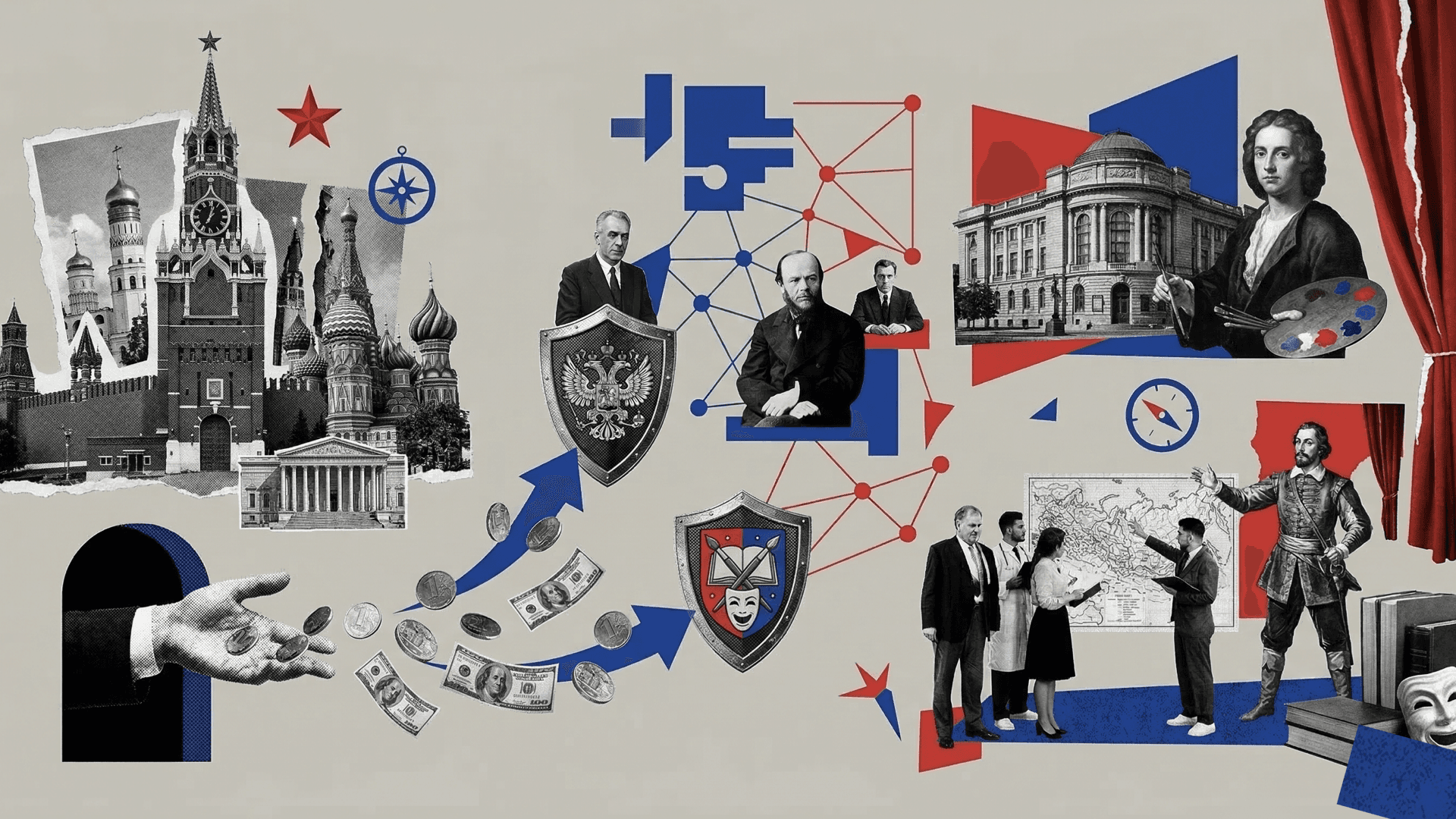
Since Putin’s first term, the Kremlin has used NPO grants to promote patriotic education and traditional values, centralizing support under the PGF and later the PFCI to fund projects aligned with its ideological priorities.
Summary
Patriotic education and the promotion of traditional values have been part of official Russian state policy since Vladimir Putin’s first presidential term. Initially implemented through five-year state programs, these priorities were later incorporated into initiatives run by various government agencies. Yet these programs lacked an effective mechanism for dialogue with grassroots initiatives.
Such a mechanism gradually emerged within the framework of state support for the nonprofit sector. Grant competitions provided a convenient way for the authorities to interact with civil society, delegating certain state tasks to nonprofit organizations (NPOs). From 2006 to 2016, presidential grants for NPOs were distributed through several intermediary organizations. In 2017, the Presidential Grants Foundation (PGF) was established as the unified operator distributing federal support.
From the outset, some competition winners were initiatives focused on patriotic education and support for the president and his policies, such as the Seliger youth camps. Still, the normalization of this segment of the nonprofit space occurred gradually. Only in 2013 were “activities in the sphere of patriotic, including military-patriotic, education of citizens of the Russian Federation” formally deemed socially oriented and eligible for state support. That same year, dedicated competition categories emerged, including commemorating defenders of the Fatherland, preserving Russia’s military glory, and promoting the country’s cultural heritage. These categories were later consolidated within the PGF’s competitions under the broader category of “preservation of historical memory.”
Since 2021, the PGF has evolved from a single entity into a more diversified structure with subsidiary foundations. The first such institution was the Presidential Foundation for Cultural Initiatives (PFCI), established to assume full responsibility for financing cultural projects. After that, cultural initiatives ceased to receive support through PGF competitions.
While the PFCI largely replicates the organizational structure of its parent foundation, it has introduced a crucial innovation: explicit restrictions on the themes eligible for support, which are directly tied to the promotion of traditional values and patriotic narratives. The creation of a separate foundation has not only increased funding for cultural projects but also redefined their purpose. The system has shifted from broad support for cultural projects to targeted financing of those that advance official ideological priorities.
Overall, the current grant system allows the state to see grassroots initiatives and channel support toward those that are aligned with official priorities. The new, institutionalized division of responsibilities has further strengthened the authorities’ capacity for selective engagement with civil society: The PGF now focuses primarily on social security organizations, while the PFCI, as noted above, supports cultural creators promoting traditional and patriotic values. This helps the Kremlin simultaneously to maintain popular legitimacy and to cultivate ideologically aligned cultural production.
Introduction
Centralized state support for patriotic education was established soon after Putin assumed the presidency. The first five-year program, Patriotic Education for Citizens of the Russian Federation, was launched in 2001 and was followed by successive five-year programs that continued until 2020[^1]. Over time, these initiatives included regional programs, legislative changes, curriculum reforms, and other institutional measures. Since 2021, patriotic education has been incorporated into the national project for education.
As Marlene Laruelle demonstrates, before patriotism, great-power status, and traditional values became pillars of state ideology, the early Putin years were characterized by ideological flexibility and active engagement with a wide range of grassroots movements and initiatives[^2]. During this period, the Kremlin selectively co-opted illiberal and conservative ideas circulating within these grassroots environments. Gradually, however, this flexibility diminished, and the co-opted values became institutionalized as central components of state ideology.
Yet the patriotic education programs themselves lacked an effective feedback mechanism for identifying and incorporating emerging grassroots initiatives. The system of state grants for NPOs, introduced in 2006, provided such a mechanism. Organizations from across the country could apply for funding, while the body distributing the grants could identify and support initiatives that most closely aligned with state priorities, including ideological ones. In practice, this created a dynamic system through which the state could remain responsive to societal initiatives while retaining ultimate control over which projects received support.
In our previous analysis of the overall distribution of grants across NPO categories, we adopted the typology of civil society organizations proposed by Toepler et al.[^3][^4]
Claims-making NGOs promote progressive societal change and Western democratic values and are generally suppressed by the state.
Service-providing NGOs focus on service delivery, social innovation, and advocacy.
Loyal NGOs promote and defend the state’s conservative and traditionalist agenda.
While that analysis applied this framework to the nonprofit sector as a whole, it did not examine in detail the evolution of state support for the latter category over time. This paper focuses specifically on loyal NPOs.
Loyal NPOs
Support for patriotic projects and initiatives promoting traditional values—for what Toepler calls loyal NPO activities—has been present since the inception of Russia’s state grant system for nonprofit organizations. However, its institutionalization has occurred gradually.
From 2006 to 2016, state support for NPOs was channeled through annual allocations to several operator foundations, which organized grant competitions and distributed resources to the winners. During this period, the total volume of funding increased from $48.0 million in 2007 to $62.5 million in 2016.
Each operator foundation determined the categories of projects eligible for funding. The main ones included: youth initiatives; social assistance to vulnerable groups; legal education; promotion of healthy lifestyles; educational and cultural projects; and development of civil society institutions and local self-governance.
Until 2013, “patriotism” was not formally designated as a separate funding category, though patriotically oriented initiatives had been awarded money. For example, in 2008 some of the money distributed by the Gosudarstvennyy Klub cadre reserve preparation organization (Fond Podgotovki Kadrovogo Rezerva "Gosudarstvennyy Klub") supported the youth movements Nashi (including the Seliger camp) and Young Guard (Molodaya Gvardiya), which were designed to mobilize young people in support of the ruling authorities. Such decisions opened the grant distribution system up to criticism for political bias.
Beginning in 2013, official competition categories started to include themes such as commemorating defenders of the Fatherland and preserving Russia’s military glory. In 2016—the final year of competitions before the creation of the PGF—an additional category for preserving and popularizing Russia’s cultural heritage was introduced. Thus, patriotic initiatives began to receive support as distinct competition categories.
An important step in legitimizing state support for nonprofit patriotic initiatives—broader than the presidential grant system itself—was the 2013 amendment to the NPO law regulating state support from government authorities and local self-government bodies. The list of activities qualifying an organization as socially oriented and eligible for state support—alongside things like social assistance, aid to disaster victims, and the protection of cultural monuments and the environment—was expanded to include “activities in the sphere of patriotic, including military-patriotic, education of citizens of the Russian Federation.[^5]” Moscow Helsinki Group member Valery Borshchev warned that the change threatened the nature of civil society and represented an attempt to introduce ideology into the nonprofit sector. He argued that it would divide NPOs into “patriotic” and “antipatriotic” organizations.[^6]
Presidential Grants Foundation: Patriotic and Cultural Projects
The grant distribution system based on multiple operator foundations that existed between 2006 and 2016 was widely criticized for its lack of transparency and for the absence of unified evaluation criteria. A single operator for state support was established in 2017: the PGF. Since then, it has held two grant competitions each year, with more than 3,700 applications annually.
The foundation introduced a standardized application form. Each application submitted to the PGF is assigned an official category. Among these categories are several that overlap with patriotically oriented NPO activities. The most directly relevant is “preservation of historical memory,” alongside broader categories such as “support for culture and art projects,” “development of diplomacy and support for the Russian diaspora,” and “strengthening interethnic and interreligious cooperation.”
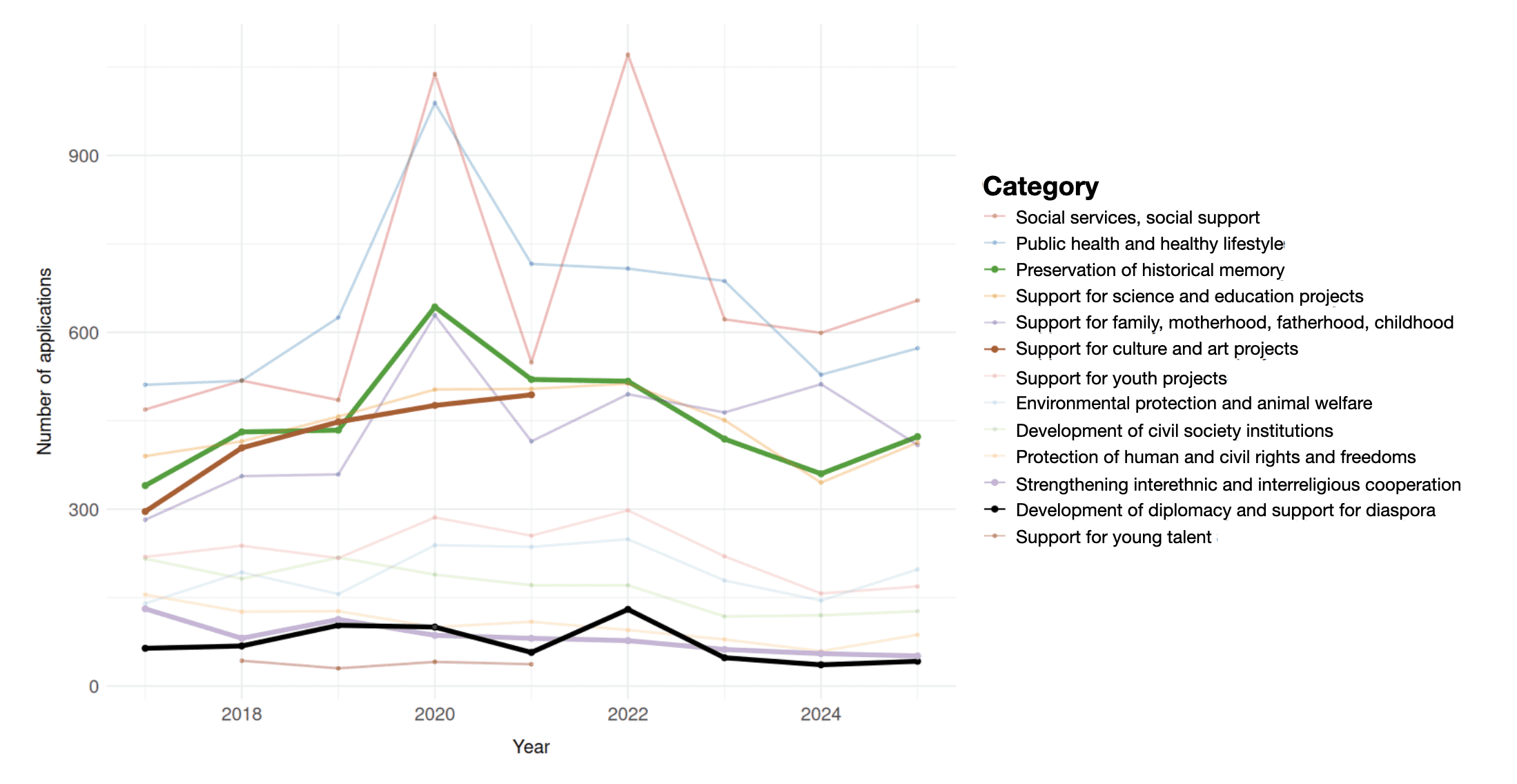
Chart 1: Number of Winning PGF Grant Applications by Category Over Time
Source: To Be Precise
Chart 1 shows that these categories do not represent a majority of winning applications, even when combined. Moreover, there is no visible growth in applications from these categories in the lead-up to or at the start of the full-scale war against Ukraine in 2022. A jump is visible in 2020, but it is attributable to the 75th anniversary of World War II.
To examine whether the nature of applications is changing, and whether their content is becoming more patriotically oriented, we classified application descriptions based on the presence of patriotic terminology, including such word collocations as: patriotic education, heritage, spiritual-moral, historical memory, military-patriotic, historical-patriotic, preservation of historical, peoples of Russia, historical-cultural, history of Russia, history of native region, motherland, fatherland, Patriotic War, special military [operation], study of history, military-historical, patriotic club, year of the Great [Victory], moral values, combat veterans, moral education, national culture, and cultural-historical.[^7]
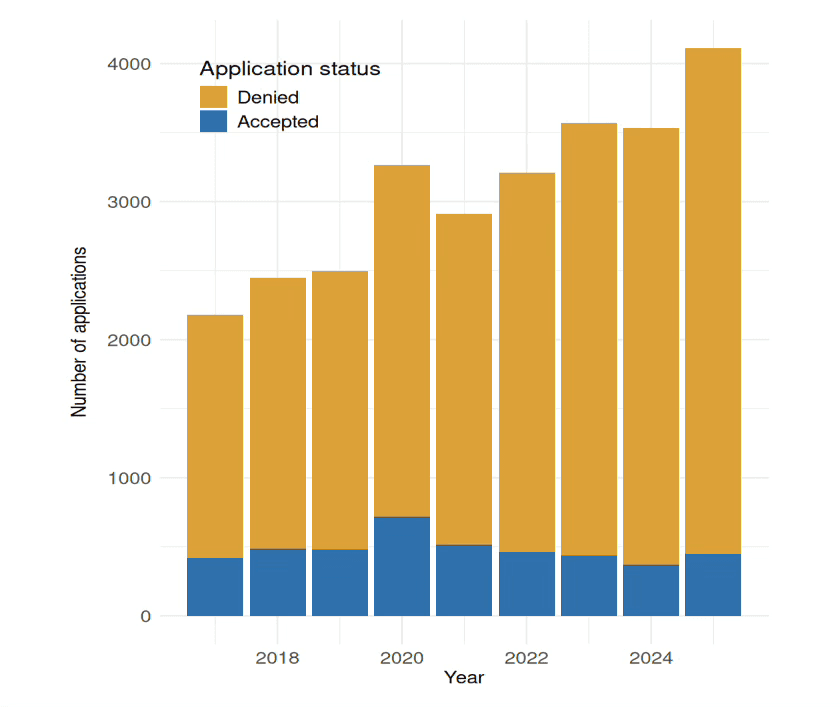
The data shows that the number of applications using patriotic terminology has increased over time. However, the number of such winning applications remains relatively stable. The only observable jump coincides with the celebration of the 75th anniversary of Victory in World War II.
Chart 2: PGF Applications Using Patriotic Terms
Source: To Be Precise
These findings suggest that more patriotic language does not correspond to higher success rates in grant competitions. In other words, the PGF does not appear to systematically favor patriotically oriented applications. Such projects remain a stable but limited share of the overall grant landscape, while social service initiatives continue to receive most of the funding.
Presidential Foundation for Cultural Initiatives: A New Model for Support
Despite the stability of grant priorities within the PGF, significant changes have occurred in the breakdown of funding distributed through the system. Following a 2021 amendment to the presidential grants law,[^8] the foundation was authorized to provide grants—by presidential decision—to organizations established by the foundation itself, without holding public competitions.
Since then, several subsidiary foundations have been created by the PGF. The first was the PFCI, established on May 17, 2021, by presidential decree to provide comprehensive support for projects in culture, the arts, and “creative industries.”[^9] Sergei Kiriyenko, who chairs the Coordinating Committee of the PGF, was appointed chair of the same committee of the new foundation. In June 2021, the Foundation for Cultural Initiatives held its first grant competition.
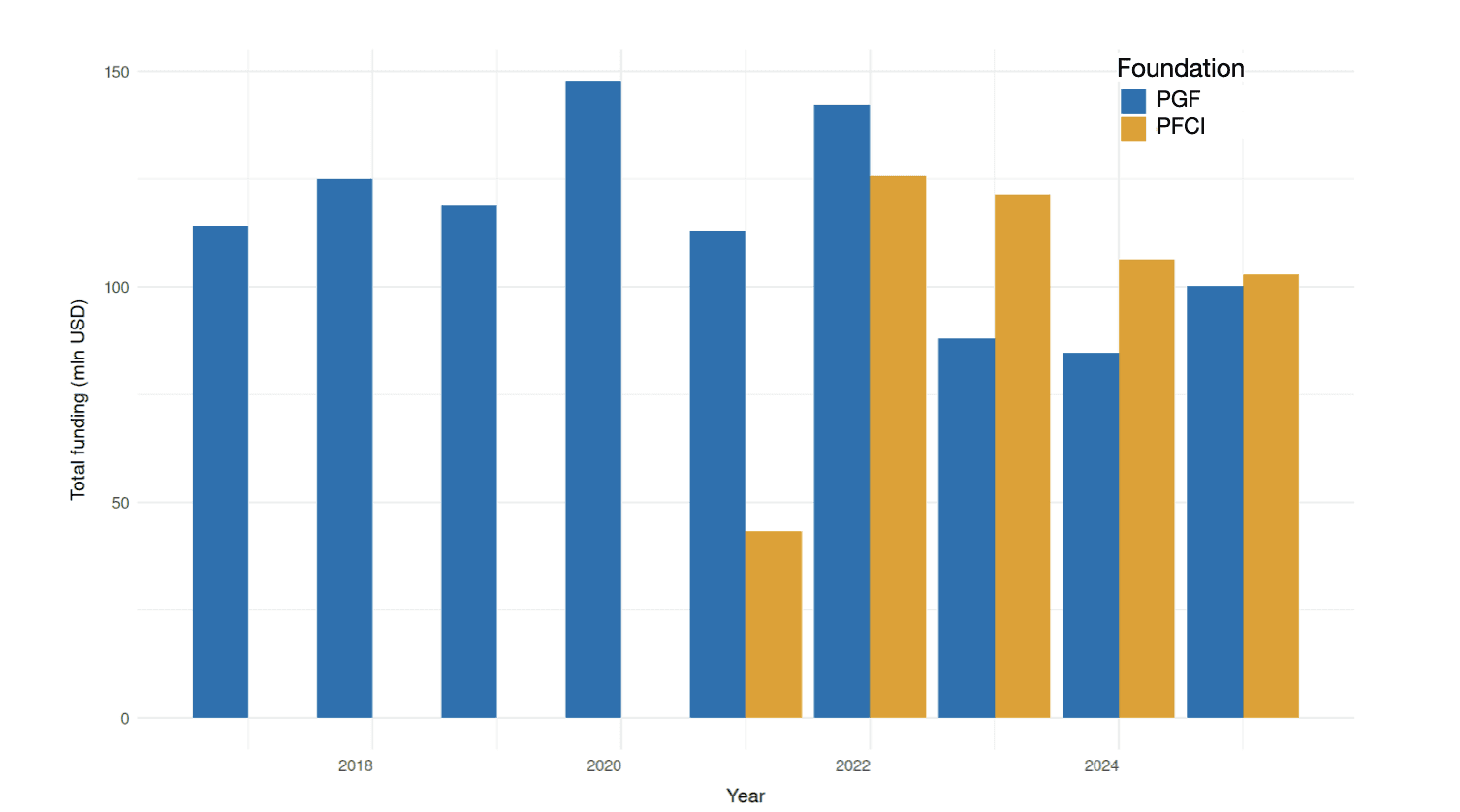
Following the creation of the PFCI, categories related to culture and art were removed from the competition categories of the PGF. Prior to that change, the PGF had allocated an average of $19.9 million per year to these areas, distributing a total of $99.4 million from its inception through the end of 2021.
The PFCI now receives more than 2,000 applications annually. From 2021—when only a single competition was held—through the end of 2025, it has distributed $499.6 million. Thus, state support for culture and art projects increased sharply following the spin-off, and the total funding distributed by the PFCI exceeds that by the PGF.
Chart 3: Total Funding by Year and Foundation
Sources: To Be Precise; The Russia Program at GW
The structure of the PFCI mirrors that of the PGF in several key respects. Grants are distributed through open competitions held twice a year. Applicants submit a standardized application describing the project, including both their own financial contribution and the amount requested from the foundation. All applications are published openly on the foundation’s website, and funding decisions are made publicly available.
Expanding the Pool of Participants
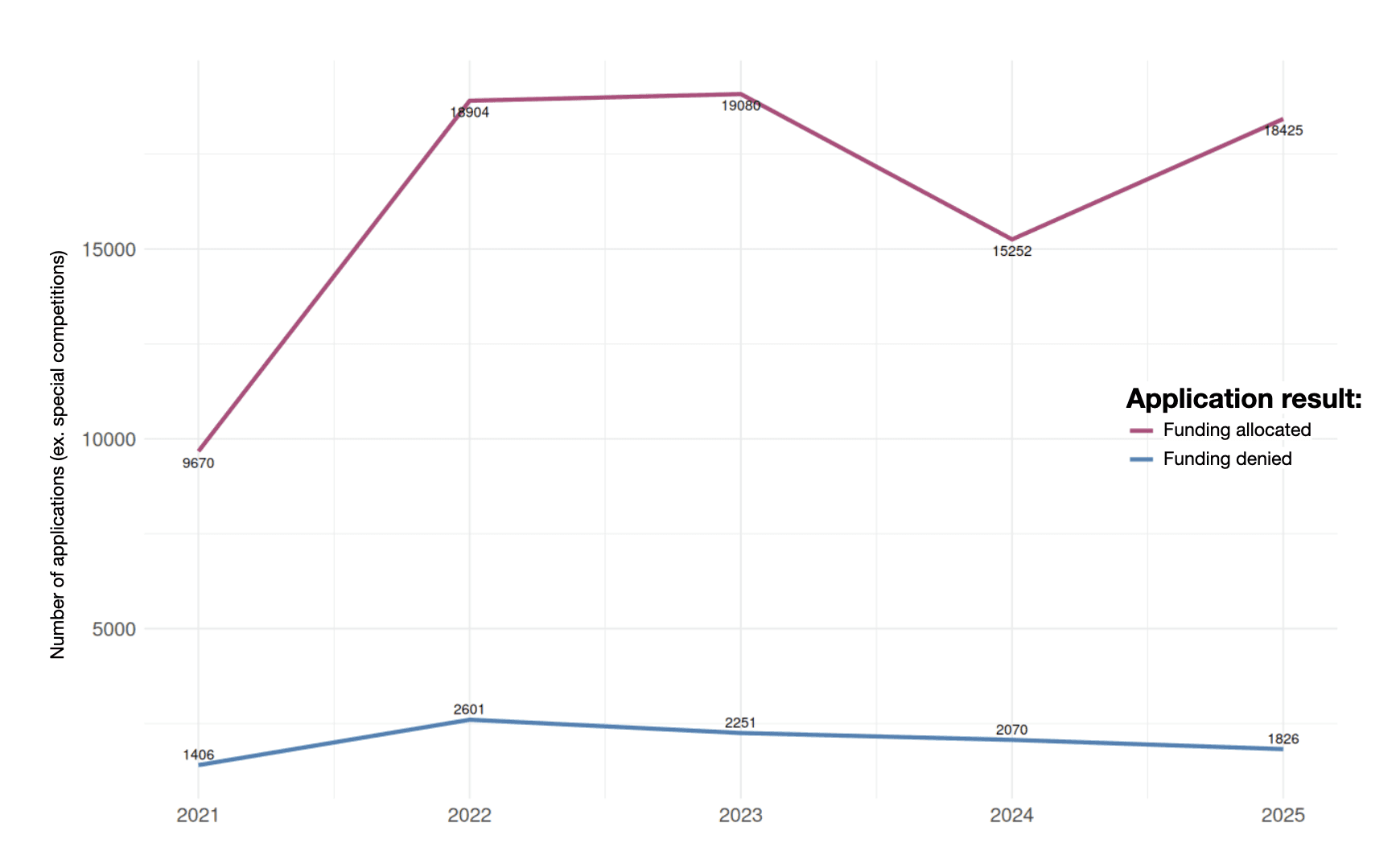
As are the rules with the PGF, state institutions, state corporations, state-owned companies, and political parties remain ineligible to participate in competitions of the PFCI. However, the pool of eligible participants has substantially expanded: While the PGF restricts participation to nonprofit organizations, the PFCI opened its competitions to commercial organizations and individual entrepreneurs. Of the 41,354 applicants since 2021, only 40% are NPOs, 41% commercial organizations, and 19% individual entrepreneurs.
Chart 4: Number of PFCI Applications by Year (Ex. Special Grant Competitions)
Source: The Russia Program at GW
As a result, the total number of participants in competitions across both foundations has nearly doubled, while the total amount of money allocated annually has remained roughly the same. The competition has therefore intensified significantly. While the PGF maintains an average success rate of about 20%, the success rate in competitions of the PFCI is only about 10%.
Meanwhile, the PFCI has managed to attract entirely new applicants: Only 30% of participants in PFCI competitions (11,994 of 41,338) had previously participated in competitions organized by the PGF.
Support for Trusted Organizations
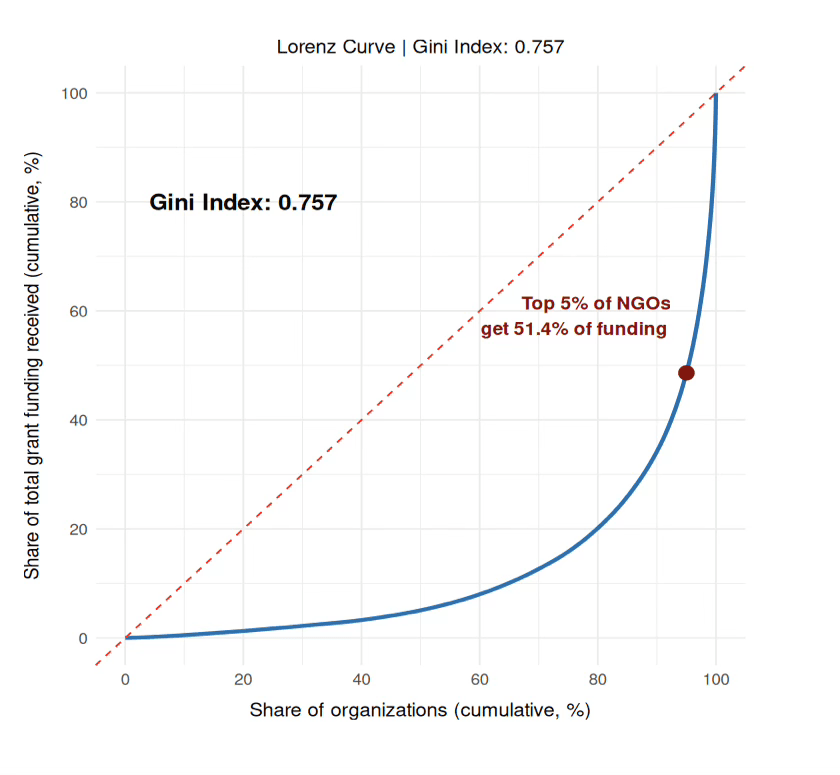
Grant distribution among recipients of PFCI funding, like that of the PGF, is highly unequal. The Gini coefficient—a statistical measure of inequality in which 0 represents perfect equality and 1 represents maximum inequality—stands at 0.757, even higher than the 0.703 for the PGF. This reflects a strong concentration of funding, with just 5% of winners—370 organizations implementing 1,257 projects—receiving 51.4% of all distributed funding, out of a total of 7,409 winners implementing 11,346 projects.
Chart 5: Extreme Concentration of Awarded PFCI Funding Since 2021
Source: The Russia Program at GW
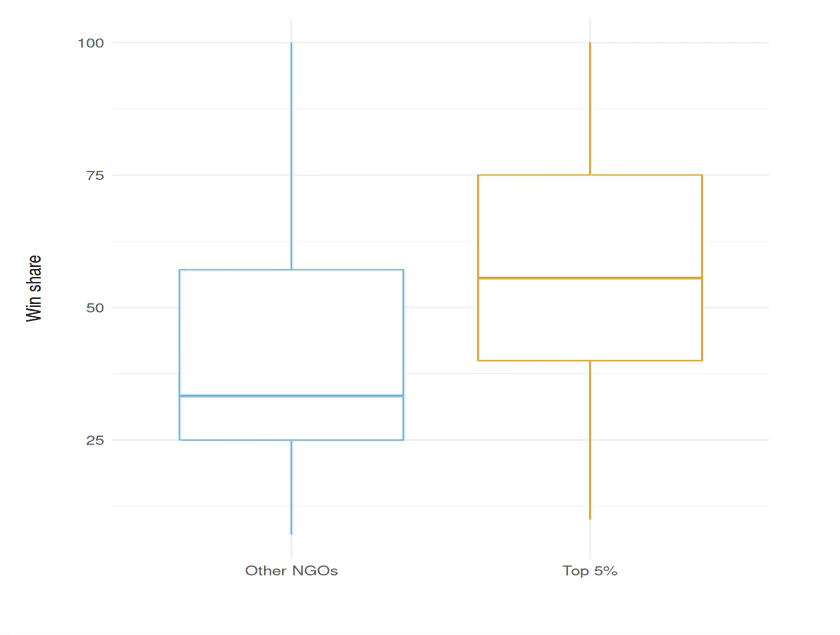
Organizations in the top 5% not only win larger sums in more competitions but also have a higher median win rate compared to other grant-winning organizations. This indicates the formation of a core of trusted organizations, which can reliably expect to win and receive sufficient funding for long-term projects.
Chart 6: Share of Successful PFCI Applications Since 2021, Top 5% vs Others
Source: The Russia Program at GW
One contributing factor is that, as at the PGF, the track record of the applicant organization, along with the experience of its team members, serves as key evaluation criteria for reviewers. For projects requesting larger grants, these criteria account for more than 20% of the total score. This creates a self-reinforcing dynamic: The more often an organization wins grants, the greater its chances of future success.
Although relatively few recipients of PFCI grants had previously received support from the PGF, a significant share of the top 5% of the most highly funded organizations already had experience collaborating with the state in other ways.
Take the Social Research Expert Institute (EISI), which has received the largest amount of funding from the PFCI—$6.6 million—without losing a single competition entered. Founded in 2017 as a think tank for the Presidential Administration, EISI initially conducted regional sociological monitoring ahead of elections in 2018.[^10] It now analyzes everything from politics in Russia’s regions and restrictions on media and political freedom in Western countries, to industrial subsectors affected by sanctions.[^11] Notably, in the competitions of the PFCI, EISI does not feature its core research activities; instead it organizes cultural events—most prominently the Russian Summer: For Russia (Russkoye leto. ZaRossiyu) patriotic festival, held annually in support of the war.
Many other top grant recipients have extensive experience in organizing large-scale cultural events. One example is event agency GALA-RUS, which ranks second in total funding received at $5.0 million. Since 2014, the company has organized major events in partnership with the Ministry of Culture and the Hermitage, including Russian Army Festival, and now uses grant funding to organize media art competitions. Another notable major recipient is pianist Denis Matsuev and his Stars on Baikal (Zvezdy Baykala) music festival, ranking fourth in total funding received. The festival has been held since 2004 and, while it had not previously received support from the PGF, it was backed by Gazprom.
While the PFCI has created opportunities for new participants and grassroots initiatives, it also serves to channel the largest amounts of money toward a cultivated network of trusted organizations and individuals.
Defining Acceptable Cultural Content
Selecting ideologically aligned organizations based on evaluation criteria favoring experience and a reliable track record is not the only mechanism for ensuring ideological conformity—more directly, the PFCI has made a project’s theme a required field.
The PGF previously used broad formal categories—such as “support for culture and art projects” and “support for young talent”—that imposed minimal restrictions on content and functioned primarily as administrative classifications. These categories were removed from PGF competitions in 2021 following the creation of the PFCI. Organizations that earlier applied in culture and art categories account for only 18.3% of PFCI participants. The remaining participants come from across PGF categories. Among these, the largest share (13%) previously applied in the “preservation of historical memory” category. This suggests that the category was already closely aligned with the thematic focus of the newly established PFCI, alongside the other culture categories transferred to it.
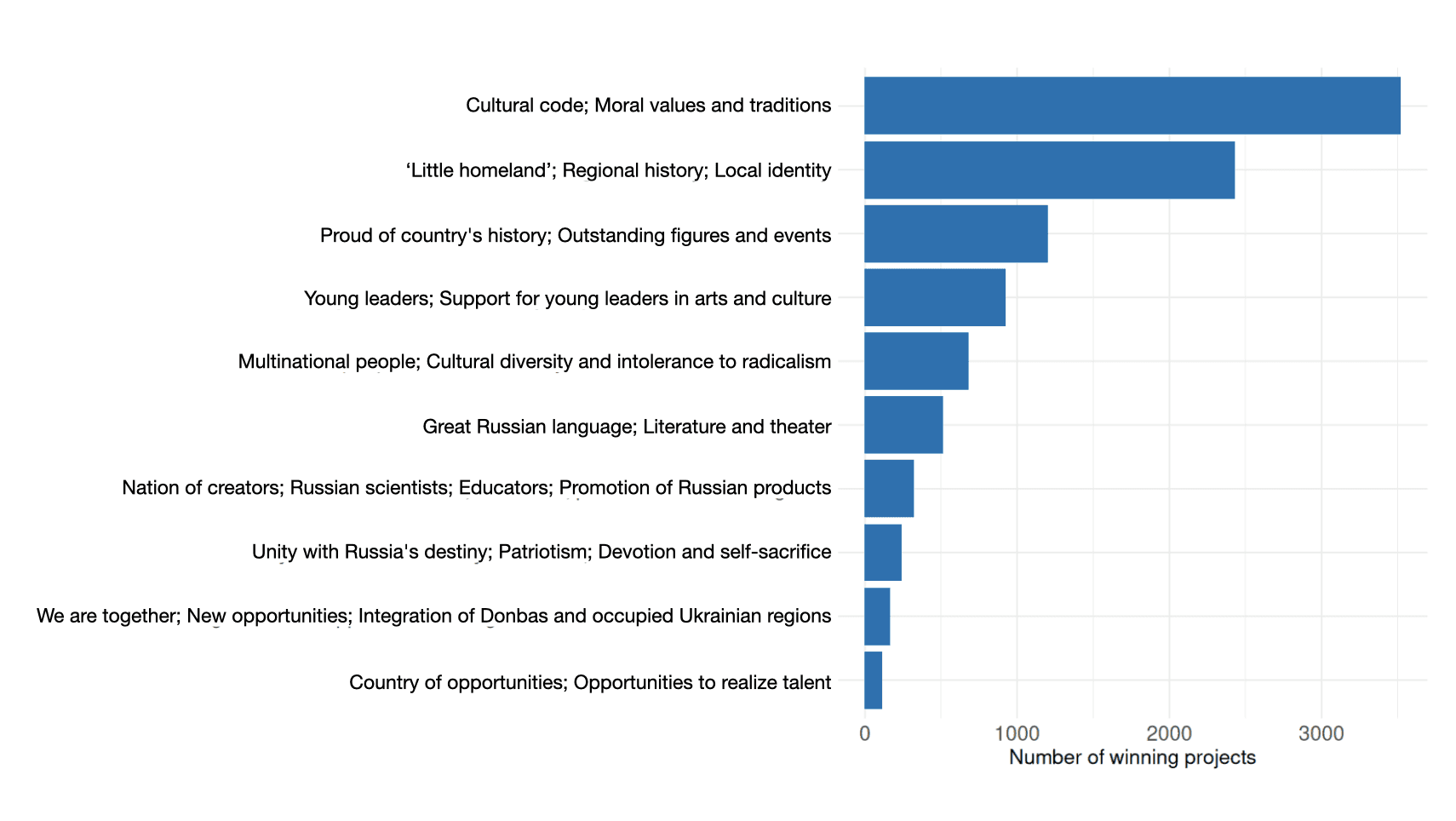
Chart 7: Top 10 Themes of Winning Projects (PFCI Regular Competitions)
Source: The Russia Program at GW
Chart 7 shows that project themes center on the promotion of traditional values, celebration of Russian history and achievements, and development of local cultures within a unified nation.
The above chart provides abbreviated descriptions of project themes; in applications they are laid out in greater detail. For example, the most common theme is formulated as follows: “Projects that promote traditional Russian values through culture and creative industries, incorporating traditional crafts, folk art trades, folk and spiritual music and songs, classical and contemporary literature, and traditional and national forms of artistic creativity.” This formulation illustrates how the foundation links the concept of “traditional values” to specific cultural practices and artistic forms.
Beginning with the second competition of 2025, new rules were introduced that required project descriptions to reference explicitly at least one of the 17 values enshrined in Presidential Decree No. 809, from November 2022, called “On Approval of the Foundations of State Policy for Preserving and Strengthening Traditional Russian Spiritual and Moral Values”:
Traditional values include life, dignity, human rights and freedoms, patriotism, civic consciousness, service to the Fatherland and responsibility for its destiny, high moral ideals, strong family, creative labor, priority of the spiritual over the material, humanism, compassion, justice, collectivism, mutual assistance and mutual respect, historical memory and continuity of generations, and the unity of the peoples of Russia.[^12]
The introduction of explicit content requirements, as well as the specification of which values projects must promote, may help explain why more than 30% of NPOs that had previously received funding for culture and art projects from the PGF did not apply to competitions organized by the PFCI.
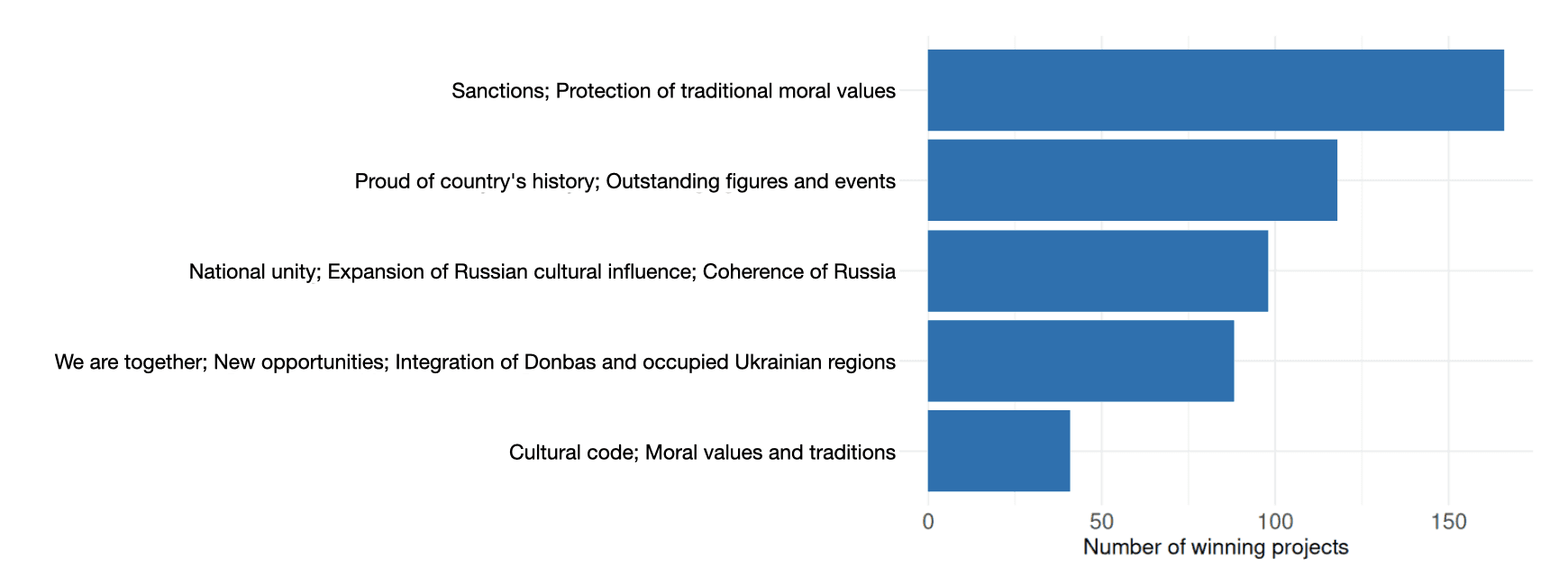
Like the PGF, the PFCI has held special competitions, organized in addition to the two regular annual competitions, to respond to crises. In particular, after the outbreak of the full-scale war, special competitions were launched to help organizations affected by international sanctions against Russia (for example, restrictions on international travel), not to mention projects promoting Russia’s supposed historical and cultural unity with “newly incorporated” Ukrainian territory.
Chart 8: Top 5 Themes of Winning Projects (PFCI Special Competitions)
Source: The Russia Program at GW
The themes of regular PFCI competitions have also changed since the start of the full-scale war and the introduction of sanctions against Russia. Beginning in 2023, a new category was added: “We are together. Projects aimed at integrating the Donbas and liberated territories into a unified cultural, educational, enlightenment, and civilizational space.” Occupied regions, meanwhile, were swiftly included in the official list of participating regions: In 2023 the PFCI began accepting applications from organizations located in the Luhansk and Donetsk people’s republics; in 2024, eligibility was extended to those operating in Kherson and Zaporizhzhia regions.
Conclusion
Previous state programs aimed at promoting patriotic values, such as “Patriotic Education for Citizens of the Russian Federation,” lacked an effective feedback mechanism for the state to interact with initiatives at the grassroots level. By contrast, the evolving state grant competitions for NPOs have enabled that. The open competitions allow the authorities to identify ideologically aligned actors and determine which organizations should be trusted to receive support and implement projects. The current grant system is marked by openness to new initiatives, combined with a concentration of funding by organizations with established track records. This has been true of state policy overall since 2006 and in a unified form since 2017, when the PGF was set up.
This system is supposed to address both the provision of social services and the promotion of traditional values. Overall, the PGF has consistently prioritized the former, with no increase in the share of projects related to the latter or patriotic education even after the start of the full-scale war with Ukraine. Indeed, the spin-off of the PFCI in 2021 restructured state support for culture. Compared with the PGF, which used broad project categories and worked only with NPOs, the PFCI toughened rules around project themes and expanded eligibility to commercial organizations and individual entrepreneurs. Even though total funding has increased from $99.4 million (by the PGF in 2017–2021) to $499.6 million (by the PFCI in 2021–2025), the biggest shift has been qualitative. The PFCI explicitly defines, and reserves support for, acceptable cultural content, meaning the aim of state support for culture has shifted from general development to targeted promotion of state ideology.
[^1]: Ekaterina Khodzhaeva, Svetlana Barsukova, and Iskender Yasaveev, “Mobilizing Patriotism in Russia,” Russian Analytical Digest, no. 207 (2017).
[^2]: Marlene Laruelle, “Making Sense of Russia’s Illiberalism,” Journal of Democracy 31, no. 3 (2020): 115–29.
[^3]: The Russia Program, “Outsourcing Social Policy, Controlling Civil Society: Russia’s Presidential Grants Fund” (policy paper, 2025).
[^4]: Stefan Toepler, Annette Zimmer, Christian Fröhlich, and Katharina Obuch, “The Changing Space for NGO Civil Society in Authoritarian and Hybrid Regimes,” VOLUNTAS: International Journal of Voluntary and Nonprofit Organizations 31, no. 4 (2020): 649–62.
[^5]: Federal Law of the Russian Federation No. 7-FZ, January 12, 1996, “On Non-Commercial Organizations,” art. 31.1, “Support of Socially Oriented Non-Commercial Organizations by State Authorities and Local Self-Government Bodies.”
[^6]: Viktor Khamraev, “NPOs Are Being Enlisted for ‘Patriotic Education,’” Kommersant, March 11, 2013, https://www.kommersant.ru/doc/2143560.
[^7]: Patrioticheskoye vospitaniye, naslediye, dukhovno-nravstvennyy, istoricheskaya pamyat', voyenno-patrioticheskiy, istoriko-patrioticheskiy, sokhraneniye istoricheskogo, narody Rossii, istoriko-kul'turnyy, istoriya Rossii, istoriya rodnogo kraya, rodina, otechestvo, Otechestvennaya voyna, voyenno-patrioticheskiy, spetsial'naya voyennaya, izucheniye istorii, voyenno-istoricheskiy, patrioticheskiy klub, god Velikoy, nravstvennyye tsennosti, veterany boyevykh, nravstvennoye vospitaniye, natsional'naya kul'tura, kul'turno-istoricheskiy.
[^8]: Presidential Decree No. 302, May 20, 2021, “On Amendments to the Regulation on Presidential Grants for Civil Society Development.”
[^9]: Presidential Decree No. 287, May 17, 2021, “On the Establishment of the Presidential Fund for Cultural Initiatives.”
[^10]: “EISI Expert Meeting,” Ekspertnyi institut sotsial'nykh issledovanii (EISI), accessed January 15, 2026, https://eisr.ru/events/soveshchanie-ekspertov-eisi/.
[^11]: “Projects and Research,” Ekspertnyi institut sotsial'nykh issledovanii (EISI), accessed January 15, 2026, https://eisr.ru/projects-and-researches/.
[^12]: “New Grant Competition Directions and 17 Traditional Spiritual and Moral Values in Projects: PFCI Announced Innovations in Campaign Implementation,” Presidential Fund for Cultural Initiatives, December 17, 2024, accessed January 15, 2026, https://фондкультурныхинициатив.рф/news/5942.