After Putin. The Unfinished Russian Revolution
An essay by David Hoffman, the author of "Citizens Rising: Independent Journalism and the Spread of Democracy"
Executive Summary

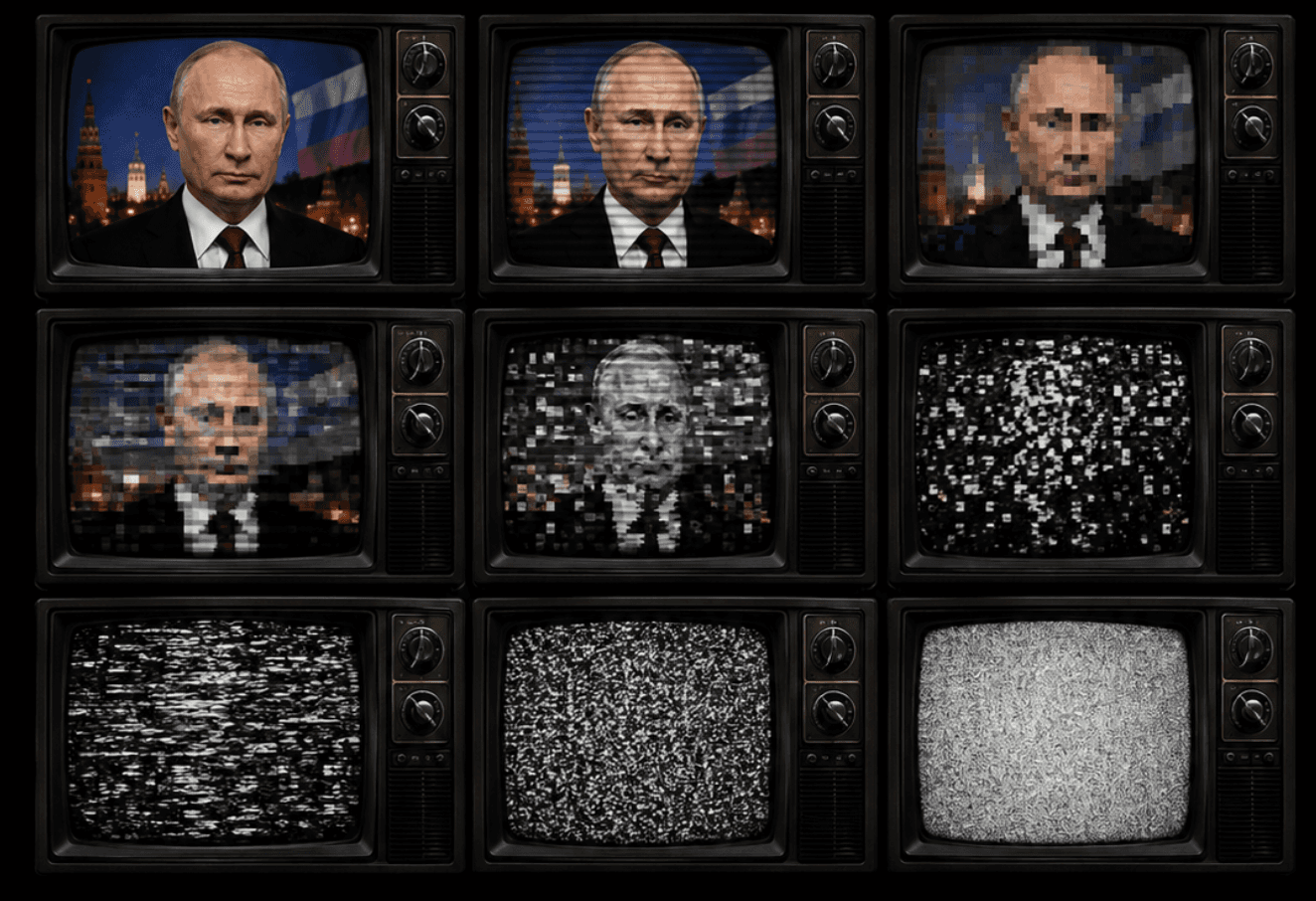
The Ostankino Tower, symbol of Russian state broadcasting power.
Photo: Wikimedia Commons / CC-licensed
President Vladimir Putin's authoritarian regime will not last forever. When he eventually leaves the scene, Russia will again face a question that has shaped its modern history before: what kind of information system will replace today’s state-controlled media? The answer will influence not only the future of Russian journalism but the character of the Russian state itself.
As the co-founder of an international media development NGO, I have spent more than forty years helping build independent media around the world. Beginning in the final years of the Soviet Union, my team and I had the extraordinary privilege of working alongside many of the Russians who created the country’s first independent media revolution. Internews and its Russian partners helped start television stations, journalism training programs, media law organizations, production companies, and professional networks. Together, they became part of one of the twentieth century's most ambitious experiments in democratic communication.
We did not appreciate at the time how fragile those achievements would prove to be. Looking back, it is easy to remember the excitement of those years and forget how quickly the institutions beneath them disappeared. Putin did far more than silence critical journalists. He dismantled the organizations that made independent journalism possible in the first place. Ownership changed hands. Independent broadcasters vanished. Journalists left the country. Piece by piece, a decentralized information system became centralized once again.
Yet today's Russia is not simply a return to the Soviet Union. State television remains powerful, but it now exists alongside digital platforms, encrypted messaging services, YouTube channels, and independent news organizations working largely from exile. Russians navigate several overlapping information worlds, depending on age, technology, geography, and whom they trust. That is why rebuilding independent media after Putin cannot mean recreating the institutions of the 1990s. The country they served no longer exists.
This paper grows out of that experience. Its central argument is straightforward:
The next generation of assistance should focus less on rebuilding individual news organizations than on restoring the broader network of institutions that enables independent journalism to survive.
Russia has already shown that it can produce journalism of remarkable courage, creativity, and public influence. The challenge after Putin will not be discovering those qualities again. It will be creating conditions in which they can endure.
The Promise
If I had to choose the moment when the Cold War truly began to end, I would not begin with a summit meeting or a treaty. I would begin with two television studios linked by an unprecedented use of a new technology, communications satellites. One studio was in Seattle. The other was in Leningrad. The year was 1985, four years before the Berlin Wall came down.
The program, “A Citizens Summit,” was the most prominent of a series of largely experimental, live, and interactive television exchanges known as “spacebridges” or “telemosts” in Russian, conceived by a Russian, Josef Goldin, and one of the founders of Internews, Kim Spencer. Four years before the Berlin Wall came down, ordinary Americans and ordinary Russians spoke directly to one another without governments standing between them.
Historians understandably tell the story of the Cold War through presidents, missile deployments, and diplomatic negotiations. Those events mattered enormously, but the Cold War also depended upon something less visible: two societies that knew each other largely through official caricatures. As the philosopher Sam Keen observed, “Before a drop of blood is spilled, we must think each other to death.” The spacebridges began to interrupt that process.
It is difficult now to appreciate how extraordinary those broadcasts were. Communications satellites were then what artificial intelligence may be today: a technology whose broader implications were only beginning to emerge. Soviet citizens had rarely seen foreign television. They had certainly never watched ordinary Americans question ordinary Russians—or vice versa—in a live, unscripted conversation.

The Leningrad audience watches the Seattle broadcast during the December 1985 “Citizens Summit” spacebridge.
Frame from the original broadcast, courtesy of the author
One of the best-known of these exchanges took place in December 1985 between King TV, an NBC affiliate in Seattle, and the Soviet state TV studios in Leningrad. Phil Donahue roamed the American audience with his signature handheld microphone while Vladimir Pozner did the same in Leningrad. There were no speeches and no prepared statements. Teachers questioned teachers. Students questioned students. Parents asked parents about raising children, about their hopes, their fears, and the ordinary concerns of family life. Sometimes the discussion turned to politics. More often, it remained surprisingly personal. No one knew what would be said next. In a subsequent TV exchange that became famous yet apocryphal, in answer to a question about sex in advertising, a Soviet woman replied, “We don't have sex in the Soviet Union.”
The audience of an estimated 200 million laughed. In the United States, the remark seemed like a crude joke. In the Soviet Union, it carried another meaning. Russians have a word—vranyo. It describes a falsehood that everyone recognizes yet all publicly accept. The laughter was not simply about sex. It reflected the sudden recognition of a shared irony. Millions of viewers understood immediately that public life had long required saying things no one completely believed.
A few weeks later, I visited Alexander Aksyonov, Chairman of Soviet State Television and Radio. Before we began talking, he poured two generous glasses of vodka. He then told me the story of how contentious the spacebridge had been within the Soviet leadership. The Soviet Central Committee, he explained, had spent two hours debating whether the Seattle-Leningrad broadcast should be shown live. Unable to reach an agreement, they finally left the decision to him.
“I went back to my office,” he recalled, “and drank a bottle of vodka. Only then did I authorize the broadcast.”
Aksyonov was not simply approving a television program that would eventually be broadcast in prime time three nights in a row in the Soviet Union. He was permitting millions of Soviet citizens to watch unscripted public life unfold in real time. After seven decades of Communist Party control over the media, neither he nor anyone else knew where that decision might lead.
Watching those early broadcasts was Eduard Sagalaev, then head of youth programming for Soviet television. He and a group of equally restless producers understood that the spacebridges had demonstrated something larger than the possibilities of satellite technology. They had revealed an audience eager for uncensored conversation. From that insight came 12th Floor and later Vzglyad, programs that overturned nearly every convention of Soviet broadcasting. Instead of officials inaugurating factories and celebrating production quotas, viewers saw journalists asking unscripted questions, guests disagreeing openly, audiences participating directly, and discussions whose conclusions had not been decided before the cameras began to roll.
Almost overnight, 12th Floor and Vzglyad attracted audiences that traditional state programming could no longer match. Suddenly, Russians got their news from independent journalists, not Party apparatchiks. The transformation was exhilarating. It was also fragile.
It is tempting to see these developments as the inevitable consequence of glasnost. They were nothing of the sort. Every advance remained contested. Reformers and conservatives argued continuously over how much freedom would be permitted, who would control it, and whether it would survive at all. At every stage, individuals made decisions whose consequences they could not foresee. Yet one change proved irreversible. Mass media had ceased to be merely a vehicle through which the state spoke to society. It was becoming a place where society could begin speaking to itself.
The changes spread with astonishing speed. Under Vitaly Korotich, the newspaper Ogonyok became required reading for millions of Soviet citizens eager to understand a country whose recent past had suddenly become discussable. Yegor Yakovlev’s Moskovskie Novosti showed that journalism could challenge official assumptions without abandoning professionalism. Radio found its voice as Echo Moskvy introduced listeners to something rarely heard on the Soviet airwaves: genuine debate. Each institution developed its own character, yet all shared a common assumption that would have been almost unimaginable only a few years earlier—that the public could be trusted with information.
None of this meant that censorship had disappeared or that reform had become secure. Powerful forces within the Communist Party continued to resist change, while reformers themselves often disagreed about how far and how fast the country should move. What had changed was something more fundamental. The monopoly over public information had begun to crack. Once Soviet citizens experienced journalism that informed rather than instructed, it became increasingly difficult to persuade them that official truth was the only truth worth hearing. What was happening in journalism was mirrored in culture. In just one example, my friend and, Grisha Liebergal, tested the limits of Soviet control by playing the Beatles' song “Let It Be” on his state radio program and received 80,000 letters in support. The Rolling Stones soon followed.
The transformation was not driven by technology alone, although technology made much of it possible. Nor was it simply the result of enlightened political leadership. President Mikhail Gorbachev's policy of “glasnost” (“openness”) deserves enormous credit for creating the political space in which these experiments could occur, but political openings do not automatically create institutions. They create opportunities. What followed depended upon the initiative of individuals who were prepared to test the boundaries of newly available freedom.
That initiative soon spread far beyond Moscow. The capital remained the center of political reform and national broadcasting, but it no longer possessed a monopoly on imagination. Across Russia, journalists and entrepreneurs began creating institutions of their own—not because they had been instructed to do so, but because, for the first time in generations, they believed they could. The provinces were no longer waiting for permission. They were beginning to act independently.
This marked a profound shift in the way information moved through Russian society. For decades, ideas had flowed almost exclusively from the center outward. Now, initiatives were increasingly moving in both directions. Local broadcasters borrowed ideas from Moscow, but they also adopted them from one another. Editors adapted innovations developed hundreds or even thousands of miles away. Professional relationships were formed across regions that previously had little contact with one another. A new kind of network was beginning to emerge—not one directed from above, but one built horizontally through collaboration among people confronting remarkably similar problems in places far away.
Once censorship and the fear of speaking against the Party line were broken, the floodgates were open. The next stage would prove even more consequential. Independent media would cease to be a handful of innovative programs produced in Moscow and become something far more ambitious: a national community of institutions built by Russians themselves.
That story begins in the provinces.
II. The Ecosystem
In 1992, I attended a meeting of the executive committee of the Glasnost Defense Fund. At the head of the table sat Yegor Yakovlev. As the editor of Moskovskie Novosti (Moscow News), he had become one of the most respected figures in the transformation of Soviet journalism, demonstrating that a newspaper could investigate, question, and challenge authority. His recent appointment as Chairman of Russian State Television was a remarkable indication of how rapidly the old order was changing.
Yet the person I remember most vividly from that meeting was someone I had never met before. Around the table sat many of the best-known men in Russian journalism, but my attention kept returning to the one woman in the room, Manana Aslamazyan. She had none of the theatrical qualities that often accompany leadership. She listened carefully, spoke sparingly, and almost always redirected the discussion toward practical solutions. She possessed a rare combination of organizational discipline, political judgment, and quiet confidence. When the meeting ended, I turned to Alexei Simonov, Manana’s boss at the Glasnost Defense Fund, and, only half joking, said, “I'll trade you my Macintosh for Manana.”

Manana Aslamazyan became director of Internews Russia and one of the architects of the country's independent media system.
Courtesy of Internews
The joke eventually became reality. Manana formed Internews Russia and became its director, and I gave up my Mac. Manana had a keen sense of the historical changes taking place. She understood instinctively that the future of independent Russian media would not be determined solely by what happened in Moscow. The capital had produced Vzglyad, Ogonyok, Moskovskie Novosti, and many of the innovations that made independent journalism imaginable. But unless those ideas spread throughout the country, they would remain isolated successes rather than the foundation of a new media system.
At first glance, her decision to avoid Moscow seemed counterintuitive. Moscow was the political center of the Soviet Union, home to the country's largest broadcasters and to the journalists who had become the public face of glasnost. If independent television had a future, many assumed it would be built there.
She saw it differently. Moscow was also where political power, economic interests, and the old institutions of the Soviet state would collide first. Whatever freedom had been won there would inevitably be contested. If independent media were to endure, it could not remain primarily a Moscow phenomenon. It had to become part of everyday life across the country. But could the energy released by glasnost spread beyond the capital and become rooted in hundreds of communities that had never before possessed an independent voice? As it turned out, it was already starting to happen.
Across the former Soviet Union, journalists and entrepreneurs were beginning to establish television stations of their own. Few had substantial financial resources. Most had little experience operating an independent channel because no such institutions had previously existed. They improvised with whatever equipment they could obtain. Some followed the model of creative entrepreneurs in East Berlin who figured out how to transform an ordinary videocassette recorder into a low-power television station. Connected to the cable systems serving multiple Soviet apartment buildings, these makeshift ‘transmitters’ could reach audiences numbering in the tens of thousands. Others worked from borrowed offices, community centers, or private apartments. This was Wayne’s World on steroids.
What struck us most was not the number of new stations but their isolation from one another. A broadcaster in Tomsk often had no idea that someone in Perm, Yekaterinburg, Vladivostok, or dozens of other cities was confronting precisely the same technical, financial, and political problems. Most believed they were isolated experiments. They solved problems independently because no national organization existed to connect them, and there was almost no opportunity to exchange ideas with colleagues facing similar challenges.
Liz Hasse, an American lawyer working closely with Manana, undertook the task of finding them. One by one, she contacted independent broadcasters across Russia and invited them to Moscow for a conference. Engineers soon discovered colleagues solving many of the same technical problems. News directors exchanged videotapes and reporting techniques. Station managers compared advertising strategies, legal obstacles, and experiences with local officials. But the purpose of bringing them together went beyond the important exchange of practical advice. The goal was to build an entire sector.
Everyone returned home with the realization that independent broadcasting in Russia was no longer a collection of isolated local experiments. It was becoming a national movement. Relationships formed quickly. Trust developed naturally. Ideas traveled from city to city without first passing through Moscow. Broadcasters increasingly looked to one another rather than to the capital for solutions to common problems. The flow of innovation was beginning to run horizontally across Russia.
Those relationships eventually acquired institutional form. Over the following years, they developed into the Independent Broadcasting System, or IBS, one of the first national—and eventually international—networks of independently owned television stations. Unlike every broadcasting system Russians had previously known, IBS was not organized from the center outward. Individual stations remained locally owned and managed. Cooperation replaced hierarchy without sacrificing local independence.
Its growth exceeded anything we had imagined. Wired magazine later reported that by 2001, IBS linked approximately 120 independent stations across seven former Soviet republics, reaching an audience of more than one hundred million viewers. It grew considerably after that. Only a few years earlier, the existence of a nationwide television network operating outside state control would have seemed impossible. Russia had demonstrated that independent broadcasting could be organized on a national scale without being directed from the national capital.
The significance of those relationships became particularly clear in Tomsk when TV-2 obtained footage showing black body bags being unloaded from an aircraft returning from the Soviet war in Afghanistan. Broadcast locally, the images challenged the sanitized official narrative of the war. Through IBS, the video quickly reached stations across Russia. Viewers who had previously encountered the conflict largely through official reports suddenly saw its human cost. The images carried far greater force than any political commentary because they revealed what official television had chosen not to show.
Looking back, it's tempting to remember only the stations themselves. They were certainly the most visible part of the transformation. But the stations represented something much larger developing simultaneously across the country. Journalism schools were revising curricula. Lawyers were drafting media legislation. Engineers, advertisers, trainers, station managers, and civic organizations were creating professional relationships that had not previously existed.
That achievement helps explain both the remarkable success of Russia's first media revolution and its later vulnerability. Independent journalism was never sustained by newsrooms alone. It depended upon a growing network of institutions, professional relationships, and shared standards that reinforced one another. Those institutions would later be amongst the first targets of a government determined to restore centralized political control. Before independent journalism itself could be subdued, the foundations on which it rested had to be dismantled.
So long as Yeltsin remained in power, Gorbachev's reforms of glasnost and perestroika would continue to allow and protect independent media. But on October 3, 1993, forces wishing to reinstate central control launched a coup d'etat to overthrow Yeltsin. That day, I was with Manana in Kyiv at a regional staff meeting when news came on TV that tanks were on the streets of Moscow. Anti-Yeltsin protesters had broken through the security perimeter guarding the Russian White House, the seat of its parliament. Alexandr Rutskoi, the Russian Federation's Vice-President whom the coup leaders hoped to install as President, appeared on a balcony and told the angry crowd:
“You’ve come to the wrong address. Go to Ostankino (the TV center),” he told them, implicitly recognizing that power resided more in the control of the media than in the parliament.
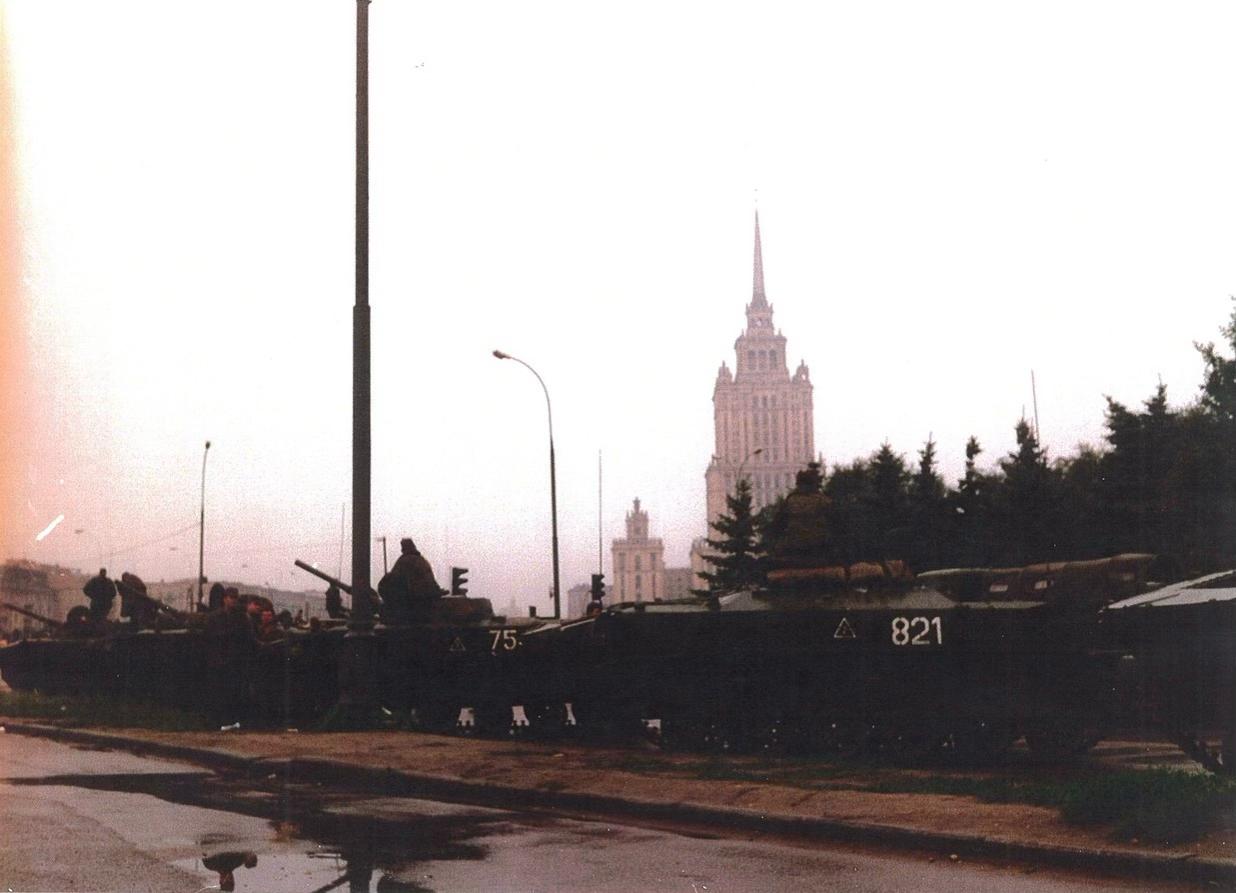
Armored vehicles in Moscow during the October 1993 crisis.
Photo: Wikimedia Commons / CC-licensed
The coup was eventually put down by forces loyal to Boris Yeltsin, but the survival of the Russian revolution hung in the balance.
III. The Faustian Bargain
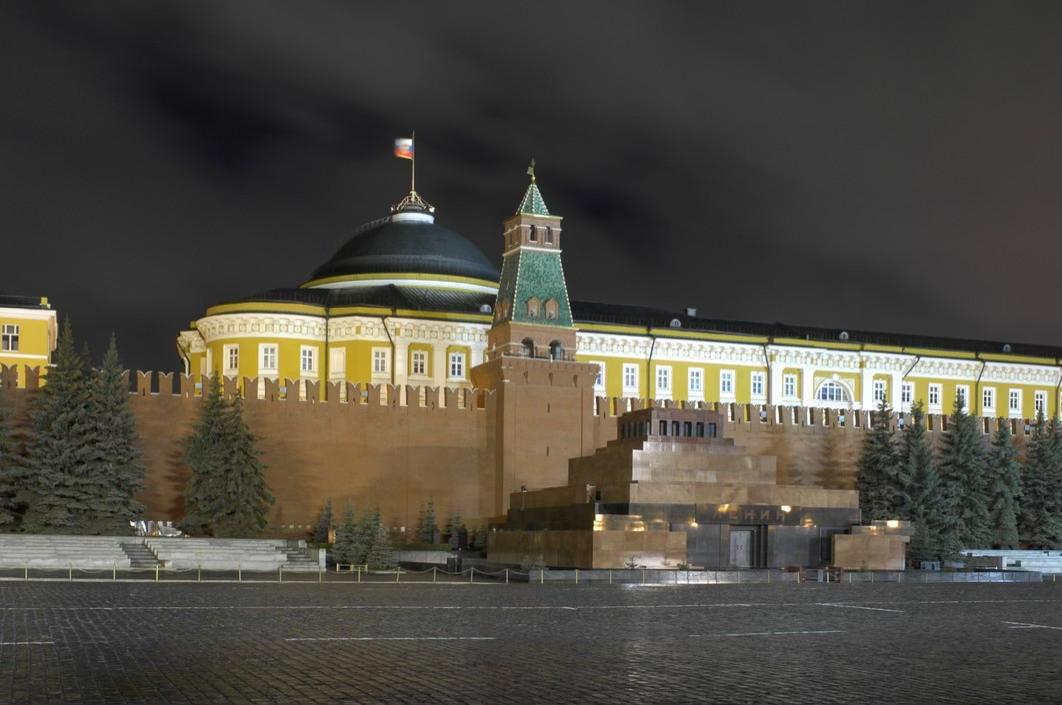
The Kremlin Senate and Lenin Mausoleum at night, seat of Russian state power.
Photo: Godot13 / Wikimedia Commons, CC BY-SA 4.0
History has a way of simplifying impossible choices. Decisions that once seemed agonizing become obvious. Those who made them become heroes or villains. Yet those who actually live through democratic crises rarely enjoy that luxury. They act amid uncertainty, knowing only that every available course of action carries risks whose consequences are not yet known.
For Russia's independent media, that moment arrived during the 1996 presidential election. The Russian Federation was barely five years old. Hyperinflation had wiped out savings. Organized crime flourished. The first Chechen war had shattered confidence in the government and exposed official deception. President Boris Yeltsin's health was visibly failing. His approval ratings had collapsed. Polls consistently showed Communist Party leader Gennady Zyuganov with what appeared to be an insurmountable lead. Many journalists who had spent years dismantling Soviet censorship believed that a Communist victory might reverse everything they had helped build.
The dilemma they faced was genuine. Should independent journalists remain politically neutral when they believe democracy itself is in danger? Or should they intervene to preserve the fragile democratic experiment that had made independent journalism possible? Igor Malashenko, the head of NTV, chose the second course. Along with the country's other leading broadcasters, NTV threw its full support behind Yeltsin. Zyuganov largely disappeared from the airwaves. Working closely with Yeltsin's daughter, Tatyana Dyachenko, Malashenko became the principal architect of Yeltsin's media strategy, orchestrating one of the most effective political communications campaigns in modern Russian history. The campaign succeeded. Boris Yeltsin remained president. After the election, Yeltsin invited Malashenko to become head of the Presidential Administration. He declined and returned to NTV instead.
For a brief moment, it appeared that Russian democracy had survived its greatest test. Yet something fundamental had changed. Television was no longer simply reporting politics. It had demonstrated that it could decisively influence political power. It's easy to criticize that decision from the distance of three decades. To many of those involved, however, neutrality itself seemed irresponsible if it increased the likelihood that authoritarian rule would return. They believed they were defending the conditions under which independent journalism could continue to exist. Historians can continue to debate whether they made the right choice. What cannot be debated is that the relationship between journalism and political power had been permanently altered.
Years later, after Vladimir Putin had brutally dismantled NTV and many of the leaders of Russia's independent media had been killed, silenced, or driven into exile, I met Igor Malashenko in New York. A mutual friend arranged for us to spend an afternoon in David Rockefeller's office, of all places. Surrounded by impressionist masterpieces worth more than most Russian television stations, we spent much of our time discussing the 1996 election and the decision that changed the course of Russian television. I asked him whether, looking back, he regretted what he had done. He sat quietly for a long moment before answering. Finally, he said that he did. He now realized that supporting Boris Yeltsin had fatally compromised the independence of Russian journalism. Then he looked at me and asked softly, “But what choice did we have?” Had Zyuganov won, he believed, Russia's democratic experiment might have ended before it had truly begun. It was not an attempt to excuse the decision. It was an acknowledgment that every available choice carried consequences he considered unacceptable. But it also established precedents that others, with very different motives, could later exploit.
“But what choice did we have?”
IGOR MALASHENKO, PRESIDENT, NTV
Alexei Simonov expressed the tragedy more elegantly than any historian could. “The press decided that it could put aside part of its freedom and get it back with interest,” he told me. “But freedom never grows in the bank.” The bargain achieved its immediate objective. Boris Yeltsin remained president. Yet once the boundary between journalism and political power had been crossed, it could not simply be uncrossed. The election of 1996 demonstrated that television had become one of the principal instruments through which political power could be won and preserved. Putin did not invent that reality. He inherited it.
“The press decided that it could put aside part of its freedom and get it back with interest. But freedom never grows in the bank.”
ALEXEI SIMONOV, PRESIDENT, GLASNOST DEFENSE FOUNDATION
IV. The Counter-Revolution
When Vladimir Putin became acting president on December 31, 1999, many Russians did not expect a fundamental transformation of the country's media. Independent television networks remained on the air. Newspapers continued to investigate corruption. Radio stations still hosted vigorous political debate. The institutions built during the previous decade appeared bruised but intact. Few imagined how quickly that landscape would change.
Putin understood something that many Russian reformers had underestimated. Political power in modern Russia depended not simply on controlling the state, but on controlling the flow of information. The Soviet Union had governed through an integrated information system in which the Party, the broadcasters, the telecommunications infrastructure, and the security services operated as parts of a single machine. Glasnost had broken that machine apart. The 1990s had demonstrated that information could move independently of the state. Putin's central political achievement was not to recreate the Soviet system exactly, but to construct a modern version suited to the digital age.
The process began with television because television still shaped the daily political conversation of most Russians. NTV, the country's most influential independent broadcaster, became the first target. Officially, the conflict concerned debts owed by Vladimir Gusinsky's Media-Most empire, NTV’s parent company, to Gazprom. In reality, it was a struggle over whether an independent national television network would continue to exist. Gusinsky was arrested, then later released. Soon after, when Gazprom forcefully seized control of NTV in 2001, many of its leading journalists resigned rather than accept the new management. Some attempted to continue their work elsewhere. Others eventually left Russia. The country's most important experiment in independent national television had effectively come to an end.
The assault did not stop with NTV. Other stations, independent newspapers, regional broadcasters, and investigative journalists all encountered different forms of pressure. Some organizations were purchased by state-controlled companies. Others lost broadcast licenses, advertisers, or owners willing to withstand political pressure. Individual journalists faced lawsuits, intimidation, violence, and, in some cases, assassination. Over time, the independent institutions that had emerged during the previous decade disappeared one after another.
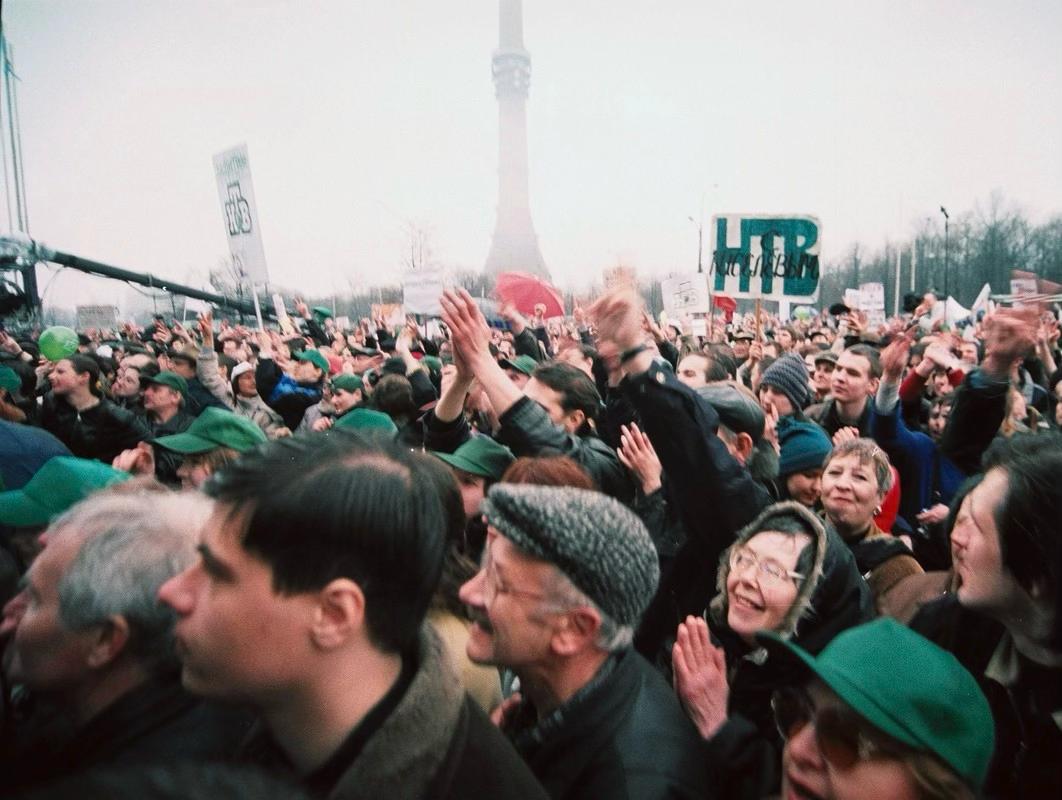
Supporters rally outside the Ostankino television center in support of NTV's ousted staff, April 2001.
Viewed individually, each episode could be explained as a commercial dispute, a regulatory decision, or an isolated political conflict. Viewed together, they formed a coherent strategy. The Kremlin was not simply suppressing unfavorable reporting. It was dismantling the institutional foundations that allowed independent journalism to survive. News organizations can be rebuilt. Legal protections, advertising markets, journalism schools, and habits of collaboration take much longer to recreate once they have been broken.
The Russia that emerged was different from both the Soviet Union and the Russia of the 1990s. Soviet citizens had lived inside a largely unified information system dominated by state media. During the first post-Soviet decade, that monopoly fractured as multiple centers of information emerged. Under Putin, central political control returned, but it returned to a society transformed by digital technology. The Kremlin could no longer rely exclusively on owning newspapers and television stations. Russians were increasingly getting information through websites, social media, messaging applications, and online video. Control, therefore, had to extend beyond editorial content to the channels through which information traveled.
That distinction is critical because it changes the nature of media policy. In the twentieth century, governments primarily controlled publishers and broadcasters. In the twenty-first century, they increasingly control access. The Russian state now acts not only through editors and owners, but through internet service providers, telecommunications companies, search engines, and surveillance. Censorship has become infrastructural. It often operates long before an editor decides what to publish.
The result is often misunderstood. It is tempting to imagine that Russia has simply recreated a Soviet-style information monopoly. The evidence suggests something more complicated. Television remains the single largest source of news for Russians and still enjoys higher levels of public trust than any individual online platform. At the same time, internet use has become nearly universal, social media reaches mass audiences, Telegram has become a major political distribution channel, and independent journalism continues to survive from exile despite severe restrictions. Russians no longer inhabit a single national information space. They occupy overlapping information environments shaped by age, geography, technology, education, and political preference.
This fragmentation has important political consequences. Older Russians continue to rely heavily on television, where the Kremlin exercises overwhelming influence. Younger Russians obtain information from a mixture of social networks, messaging platforms, websites, and online video. These audiences overlap, but they do not consume the same information, nor do they necessarily share the same assumptions about current events. The result is not a single public conversation but several partially connected ones.
That does not mean the Kremlin has lost control. Quite the opposite. It has gradually learned to govern a fragmented information environment by influencing the infrastructure that connects it. Platforms can be slowed without being formally banned. Applications can disappear from digital stores. VPNs can be restricted. Search results can be manipulated. Foreign services can become progressively more difficult to reach without ever disappearing entirely. These techniques attract less attention than the outright closure of a newspaper, but they often prove equally effective. They shape what information people can conveniently reach rather than simply prohibiting what they may read.
The fragmented nature of modern information ecosystems also makes it increasingly difficult, if not impossible, to mount an effective counterweight to Kremlin control. The persistence of exile media illustrates both the strengths and the limits of the new environment. Dozens of Russian news organizations now operate outside the country, preserving professional standards, investigative capacity, archives, and experienced journalists who might otherwise have disappeared from public life. Millions of Russians continue to find their reporting despite censorship and technical obstacles. Yet exile media does not reach a majority of the population. Its audience is significant without being dominant. It preserves institutional memory and professional capacity, but it cannot by itself replace the broad public reach once enjoyed by independent national broadcasters.
TWO DECADES OF PRESSURE
At least 34 media professionals killed in connection with their work in Russia since 2000.
Russia ranked 171st of 180 countries in Radio Sans Frontiers’ (RSF) 2025 World Press Freedom Index, down from 162nd the year before.
Key institutional losses: NTV (2001); Dozhd/TV Rain dropped by cable and satellite providers (2014); Lenta.ru's editor and most of her staff dismissed (2014); Ros Business Consulting’s (RBC) editorial leadership removed (2016).
Since the 2022 invasion of Ukraine, nearly all independent Russian media are banned, blocked, or labeled "foreign agents" or "undesirable organizations" (RSF).
49 journalists and media workers were held in detention in Russia as of late 2025 (RSF Barometer).
Sources: Reporters Without Borders, "Vladimir Putin's Damning Record on Press Freedom" and 2025 World Press Freedom Index; Committee to Protect Journalists.
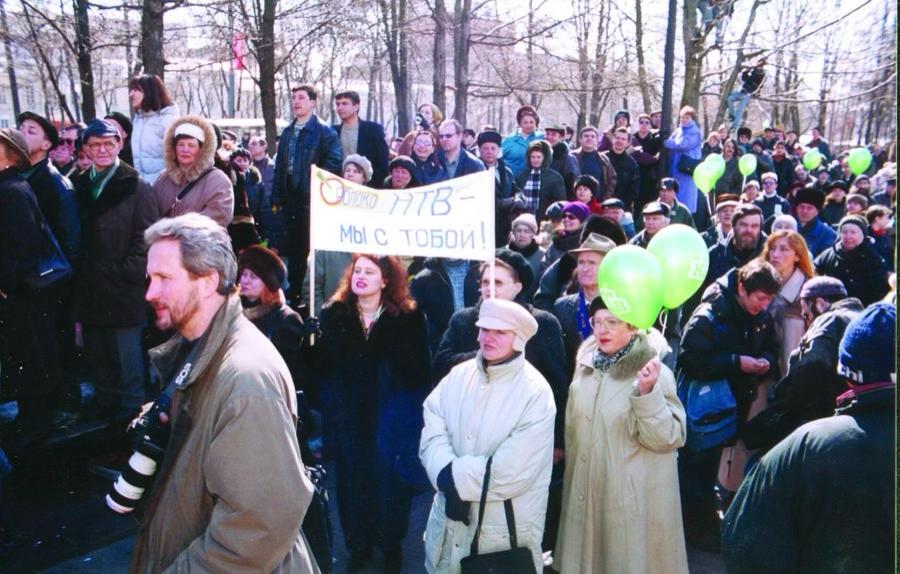
A decade later: journalists, Yabloko party members, and civil-society activists mark the tenth anniversary of the NTV takeover outside Ostankino, April 2011. The banner reads, “Yabloko — NTV, we are with you.”
Wikimedia Commons, free license
This is why the media landscape that follows Putin will not resemble either the Soviet Union or the Russia of the early 1990s. The centralized monopoly has nominally been broken, but it has not been replaced by a stable democratic public sphere. Instead, Russia has developed a complex information environment in which state television, commercial platforms, independent journalists, regional media, messaging services, and exile institutions coexist in an uneasy, constantly changing relationship. The unfinished revolution that began with the spacebridges has not disappeared. It has become harder to see because it now unfolds across many different platforms rather than on a handful of national and regional television channels.
Understanding that transformation is essential because it changes the question facing those who hope to support a democratic Russia after Putin. The challenge will not be to recreate the media institutions of the 1990s. The country those institutions served no longer exists. The challenge will be to reconnect a society whose information system has been divided by technology, politics, geography, and fear. That task is considerably more difficult than rebuilding a few newspapers or television stations, but it also offers the possibility of creating a media system more resilient than the one Russia lost a generation ago.
V. Why The First Media Revolution Failed
It is tempting to explain the collapse of Russia's first experiment with independent media as simply the consequence of Vladimir Putin's authoritarianism. Certainly, without Putin's determination to restore centralized political control, many of the institutions created during the 1990s might have survived far longer. But that explanation is incomplete. It risks turning history into inevitability and overlooks the vulnerabilities that already existed within the democratic experiment itself. Putin succeeded not only because he was determined and ruthless, but because he inherited institutions that were younger, weaker, and less deeply rooted than many of us realized.
The first weakness was economic. Independent journalism emerged precisely as Russia was dismantling a command economy and attempting to build a market economy almost overnight. Price controls disappeared. Inflation consumed personal savings. State enterprises collapsed. New commercial markets barely existed. Independent news organizations suddenly had to support themselves through advertising and private investment in a country where neither was well developed. Journalists who had spent their careers learning how to report the news now found themselves trying to build businesses under conditions that would have challenged experienced entrepreneurs.

Bare shelves in a Moscow grocery store, circa 1990–91. Economic collapse, not just political will, shaped the fragility of Russia's first independent media.
Wikimedia Commons, CC BY-SA 3.0
Some organizations succeeded remarkably well. NTV demonstrated that independent television could attract large audiences and compete successfully with state broadcasters. Regional stations discovered local advertisers among the many new businesses eager to reach consumers previously inaccessible to them. Newspapers experimented with subscriptions, commercial partnerships, and entirely new business models. The creativity of those years was extraordinary. But the underlying economics remained fragile. Many organizations depended upon wealthy owners whose political and commercial interests did not always coincide with the long-term independence of their newsrooms. Others relied heavily upon international assistance while domestic markets slowly developed. Few enjoyed the financial stability necessary to withstand prolonged political pressure.
A second weakness lay in the broader institutions of democracy itself. Independent journalism can expose corruption, challenge official narratives, and inform citizens. It cannot, by itself, guarantee constitutional government. Courts must remain independent. Political parties must compete fairly. Property rights must be respected. Civil society organizations must flourish. Citizens must believe that elections can produce legitimate change. During the 1990s, Russia made progress in many of these areas, but the institutions themselves remained remarkably young. They had little time to acquire the public confidence that allows democratic systems to survive periods of crisis.
That fragility became particularly dangerous because many Russians experienced democracy and economic upheaval simultaneously. To outside observers, the expansion of press freedom, competitive elections, and open political debate represented extraordinary achievements. For many Russian families, however, those same years were remembered for unpaid wages, disappearing savings, organized crime, corruption, and declining living standards. Fairly or unfairly, democracy and economic insecurity became associated in the public consciousness. When Putin later promised stability, order, and rising incomes, many Russians accepted greater political control as a price worth paying.
The media themselves were not immune to these pressures. The 1996 presidential election demonstrated how easily even principled journalists could become participants in political struggles they believed transcended ordinary professional neutrality. Yet by aligning themselves so visibly with one political outcome, they unintentionally weakened one of journalism's most valuable assets: its independence from those who govern. The decision may well have been understandable. Its consequences, nevertheless, proved lasting.
We often think of democratic assistance in terms of visible institutions—a newspaper, a television station, an election commission, or a civic organization. Those institutions matter enormously, but their durability depends just as much upon the invisible relationships that connect them. Democracy is sustained not by isolated organizations but by communities of practice, habits of cooperation, professional norms, and trust developed over many years. These are difficult to measure, difficult to finance, and often invisible to outside observers. They are also among the first casualties when authoritarian governments seek to restore centralized control.
Russia's first media revolution did not fail because Russians were somehow unsuited to independent journalism or democratic institutions. On the contrary, the achievements of the late Soviet and early post-Soviet years demonstrated extraordinary creativity, courage, and professional commitment. The revolution remained unfinished because the institutional foundations beneath it were not yet strong enough to withstand a determined effort to dismantle them. The challenge after Putin will be to rebuild the wider network of institutions that allows those qualities to endure across generations rather than only during moments of political opening.
VI. Building The Next Russian Media Revolution
No one can predict when Russia's current political system will end or what circumstances will bring that moment about. History rarely unfolds according to anyone's expectations. The Soviet Union collapsed with astonishing speed after appearing stable for decades. The transition that follows Putin, whenever it comes, is likely to be equally unpredictable. What can be anticipated, however, is that the first months and years afterward will shape Russia's information system for a generation. Decisions made during that period will determine whether independent journalism again becomes woven into the fabric of Russian society or remains a series of isolated voices struggling against the next concentration of political power. That is why preparation matters now.
The first priority should be rebuilding professional capacity. Thousands of Russian journalists now live outside their country. They represent one of Russia's greatest democratic assets. Many continue producing outstanding journalism under extraordinarily difficult circumstances. Just as important, they preserve professional standards, editorial experience, investigative skills, and institutional memory that would otherwise have been lost. Their work cannot substitute for independent media operating within Russia, but it can help ensure that a future democratic Russia will not have to start from scratch. These institutions in exile should be understood not as temporary substitutes for domestic journalism but as repositories of professional knowledge that will become indispensable when political conditions permit their return.
Regional media deserve equal attention. One of the most encouraging discoveries of the 1990s was that innovation did not depend upon Moscow. Some of the most creative journalism emerged from cities that had long been considered peripheral to national life. Those stations succeeded because they understood their communities, reflected local concerns, and enjoyed the trust of their audiences. A future Russian media system should encourage that diversity rather than subordinating it to another centralized national model. Healthy democracies require vigorous local journalism no less than influential national institutions.
Technology must also be approached differently. During the Cold War, communications satellites expanded the possibilities of public conversation. Today, artificial intelligence, encrypted communications, distributed publishing, and digital networks are reshaping journalism at an equal speed. These technologies will create new opportunities for independent reporting, but they will also provide governments with increasingly sophisticated tools for surveillance, manipulation, and censorship. Democratic assistance should therefore devote as much attention to secure communications, resilient digital infrastructure, cybersecurity, and open technological standards as it once devoted to newspapers and broadcasting licenses. The architecture through which information travels has become almost as important as the journalism itself.
That lesson extends to law and public policy. Independent journalism cannot flourish if governments retain unchecked authority over telecommunications networks, internet service providers, platform regulation, or digital surveillance. Freedom of expression in the twenty-first century depends not only on constitutional guarantees, but also on the rules governing digital infrastructure. Questions that once seemed primarily technical—network neutrality, encryption, platform transparency, data privacy, and competition policy—have become central questions of democratic governance. The future of press freedom will increasingly be decided not only in newsrooms but in the institutions that govern the digital public square.
Education deserves similar emphasis. Journalism schools should not simply teach reporting techniques. They should cultivate professional ethics, investigative methods, digital verification, audience engagement, and an understanding of journalism's constitutional role within democratic society. Russia's first media revolution succeeded in large part because a generation of journalists believed they were participating in a profession with standards larger than politics itself. Rebuilding that professional culture will be every bit as important as rebuilding individual news organizations.
International assistance should also learn from its own history. During the 1990s, much of our work understandably focused on creating institutions that did not yet exist. In the future, even more attention should be devoted to helping those institutions develop lasting relationships with one another. Networks of cooperation are not secondary activities. They are the connective tissue that allows independent institutions to survive political pressure. They are also much harder for authoritarian governments to dismantle than isolated organizations.
PRIORITIES FOR REBUILDING
Professional capacity in exile — supporting the thousands of Russian journalists now working abroad as a repository of standards and skill, not a temporary substitute for domestic media.
Regional media — encouraging local journalism outside Moscow, where much of the 1990s' most creative work originated.
Technology and infrastructure — investing in secure communications, resilient digital networks, and cybersecurity as seriously as broadcasting licenses were once treated.
Law and policy — addressing network neutrality, encryption, platform transparency, and data privacy as core press-freedom questions.
Education — cultivating professional ethics and investigative method, not just reporting technique.
International partnerships — building lasting relationships between institutions, not just funding institutions in isolation.
None of this guarantees success. Russia's future will ultimately be determined by Russians, not by outside assistance. That has always been true. The first media revolution succeeded because Russians themselves seized opportunities that no foreign organization could have created for them. Many international partners contributed resources, training, and encouragement, but the courage, imagination, and persistence belonged to the journalists, lawyers, educators, and entrepreneurs who built those institutions under extraordinarily difficult conditions. They remain the strongest argument against the cynical claim that independent journalism is somehow incompatible with Russian political culture.
When I think back to the Seattle-Leningrad spacebridge that opened this story, I am reminded that history often changes in ways that are almost impossible to recognize as they happen. No one watching those conversations in 1985 could have predicted the extraordinary flowering of independent journalism that followed. Nor could anyone have foreseen how much of it would later be dismantled. History seldom moves in straight lines. Progress is rarely permanent. Institutions can disappear. They can also be rebuilt.
The central lesson of Russia's first media revolution is therefore neither optimism nor pessimism. It is that institutions matter. Journalism is sustained not only by talented reporters or courageous editors but by the wider community of laws, schools, technologies, business models, and relationships that allow independent reporting to survive from one generation to the next. Those institutions are slower to build than individual news organizations, and they are often invisible until they are gone. Yet they are the true foundation of a free press.
Russia has already demonstrated that it possesses the talent, creativity, and courage to build such institutions. The next opportunity, whenever it comes, should be approached with greater humility, greater patience, and a deeper understanding of what the first generation accomplished—and why, despite those extraordinary achievements, their work remains unfinished.
About The Author

David Hoffman
David Hoffman is the author of “Citizens Rising: Independent Journalism and the Spread of Democracy” (CUNY). For more than forty years, he worked alongside journalists, broadcasters, and civic organizations building independent media in the former Soviet Union and around the world, including the regional Russian television network and training programs described in this monograph.
His work has been recognized with an Emmy Award and the European Commission's Human Rights Award. His writing has appeared in The New York Times, The Washington Post, The Wall Street Journal, and Foreign Affairs.